Dr Pantanowitz was responsible for forming the WIC and served as the inaugural Director for 18 months.
During his tenure, he was involved in revising and writing new policies, brokering deals for Wits University spinouts and building partnerships across the Wits ecosystem, including aligning Wits Enterprise and Wits University’s Tshimologong Digital Innovation Precinct. He also negotiated investments into the University Technology Fund (UTF), and initiated plans to establish a bespoke Wits Innovation Fund (WIF).
Dr Pantanowitz supported new programs such as Artists in Labs, GRiP and the Postdoctoral Fellowships in Innovation while successfully supporting and implementing new and existing WIC programming such as Afretec-funded workshops, the PGDip in Innovation and Entrepreneurship, the Prospectors and the Biomedical Innovation and Entrepreneurship (BIE) training courses.
He delivered numerous public talks and had many internal engagements, and through this work, conceptualised the thinking which attracted a large grant from MerSETA.
His lasting contribution will be his ability to create innovator-friendly pathways and frameworks for translating University research to impactful innovations.
Dr Pantanowitz will continue to serve as a part-time strategic advisor in the office of the Deputy Vice-Chancellor for Research and Innovation to ensure the continuity of projects he championed.
We thank Dr Pantanowitz for using his ingenuity and unique skills to advance innovation at Wits and wish him all the best.
Acting Chair in the Wits Innovation Centre (WIC)
During the transition, Professor Christo Doherty,will assume the role of Acting Chair within the WIC where he currently serves as the academic co-ordinator of the PGDip in Innovation & Entrepreneurship.
Professor Doherty is a pioneer artist, scholar and innovator who consistently pushes the cutting edge of art and technology in Africa. He founded the Digital Arts Department in the Wits School of Arts where he developed ground-breaking programmes in Digital Animation, Interactive Media and Game Design – making Wits the first university to adapt its art curricula to embrace new technologies.
The Game Design programme led to a unique collaborative degree with the Wits School of Electrical and Information Engineering. He also co-founded and became the first Creative Director of the Fak’ugesi African Digital Innovation Festival, which is still thriving today at the Tshimologong Innovation Hub, more than a decade after it was started.
After joining the WIC in 2022, Professor Doherty founded the Artists-in-Labs programme, which has stimulated unique collaborative projects between artists and scientists in engineering and physics at Wits.
We thank Professor Doherty for his willingness to take on the Chair role and to further the academic aspirations of the WIC.
Director of the Wits Innovation Centre (WIC)
Finally, we are pleased to announce that Mr Letlotlo Phohole has been appointed as the Director of the WIC.
Over the past year, Mr Phohole has made notable contributions in training and education, including directing his team in facilitating critical systems thinking courses for industry leaders and developing innovative programs in design thinking. He was instrumental in securing strategic projects such as MerSETA, which leverages systems and design thinking to address complex challenges in skills planning.
Under his leadership, the Innovation Support unit was broadened to accommodate all Faculties and student entrepreneurs in collaboration with the Office of the Dean of Students. He introduced Innovation Readiness Levels to enhance the commercial viability of Wits inventions. He also expanded the role of the Innovation Systems Lab to support research and development and scaling for innovations such as Peco Power, Button Optics, and Cleantouch.
Mr Phohole has significantly grown the Telkom Industry Solutions Lab from two initial contributors to a robust team comprising six resident engineers in training, data scientists, a system architect, an entrepreneur and innovator in residence, academics, as well as the Telkom R&D and a project management team. This expanded team has tackled operational efficiency projects, including the use of AI tools and methods, to enhance customer experiences as an initial set of interventions.
Furthermore, Mr Phohole played a pivotal role in strategic projects such as the Jozi My Jozi initiative, which fosters a united movement for Johannesburg’s renewal, and major transcontinental projects like the Trans Africa Growth Corridor (TAGC) and the Peace Dividend Growth Corridor (PDGC), involving multiple African nations and the US Government. These efforts showcase his ability to lead impactful international collaborations and development projects.
We are excited for Mr Phohole to direct the WIC into its next phase of growth and impact.
Professor Lynn Morris
Deputy Vice-Chancellor: Research & Innovation
5 March 2025
Plugging South Africaʼs skills GAP
- Deryn Graham
Are we adequately training young people for the labour market, or do we need to review our approach to education and training?
According to the Deputy Minister of Higher Education and Training Dr Mimmy Gondwe, education is a means to an end and not an end in itself. The end goal, of course, is employment, but for many graduates, jobs are elusive, and years after graduation, they remain without work.
But is there really a skills gap or does the problem lie elsewhere?
According to Ebrahim-Khalil Hassen, Senior Researcher at the Gauteng City-Region Observatory (GCRO), in order to meet the private sector’s employment demands, tertiary institutions need to balance managerial training and functional competency with academic excellence. “We need to create career pathways from hard skills to more general managerial training,” he says.
The Sector Education and Training Authorities (SETAs) are in theory meant to drive reporting on skills demand in their respective industries, although their own skills in achieving this are patchy. Stephanie Allais, Professor of Education and Research Chair of Skills Development at the Centre for Researching Education and Labour, has written extensively about the shortcomings of the SETAs.
“The process is too complex with too many tools to do too many things, rendering it ineffectual,” she says. “The data coming from employers is poor, and this feeds into poor reporting and so skills development funding goes to the wrong places.” She also claims that SETAs tend to go through box- ticking exercises, reporting skills deficits only in areas in which they are already equipped to train, as this earns them their subsidies. In addition, Small and Medium Enterprises (SMEs) lie outside skills sector planning and their needs are not factored in.
“Funding models for Technical and Vocational Education and Training institutions (TVETS) and vocational training are also complex and so, given that a university degree is still seen as increasing graduates’ prospects of getting a job, those that can, go to university,” she says. However, she believes, while vocational colleges can’t solve youth unemployment and plug all the gaps, they can play an important role in the economy if they are funded more efficiently and if they had a clearer mandate.
Government thwarts innovation
In his 2024 State of the Nation speech, President Ramaphosa spoke about a 'demand-led' approach to job creation, launching the National Pathway Management Network which aggregates learning and earning opportunities on a single platform. Here young people can match their skills with jobs and access a range of support services.
Another government initiative is the Labour Market Intelligence Partnership (LMI) which aims to ‘integrate skills planning with government strategies and plans in order to produce a capable workforce to achieve an inclusive growth path’. Their manifesto goes on to say that ‘LMI ensures that skills are not a constraint on economic growth and promotes the use of labour market intelligence for skills provisioning’. Launched in 2012, the success of this programme is debatable.
If it’s entrepreneurial endeavour that is going to be the job creator of the future – picking up some of the slack in the labour market – then South Africa is in trouble. While we have great, innovative minds, legislative barriers to establishing a company are high and the track record of small businesses making it past year one is poor. The Global Entrepreneurship Monitor shows that we score highly for start-ups, but low for established businesses, and this must be a concern.
“We are an industrious nation, but South Africa is a difficult place in which to succeed and so we are not developing the jobs in the SME sector that we should be,” says Hassen. “The fact is that we have a concentrated economy dominated by a number of large companies.”
Without a transition of asset holdings, the jobs and skills market will intrinsically be bound to their needs.
Hassen believes that we will only build new assets by looking for a better return on investment on education. Allais puts it more bluntly, “South Africa has a skills crisis, and our education system isn’t meeting the needs of the economy.”
Skills scapegoating
Beyond the skills crisis, the socio-political landscape, too, impacts who gets to work. On claims that ‘automation and foreigners are taking jobs and widening the skills gap’, Hassen says, “The introduction into basic education of subjects such as robotics and coding, and the Basic Education Laws Amendment [BELA] Act making Grade R compulsory, will go a long way to addressing skills deficits, but only in the future.” As for xenophobic accusations that foreigners are taking South African jobs, he believes that a society that attracts skills from overseas is better than an insular one, and that we mustn’t scapegoat foreigners for our unemployment crisis.
One proposal to meet the skills gap challenge is the provision of a universal basic income grant. Hassen believes that such a grant would put recipients on a path to economic activity, eventually funnelling some of them into the jobs market. “Make everyone part of the economy, and the opportunities for acquiring skills will be more equitably distributed,” he says.
South Africa undoubtedly needs a programme of re- and up-skilling of the existing workforce, structural change to increase job opportunities, and a more innovative form of capitalism if we are going to address our skills deficit and a state of persistent unemployment.
Read more in the 18thissue, themed #Work, which delves into the evolving nature of work, shaped by societal shifts, technological advances, and equity challenges.
The sorcerer’s apprentice: The impact of AI on future jobs
- Deryn Graham
What is the future of humans in the world of AI? We look at the myths and realities, risks and opportunities posed by the adoption of AI.
In Disney’s The Sorcerer’s Apprentice, Mickey Mouse employs the services of a broom to help him more efficiently fill a cauldron with water. The broom misses the brief and even when the cauldron is full, continues to bring in bucket after bucket of water. Unable to halt the broom’s advance, Mickey takes an axe to it, but each of the splintered pieces forms a new broom, and soon the place is overrun with over enthusiastic brooms and flooded with water.
This story has been used as an analogy for AI taking over jobs, after humans have used it to improve productivity. Man, it is predicted by AI’s detractors, will ultimately be taken over by machines (or brooms).
Dr Steven James, Senior Lecturer in the School of Computer Science and Applied Mathematics quotes British sci-fi writer Arthur C Clarke who said, “Any sufficiently advanced technology is indistinguishable from magic” and it is this mystification around AI and its uses and applications that is driving the myths around how far it may eventually take us.
“It’s common for most technologies to be overestimated in the short term and underestimated in the long term,” says James. “But AI is showing signs of diminishing returns; having ingested all of the data on the internet, we are starting to see a slowdown in the improvement of these systems. When there is no more data from which to draw, there will be no new outputs, making AI less than intelligent in the human sense,” he says.
Although the displacement of humans in favour of AI, bots and other automated functions may have been hyped, it is certain that, like the internet 40 years ago, new technology has changed the world of work irrevocably. However, it is said that in the next decade, most work roles are not at risk from AI, but from a human who knows how to use AI better than you do. After that, it’s impossible to say where AI may take us. People are still only dabbling in AI and large language models such as ChatGPT, with few fully fledged, scalable systems in commercial use, so keep your eye on your colleague and not necessarily company strategy around AI.
AI is not sentient
Fears around humans being supplanted by AI en masse are mere extrapolations of far-fetched scenarios. People who are surprised by how good ChatGPT and other large language models are, are likely to speculate and imagine ‘what else it can do’. But it is precisely language that sets humans apart from animals – and technology – and AI does not have a human’s nuanced understanding of a question or a prompt. Anthropomorphising technology is a mistake, says James, and ascribing to it human capabilities is simply good marketing on the part of its creators. When we prompt ChatGPT and it takes a moment to respond, it isn’t ‘thinking’, it’s ‘processing’ and studies have shown that using ‘please’ and ‘thank you’ doesn’t necessarily change AI’s output. No one ever used these social niceties with Google.
James believes that in fact, labelling these language models as ‘artificial intelligence’ is a misnomer. They are not intelligent in the way that humans are intelligent and should rather be called a ‘machine learning tool for language’ or a ‘machine learning tool for hiring’, or a machine learning tool for whatever function it is being deployed.
If machine automation has changed the workplace for blue collar workers, mechanising factory production lines, agricultural and other mundane, repetitive tasks, the fear is that it is now coming for white collar jobs. Some believe that this will result in the death of creativity, the erosion of critical thinking and increased job inequality and polarisation.
Bruce Mellado, Professor in the School of Physics believes that AI is simply a tool for improving efficiency and production and cannot be blamed for job losses. “We can’t blame inequality and unemployment on AI or machines, but on an unequal society and an imbalance in economic structures,” he says.
Finding purpose in AI
For Mellado, the critical question is the purpose for which technology is used, which should be for the enrichment of the many and not the few. In mining, technology has replaced some functions, but it can also be used to detect exhaustion in workers, potential hazards and dangers and therefore save lives and so is a good thing. “We need to judge AI on a case-by-case basis, find its responsible application and how and where it can help and do good,” he says. “If the goal is simply profit, there is no doubt jobs will be lost.”
As AI automates more work functions, Rosman says that this could free manual workers to pursue other opportunities that have the potential to make them more money with a greater sense of personal fulfilment. For example, AI gives people who have not had the advantage of education the opportunity to construct a business model from a modest idea. It can help propel a small business to greater heights. It can model financial projections, enabling people to look more successfully for funding for a business start-up. AI unlocks human potential that has been stymied by social circumstances, bringing more people into the formal economy, creating new jobs. AI gives people the freedom to innovate, and to create a strong gig economy, already part of South Africa’s work landscape.
Work’s existential crisis
Rosman doesn’t believe that there are many jobs which AI won’t be able to do in the future, and this poses an existential crisis for the world of work. AI affects the prospects of all employees, but rather than running off to retrain and reskill ourselves, he says, like Mellado, that it would be better to rethink and reimagine the structure of society and the economy. The expanding uses of AI means that there has never been a better time to realise dreams with fewer resources.
Much has been made of AI taking creative jobs driving Hollywood writers and the Actors’ Guild to go on strike in protest. But AI is not creative insofar as it cannot write with a distinct ‘voice’ shaped by human insight. It is unable to apply different literary devices, wit or subtlety to its output. It’s humans who give nuance as they finetune the work of AI and so it’s unlikely to replace many of the roles that go into producing a movie, a stage play, or even a novel. The Hollywood writers’ and actors’ strike showed the power of labour unions in being part of discussions and contractual negotiations about who controls AI and how it will be used. Labour in all sectors needs to be involved and have input into how AI technologies are deployed, bringing better efficiencies and productivity, cost reductions and improvements to the bottom line without jeopardising jobs. Freeing workers up from performing repetitive tasks allows them to move into bigger, more complex roles, developing a more, not less, skilled workforce.
The question is what we do in an age when there are more resources available but fewer jobs. According to Rosman, we re-think how we derive value from our lives. In the end, it’s entirely up to humans to craft the future we want to see, including the uses and purpose for which we deploy AI.
Sam Altman, CEO of Open AI said, “No one is ever going to be replaced, but jobs are definitely going to go away”. The question is how we use AI to boost innovation and create opportunities while reducing the risks to people’s chances of meaningful employment.
Who controls AI and how it’s used is critical in shaping the future of work, and is something in which multiple stakeholders including government, labour unions, lawmakers, and the public and private sectors need to be involved.
Read more in the 18thissue, themed #Work, which delves into the evolving nature of work, shaped by societal shifts, technological advances, and equity challenges.
The future of work – A flicker of a silver lining
- Sarah Hudleston
With a disastrously high unemployment rate and inequality, South Africa has a mountain to climb, but there is hope.
In February 2023, during the 36th Ordinary Session of the African Union (AU) Assembly in Addis Ababa, Ethiopia, United Nations Secretary-General António Guterres told Africa's leaders that despite its challenges, the continent’s abundant natural resources, diverse cultures, and youthful population, could see the 21st Century being "Africa's Century".
Is Guterres’ optimism misplaced? With African countries being among the most unequal on earth, can his prophecy be realised? How can Africa thrive when, in South Africa, one of the most developed countries on the continent, the official unemployment rate currently sits at 32%, although pundits believe it could be closer to 50%? The question is, how does a country claw its way back from this disastrous statistic, and what are the dangers that could see the unemployment figure soar even higher?
The answer to all these questions may lie in recent positive engagements with world bodies such as the United Nations (UN) and the Group of 20 (G20).
In November 2024, South Africa took a step closer to playing a bigger role in the world order when it took over the chair of the G20 from Brazil. The G20 is an intergovernmental group of countries and includes the European Union and African Union. It focuses on addressing global issues such as international financial stability, climate change and sustainability. In taking the rotating chair of the G20 until the end of 2025, South Africa has a golden opportunity to set the stage for national growth, believes Professor Imraan Valodia, Wits Pro Vice-Chancellor: Climate, Sustainability and Equality.
“South Africa will get to set the agenda focusing on three main areas, namely poverty, inequality, and climate change. All these factors impact the Global South’s ability to thrive,” says Valodia, who along with Dr Kenneth Creamer from the Wits School of Economics and Finance, has been appointed to the Presidential Economic Advisory Council.
“This was evident during the Summit for the Future, a side event during the United Nations General Assembly in New York in September 2024,” says Wekesa.
A result of this summit was the Pact for the Future, in which world leaders resolved that African countries should have a greater voice in sustainable development and financing for development, international peace and security, science, youth and innovation, in digital cooperation, and in transforming global governance.
“It is accepted that there are inequalities based on how the world is governed, more specifically in terms of the global financial institutions, the World Bank, the International Monetary Fund (IMF), and the World Trade Organization (WTO),” says Wekesa. “These institutions are in the hands of the West, or rather, the Global North. There has been a push for the reform of these institutions because they play a massive role in terms of the allocation of finances that support economies that should in turn be supporting economies in the Global South.”
Now, it is hoped, Africa will be considered when these financial institutions are planning their budgets for grants and loans, and countries such as South Africa and others in the Global South can benefit equally.
“This will make a massive difference on the continent because, in terms of economic engagement, it will percolate down to the lowest levels in cities, villages, rural areas, and even in informal settlements,” he says.
At the Rio de Janeiro summit in November 2024, the African Union was represented at the G20 for the first time, thanks to the lobbying of efforts of South Africa.
“So now, we actually have the G21,” says Wekesa. “And with South Africa chairing, we can expect much work being done to level the playing field in terms of access to resources, including access to finance and better terms of trade. I expect that there will be intensive discussions around reform of the World Bank and the WTO so that African countries can do more with their raw materials and reap the rewards of beneficiation,” he says.
Under new management: a new SA-US dynamic
However, it will not be all plain sailing. Africa faces some harsh challenges. In February 2024 a bi-partisan bill was introduced in the United States Congress calling for a comprehensive review of US-South Africa relations after South Africa brought a case against Israel at the International Court of Justice (ICJ) accusing that country of genocide in Gaza. The ICJ ruling found it plausible that Israel, a major US ally, has indeed committed acts of genocide and now the bill threatens South Africa’s benefits from the African Growth and Opportunity Act (AGOA), which allows certain sub-Saharan countries duty-free access to US markets for a range of products.
If South Africa were to lose its AGOA benefits, it could affect key industries, including the automotive sector, agriculture and agribusiness, mining and minerals, textiles and apparel, chemicals, and pharmaceuticals. It would also impact the exports of renewable energy equipment, wine, and the export of machinery and other equipment. AGOA’s benefits have supported thousands of jobs across these industries, while small and medium enterprises (SMEs) have also been able to gain better access to international markets.
John Stremlau, Visiting Professor in the Department of International Relations at Wits, believes that South Africa’s Government of National Unity (GNU) should not hold its breath waiting for US President Elect, Donald Trump to act on AGOA, but should rather place its faith in BRICS – an intergovernmental organisation that includes Brazil, Russia, India, and China, and should be a friend to all.
“Trump’s first administration was chaotic, vindictive, and corrupt. His interest in Africa was negligible, and he allowed his diplomats just to continue their work. To call him an unreliable partner is an understatement,” says Stremlau.
South African president Cyril Ramaphosa announced at the G20 summit in Brazil that Trump would be part of a troika – a G20 partnership comprising the USA, South Africa, and Brazil – and that these three countries in effect would forge a close alliance. However Stremlau is not betting on Trump even attending next year’s summit when South Africa hands the G20 chair over to the US. On the other hand, Stremlau does have great faith in South Africa’s GNU, which, he believes, seems to be focused on driving growth.
The chicken and the egg
One of the major challenges that South Africa needs to overcome in its quest to stimulate economic growth is the impact of the rise of the global digital economy. While it may require fewer, highly skilled workers, it could nevertheless stimulate South Africa’s struggling township economies. Following the COVID-19 pandemic and the proliferation of digital technologies, it was thought that technology-driven jobs would help boost our economy and reshape the world of work but, ultimately, it is the other way round, and we first need economic growth to drive job creation.
Valodia believes that the global reality, particularly in the Global South, is that physical work needs to continue to be the main source of livelihoods.
“Although technology is having huge impacts on the world of work, it is not this grand emancipatory idea that we can all be freed by virtue of the way in which the management of work is changing,” says Valodia. “There are real concerns about how some of the more exploitative elements of labour markets are being integrated into digital work platforms”.
While some jobs will become obsolete, they will be replaced by others. Valodia believes that the evolution of work will be more of a churning process than the idea that technology will kill employment as we know it. “Young people, as they become more technically able, will use technology to make their work easier, but not to supplant their intellectual abilities,” he says.
"There’s this sense that digital technologies may help countries to leapfrog the process of industrialisation and become service-driven economies,” she says.
However, these services usually comprise online-based platforms that perform roles such as editing, translating, or data cleaning, or location-based platforms that mediate relations between workers, customers, and intermediary providers across a wide range of sectors, from transportation to domestic work.
Castel-Branco also says that these types of jobs are unsustainable because companies are growing based on venture capital funds from the Global North, which ultimately reproduces unequal relations between the North and South.
Procurement and the township economies
“In effect, it’s a form of digital colonialism. The expansion of digital technologies has happened on the back of neoliberal reforms that undermined the nature of public provisioning. The liberalisation of economies has also made it more difficult for governments to collect taxes from international corporations,” she says.
Ebrahim-Khalil Hassen, of the Gauteng City-Region Observatory (GCRO) at Wits, specialises in research on how technological changes, economic policies, and social dynamics affect labour markets and employment trends. This research highlights the need for the adoption of proactive policies that can support job security and growth.
Currently, his particular focus is the public procurement system and tackling unemployment, especially in the township economies. “The Gauteng government has a policy that 60% of all government procurement should come from township businesses, but in reality, less than 10% does,” says Hassen.
The GCRO has been working with government to understand the nature of township businesses and to examine the opportunities to expand public procurement in those areas, providing an entry point for businesses to be part of a larger market.
“I only hope the government is having sensible conversations around introducing grants for the unemployed and job seekers,” says Hassen. “We are also beginning to appreciate the potential of cities as economic centres that can be used to generate economic growth and employment.”
With its new role and standing in the international community, and the growth of the digital economy, South Africa is poised to drive economic growth by exploiting new international and regional trade relationships, and exploiting digital and remote working models, creating more much needed job opportunities here at home.
Read more in the 18th issue, themed #Work, which delves into the evolving nature of work, shaped by societal shifts, technological advances, and equity challenges.
When your boss is an algorithm
- Ufrieda Ho
The digital revolution has opened unimagined opportunities, but it comes with a threat of leaving the most vulnerable workers behind.
The future of work may look like algorithms will be doing the hard graft, but in reality, it may be less a case of humans being able to sit back and do less than of human workers becoming increasingly invisible.
It’s a trade-off, but one that researchers say deserves greater pause and considered intervention. What comes next in our digital future must be a better understanding of its impact on workers and consumers. We need appropriate and implementable regulations and protection to ensure that workers are an integrated component of a productive digital economy, and that they do not slip further through the cracks, becoming more vulnerable in the process.
A recent research project by Professor Bridget Kenny of the Department of Sociology has focused on the experiences of warehouse workers who are employed by a large online shopping platform and how algorithmic management affects e-commerce logistics. Kenny’s research interest spans labour, unions, gender, race, and consumption with a specific focus on service work, precarious employment, and political subjectivity in South Africa.
Kenny describes a typical day for a warehouse worker who takes instructions from algorithms. Through this lens she highlights new workplace stresses, greater precarity for workers and more erosion of their rights.
“Workers start their shifts with instructions given to them with a handheld scanner or via a cell phone app. They are given a set of tasks to pick and pack for an order, collecting items that are identified by a barcode or QR code from different parts of a warehouse. Packers are dispersed throughout the whole warehouse and the time they take to complete each task is monitored through the app,” says Kenny.
She says this reorganisation of workflow has contributed to one of the most significant disruptions: removing the knowledge and command of a job from workers.
“New technology has broken up knowledge of the job and taken it away from the worker. In the past, a worker would perhaps have known where to find items because they knew the layout of a warehouse. They would have control over the tempo of picking and packing and were able to keep in their own mind the order of the collecting, packing, and dispersing. Now it’s a case of following an instruction that is algorithmically managed and being tracked,” says Kenny.
A task not a job
Kenny says workplace dynamics have also shifted. For instance, she says, when workers may in the past have been able to help a co-worker with a task, they are no longer able to do so because of how the app controls them.
“Everything requires a sign-in under an individual’s name. It means that people are reluctant to help out, or can’t because they would be held personally responsible,” she says.
In her case study, the majority of workers are employed by labour brokers. This, combined with how supervisors can pull people off shifts with little notice means workers don’t know how much work they will get or how money they are likely to make in a month.
Kenny says these kinds of reconfigurations have caused more workplace stress and anxiety and have also left the digital workforce more fragmented. It raises concerns, she says, about workers’ rights and their ability to organise or mobilise collectively.
The right to down tools
Researchers from the Future of Work(ers) Research Group at the Southern Centre for Inequality Studies (SCIS) have homed in on the need for workers and unions to reorganise differently in these new digital economies. Public policy must also play a greater role. In addition, there needs to be a deeper awareness and understanding by end consumers of the real cost to the invisible workforce of consumer convenience - of same day delivery, getting a ride home via an app at 3am, or the guarantee of a pizza arriving sizzling hot “or your money back.”
The late Professor Edward Webster and Dr Ruth Castel-Branco wrote in The Conversation in November 2022 arguing for the role of unions to be bolstered – not rendered less relevant – in the advancing digital age. But the pair noted that this comes with significant challenges as trust in unions wanes, and union memberships decline globally as established trade unions remain reluctant to organise platform workers.
“Platform workers are geographically dispersed and work in an individualised manner, which makes collective claim-making difficult. The elusive nature of algorithmic management muddies the nature of demands. And the misclassification of platform workers as self-employed means that it is not always clear who they should make claims from,” the article says.
But the SCIS researchers and Kenny argue that workers do have power precisely through protest via the platforms themselves. It could be digital go-slows or a digital downing of tools by logging off the app as a collective. Examples of this have included e-hailing drivers logging off the app for a day to raise awareness about their working conditions.
Changing the AI story
Professor Gregory Lee of the Wits Business School lectures and writes on digital business, human resources, and business analytics. For Lee there is a need to reframe the narrative of artificial intelligence (AI) coming for jobs. Lee says it would be more helpful to push for targeted and enabling regulatory frameworks and to ensure that South Africa can assist more people in making the transition into a digital future.
“There are positive findings from new research that say that automation may actually add more employment than it destroys. Of course, there is a caveat that job creation in automation is unequal across a digital and skills divide,” says Lee.
He adds though that to begin with there may be more sideways employment, particularly among workers who have more manual skills, and especially in the construction and infrastructure sector. Even the building of smart cities still needs the muscle of those who dig trenches, lay pipes and support maintenance and repair programmes.
Lee says the thinking should be around finding new opportunities rather than just counting how many jobs are being lost to obsolescence. His example includes regional e-commerce businesses such as the supply of dry goods from South Africa to its neighbours. Rather than seeking to compete against Chinese e-commerce giants, the model could focus instead on different product offerings that it can bring to an untapped market.
He also says that there is a way to master AI in the workplace - including knowing when to turn it off. One of his projects is looking at getting workplaces periodically to “switch off” AI. It’s a trial to allow workers to intuit and create with more freedom, but also to know that AI remains an available tool.
“The digital future is not all bad. What I'm seeing is fundamental reorganisation in the way people do work. We have many things to get right still, but some of what is already happening is profoundly good,” Lee says.
Read more in the 18th issue, themed #Work, which delves into the evolving nature of work, shaped by societal shifts, technological advances, and equity challenges.
Writing the AI-wrongs in journalism
- Ufrieda Ho
The rise of AI in journalism signals the time for guidelines around disclosure, transparency and accountability.
More than this, it’s time for journalism to do the work of rebuilding trust and restoring its value.
“I don’t trust mainstream media anymore; I prefer to get my news from X. It’s not as biased,” says the woman at the lunch table.
“But you’re just being fed posts from an algorithm, it’s an echo chamber,” says her husband, seated next to her.
“Now he’s going to say I’m being brainwashed,” she says, elbowing him with a chuckle. “But I’m not. You can follow anyone on X – even Barack Obama.”
Her husband picks at his plate, silent.
This actual exchange happened just after Trump won the American election in November 2024. This brief conversation sums up the very deep, troubled waters into which journalism has drifted.
Relationship, reach, and ranting
Let’s unpack this. First, the audiences have crashed out of love with journalism, resulting in a massive trust deficit.
Second, journalism is up against social media’s astounding reach (with the backing of rich owners who are the Big Tech monopoly). Algorithms are insidiously powerful as they crush through users’ data, creating so-called personalised content that’s pushed out relentlessly. This ‘samey’ content – sometimes outright disinformation and misinformation – reinforces the user’s view. But it is ‘curation’ that strips out context, nuance, opposing views and a broader range of sources.
Third, because social media’s influence fuels emotionally charged responses, it shapes people’s opinions in a way that makes less room to engage, challenge and debate. It leaves people feeling more angry, more disappointed, and further removed from those who don’t share their views.
‘Death’ of the newsroom
This is the reality of the world in which journalism operates – aggravated by disruptions within newsrooms themselves, many of which are now operating virtually or are depleted. They rely on freelance journalists who are underpaid and unprotected, or they use contributing writers who have primary paid jobs. These newsrooms also rely on articles produced by niche journalism outlets, most of which are donor-funded, disseminating news through a free-to-use content sharing model.
Journalism digitally disrupted
Dr Nechama Brodie, a Senior Lecturer in Journalism and Media Theory at the Wits Centre for Journalism and an author and researcher, worked as a journalist for 25 years. She sets out how digital disruption changed and continues to change journalism in South Africa.
“Going back at least 15 years, we saw the start of mainstream news organisations pushing to build more prominent websites and taking more of their content online. There was a lot of investing in digitisation – from so-called digital consultants and gurus, who turned out not to be gurus – hoping that digitisation would somehow bump up traffic and be a revenue boost. What media owners failed to do was invest in journalism,” she explains. “So, we've seen this erosion of journalism skills in favour of digitisation, but we've also seen losses of revenue amongst news media.”
Digitisation has not been all bad, making it even trickier with which to get to grips. For instance, Brodie points out, it has also had several “amazing benefits”. It’s allowing for better desktop-based fact-checking, easier transcription, data sorting, better access to contacting a wider variety of people and different resources.
But this has often come at the cost of the practise of journalism, which has been weakened. Brodie says that this is clear in the woefully thin coverage of news or big issues. It’s made audiences feel that journalism has less impact, less relevance, and is simply out of touch.
Brodie says, “Diversity is also not happening – news titles are concentrated within the same large media companies, many of community and regional newspapers are shrinking, or don't exist anymore. The whole idea of a robust journalism system is that we shouldn't only have one voice; there should be lots of different voices.”
Impact of ai on journalism
Then there’s the latest newsroom disrupter: how artificial intelligence is reshaping newsrooms and how journalists work. Brodie says that it’s important first to understand AI – its strength and also its weaknesses.
“The biggest problem that we see right now is not so-called AI writing individual articles, but using these technologies to scrape and generate aggregated summaries. AI is not intelligent; it’s stochastic [having random probability] – it's like a parrot that’s able to repeat words without necessarily attributing meaning to those words. Something like ChatGPT is a large language model that is fed massive amounts of data in the form of other people's writing and can calculate the statistical probability of one word following another, or a group of words in context with each other.”
ChatGPT is a chatbot developed by Californian company OpenAI. The bots are trained, says Brodie – fed data that is generated by humans and therefore have the same biases as we do. There are inherent features in the programming that create glitches. It means AI makes mistakes.
For this article, questions were put to ChatGPT on how it gets things wrong. The generated responses were, “AI tools still face significant challenges in fully preventing the spread of disinformation. Also, that it “generates persuasive-sounding but false content … making it difficult for users to distinguish truth from fiction”.
ChatGPT added that “the global, interconnected nature of the internet means that misinformation can spread rapidly, and different cultural, legal, and societal norms make it hard to implement universal solutions.”
Brodie says that a start is to recognise these limitations of AI, then there must be a push for better guidelines for the use of AI in journalism that includes more transparency, disclosure, and tracking.
“Journalism is not about filling a page with words – it’s about a thought process, about conceptualising something, also showing the original sources and referencing,” she says.
Whither AI and journalism?
Brodie says that restoring trust in journalism comes down to doing the work to build credibility. It’s important for journalism to show that it can take responsibility and accountability as it argues for its unique value to be recognised.
Pheladi Sethusa, a Lecturer in the Wits Centre for Journalism and the Editor of Vuvuzela, the student newspaper, says, “The recurring theme we hear is for honesty about where and how AI is being used. These are the right kinds of conversations taking place about creating working principles and frameworks when it comes to the use of AI in journalism, but its broad implementation is going to be the next hurdle to get over.”
Sethusa warns that using AI cannot be the easy “temptation to subsidise our work” just because journalism faces multiple constraints. Relying disproportionately on AI, she believes, exacerbates the crisis of reporting that is “narrowly focused, un-nuanced and devoid of context and care.”
There are practical solutions though, she says. Along with industry guidelines for AI use, there should be drives to improve media literacy, starting at primary school level. “Teaching children from early on what the news looks like; explaining the minutiae of how news works is critical,” she says. It’s the grounding that children need to recognise news versus messaging from advertisers, promotors, politicians or those with social media influence. It’s education to understand bias, to verify sources, and to inculcate the practice of read-more-widely, she adds.
But this is also not the moment to crumble under the multiple crises facing journalism and journalists, says Sethusa. “This is the moment we get to decide how we want to reshape journalism; to redefine it. It’s to go back to core principles; to lean back into our humanity as journalists, because the machine will never be able to relate to people in the ways that journalists can.”
Read more in the 18th issue, themed #Work, which delves into the evolving nature of work, shaped by societal shifts, technological advances, and equity challenges.
Using your own tech for work? Why it’s a security hazard
- Thembekile Olivia Mayayise
Letting employees use their own devices such as laptops and phones for work has many benefits – and many risks, too.
Next time you’re working in a coffee shop or similar public space, take a moment to look around at your “co-workers” for the day, busy, like you are, with laptops, cellphones and tablets. How many of those devices belong to the organisations that employ them? Or are they – and you – using personal devices to conduct company business?
Many businesses are embracing the convenience of a practice known as “bring your own device”. This allows employees to use their personal or privately owned devices such as smartphones, laptops, USB drives, and even personal cloud storage, for work purposes. A broader term, “bring your own technology”, encompasses the use of privately owned software for business activities.
According to technology company Cisco’s 2024 Cybersecurity Readiness Index, 85% of the more than 8,000 companies surveyed around the world reported that their employees accessed company platforms using unmanaged devices.
There are undeniable benefits to a “bring your own device” approach. These include lower purchase costs for companies and more flexibility for staff. But the practice is also risky.
Privately owned devices aren’t always well set up for security. They often lack endpoint security controls like anti-virus software and encryption (converting plaintext data into an unreadable format). This leaves them vulnerable to data breaches and other forms of cyberattack. Such attacks are common and can be costly. Cybersecurity company Kaspersky documented almost 33.8 million mobile cyberattacks worldwide in 2023 – a 50% rise from 2022 figures.
So, what can organisations do to reduce the risks associated with “bring your own device”? As a cybersecurity professional who conducts research on and teaches cybersecurity topics, here is my advice for businesses that want to keep their data safe while letting employees use their own technology.
Who should be concerned?
Organisations of all sizes that use internet and communication technology (ICT) for business operations should address the risks that come with “own devices”. This isn’t just a matter for IT departments. Without collaboration between technical teams and management, it’s impossible to balance operational efficiency and robust data security measures.
This should be an immediate priority if:
your organisation or business has no “bring your own device” policies, standards and guidelines in place
you haven’t introduced fundamental technical safeguards for personal devices. These may be virtual private networks, up-to-date anti-virus software, multi-factor authentication, encryption and mobile device management tools.
your business doesn’t have adequate processes for managing user accounts (often the case for entities without dedicated ICT resources)
your ICT operations are fragmented, with no uniform standards or practices across departments
the organisation hasn’t assessed the risks of “bring your own device” practices.
It’s never too late to strengthen cybersecurity controls for these practices. As cyber risks evolve, organisations must adapt to protect their information. Assess the financial and reputational risks of a data breach and you’ll almost certainly find that it’s worth spending money upfront to prevent huge losses in future.
Managing the risks
Organisations with the necessary cybersecurity resources can take measures in-house. Others may need to consider outsourcing in critical areas where there are major gaps.
First, you need a comprehensive “bring your own device” strategy that’s tailored to your organisation’s needs. This should align with organisational objectives and set out who has to have which measures in place. It should outline how letting employees use their own devices for work will meet business needs.
Then, the company must create policies to help in the governance of privately owned devices.
But it’s no use merely putting a policy on paper: communicate it to all staff, and make it easily accessible at all times through platforms such as the intranet. Communicate any policy updates to all users through various channels such as emails or workshops. Provide regular, customised training. Not everybody is tech-savvy; employees may need help to install the necessary safeguards.
And remember to update your team about any changes. It’s crucial to perform regular (monthly or quarterly) or continuous risk assessments and make necessary changes.
Critically, the organisation must monitor and enforce compliance. All members of staff, from top executives to junior staff, need to adhere to policies to uphold data security. Cybersecurity is a shared responsibility, and it’s important to be vigilant about certain threats, such as whale phishing – when scammers pretend to be senior officials at a company to specifically target other senior and key officials.
Avoid disaster
These strategies can help companies to prevent “bring your own device” from becoming “bring your own disaster”. A well-managed approach isn’t just a safeguard against threats – it’s an investment in your organisation’s growth, stability and credibility.
Wits enables free Wi-Fi at public libraries in Jozi
- Wits University
Students and staff from all South African public universities can now access free wi-fi at 36 libraries owned by the City of Johannesburg.
Wits University, in partnership with its technical partner TENET and the City of Johannesburg (CoJ), is proud to announce the rollout of eduroam in 36 public libraries across the city. This groundbreaking initiative grants students and staff from all South African public universities secure wi-fi access, supporting learning, teaching, and research beyond the traditional campus setting.
Eduroam provides a seamless, reliable platform for users to connect to the internet using their institutional credentials, enabling academic engagement wherever eduroam is available. This expansion builds on the success of our 2023 collaboration with Airports Company South Africa (ACSA), which introduced eduroam at major ACSA airports nationwide.
"By bringing eduroam to libraries, we are making a tangible difference in access to educational resources, especially for those without reliable internet at home. Wits ICT is committed to driving innovation that enhances higher education and supports the academic community," says Dr Stanley Mpofu, Wits' Chief Information Officer and Chair of Higher Education Information Technology South Africa (HEITSA) representing SA's 26 public universities, who was named SA's 2024 CIO of the Year.
Enjoy access at these public libraries:
CoJ Blackheath Public Library
CoJ Boskruin Public Library
CoJ Bryanston Public Library
CoJ Coronationville Public Library
CoJ Eldorado Park Ext 5 Library
CoJ Emmarentia Public Library
CoJ Emndeni Public Library
CoJ Florida Public Library
CoJ Glenanda Public Library
CoJ Ivory Park North Public Library
CoJ Ivory Park Public Library
CoJ Killarney Public Library
CoJ Lehae Public Library
CoJ Lenasia Ext 1 Public Library
CoJ Library Gardens
CoJ Mayfair Public Library
CoJ Newlands Public Library
CoJ Noordgesig Public Library
CoJ Norscot Manor Public Library
CoJ Parkhurst Public Library
CoJ Phiri Public Library
CoJ Pimville Public Library
CoJ Randburg Public Library
CoJ Rhodes Park Public Library
CoJ River Park Public Library
CoJ Rivonia Public Library
CoJ Roodepoort Public Library
CoJ Rosebank Public Library
CoJ Linden Public Library
CoJ Sandton Public Library
CoJ Westbury Public Library
CoJ Wilropark Public Library
CoJ Witpoortjie Public Library
CoJ Rosettenville Public Library
CoJ Sandringham Public Library
CoJ Rabie Ridge Community Library
Another round of UTF grants provides innovation opportunities for Wits
- Wits University
Wits University is set to benefit from the second instalment of the University Technology Fund (UTF), meaning more innovation is on its way.
The UTF, a venture capital fund seeded by the South African SME Fund and managed by Stocks & Strauss, works to commercialise university technology, research and intellectual property (IP). The University of the Witwatersrand will now be investing in the next phase of this fund, which benefits universities around the country. Wits’ innovation ecosystem has already greatly contributed to the country’s innovations by turning creative and unique ideas into marketable solutions.
The UTF has raised a new fund of over R250m to invest in local innovation. Wits has led the charge from universities outside of the Western Cape to come on board with UTF 2.0. This type of fund can uplift the venture ecosystem of universities by creating jobs, opportunities, and solving societal problems.
Wits will continue to have access to pitch to the UTF for its promising innovations and startups, likely leading to a variety of interesting and unique innovations. Additionally, Wits will now be involved in the new UTF ‘alumni fund’, the university can benefit financially from innovations by the university’s illustrious alumni network.
Dr Adam Pantanowitz, Senior Advisor in Innovation and former Chair in Innovation, believes that access to funding can bootstrap the entire ecosystem. “Greater awareness of opportunity, and simply the knowledge that it is possible, can help innovators create change through their ideas,” he says. “Mindset is everything for innovation, and links to funders like the UTF create the rocket fuel we need for success”.
Adam Pantanowitz led the charge for Wits to subscribe to the UTF, and worked with Mandy-Lee Pietersen, who will continue providing crucial input in her role as Seed Fund Manager within the Wits Innovation Centre.
The first round of funding benefited Wits’ innovation ecosystem previously, by Button Optics receiving R1,4 million. The company creates solutions based on innovations using the latest cutting-edge physics in structured light. Their first products are comprehensive generation and diagnostic devices, which can create or evaluate structured light. The technologies stem from innovative research by Professor Andrew Forbes and his team at the Structured Light Lab at Wits University.
For instance, their product has immediate use in testing and validation of lasers, optical components and materials, with target markets including laser manufacturing, pharmaceuticals and ophthalmology.
Forbes says, “We are excited that we will soon be able to take this to market. Our plan is to initially sell into the photonics market - selling photonics technology to photonics people - but the much larger market is to sell on as an enabler to non-photonics people.”
One example is an all-digital solution in ophthalmology, where the structured light is unwanted aberrations of the eye. “Button Optics has pioneered the exploration and exploitation of all of light’s degrees of freedom, beyond the textbook examples,” Forbes says.
“We are proud to be bolstering and enhancing the innovation ecosystem at South African universities, including our own,” says Professor Lynn Morris, DVC of Research and Innovation. “There is so much untapped potential within our universities and it's exciting to offer these opportunities to translate research into innovative solutions for the broader market”
UTF 2.0 will likely bring more investment into the Wits ecosystem and to other universities. Pantanowitz is confident this will lead to greater activity in the country’s innovation ecosystem.
There are exciting possibilities in the making, according to Letlotlo Phohole, Director of the Wits Innovation Centre. “We are seeing a number of opportunities in the pipeline via our Innovation Support team that are reaching advanced innovation readiness levels. In Energy, Health, Science, Manufacturing, and Environment, innovations such as DC microgrids, bio-ethanol blending, biomedical implants, molecular and optical diagnostic tools, and environmental filtration systems are progressing toward real-world deployment, with strong potential to impact society.”
Pantanowitz adds, “We are hoping that with greater access to funding, more of our incredible innovators will be able to turn their visions into reality. The ecosystem is maturing, and we are incredibly excited to lead the way by investing in it in the hope it’ll bolster solutions to South African problems.”
Understanding intellectual property can supercharge innovation
- Wits Innovation Centre
Producing knowledge is a daily pursuit at universities — knowing how best to protect and draw value from it is crucial.
The entities celebrated World Intellectual Property Day, held on 26 April, and World Book and Copyright Day (23 April) by bringing together experts to share how ordinary members of the Wits community should be thinking about these issues. Since World IP Day’s theme of the year is ‘Feel the beat of IP’, there was a particular focus on creative and musical creations.
Letlotlo Phohole, the Director of the WIC, says copyright is not just about a current creation, but the knowledge systems and cultural progress linked to this. “Music and literature are not just products, but entities of history and of hope,” he says.
Professor Lynn Morris, the Deputy Vice-Chancellor of Research and Innovation at Wits, emphasises that intellectual property is valuable property. She points out that at Wits, intellectual property support is provided by entities like the WIC and Wits Libraries.
The key safeguards
As an introduction into understanding the options, Advocate Thato Moloto, who specialises in intellectual property and copyright, explains that ‘if art is your child, intellectual property is how you raise it.’
Moloto broke down the three main types of intellectual property that can protect creations:
Patents are the registration of new technical solutions to problems, and are also filed with the CIPC.
Copyright covers an original creation that exists in a practical way by giving the creator the rights to authorise who can reproduce, adapt, perform, distribute and sell the creation. It does not require registration, making it particularly tricky to regulate. “Copyright,” Moloto jokes, “is like having a child without a birth certificate.”
This is critical to understand, not only because of the need to protect creations and possibly collect royalties, but also because of the sheer size of the industry. Moloto quotes statistics like the around 120,000 songs released daily on streaming platforms, and that the United Nations Educational, Scientific and Cultural Organization(UNESCO) estimates that around 2.2 million books are published yearly.
There are some key identifiers or ways to protect copyright that are administered by various national and international bodies. For instance, books have ISBN numbers issued by national libraries, DOI numbers are for academic texts and the like, and ISWC numbers are for musical compositions.
Other ways to protect various forms of work and to track where it has been used, such as a song used in a video, include:
Blockchain immutable ownership records (eg. Audius, Verisart)
Collective Management Organisation partnerships like SAMRO, DALRO, and CAPASSO
Using trademarks for stage names, etc
Using take-down measures on websites
Notices to opt in or opt out of AI training
IP in an AI world
An understanding of intellectual property is crucial, particularly in the rapidly changing climate thanks to the rise of generative artificial intelligence (AI). Rachel Sikwane, a commercial lawyer focusing on academic publishing at RNMS, explains that institutions and creators are still learning how to respond.
“As a result of AI and platforms like ChatGPT, a lot of the fundamental IP principles have been challenged and tested,” she says. This includes who counts as the author or inventor of material generated or developed with the help of such tools.
Another issue is whether copyrighted materials that have been used to train AI have been done so with permission and compensation. This also brings up whether there is a need for updated guidelines on AI generated content in being used in the academic sphere.
Sikwane says that one way to approach this is that large academic publishers like Oxford University Press, Taylor & Francis Group, and Wiley Publishers have stepped into large financial licensing deals with AI companies. Also, legal actions in countries like the US, France, and Ireland, are pushing for clarity on these issues.
Finding a way through the complexity
As numerous as the challenges around intellectual property currently are, this has long been an area of contention and tensions. Lazarus Matizirofa, the Associate Director of Research, Scholarly Communication, Digital Services & Systems at Wits Libraries, points to a number of famous songs that have faced copyright controversy, such as Shakira’s Waka Waka (This Time for Africa).
Thankfully, there are various services available to the Wits community when considering possible intellectual property. Matizirofa says Wits Libraries offer various copyright services and consult around using copyright materials. This extends not only to individuals, but Faculties themselves, for instance, around course materials.
Matizirofa also warns that researchers should be aware of copyright policies that may be linked to their research grants. Wits Libraries can assist with understanding and fulfilling this. He also advises that there are various AI tools available that may be particularly reliable to use in the University setting, such as SCOPUS.
For patents and other intellectual property concerns around innovation and possible commercialisation, the WIC’s Innovation Support office is the recommended point of contact.
As Morris concluded in her closing comments to the event: “Our job as a university is obviously to encourage creativity, but it is to safeguard it, so that our ideas, inventions, and music aren’t stolen or disappear, but that they thrive and will benefit the people that created them.”
Bots with brains: Wits robotics goes underground
- Wits University
Wits’ RAIL Lab trains intelligent machines to navigate caves, pour milk, and plan like humans, pushing the frontiers of autonomous AI research.
At Wits University’s Robotics, Autonomous Intelligence, and Learning (RAIL) Lab, researchers are advancing the frontiers of artificial intelligence—developing machines that can walk, pour milk, and even explore ancient fossil caves.
Led by Professor Benjamin Rosman of the School of Computer Science and Applied Mathematics, the lab’s work centres on building systems that can plan, adapt, and operate independently in complex environments.
“In the RAIL Lab, we focus on fundamental research into AI—specifically, autonomous decision-making,” says Prof. Rosman. “We’re interested in how machines can make sequences of decisions, particularly over longer time horizons, to achieve a goal.”
This ability is critical in robotics, where tasks are rarely simple. From navigating unfamiliar terrain to preparing a cup of coffee, autonomous systems must combine multiple actions into coherent, goal-directed behaviour. The lab tackles this by isolating specific skills—like walking, carrying, or pouring—and training systems to learn and combine them effectively.
“If the system can figure out what those skills are, how to learn them, and when to use them—it becomes truly powerful,” Rosman explains.
One of the lab’s standout projects applies these ideas to the Wits Sterkfontein Caves, a world-renowned paleoanthropological site and part of Wits’ research heritage. The team is developing robotic explorers—ranging from legged robots and wheeled vehicles to drones—that can autonomously map the terrain, locate excavation zones, and safely gather data in areas that are dangerous or inaccessible to humans.
“In these environments, you might need different types of robots—each suited to a specific task,” says Rosman. “We’re researching how these systems can collaborate, navigate, and solve problems as a team.”
The initiative draws in expertise from across Wits, involving students and researchers in engineering, computer vision, and optimisation science. “It’s incredible doing this work at Wits,” says Rosman. “We have the infrastructure, the collaboration, and the institutional support to build systems that have real-world impact.”
The RAIL Lab places Wits at the cutting edge of artificial intelligence and robotics research while advancing the university’s broader mission to address local and global challenges through innovative, ethical science and technology.
Global innovation award for converting cashew waste into key vaccine ingredient
- Wits University
Scientists win prestigious international award for pioneering a biodegradable, Africa-sourced ingredient that could transform the future of vaccine production.
The Antiviral Gene Therapy Research Unit (AGTRU) and the Synthetic Organic Chemistry Unit in the School of Chemistry at Wits have received one of six international innovation awards under the GIZ SAVax programme. Their project, Local large-scale production of ionisable lipids, secured a R7-million grant to develop vaccine-enabling compounds derived from cashew nutshell liquid – a by-product of the cashew industry that is abundant across Africa.
This breakthrough positions Wits and South Africa as a leader in developing bio-renewable materials for mRNA vaccines and supports the African Union’s target of producing 60% of the continent’s vaccines locally by 2040. Currently, Africa produces only 1% of the vaccines it uses.
mRNA vaccine technologies gained prominence during the Covid-19 pandemic and are now central to future global health efforts. Ionisable lipids – a crucial component in these vaccines – enable the safe delivery of mRNA into cells, where it instructs them to produce proteins that trigger immune responses. However, these lipids are currently expensive, often made from petroleum, or subject to restrictive patents.
Professor Patrick Arbuthnot, head of AGTRU, said the award comes at a pivotal time. “Ionisable lipids have important applications for vaccines, and the potential to scale this technology is promising. We are excited to develop a sustainable, locally sourced alternative."
The Wits team has successfully transformed cashew nutshell liquid into hydrogenated cardanol. This is a cheap and sustainable way to assemble ionisable lipids, which can be custom-designed to carry mRNA. This is an accessible alternative for low- and- middle-income countries. Indeed, Africa produces about 54% of the world’s cashew nutshell liquid, which is usually discarded as waste.
"Furthermore, the source of the chemical building blocks is from cashew shells and not the cashew nut. Hence this doesn’t compete with an important food source,” said Professor Charles de Koning, Head of the School of Chemistry.
In partnership with Chemical Process Technologies (CPT) Pharma, a local industry partner, the special lipids shall be produced on a large scale in South Africa at a lower cost. This is an important step before the lipids can be used in medical products. The CPT group has a team of researchers who use innovative and creative methods to develop essential ingredients for medicines.
These methods have considerable potential for success in the market. Together, the Wits and CPT Pharma scientists will develop the ingredients needed to produce vaccines both locally and internationally.
Funded by the European Union and the German Federal Ministry for Economic Cooperation and Development (BMZ), the SAVax programme supports vaccine and health technology innovation across Africa as part of the Team Europe Initiative on Manufacturing and Access to Vaccines, Medicines and Health Technologies (MAV+).
Speaking at the event, Enrico Brandt, Deputy Head of Mission: German Embassy to South Africa, explained that South Africa is uniquely placed as a science and innovation hub.
“South Africa, through its scientific excellence, can respond to current and future health threats. It is a strategic decision for Europe to invest in these bio-innovation projects, particularly in light of colliding health challenges.”
Arbuthnot says, “This innovation not only underscores the scientific excellence at Wits University but demonstrates how African ingenuity can solve global health challenges through local resources and sustainable science."
Wits named recipient of prestigious grant for AI climate research
- Wits University
The Bezos Earth Fund’s AI Grand Challenge for Climate and Nature has awarded the grant to the Wits Climate Risk Modelling project.
The Wits project secured a US$50,000 (approximately R925,000) Phase I grant to lead a ground-breaking project aimed at transforming weather forecasting across the African continent.
The project, led by Professor Rendani Mbuvha from the Wits School of Statistics and Actuarial Science will make use of advanced artificial intelligence — including Graph Neural Networks and diffusion models — to deliver accurate, high-speed weather and climate predictions in regions where current systems are insufficient.
“We are deeply grateful to the Bezos Earth Fund for selecting us as a grantee in this highly competitive AI Grand Challenge for Climate and Nature,” says Mbuvha. “Together with our partners, we’re thrilled to democratise skilful AI-driven weather forecasts that will generate multisectoral impact across the Global South. This grant award is a vote of confidence in our work and inspires us to accelerate inclusive, community-informed solutions for climate resilience.”
The Bezos Earth Fund launched the AI Grand Challenge with a total commitment of US$100 million (around R1.85 billion) to support bold, AI-powered ideas aimed at addressing climate change and biodiversity loss. The Climate Risk Modelling project was selected for its potential to address a major climate and development challenge in Africa — the lack of reliable weather data and forecasting infrastructure, particularly in rural and underserved areas dependent on rain-fed agriculture.
At present, Africa has just one-eighth of the weather station density cover recommended by the World Meteorological Organisation — and that number is decreasing. This scarcity limits access to accurate early-warning systems that are critical for climate adaptation.
To help close this gap, the Wits-led initiative will expand observation networks by deploying automatic weather stations in under-served areas, working closely with grassroots research communities and national weather services. It will also combine ground-based, satellite, and historical climate data to build robust, open-access forecasting models that can be used across the continent and beyond.
“I am delighted that the Bezos Earth Fund is supporting the climate risk modelling work of Professor Mbuvha,” says Professor Stephen Jurisich, Head of the Wits School of Statistics & Actuarial Science. “It really strengthens the research of the School in this important area. Many congratulations to Rendani and his collaborators.”
The project is also notable for its focus on ethical and inclusive AI development, ensuring that data privacy, environmental sustainability, and equitable access are prioritised. All outputs — including data, models, and forecasts — will be open-sourced to maximise their value to global and local efforts to improve climate resilience.
By securing this Phase I grant, the Wits team is now eligible to further compete in an innovation sprint for a Phase II implementation grant of up to US$2 million (approximately R37 million) to further develop and scale the project over the next two years.
This recognition from the Bezos Earth Fund affirms Wits University’s leadership in applying frontier technologies to real-world challenges, and marks a significant step forward in building climate resilience for vulnerable communities across Africa.
Prestigious NRF P-rating for Dr Mitchell Cox
- Wits University
Cox earned the rating for his work in research and developing cutting-edge structured light and low-cost laser internet.
South Africa’s National Research Foundation (NRF) P-rating is reserved for early-career researchers whose work shows exceptional potential to become future international leaders. Since its introduction in 1983, fewer than 140 researchers in South Africa have received a P-rating.
As Senior Lecturer in the School of Electrical and Information Engineering at Wits University, Cox’s innovative photonics and optical communications work has recently received a string of honours:
In 2024, he received the Meiring Naudé Medal from the Royal Society of South Africa for early-career excellence in science.
In 2023, he was awarded the Friedel Sellschop Fellowship by Wits University for emerging research leadership.
Cox’s recognition stems from his dual focus: pushing the frontiers of structured-light photonics while developing ultra-low-cost wireless optical communication systems – laser-based technologies that promise high-speed Internet in areas where fibre and radio are impractical or unaffordable.
“I began as an electronics hobbyist, learning about and building all sorts of gadgets in my backyard. Today my group shapes laser beams into complex patterns that can carry the internet through the air. Essentially, fibre without the fibre,” Cox said.
From hobbyist radios to world-class photonics
After several years in industrial automation, Cox returned to university to pursue an MSc that took him to the European Organization for Nuclear Research, known as CERN. The experience ignited a passion for research and, guided by Professors Andrew Forbes and Ling Cheng, he pivoted to photonics for his PhD. “I grew up building radio transmitters and later helped deploy community Wi-Fi meshes. Optical communications felt like the natural next step,” he reflected.
Since completing his doctorate in 2020, Cox has published 26 journal papers and a book chapter, amassed over 1 600 citations, and holds an h-index of 17. He now leads the Wits Optical Communications Laboratory, which features a permanent rooftop wireless optical link – a rare real-world testbed for structured-light experiments.
Wave-fronts of impact
Cox’s research brings together structured-light physics, machine learning, and practical engineering to push the boundaries of wireless optical communication and photonic computing. One of his group’s most promising directions is the development of all-optical neural networks: systems where light itself performs computation, removing the need for power-hungry electronic processors.
By using passive optical elements—no moving parts, no digital silicon—these architectures could execute AI workloads at speeds far beyond current hardware, and with a fraction of the energy.At a time when large language models and other AI systems consume staggering amounts of power — with modern data centres drawing as much electricity as entire South African cities — this kind of ultra-efficient computing is becoming increasingly critical.
The foundations for this work were laid in Cox’s earlier studies of wireless optical communication using structured light—laser beams shaped into rings, grids, and more complex patterns that interact differently with atmospheric turbulence.
“Twinkling stars are beautiful, but the same atmospheric distortion that makes them shimmer destroys laser signals,” he explains. His experiments revealed that several assumptions about beam robustness were unfounded, leading to the concept of modal diversity: transmitting multiple shaped beams simultaneously to increase resilience without relying on complex tracking or adaptive correction systems.
To support both communication and computing applications, Cox’s lab also builds detailed models of how laser signals behave in real-world conditions. These include time-series simulations and machine-learning tools trained on live data from rooftop test links, capable of predicting burst errors and enabling adaptive signal strategies. Together, these threads aim to make photonic technologies—once confined to research labs—not only practical, but transformative.
Looking ahead
As global demand grows for faster, more efficient data systems, Cox’s research is opening up new possibilities—not just for advanced communication, but for how computation itself is done. His work blends fundamental optics with practical engineering, with a long-term aim of making photonic technologies accessible and impactful beyond the lab.
But while the world races to build faster networks and smarter machines, Cox is equally focused on ensuring that these advances reach those who are still left offline. “We also need to connect the unconnected in South Africa to be part of this wave,” he says. “It is a uniquely difficult problem—one that pure market forces have struggled to solve. Perhaps this is where academia can offer something different.”
“The P-rating is an honour,” Cox said. “But more than that, it affirms that we can tackle complex, global challenges from right here in South Africa. Whether it is advancing the frontiers of light or getting fast Internet into underserved areas, the goal is the same: to do research that matters.”
The art of sound in architecture
- Wits Innovation Centre
Artist-in-residence Fellow brings sound innovation to School of Architecture and Planning
The fourth ArtSci4Innovation Postdoctoral Fellow, Dr Warrick Swinney, brought a new perspective in his time at the School of Architecture and Planning (SOAP) in the Faculty of Engineering and the Built Environment at Wits University.
Swinney is a musician, composer, and sound designer known under the moniker of Warrick Sony or as the Kalahari Surfers. He has a masters degree in Fine Art from the Michaelis School of Fine Art at the University of Cape Town and a PhD in English Creative Writing from the University of the Western Cape.
Swinney recently completed the first half of the fellowship embedded in the SOAP, where he co-taught an elective and gave a variety of public lectures.
While applying for the postdoc, he discovered that there wasn’t a lot of sound teaching in the field of architecture, which surprised and fascinated him. “The research I did to get into the lab opened up the whole world for me,” Swinney says. He had a particular interest in the escape from noise, and how that interacts with the design of buildings.
“I guess what I wanted and what I have been teaching the students is a way of listening and a way of hearing.” Swinney says he feels he has made steps towards showing how important that is in architecture.
Echoing elective
Swinney’s impact in the School is particularly noticeable during the elective he co-taught with SOAP lecturer, Dirk Bahmann. Here, students worked in teams of two to create installations with sound and form, under the title Echoes in a Soundless Room. Projects included the use of lights, quiet chambers, or the use of specific corners of the School building to create a specific atmosphere. The students recorded sounds and processed them to abstract them atmospherically.
Bahman says Swinney “brought a whole other dimension that as architects, we always ignore. I think the spatial dimension of sound is now prevalent as an understanding in the students’ work.” He says he can see a significant difference to previous year’s work, which did not include sound.
Professor Christo Doherty, Founder and Director of the ArtSci4Innovation programme and acting Angela and David Fine Chair in Innovation, was also excited by the quality that came from the elective. “The works showed a high level of technical ability and conceptual thinking. I was also impressed by the evident pride and interest that the students took in their sound installations.”
Participating students were overwhelmingly positive about Sony’s input. Stefan Van Der Westhuizen says the sound-focused sessions became the highlight of his week. “It was a wonderful journey working with Warrick. He was always so helpful and easy to work with,” he says. “I found it very fun and enjoyed learning how to edit, make and play with sound.”
Another student, Tamae Saisha Reddy, said she was very grateful for the experience.”Sound design helped me reach a higher level of consciousness and understanding of places and people, and how the sense of sound in a place can affect the atmosphere significantly, which I will carry with me throughout my career.”
A new dimension
By introducing sonic awareness and audio production skills into Architecture teaching and research, Swinney brought an important new aspect to the work of the School. Doherty emphasises that Swinney’s contribution was bringing innovation to the field. “By bringing sonic awareness and audio production skills into architecture teaching and research, he introduced an important new aspect to the work of the School. “
that having an embedded artist has been a great fit. “Music is the closest discipline to architecture, just because they are both compositions. In terms of delineation or articulation, both buildings and sound have a beginning and some sort of end.”
Swinney cheerfully agrees. “The fellowship has shown me that architects are installation artists in waiting.” He says that in comparison to many fine artists, the architectural students tend to have a structured and technical approach that lends itself well to exhibitions.
He adds that he saw an uplifting sense of interest in collaboration between different disciplines during his time at Wits. For example, he found that people from the departments of music, fine arts, and architecture were all interested in his public lectures.
Swinney will continue the rest of the year-long post-doctoral fellowship remotely in Cape Town, working on his own research outputs inspired by his residency in the Wits School of Architecture and Planning.
This is the fourth ArtSci4Innovation Fellow, hosted by the Wits Innovation Centre. The first two residencies were in the Structured Light Lab in the School of Physics. The third fellow, Dr Hugh Sillitoe, is currently in the Johannesburg Lightning Research Laboratory. Calls for applications are released bi-yearly through the Wits social media platforms.
Plug in. Power up. The future is African-made
- Fak’ugesi African Digital Innovation Festival
There’s a certain kind of energy that builds before something truly powerful happens. This year’s Fak’ugesi Festival is taking shape.
Since 2014, the Fak’ugesi African Digital Innovation Festival has been that current - an annual confluence of art, technology, and culture rooted in African futures, creative intelligence, and radical imagination.
Over the years, Tshimologong and Fak’ugesi have grown in deep symbiosis. The Precinct serves as a beating heart for digital creativity and entrepreneurship, while the Festival electrifies that pulse, amplifying African voices across gaming, AI, animation, extended reality, sound, design, and more. Together, they form a catalytic ecosystem where creative industries thrive, spark new futures, and set the standard for African-led innovation.
Now entering its 12th year, the Festival continues to evolve, staying fiercely committed to the continent’s creators who are building technologies and systems on their own terms. In October 2025 Fak’ugesi returns not as a moment, but as a movement.
Anchored in key venues like Tshimologong, the Wits Anglo American Digital Dome, Wits Origins Centre, and the surrounding innovation and arts district, the festival activates the ecosystem as a living network. It connects people and ideas through digital storytelling, new media arts, immersive experiences, AI, gaming, performance, design, and the kind of unexpected creative alchemy only Jozi dishes up.
Fak’ugesi isn’t just about what’s next, it’s about what’s needed. As the world grapples with climate emergency, rising inequality, technological disruption, and cultural erasure, the festival invites a rethinking of systems: not just technological, but social, ecological, and spiritual. African creators are not merely responding to the digital age, they’re shaping it.
This year’s program explores the infrastructures, tools, and imaginaries driving innovation: from ancestral intelligence versus AI systems, to sustainability frameworks rooted in community, to the economic justice of owning your digital output.
Over the past decade, Fak’ugesi has grown from a singular vision into a powerful platform empowering young people across the continent to claim space, define their own narratives, and invent new ways of being. This year’s edition builds on that legacy, not with nostalgia, but with momentum.
The call is clear: show up, switch on, and connect with the creators charging the future with meaning and purpose. This is not tech for tech’s sake. This is technology in service of culture, of community, and of something much more electric: creative freedom.
Tech can drive blood donations
- Relebohiseng Matubatuba
South Africa must shift from finding new blood donors to building relationships with existing ones. Technology can help.
The shortage of blood for medical use is a global challenge. South Africa is not exempt. Blood collection organisations such as the South African National Blood Service struggle to meet the demand for blood products, because of insufficient blood donations and the scarcity of loyal blood donors.
To increase the numbers, the country’s blood donation organisations have focused on the recruitment of new donors and awareness initiatives, using research findings that look at what motivates, and what deters, people from donating blood. But little focus has been put on the behaviour of those who already donate.
I have conducted research in a bid to fill this gap. In a recent paper I examined factors influencing consumers’ intention to donate blood. In addition, in my recently completed PhD, I looked at the retention of existing blood donors and what drives their donation behaviour.
The research suggests that blood collection organisations need to shift focus from acquiring new blood donors to building relationships with existing blood donors. Existing donors are an important cohort because they are reliable, and have higher donation eligibility and lower recruitment costs.
The aim should be to drive loyalty.
I considered the use of technology to encourage people to donate blood regularly. I concluded from my findings that blood collection organisations should customise appeals to various types of donors. They need to appeal to people in a personalised way if they want to drive loyalty.
The drivers
To understand what drives donor loyalty, it was important to understand why people donate blood.
As part of my research, 658 blood donors completed the survey and I conducted interviews with 18 blood donors. The interviews revealed various reasons for donating blood. These included:
Awareness of the importance of donating blood
As one participant in my research put it:
I’ve been in and out of hospital for my kids and for my wife when she was pregnant. If I don’t donate, where are they going to get that blood from?
Contribution to society – saving or changing someone’s life
This was articulated by one person:
I’m past the point of only going for a reward, but I actually want to go, because I want to save someone’s life and do good in the community.
Moral responsibility
As one participant put it:
When I don’t donate blood, I feel bad because, as a universal donor, I could potentially be saving lives as my blood is not limited, as opposed to other groups.
Health-related benefits, like free health checks and the requirement to live a healthy lifestyle
Incentives
The gifts make me feel appreciated. It makes me want to donate more and more.
Beyond just donating blood, some donors also expressed that they shared their blood donation experiences with their friends, family, co-workers and on their social media platforms to encourage others to donate.
The use of technology
Findings from my PhD show that donors would like personalised communication from the blood collection organisations. This should include:
sharing information about blood donation achievements specific to them (the donor)
checking up on the donors who are not donating as they used to or may have stopped donating
following up on deferred donors to encourage them to return for a checkup and subsequent donation. Deferred donors are those who were unable to donate during a donation drive because they didn’t meet the donation requirements (for example they had low iron levels).
reminding donors of their upcoming donations.
Others shared that they would like more interactive communication beyond being told that they have saved three lives after donating blood. This could include sharing specific information about the impact of the donors donation – “your donation helped a cancer patient recover” – and stories to make their contribution more tangible.
What needs to be done
Research has shown that digital technologies have been used successfully to foster customer engagement, enhance customer experiences and satisfaction, facilitate communication and information-sharing, and offer opportunities to shape and influence behaviour. To achieve this, donor organisations have large amounts of donor data and other data (big data) which they can use to gain insights that can be used in the following ways.
Firstly, they should analyse donor data to identify patterns and segment donors based on factors such as how long an individual has been donating, donation frequency, blood type, location, and preferred communication channels.
This information can be used to tailor communication and engagement strategies to specific donor groups. Donors follow different donor paths over time and cannot be viewed as a single segment.
Secondly, organisations should monitor donation trends over time. This will help to understand seasonal fluctuations, identify peak donation periods, and anticipate potential donor needs. These insights can be used to plan targeted recruitment campaigns and allocate resources.
Thirdly, organisations should consider personalised communication. This could include:
Targeted nudging: timely and relevant communication, like reminders for upcoming donation appointments, personalised thank-you messages, information about the donation they have made or invitations to special donor events.
Multi-channel engagement: reaching donors through their preferred communication channels, such as email, SMS, or social media.
Loyalty programmes: rewarding frequent donors with exclusive merchandise, discounts or special recognition, based on individual donor preferences and donation history.
Gamification: using game-like elements to make communication and the donation process more engaging and fun, using challenges, leaderboards and badges to motivate donors and foster a sense of community.
Predictive analytics: using data history and past events to establish donor patterns and predicts future outcomes. This data can be used to identify donors who might lapse and reach out to them with personalised communication.
The solution demands two simple and clear actions: declare that photo manipulation has taken place and disclose what manipulation was carried out.
The problem is simple: it’s hard to know whether a photo’s real or not anymore. Photo manipulation tools are so good, so common and easy to use, that a picture’s truthfulness is no longer guaranteed.
The situation got trickier with the uptake of generative artificial intelligence. Anyone with an internet connection can cook up just about any image, plausible or fantasy, with photorealistic quality, and present it as real. This affects our ability to discern truth in a world increasingly influenced by images.
I teach and research the ethics of artificial intelligence (AI), including how we use and understand digital images.
Many people ask how we can tell if an image has been changed, but that’s fast becoming too difficult. Instead, here I suggest a system where creators and users of images openly state what changes they’ve made. Any similar system will do, but new rules are needed if AI images are to be deployed ethically – at least among those who want to be trusted, especially media.
Doing nothing isn’t an option, because what we believe about media affects how much we trust each other and our institutions. There are several ways forward. Clear labelling of photos is one of them.
Deepfakes and fake news
Photo manipulation was once the preserve of government propaganda teams, and later, expert users of Photoshop, the popular software for editing, altering or creating digital images.
Today, digital photos are automatically subjected to colour-correcting filters on phones and cameras. Some social media tools automatically “prettify” users’ pictures of faces. Is a photo taken of oneself by oneself even real anymore?
The basis of shared social understanding and consensus – trust regarding what one sees – is being eroded. This is accompanied by the apparent rise of untrustworthy (and often malicious) news reporting. We have new language for the situation: fake news (false reporting in general) and deepfakes (deliberately manipulated images, whether for waging war or garnering more social media followers).
Misinformation campaigns using manipulated images can sway elections, deepen divisions, even incite violence. Scepticism towards trustworthy media has untethered ordinary people from fact-based accounting of events, and has fuelled conspiracy theories and fringe groups.
Ethical questions
A further problem for producers of images (personal or professional) is the difficulty of knowing what’s permissable. In a world of doctored images, is it acceptable to prettify yourself? How about editing an ex-partner out of a picture and posting it online?
Would it matter if a well-respected western newspaper published a photo of Russian president Vladimir Putin pulling his face in disgust (an expression that he surely has made at some point, but of which no actual image has been captured, say) using AI?
The ethical boundaries blur further in highly charged contexts. Does it matter if opposition political ads against then-presidential candidate Barack Obama in the US deliberately darkened his skin?
Would generated images of dead bodies in Gaza be more palatable, perhaps more moral, than actual photographs of dead humans? Is a magazine cover showing a model digitally altered to unattainable beauty standards, while not declaring the level of photo manipulation, unethical?
A fix
Part of the solution to this social problem demands two simple and clear actions. First, declare that photo manipulation has taken place. Second, disclose what kind of photo manipulation was carried out.
The first step is straightforward: in the same way pictures are published with author credits, a clear and unobtrusive “enhancement acknowledgement” or EA should be added to caption lines.
The second is about how an image has been altered. Here I call for five “categories of manipulation” (not unlike a film rating). Accountability and clarity create an ethical foundation.
The five categories could be:
C – Corrected
Edits that preserve the essence of the original photo while refining its overall clarity or aesthetic appeal – like colour balance (such as contrast) or lens distortion. Such corrections are often automated (for instance by smartphone cameras) but can be performed manually.
E – Enhanced
Alterations that are mainly about colour or tone adjustments. This extends to slight cosmetic retouching, like the removal of minor blemishes (such as acne) or the artificial addition of makeup, provided the edits don’t reshape physical features or objects. This includes all filters involving colour changes.
B – Body manipulated
This is flagged when a physical feature is altered. Changes in body shape, like slimming arms or enlarging shoulders, or the altering of skin or hair colour, fall under this category.
O – Object manipulated
This declares that the physical position of an object has been changed. A finger or limb moved, a vase added, a person edited out, a background element added or removed.
G – Generated
Entirely fabricated yet photorealistic depictions, such as a scene that never existed, must be flagged here. So, all images created digitally, including by generative AI, but limited to photographic depictions. (An AI-generated cartoon of the pope would be excluded, but a photo-like picture of the pontiff in a puffer jacket is rated G.)
The suggested categories are value-blind: they are (or ought to be) triggered simply by the occurrence of any manipulation. So, colour filters applied to an image of a politician trigger an E category, whether the alteration makes the person appear friendlier or scarier. A critical feature for accepting a rating system like this is that it is transparent and unbiased.
The CEBOG categories above aren’t fixed, there may be overlap: B (Body manipulated) might often imply E (Enhanced), for example.
Feasibility
Responsible photo manipulation software may automatically indicate to users the class of photo manipulation carried out. If needed it could watermark it, or it could simply capture it in the picture’s metadata (as with data about the source, owner or photographer). Automation could very well ensure ease of use, and perhaps reduce human error, encouraging consistent application across platforms.
Of course, displaying the rating will ultimately be an editorial decision, and good users, like good editors, will do this responsibly, hopefully maintaining or improving the reputation of their images and publications. While one would hope that social media would buy into this kind of editorial ideal and encourage labelled images, much room for ambiguity and deception remains.
The success of an initiative like this hinges on technology developers, media organisations and policymakers collaborating to create a shared commitment to transparency in digital media.
Scientists on the African continent have made notable contributions to photonics research.
Light is all around us, essential for one of our primary senses (sight) as well as life on Earth itself. It underpins many technologies that affect our daily lives, including energy harvesting with solar cells, light-emitting-diode (LED) displays and telecommunications through fibre optic networks.
The smartphone is a great example of the power of light. Inside the box, its electronic functionality works because of quantum mechanics. The front screen is an entirely photonic device: liquid crystals controlling light. The back too: white light-emitting diodes for a flash, and lenses to capture images.
We use the word photonics, and sometimes optics, to capture the harnessing of light for new applications and technologies. Their importance in modern life is celebrated every year on 16 May with the International Day of Light.
Scientists on the African continent, despite the resource constraints they work under, have made notable contributions to photonics research. Some of these have been captured in a recent special issue of the journal Applied Optics. Along with colleagues in this field from Morocco and Senegal, we introduced this collection of papers, which aims to celebrate excellence and show the impact of studies that address continental issues.
In more recent times, Africa has contributed to two Nobel prizes based on optics. Ahmed Zewail (Egyptian born) watched the ultrafast processes in chemistry with lasers (1999, Nobel Prize for Chemistry) and Serge Harouche (Moroccan born) studied the behaviour of individual particles of light, photons (2012, Nobel Prize for Physics).
Unfortunately, the African optics story is one of pockets of excellence. The highlights are as good as anywhere else, but there are too few of them to put the continent on the global optics map. According to a 2020 calculation done for me by the Optical Society of America, based on their journals, Africa contributes less than 1% to worldwide journal publications with optics or photonics as a theme.
Yet there are great opportunities for meeting continental challenges using optics. Examples of areas where Africans can innovate are:
bridging the digital divide with modern communications infrastructure
optical imaging and spectroscopy for improvements in agriculture and monitoring climate changes
harnessing the sun with optical materials for clean energy
bio-photonics to solve health issues
quantum technologies for novel forms of communicating, sensing, imaging and computing.
The papers in the special journal issue touch on a diversity of continent-relevant topics.
Another paper is about tiny quantum sources of quantum entanglement for sensing. The authors used diamond, a gem found in South Africa and more commonly associated with jewellery. Diamond has many flaws, one of which can produce single photons as an output when excited. The single photon output was split into two paths, as if the particle went both left and right at the same time. This is the quirky notion of entanglement, in this case, created with diamonds. If an object is placed in any one path, the entanglement can detect it. Strangely, sometimes the photons take the left-path but the object is in the right-path, yet still it can be detected.
New approaches in spectroscopy (studying colour) for detecting cell health; biosensors to monitor salt and glucose levels in blood; and optical tools for food security all play their part in optical applications on the continent.
Another area of African optics research that has important applications is the use of optical fibres for sensing the quality of soil and its structural integrity. Optical fibres are usually associated with communication, but a modern trend is to use the existing optical fibre already laid to sense for small changes in the environment, for instance, as early warning systems for earthquakes. The research shows that conventional fibre can also be used to tell if soil is degrading, either from lack of moisture or some physical shift in structure (weakness or movement). It is an immediately useful tool for agriculture, building on many decades of research.
The diverse range of topics in the collection shows how creative researchers on the continent are in using limited resources for maximum impact. The high orientation towards applications is probably also a sign that African governments want their scientists to work on solutions to real problems rather than purely academic questions. A case in point is South Africa, which has a funded national strategy (SA QuTI) to turn quantum science into quantum technology and train the workforce for a new economy.
Towards a brighter future
For young science students wishing to enter the field, the opportunities are endless. While photonics has no discipline boundaries, most students enter through the fields of physics, engineering, chemistry or the life sciences. Its power lies in the combination of skills, blending theoretical, computational and experimental, that are brought to bear on problems. At a typical photonics conference there are likely to be many more industry participants than academics. That’s a testament to its universal impact in new technologies, and the employment opportunities for students.
The last century was based on electronics and controlling electrons. This century will be dominated by photonics, controlling photons.
Professor Zouheir Sekkat of University Mohamed V, Rabat, and director of the Pole of Optics and Photonics within MAScIR of University Mohamed VI Polytechnic Benguerir, Morocco, contributed to this article.
South Africa has the opportunity to build a model of digital transformation that strengthens public institutions rather than diminishes them.
The digital revolution is reshaping governance worldwide. From the electronic filing of taxes to digital visa applications, technology is making government services more accessible, efficient and transparent.
South Africa is making progress in its digital journey. In 2024 it climbed to 40th place out of 193 countries, from 65th place in 2022, in the United Nations e-Government Index. This improvement makes the country one of Africa’s digital leaders, surpassing Mauritius and Tunisia.
Some countries have weakened the state’s role by rapidly outsourcing key government functions. But South Africa has the opportunity to build a model of digital transformation that strengthens public institutions rather than diminishes them.
New technologies must bring tangible benefits for citizens. Digital transformation can improve public administration. But, if mismanaged, it could burden taxpayers with costs.
Benefits
Digital transformation comes at a cost. This is particularly true if the state fails to use its procurement power to negotiate reasonable prices. Infrastructure upgrades, cybersecurity measures, software licensing and system maintenance require substantial financial investment.
The question is whether these expenses are a necessary step towards a more efficient and accessible government.
Two South African examples illustrate that digital transformation can save money and enhance service delivery quality.
Similarly, digitising social grant payments has had a number of positive effects. In a chapter of a recent edited volume on public governance, my colleagues and I wrote a case study about how the South African Social Security Agency used basic technologies and platforms like WhatsApp and email to process a grant during the COVID pandemic. It allowed over 14 million people to apply, paid grants to over 6 million beneficiaries during the first phase of the project.
South African Social Security Agency annual reports show that over 95% of grant beneficiaries receive their payouts electronically through debit cards, instead of going to cash points. This improves security and lets beneficiaries decide when to get and spend their money.
There are fears that automation could result in massive job losses. But global experience has shown that digitalisation does not necessarily lead to large-scale retrenchments. Instead it can shift the nature of work to other responsibilities.
The South African Social Security Agency provides a compelling case. Its transition to digital grant payments did not lead to job losses. Similarly, the expansion of e-filing at the revenue service has not resulted in workforce reductions. In both cases efficiencies improved.
These cases highlight that digital transformation is reshaping roles rather than displacing employees. Public servants are moving into areas such as cybersecurity, data analysis and AI-driven decision-making.
Shortcomings and pitfalls
A number of inefficiencies are at play in government services.
Firstly, most government digital operations still work with outdated paper-based systems. The lack of a uniform digital identity creates bureaucratic inefficiencies and delays.
Secondly, fragmented procurement of equipment in government has led to duplicated efforts, increased costs and fruitless expenditure.
Thirdly, different departments often use isolated and incompatible digital systems. This reduce the mutual benefits of digital transformation. The State IT Agency has been blamed for inefficiencies, procurement failures and questionable spending.
Fourthly, South Africa’s public service remains fragmented. Citizens still struggle to access government services seamlessly. They often move between departments to complete what should be a single transaction.
Without a centralised system, departments operate in isolation, duplicating efforts, increasing costs and eroding public trust.
Fifth, a lack of skills. Increasing reliance on digital tools requires expertise in data analytics, cloud computing and automation. Many public servants lack the training to take on these new roles. The National Digital and Future Skills Strategy was introduced in September 2020 to bridge this gap, but its effectiveness depends on its implementation.
Introducing it in 2020 at the height of the COVID-19 pandemic forced government to make digital leaps which otherwise might have taken longer. To sustain services, technology had to be rapidly adopted, including basic things like holding Cabinet meetings online, using a system rapidly developed by the State Information Technology Agency.
Sixth, security concerns complicate the transformation. As government systems become digital, they become vulnerable to cyberattacks. South Africa must put in place cybersecurity infrastructure to prevent identity theft, data breaches and service disruptions. A cyberattack on one department could affect the entire public sector.
What needs to be done
Government must streamline procurement, improve coordination and eliminate inefficiencies to ensure interdepartmental collaboration.
A single, integrated e-government platform would:
cut red tape
reduce queues
increase efficiency.
Government needs to upskill civil servants and improve their digital literacy.
Government must create a seamless e-government system that connects services while protecting citizens’ personal information. The success of digitalisation depends on technological advancements as well as the level of trust citizens have in government systems. Without strong security measures, transparency and accountability, even the most sophisticated digital tools will fail to gain public confidence.
South Africa has the chance to demonstrate that a strong, capable state can successfully integrate technology while safeguarding public interests. It should take full advantage of offers by Microsoft, Amazon and Huawei to support digital skills training in the public sector in a way that does not advantage one company’s technologies over others. Choices of technology must be user-centric, not based on preferences of accounting officers and chief information officers. Leaders of public institutions must be measured on their ability to digitally transform their organisations.
Shanghai delegation at Wits to explore innovation and collaboration
- Wits University
The high-profile delegation from the Shanghai State-owned Capital Investment (SSCI) visited to identify potential key strategic partnerships.
On 10 June 2025, Wits Commercial Enterprise, in collaboration with the Wits Internationalisation and Strategic Partnerships Office, hosted a high-profile delegation from Shanghai State-owned Capital Investment (SSCI), a venture capital firm seeking investment opportunities in the African continent.
The engagement fostered dialogue on technological innovation, funding models, and entrepreneurial ecosystems. The event, held at Wits’ Commerce, Law and Management Faculty, brought together innovation management practitioners, academic leaders, industry experts, and international partners to explore synergies between South African and Chinese investment strategies.
Andrew Hope-Jones set the tone with a warm welcome, followed by introductions and an overview of Wits University by Dr Samia Chasi, highlighting its role as a hub for research and innovation. The Shanghai delegation shared their approach to state-owned capital investment, while Thembela Ntlemeza provided a South African perspective on funding technological advancements.
Discussions deepened over lunch, with subsequent sessions on Wits’ funding models led by Tebogo Machethe, and venture capital insights from Mark Harris from Wits University’s Tshimologong Digital Innovation Precinct. Dr Dennis Mhangami showcased the Wits Business School’s Centre for Entrepreneurship’s initiatives, emphasising scalable solutions for emerging markets.
The strategic discussion identified potential partnerships, with both parties committing to further explore collaboration opportunities in technological innovation. The session concluded with a shared vision to bridge resources and expertise across continents.
Reflecting on the significance of the engagement, Dr Samia Chasi noted: “The visit of the Shanghai State-owned Capital Investment (SSCI) Company was a valuable opportunity to explore ways in which Wits can deepen and broaden its engagements with China beyond university-to-university linkages. The discussions centred on fostering industry-university partnerships in innovation and research, with insightful contributions from several key players in Wits’ innovation ecosystem, including Wits Enterprise, the Wits Innovation Centre, the Tshimologong Digital Innovation Precinct and the Centre for Entrepreneurship at the Wits Business School. We trust that further dialogue will contribute to strengthening existing links, creating new opportunities and strategically positioning Wits in Shanghai, one of the world’s leading innovation hubs.”
As a follow-up, Wits Enterprise is working with the Wits Innovation Centre and Wits Health Consortium to compile and share a list of high potential closer-to-market Wits innovations for SSCI’s investment consideration. This productive exchange has laid the foundation for future collaboration, an exciting prospect for Wits University.
Affordable power brick innovation energises underserved communities
- Wits University
A pioneering solar power solution co-developed with Wits University is transforming access to energy in underserved communities, one “Power Brick” at a time.
Peco Power, launched through a collaboration between Wits and impact investment partner Mbono, offers a modular, affordable energy system designed to grow with a household’s needs. The innovation was developed with support from Wits Enterprise, which helped shape the commercialisation strategy that led to Peco Power’s spin-out as an independent company. Wits remains a foundational stakeholder in the venture.
At the heart of the system is the Power Brick, a robust 12-volt lithium-ion unit that is solar-ready and grid-compatible. Designed for flexibility and durability, the bricks range from 30W to 200W and can be stacked to scale up power over time. An add-on Inverter Brick allows conversion to 110V or 220V AC, depending on regional requirements.
“The Power Brick is built for African conditions,” says Dorian Wrigley, Chief Executive Officer at Peco Power. “You can start with just enough to run lights, then add more bricks as your energy needs grow without replacing anything.”
To address affordability, Peco Power introduced a Champion Franchise Model, a Rent-to-Own programme over 12, 24 or 36 months. This approach puts sustainable power within reach for communities that need it most.
In Nomzamo, Mpumalanga, a local Early Childhood Development Centre uses the system to refrigerate food and power devices for learning and play, demonstrating the technology’s real-world impact.
“This is more than a product,” says Wrigley. “It’s a collaboration. Wits students and staff have played a central role in bringing Peco Power to life and we hope that partnership continues well into the future.”
From lab to light switch, the project exemplifies the power of university innovation to energise both communities and careers.
Digital Humanities takes centre stage in futures research
- Wits University
Wits and the University of Edinburgh join forces with a new research Chair in Digital Humanities to shape more inclusive, just, and equitable digital futures.
The Chair is designed to break new ground in the Digital Humanities, broadening our understanding of the role of technology in society and re-centring Africa as a space of radical conceptual and technological innovation.
Advancements in literature, scholarship, research, and the arts over the past decade in Africa have begun to show how forms of knowledge that have been historically marginalised can offer pathways to reimagine more humane ways of interfacing with digital innovation.
“This Chair comes at a transformative moment for the relationship between the humanities and the digital, as well as for where and how Africa is positioned in innovation ecosystems (or processes),” says Gagliardone.
“We are witnessing a turn away from the narrow understanding that digital tools merely enhance the study of the humanities. There is a growing acknowledgement of the pivotal role the humanities play in shaping more just and inclusive information societies.”
He adds that African countries are interfacing with digital innovation and technologies in new ways. “Africa is less and less playing catch-up to techno-hegemonies, and there is greater confidence that many resources that were erased and marginalised by colonial powers can now be unearthed and leveraged in conjunction with digital tools.”
Africa’s new wave of digitisation
In the first wave of digitisation in Africa, digital technologies were perceived as ‘tools for development’. Today, citizens and societies in Africa are interfacing with a new wave of digital innovations, including artificial intelligence, in ways that are more ambivalent and complex.
Confidence in digital tools as a transformative force for social good is tempered by anxieties and concerns that AI-powered solutions will deepen inequalities and concentrate power in the hands of corporate and state actors. There are also growing questions about the promises of connectedness or entrepreneurship made by Big Tech, whose hypocrisy has been revealed through a pattern of exploitation, unequal treatment, and prioritisation of profit over genuine social impact.
Digital Humanities in action
Archives are often seen as static: resources that can be accessed by experts in the pursuit of their research goals but are not especially relevant to the general public. The rapid advancement of digital tools — and artificial intelligence in particular — has the potential to transform this.
Many scholars at Wits and other universities in South Africa are using existing archives, or creating new ones, not only to safeguard the past, but also to imagine new futures.
“This can take the form of using indigenous knowledge and African architecture to generate new visions of African cities, or of building on precolonial economic and social history to imagine how relationships among individuals and societies might differ if we once again tap into seemingly lost forms of sociality.”
“These new practices are informed by distinctive qualities of the humanities in the Global South. It is not about rewriting “capital-H” history, but about allowing multiple “lowercase histories” to emerge as inspiration for new ways of coexisting,” says Gagliardone.
Co-Investigator, Professor Christian Vaccari, Chair in Future Governance, Public Policy, and Technology at UoE, says: “Professor Gagliardone’s timely project exemplifies the kind of innovative, boundary-crossing research we champion at the Edinburgh Futures Institute. By connecting diverse intellectual traditions and addressing urgent global challenges, this Chair will help reimagine how knowledge is produced and shared at a time of profound technological and social transformation. It also highlights the vital role of international collaboration in shaping more inclusive, just, and equitable digital futures.”
The first five years
The Chair in the Digital Humanities aims to produce a substantial body of high-quality research outputs over the next five years. This will include publications, human capital development, and the development of innovative methodologies. The Chair will not only have a transformative impact in South Africa and the National System of Innovation (NSI), but will also focus on placing South Africa at the centre of Africa-wide and global research and debate by delivering scholarship, training, and innovation at the highest level.
The Chair will also generate additional research outputs in the form of repositories, which will make curated datasets available to the research team and its network, as well as more broadly to the academic community.
He is also an Inaugural Fellow of the newly established Wits Machine Intelligence and Neural Discovery Institute — the Wits MIND Institute — an African-based interdisciplinary AI research hub that pushes the frontiers of scientific understanding of machine, human and animal intelligence.
He is the author of "Countering Online Hate Speech" (2015), “The Politics of Technology in Africa” (2016) and “China, Africa, and the Future of the Internet” (2019). His most recent work examines the international politics of Artificial Intelligence and the emergence of new imageries and materialities of technological evolution in Africa and the Global South.
About Wits University
The University of the Witwatersrand (Wits University) is a leading research-intensive university in Africa, recognised globally for its academic excellence, commitment to social justice, and dedication to the public good for over a century.
A leader in discovery research and impact-driven innovation, Wits pioneers advancements in fundamental and applied sciences through strong interdisciplinary collaborations that address local and global challenges to create a just, sustainable future for all.
With expertise in fields such as artificial intelligence, data science, neuroscience, and quantum computing, and embedded in a vibrant innovation ecosystem, Wits also produces market-ready solutions that drive economic impact while remaining committed to its ethics, values, and social responsibility. #WitsForGood
The University of Edinburgh is consistently ranked among the world’s top universities, known for its research excellence, innovation, and global impact. A pioneer of Artificial Intelligence in Europe, one of Edinburgh’s key research themes is to use data, digital, and AI technologies to tackle environmental, social, and economic challenges. Its world-class computing infrastructure and interdisciplinary expertise enable responsible, ethical data-driven research across disciplines.
The Edinburgh Futures Institute is a new hub for interdisciplinary learning, research, and innovation at the University of Edinburgh. The Futures Institute addresses complex global issues by delivering a distinctive, interdisciplinary curriculum focused on innovation and societal challenges; building collaborative and transformational partnerships to tackle challenges, improve products and services, and develop new ones through better use and understanding of data and by supporting interdisciplinary collaborative, challenge-led research co-designed with communities, the third sector, business and industry partners.
Wits-developed SmartSpot has become an innovative tool in TB testing, making diagnostics safer, faster, and more accessible.
In a small yet highly innovative laboratory in Braamfontein, Professor Bavesh Kana and his team are quietly revolutionising the global response to tuberculosis (TB). As Head of the Centre of Excellence for Biomedical TB Research, Kana leads a research group that developed SmartSpot, a diagnostic innovation that has enhanced TB testing in South Africa and around the world.
“The challenge was not only diagnosing TB,” says Kana. “It was about doing it safely, quickly, and reliably, without putting healthcare workers at risk.”
In 2010, the National Department of Health adopted molecular diagnostics to accelerate TB testing. However, laboratories faced a significant hurdle to validate diagnostic machines without using live TB bacteria, which present a serious infection risk.
Kana’s team provided the solution. They developed a method to grow TB bacteria, kill them while preserving their structure, and embed them onto filter paper. These Dried Culture Spot cards provided safe, DNA-rich samples that allowed laboratories to calibrate machines without any risk of infection.
“The devices do not require live bacteria. They only need to detect DNA,” explains Kana. “So we created a way to safely provide what the machines needed.”
This breakthrough positioned South Africa as a global leader in implementing next-generation TB diagnostics. The team went further by exploring biomimicry to improve safety and efficiency. They engineered non-infectious soil bacteria to carry TB-like DNA signatures, creating a safe, scalable, and cost-effective alternative.
“We used a fast-growing, harmless organism that mimics TB at the genetic level. It was easy to produce and addressed urgent public health demands,” he adds.
The success of this approach enabled SmartSpot to expand significantly, improving access to TB diagnostics in numerous countries.
“SmartSpot is a powerful example of what is possible in South Africa,” says Kana. “It is the result of layered local innovation and the creativity of our people.”
Andrew Forbes awarded prestigious Harry Oppenheimer Fellowship Award
- Wits University
Forbes shares the honours with UCT's Professor Anthony Figaji as recipients of a dual award for 2025.
Two South African scientists are doing such internationally trailblazing research that the Oppenheimer Memorial Trust has granted each of them its most prestigious honours: the R2.5-million Harry Oppenheimer Fellowship Award.
“Each of our awardees made such a strong case that we found it impossible to choose between them – so we decided to double down in a time when our country needs it most. We’re very excited to be supporting their quests to make our world a better place for all who live in it,” says OMT chair Rebecca Oppenheimer.
The prize rewards high-calibre scholars who are “engaged in cutting-edge and internationally significant research that has particular application to the advancement of knowledge, teaching, research and development in South Africa and beyond”.
Research from University of the Witwatersrand (Wits) physicist Professor Andrew Forbes could unlock the viability of quantum computing, placing South Africa at the heart of computational progress worldwide and unleashing unquantifiable economic benefits. Meanwhile, University of Cape Town (UCT) paediatric neurosurgeon Professor Anthony Figaji could make South Africa the fulcrum of live-saving advances in paediatric brain injury response.
“Professor Forbes is approaching the question of quantum information from an entirely novel point of view carving out a niche for South Africa to participate in this burgeoning sector. Should he succeed, the world of computing will be revolutionised and the South African economy stands to be propelled forward through this emergent sector in South Africa. With Prof. Forbes playing an advisory role in developing SA’s quantum strategy, we are sure his discoveries and their applications will have market take-up,” says Oppenheimer.
“In turn, Professor Figaji stands on the brink of transforming the way we manage traumatic brain injury in children, which is the leading cause of paediatric mortality in Africa. The infrastructure that he and his team have pioneered and the world-class data they have collected are the keys to saving many brain-injured children’s lives and providing them with a brighter future.”
If successful, Forbes, distinguished professor in the Wits School of Physics and head of its Structure Light Laboratory, will have unlocked the viability of quantum computing, which will be exponentially more powerful than current technology. This will mean that humanity is able to harness AI in a revolutionary manner, quickly leading to solutions to very hard problems in fields such as chemistry, pharmacology, logistics, finance and many more. In addition, this will be accomplished without the unsustainably huge energy price, environmentally speaking, that we currently pay for AI.
Forbes will lead a vibrant, young team of South African researchers and select international partners, including leading scientists from China’s Huzhou University, France’s Sorbonne University and Australia’s Monash University, to practically demonstrate an entirely novel way of managing quantum information.
Forbes believes that cracking this question will propel South Africa, which has no Silicon Valley of its own, to pole position in quantum software. “We would develop a quantum-literate workforce that realises our country’s immense human potential, sparking human and economic opportunities that we cannot yet imagine,” he says.
Figaji, head of Paediatric Neurosurgery at UCT and the Red Cross War Memorial Children’s Hospital, believes that if his research yields positive results it could draw researchers from all over the world to South Africa, which would be the epicentre of the study of paediatric traumatic brain injury.
He will lead a research project that will analyse a vast trove of data and a bio-bank of samples collected at the Red Cross War Memorial Children’s Hospital over more than a decade, and build academic capacity at the University of KwaZulu-Natal.
Three separate analyses will be done to bolster the treatment of secondary brain injury: the cascade of complex physiological events that occur as a result of an initial brain injury, such as swelling and lack of oxygenation, which can influence each other and create a vicious cycle that doubles and even trebles mortality.
Properly understanding how to identify and treat these secondary events is the key to substantially improving patient outcomes, by as much as 50%; not only that, it can help in the development of guidelines for institutions that don’t have sophisticated resources to easily identify and effectively respond to secondary brain injury.
Children are key to improving African social conditions, especially through healthcare and notably because the median age in Africa is 19, says Prof. Figaji. “If we have any commitment to not only a vulnerable population but to our future as a continent, then we really have to be prioritising children … It's imperative to understand that, especially in an African context, we don't often have the luxury of doing science just for the sake of science, we are constantly confronted with societal needs around every corner and we believe very strongly that the purpose of science is to change society.”
OMT’s dual Harry Oppenheimer Fellowship Award underscores the transformative potential of Forbes's and Figaji’s pioneering research.
By investing in these leading South African scientists, OMT is not only advancing critical knowledge in quantum physics and paediatric neurosurgery but also actively fostering a future where South Africa plays a pivotal role in global innovation, driving economic growth, creating new job opportunities and significantly improving health outcomes both locally and internationally. Their work exemplifies the profound impact that dedicated, cutting-edge research can have on society, truly embodying the spirit of making our world a better place.
MIND Director named coveted CIFAR Fellow
- Wits University
Professor Benjamin Rosman has been appointed a Fellow of the prestigious CIFAR Learning in Machines & Brains programme.
He can now continue with his work as a Fellow in the Learning in Machines & Brains (LMB) programme of the Canadian Institute for Advanced Research (CIFAR), where he joins world experts in the field, including the three ‘Godfathers of AI’: Professors Yoshua Bengio, Yann LeCun, and the 2024 Nobel Prize in Physics laureate, Professor Geoffrey Hinton.
Rosman is a Full Professor in the School of Computer Science and Applied Mathematics at Wits University, where he runs the Robotics, Autonomous Intelligence and Learning (RAIL) Laboratory. In 2024, he became the founding Director of the Wits MIND Institute, which focuses on the fundamental science of intelligence in machines, humans, and animals. He is additionally a co-founder of both the Deep Learning Indaba and Lelapa AI.
“This is truly a profound honour. The CIFAR LMB programme has been a major influence in the development of AI, and particularly deep learning. I’m grateful to be a part of this community,” says Rosman.
“LMB, and CIFAR more generally, have been a source of inspiration for the MIND Institute through their focus on fundamental problems and their embrace of interdisciplinarity.”
About the CIFAR programme in Learning in Machines & Brains
The Canadian Institute for Advanced Research (CIFAR) is a global research organisation exploring the most pressing questions facing science and humanity.
The CIFAR Learning in Machines & Brains programme draws on neuro- and computer science to investigate how brains and artificial systems become intelligent through learning. The programme’s fundamental approach — going back to basic questions rather than focusing on short-term technological advances — has the dual benefit of improving the engineering of intelligent machines and leading to new insights into human intelligence.
How battery swapping stations powered by solar and wind can work in SA
- Lumbumba Taty-Etienne Nyamayoka
Electric vehicles are expensive and yet to take off in South Africa. Wind and solar powered battery swapping stations could help motorists make the switch.
Petrol and diesel vehicles are being phased out globally and replaced with electric vehicles so that countries can meet their commitments to zero human-caused carbon emissions by 2050. But electric vehicles’ batteries run down quickly and take a long time to recharge. One solution is battery swapping systems, where depleted batteries can be swapped for fully charged batteries, putting electric vehicle drivers back on the road faster than it would have taken them to fill up with petrol. Lumbumba Taty-Etienne Nyamayoka is a researcher and PhD candidate with the Future Electrical Energy Technology Research Group at the University of the Witwatersrand. His research looked at the best way to set up battery swapping systems powered by solar and wind energy.
What are the limitations of electric vehicle batteries?
Electric vehicle batteries have a limited driving range, depending on the type of vehicle, battery capacity and usage conditions. Their charging time is very slow – several hours to charge at home and longer at a public charging station than it takes to refuel a conventional car. Also, electric vehicle charging stations in South Africa are not as widespread as petrol stations.
The battery performance also decreases with age and use. This means the vehicles can’t travel up to 500 kilometres on a single charge, as they can with a new battery, or reach fast speeds. The older the battery, the longer it takes to charge. The batteries are also affected by extreme heat or cold. Thermal management systems that protect against this are expensive.
Electric vehicle batteries are expensive. In South Africa, they can cost between R100,000 and R400,000 (US$5,630 to US$22,523), whereas petrol car batteries can cost as little as R3,500 (US$197). Prices are falling but the high costs are still off-putting.
Finally, an electric vehicle battery pack weighs an average of 454kg and takes up between 100 litres and 200 litres of space in a car, depending on the model. This is a problem for smaller cars.
How can electric vehicle battery swapping stations help?
Instead of stopping on a long trip to spend hours charging their car’s battery, drivers need only drive up to the swapping station and get a new battery. This is very quick and easy, especially for delivery motorbikes, trucks, buses or taxis that need to be on the road all day. (Battery swapping stations need to keep multiple types and ages of batteries so that motorists can swap batteries for those of the same age and quality.)
Battery swapping stations also help electric vehicle owners because they don’t use fast charging methods which generate high heat and place strain on the battery. Instead, the stations charge electric vehicle batteries slowly, off-site. This extends the battery lifespan.
Some battery swapping stations are already established in Africa – mainly for electric motorbikes – in Kenya, Uganda, Rwanda, Nigeria and South Africa, but they exist in larger numbers in China, the US and Taiwan.
In fact, battery swapping stations can help the electric vehicle market grow by giving people confidence that they’ll always be able to charge an electric car if they buy one.
Where do wind and solar power come in?
Battery swapping stations should be powered by wind and solar renewable energy systems so that motorists are not charging environmentally friendly electric vehicles with electricity produced by burning coal. Just over 74% of South Africa’s electricity is currently generated by burning coal.
My research found that a renewable energy system made up of 64 wind turbines and 402 solar photovoltaic panels can power a moderately sized swapping station – one that replaces approximately 50 to 200 electric vehicle batteries daily.
To set one of these up costs just under R2 million (US$112,000). In my case study, this amount covers the total life cycle cost. This includes the initial capital investment, installation, operation and maintenance, and replacement costs over the system’s lifetime of 20–25 years. Battery swapping stations of different sizes would cost a different amount.
These costs could be recouped by investors within five and a half years, based on projected energy savings and operational revenues from 50-200 swaps per day. After the payback period, the system would generate profit through continued cost savings on electricity, revenue from electric vehicle users, and by earning money from feeding electricity into the grid.
Hybrid wind-solar battery swapping stations with battery storage systems to store the power generated are technically and economically feasible.
Few people drive electric vehicles in South Africa. Do we really need battery swapping stations?
Electric vehicle battery swapping stations are necessary from an early planning and infrastructure development perspective. Electric vehicle uptake is still growing, but is gaining momentum in Nigeria, Kenya and South Africa.
The high number of minibus taxis and buses on South African roads contributes significantly to urban air pollution, especially in densely populated areas. If this market starts using electric vehicles, they’ll need battery swapping stations to stay on the road all day.
By starting now, South Africa can build out its electric vehicle ecosystem so that it lines up with the country’s energy goals — without overcommitting resources too early, but by making sure it is ready when demand accelerates.
What needs to happen next?
A demonstration project of 64 wind turbines and 402 solar panels should be built. This should be tested over different periods so that we can see how a wind and solar powered battery storage system would perform in different weather conditions.
The government must also do some future projections of the costs of battery storage system parts, their lifespans, and the tariffs that might make them more expensive. This data will help guide investors.
Advanced forecasting techniques (such as machine learning or time-series models) are needed to predict load demand and renewable generation. This can be used to improve the model.
Policies must be developed to see how tax credits, subsidies and carbon credits could be used to make it cheaper for business to set up battery swapping stations.
Regulations are also needed to encourage electric vehicle charging stations to be based on hybrid wind and solar renewable energy.
Battery swapping systems do not need to be rolled out nationwide immediately. Instead, a phased approach can focus on places where electric vehicle activity is most concentrated.
This is a bad idea. African nations need to negotiate contracts that ensure they hold on to the power their resources bring.
A US-brokered peace deal between the Democratic Republic of Congo (DRC) and Rwanda binds the two African nations to a worrying arrangement: one where a country signs away its mineral resources to a superpower in return for opaque assurances of security.
The peace deal, signed in June 2025, aims to end three decades of conflict between the DRC and Rwanda.
The peace that the June 2025 deal promises, therefore, hinges on chaining mineral supply to the US in exchange for Washington’s powerful – but vaguely formulated – military oversight.
The peace agreement further establishes a joint oversight committee – with representatives from the African Union, Qatar and the US – to receive complaints and resolve disputes between the DRC and Rwanda.
But beyond the joint oversight committee, the peace deal creates no specific security obligations for the US.
This latest peace deal introduces a resources-for-security arrangement. Such deals aren’t new in Africa. They first emerged in the early 2000s as resources-for-infrastructure transactions. Here, a foreign state would agree to build economic and social infrastructure (roads, ports, airports, hospitals) in an African state. In exchange, it would get a major stake in a government-owned mining company. Or gain preferential access to the host country’s minerals.
We have studied mineral law and governance in Africa for more than 20 years. The question that emerges now is whether a US-brokered resources-for-security agreement will help the DRC benefit from its resources.
This is because resources-for-security is the latest version of a resource-bartering approach that China and Russia pioneered in countries such as Angola, the Central African Republic and the DRC.
Resource bartering in Africa has eroded the sovereignty and bargaining power of mineral-rich nations such as the DRC and Angola.
Further, resources-for-security deals are less transparent and more complicated than prior resource bartering agreements.
DRC’s security gaps
The DRC is endowed with major deposits of critical minerals like cobalt, copper, lithium, manganese and tantalum. These are the building blocks for 21st century technologies: artificial intelligence, electric vehicles, wind energy and military security hardware. Rwanda has less mineral wealth than its neighbour, but is the world’s third-largest producer of tantalum, used in electronics, aerospace and medical devices.
The DRC government has failed to extend security over its vast (2.3 million square kilometres) and diverse territory (109 million people, representing 250 ethnic groups). Limited resources, logistical challenges and corruption have weakened its armed forces.
This context makes the United States’ military backing enormously attractive. But our research shows there are traps.
What states risk losing
Resources-for-infrastructure and resources-for-security deals generally offer African nations short-term stability, financing or global goodwill. However, the costs are often long-term because of an erosion of sovereign control.
Here’s how this happens:
certain clauses in such contracts can freeze future regulatory reforms, limiting legislative autonomy
other clauses may lock in low prices for years, leaving resource-selling states unable to benefit when commodity prices surge
Examples of loss or near-loss of sovereignty from these sorts of deals abound in Africa.
For instance, Angola’s US$2 billion oil-backed loan from China Eximbank in 2004. This was repayable in monthly deliveries of oil, with revenues directed to Chinese-controlled accounts. The loan’s design deprived Angolan authorities of decision-making power over that income stream even before the oil was extracted.
These deals also fragment accountability. They often span multiple ministries (such as defence, mining and trade), avoiding robust oversight or accountability. Fragmentation makes resource sectors vulnerable to elite capture. Powerful insiders can manipulate agreements for private gain.
In the DRC, this has created a violent kleptocracy, where resource wealth is systematically diverted away from popular benefit.
Finally, there is the risk of re-entrenching extractive trauma. Communities displaced for mining and environmental degradation in many countries across Africa illustrate the long-standing harm to livelihoods, health and social cohesion.
These are not new problems. But where extraction is tied to security or infrastructure, such damage risks becoming permanent features, not temporary costs.
What needs to change
Critical minerals are “critical” because they’re hard to mine or substitute. Additionally, their supply chains are strategically vulnerable and politically exposed. Whoever controls these minerals controls the future. Africa must make sure it doesn’t trade that future away.
In a world being reshaped by global interests in critical minerals, African states must not underestimate the strategic value of their mineral resources. They hold considerable leverage.
But leverage only works if it is wielded strategically. This means:
investing in institutional strength and legal capacity to negotiate better deals
demanding local value creation and addition
requiring transparency and parliamentary oversight for minerals-related agreements
refusing deals that bypass human rights, environmental or sovereignty standards.
Africa has the resources. It must hold on to the power they wield.
When is it acceptable to use AI in academic publishing?
- When is it acceptable to use AI in academic publishing?
This field is evolving rapidly and the education sector, for one, is abuzz with discussion on AI use for writing.
Artificial intelligence (AI) refers to “intelligent machines and algorithms that can reason and adapt based on sets of rules and environments which mimic human intelligence”. This field is evolving rapidly and the education sector, for one, is abuzz with discussion on AI use for writing.
This matters not just for academics, but for anyone relying on trustworthy information, from journalists and policymakers to educators and the public. Ensuring transparency in how AI is used protects the credibility of all published knowledge.
In education and research, AI can generate text, improve writing style, and even analyse data. It saves time and resources by allowing quick summarising of work, language editing and reference checking. It also holds potential for enhancing scholarly work and even inspiring new ideas.
Equally AI is able to generate entire pieces of work. Sometimes it’s difficult to distinguish original work written by an individual and work generated by AI.
This is a serious concern in the academic world – for universities, researchers, lecturers and students. Some uses of AI are seen as acceptable and others are not (or not yet).
As editor and editorial board member of several journals, and in my capacity as a researcher and professor of psychology, I have grappled with what counts as acceptable use of AI in academic writing. I looked to various published guidelines:
the Committee on Publication Ethics (COPE), a UK nonprofit organisation which provides expert guidance, education and training in academic publishing
The guidelines are unanimous that AI tools cannot be listed as co-authors or take responsibility for the content. Authors remain fully responsible for verifying the accuracy, ethical use and integrity of all AI-influenced content. Routine assistance does not need citation, but any substantive AI-generated content must be clearly referenced.
Let’s unpack this a bit more.
Assisted versus generated content
In understanding AI use in academic writing, it’s important to distinguish between AI-assisted content and AI-generated content.
AI-assisted content refers to work that is predominantly written by an individual but has been improved with the aid of AI tools. For example, an author might use AI to assist with grammar checks, enhance sentence clarity, or provide style suggestions. The author remains in control, and the AI merely acts as a tool to polish the final product.
This kind of assistance is generally accepted by most publishers as well as the Committee on Publication Ethics, without the need for formal disclosure. That’s as long as the work remains original and the integrity of the research is upheld.
AI-generated content is produced by the AI itself. This could mean that the AI tool generates significant portions of text, or even entire sections, based on detailed instructions (prompts) provided by the author.
This raises ethical concerns, especially regarding originality, accuracy and authorship. Generative AI draws its content from various sources such as web scraping, public datasets, code repositories and user-generated content – basically any content that it is able to access. You can never be sure about the authenticity of the work. AI “hallucinations” are common. Generative AI might be plagiarising someone else’s work or infringing on copyright and you won’t know.
Thus, for AI-generated content, authors are required to make clear and explicit disclosures. In many cases, this type of content may face restrictions. Publishers may even reject it outright, as outlined in the Committee on Publication Ethics guidelines.
What’s allowed and what’s not
Based on my readings of the guidelines, I offer some practical tips for using AI in academic writing. These are fairly simple and could be applicable across disciplines.
The guidelines all say AI tools can be used for routine tasks like improving grammar, revising sentence structure, or assisting with literature searches. These applications do not require specific acknowledgement.
Across the guidelines reviewed, AI generated content is not allowed unless there are clear reasons why this was necessary for the research and the content is clearly marked and referenced as such. Thus, depending on how AI is used, it must be referenced in the manuscript. This could be in the literature review, or in the methods or results section.
Sage and the Committee on Publication Ethics emphasise that authors must disclose when AI-generated content is used by citing this appropriately. There are different conventions for citing AI use but all seem to agree that the name of the generative tool used, the date accessed and the prompt used should be cited. This level of transparency is necessary to uphold the credibility of academic work.
Other aspects linked to AI assistance like correcting code, generating tables or figures, reducing word count or checking on analyses cannot be referenced directly in the body of the manuscript. In line with current best practice recommendations, this should be indicated at the end of the manuscript.
Authors are responsible for checking the accuracy of any AI content, whether AI assisted or AI generated, ensuring it’s free from bias, plagiarism, and potential copyright infringements.
The final word (for now)
AI tools can undoubtedly enhance the academic writing process, but their use must be approached with transparency, caution, and respect for ethical standards.
Authors must remain vigilant in maintaining academic integrity, particularly when AI is involved. Authors should verify the accuracy and appropriateness of AI-generated content, ensuring that it doesn’t compromise the originality or validity of their work.
There have been excellent suggestions as to when the declaration of AI should be mandatory, optional and unnecessary. If unsure, the best advice would be to include the use of any form of AI (assisted or generated) in the acknowledgement.
It is very likely that these recommendations will be revised in due course as AI continues to evolve. But it is equally important that we start somewhere. AI tools are here to stay. Let’s deal with it constructively and collaboratively.
Scientific innovation offers new weapon against rhino poaching, by making rhino horns detectable and traceable.
The Rhisotope Project aims to create a powerful deterrent for traffickers.
After six years of intensive research and testing, the Rhisotope Project has officially reached operational status – where rhinos will effectively be protected through nuclear technology.
Combatting rhino poaching
The project aims to disrupt the illegal rhino horn trade by embedding low-level radioactive isotopes into the horn. These radioisotopes can be detected by radiation detection equipment at countries borders around the world, allowing for the effective interception of trafficked horns.
Six months ago, low levels of radioactive material were embedded into the horns of 20 rhinos living in the Unesco Waterberg Biosphere. Experimental results on the blood tests of the animals, as well as veterinary inspections have confirmed that the rhinos are unharmed by the radioisotope levels used. The project is led by researchers from the Wits University in collaboration with the International Atomic Energy Agency (IAEA).
“We have demonstrated, beyond scientific doubt, that the process is completely safe for the animal and effective in making the horn detectable through international customs nuclear security systems,” says Wits University Professor James Larkin who is also the Chief Scientific Officer of the Rhisotope Project.
No harm to rhinos
Using a technique known asbiological dosimetry, researchers cultured blood samples and examined the formation ofmicronuclei in white blood cells — a proven indicator of cellular damage. No such damage was found in the 20 rhinos during the pilot phase.
Putting nuclear to good use
“This is just one example of how Wits University’s researchers work and think innovatively, stepping out of the clinical environments of their laboratories to bring bold, creative solutions to some of the world’s toughest challenges — often going above and beyond in their commitment to make a real difference,” says Professor Zeblon Vilakazi, Vice-Chancellor and Principal of Wits University.
The Rhisotope Project was launched to combat the high levels of illegal poaching of South Africa’s rhinos. Home to the largest population of the world’s rhinos, South Africa has been combatting the illegal poaching of rhino horns for more than a decade, as this threatens to wipe out the already small population that is classified by the International Union for Conservation of Nature (IUCN) as “Near Threatened” White Rhino (Ceratotherium simum) and “Critically Endangered” Black Rhino (Diceros bicornis).
“This project exemplifies how nuclear science can be applied in novel ways to address global challenges,” says IAEA Director General Rafael Mariano Grossi. “By leveraging existing nuclear security infrastructure, we can help protect one of the world’s most iconic and endangered species.”
How it works
To test the system’s detection capability, researchers used 3D-printed rhino horns with identical shielding properties to real keratin (the organic material of which rhino horn is made).
“We simulated transport scenarios with the 3D-printed horns on carry-on luggage, air cargo shipments and priority parcel delivery systems and in each case, even a single horn with significantly lower levels of radioactivity than what will be used in practice successfully triggered alarms in radiation detectors,” explains Larkin.
The tests also confirmed that individual horns could be detected inside full 40-foot shipping containers.
About the Rhisotope Project
The Rhisotope Project operates as a registered non-profit organisation and will be fully operational from August 2025. Private and public rhino owners, NGOs and conservation authorities are urged to contact the Rhisotope Project to treat their rhinos with radioisotopes as soon as possible.
“Our goal is to deploy the Rhisotope technology at scale to help protect one of Africa’s most iconic and threatened species. By doing so, we safeguard not just rhinos but a vital part of our natural heritage,” says Jessica Babich, CEO of the Rhisotope Project.
Partners
The Rhisotope Project’s final testing phase has been made possible through the collaboration and vision of a number of key partners:
The International Atomic Energy Agency (IAEA) whose support has been essential in funding core research and development,
The University of the Witwatersrand (Wits University) for providing scientific leadership and innovation throughout the project,
Nuclear Energy Corporation of South Africa (Necsa),
The Limpopo Rhino Orphanage, whose pioneering commitment to conservation and willingness to support this groundbreaking work has been invaluable and
The UNESCO Waterberg Biosphere, now serving as the official launch site for this initiative and home to one of the world’s most important remaining rhino populations.
€10,000 Irish Tech Challenge SA applications close on Monday
- Wits Tshimologong Digital Innovation Precinct
Tech startups in South Africa are reminded that the window to enter the Irish Tech Challenge 2025 (ITCSA) is about to close on 4 August 2025.
Five ambitious, post-revenue South African technology startups stand to win up to €10,000 in grant funding and an international immersion in the Irish technology ecosystem in Dublin, Ireland with an opportunity to learn from Irish business mentors on how to scale their businesses internationally. Startups who qualify are urged to apply in the next four days to grab this rare opportunity.
What is the Irish Tech Challenge South Africa 2025?
The Irish Tech Challenge South Africa 2025 (ITCSA) is a prestigious partnership between the Embassy of Ireland in South Africa, South Africa's Department of Science, Technology and Innovation (DSTI), the Technology Innovation Agency (TIA), and leading innovation hubs Tshimologong Digital Innovation Precinct in South Africa and Dogpatch Labs in Ireland.
The program is designed to identify and nurture high-potential post-revenue South African tech businesses and provide them with the critical skills, networks and resources needed to expand into international markets, particularly Europe.
Successful applicants will embark on a journey focused on three key pillars:
Collaborate: Immerse in Ireland's world-class tech ecosystem, connecting with industry leaders, potential partners, customers and investors.
Master: Learn from leading tech professionals and business mentors at Tshimologong Digital Precinct, Dogpatch Labs and the broader Irish tech community.
Scale: Secure up to €10,000 in grant funding and leverage expert guidance to accelerate business development and international market entry.
"We are delighted with the progress of the 2025 edition of the Irish Tech Challenge South Africa," said Ambassador of Ireland Austin Gormley. "This initiative is part of the strong and growing partnership between Ireland and South Africa in promoting innovation and entrepreneurship as well as building a sustainable South Africa.” Gormley continues: “With over 600 applications already submitted in July, we are confident that this year’s challenge will deliver a more diverse and higher quality cohort than previous editions."
The ITCSA particularly encourages applications from startups focused on solutions aligned with the UN's Sustainable Development Goals (SDGs), as well as ventures led by women, young entrepreneurs and those from historically disadvantaged communities.
Mark Harris, CEO of Tshimologong Digital Innovation Precinct, added, "The Irish Tech Challenge South Africa 2025 has consistently proven to be a catalyst for growth for our local innovators.” “The opportunity to connect with and learn from Ireland's dynamic tech scene, coupled with the incredible support from Dogpatch Labs, provides an invaluable launchpad for global success. We urge all eligible startups to seize this chance to elevate their vision in the next few days and throw their hat in the ring for a chance to join the list of illustrious alumni," he concluded.
The program includes a curated 7-day immersion trip to Ireland where participants have direct interaction with Ireland's tech giants, startup communities and innovation hubs. Previous alumni have benefited significantly from the mentorship, funding and networking opportunities, successfully expanding their reach and impact. “It has been an intense interrogation of our business working with such world-class talent and expertise, and the Dogpatch ecosystem has really kind of got us to benchmark where our solution is and where our solution could be,” said 2024 alumnus and founder of Creddiple, Kgololo Lekoma.
Applications for the Irish Tech Challenge South Africa 2025 are now open and will close 4 August 2025. South African tech startups that are post-revenue (or pre-revenue with developed IP) and looking to scale globally are encouraged to apply.
For more information on eligibility criteria and to submit an application, please visit www.irishtechchallenge.com.
About Tshimologong Digital Innovation Precinct
Tshimologong Digital Innovation Precinct, a Wits University entity, is a leading African hub for digital innovation, fostering tech entrepreneurship and developing digital skills for a new generation of innovators.
About Dogpatch Labs
Dogpatch Labs is Ireland's leading startup and innovation hub, providing a gateway for startups to access global connections, mentorship, and resources to scale internationally.
Key Partners
Embassy of Ireland in South Africa
Department of Science, Technology and Innovation (DSTI), South Africa
Technology Innovation Agency (TIA)
Tshimologong Digital Innovation Precinct
Dogpatch Labs
Entrepreneurship workshop brings innovative ideas to life
- Wits Innovation Centre
The Wits Innovation Centre recently held its annual Entrepreneurship / Prospector @Wits workshop.
Every year, the WIC's workshop gives Wits staff and students the opportunity to get intensive hands-on experiential training in how to turn ideas into innovations ready to be taken to market.
The workshop director, Professor Surya Raghu, says that the week-long programme proves that the university engages with the community through innovation and entrepreneurship in ways that address society’s needs and try to better it. “Good ideas and innovations can be created at the university, and these ideas are taken to the market through entrepreneurship with the support of the entire ecosystem.”
Dineo Masokoane, the organiser of the workshop and the WIC’s senior innovation support manager, says the workshop demystified the journey from research output or concept to successful commercialisation. “By the end of the week, attendees could articulate a clear value proposition for their innovation and outline the first steps of a roadmap toward market launch.”
This development was clearly on display during the final day of the workshop, where the students presented their innovative ideas in groups to a panel of experts, who gave them feedback. One lucky team even got an investment towards their idea’s future.
Urban Harvest – Vertical Farming in Cities
The winning team was awarded R50,000, sponsored by Adams & Adams. This group chose to focus on the problem that a significant percentage of South Africans in cities face food shortages or eat food with low nutritional value.
Their solution addressed this by turning towards underutilised urban spaces by encouraging modular, vertical hydroponic farms in inner cities. Through a farm-to-shelf data platform, they aim to foster connections between property owners, microfarmers, retailers, vendors, and inner city residents themselves.
“Urban Harvest had the best overall coverage of idea to market and had the highest score according to the judging criteria provided to all the participants in advance,” Raghu said.
“They chose to tackle a problem that is personally meaningful to them, and this passion was clearly reflected in the strength and authenticity of their presentation,” Masokoane said.
XPair – Minimising prescription medicine waste
This innovation, led by a pharmacist, plans to track expiry dates on medicines. They stated that around R300 million is lost yearly in the country due to expired medicines, and that there are no searchable and verified systems to simplify manual checks.
Xpair’s solution addresses this through a web platform that works together with existing stock management systems and automatically alerts pharmacists of items that might soon expire. The team estimates that they could reduce stockouts and improve continuity of care while saving pharmacies money.
YouMeta – Edutech to facilitate college and career choices
This career platform helps high school students and other young people make more informed decisions about what to study, while connecting them with mentors and industries. The solution matches learners with possible careers and people in those fields through personalised AI and gamefied progress. It also aims to offer data to universities and funders.
The team aims to address how students dropping out of university can lead to funders of bursaries missing out on the return on investment, and how universities make less performance-based income, while students themselves suffer.
AirWise Solutions – Air quality monitoring and protective gear
This innovation came out of the personal experience of the team leader, Thandiswa Maseko, who grew up in an area with bad air pollution affecting the community’s health. Her team designed a wearable, personal air quality sensor that connects to an app to update a person about the air pollution risks around them.
The team has developed a prototype and hopes to be production-ready next year if possible. They aim to reach both people in high-risk areas or situations and fitness enthusiasts who are interested in their respiratory health.
ADBiologics – Affordable diagnostics of diseases
Targeting the problem of respiratory syncytial virus deaths (RSVs) and other diseases by developing locally produced antibodies. This would lower the price of these diagnostic tools in the country, bypass supply chain issues and address inequality and pandemic preparedness.
The team has a fungal technology in mind, which leads to a significantly lower cost of goods and a simplified process. They aim to target research labs to start off with and would like to prototype in the next year.
Blockchain Certificates - Validation and assurance of university credentials
This team is looking to offer verification of university credentials as a service. The product would be fully automated, making it cheaper and faster than its possible competitors. For instance, a verification may cost around R100 and be immediate, as opposed to taking three to five days and costing R175.
They plan to connect with the customer, authenticator, and user directly, to make the product useful to all. The team has also considered data protection and the local laws around personal data, and aim to protect this throughout.
BizVerse – Management support software for SMMEs
BizVerse was inspired by one of the team members’ experiences as a child, where their mother started a business. It failed within the first five years, not because of a lack of enthusiasm or finances, but due to a lack of managerial skills. To address this larger challenge, many small and medium businesses face, the team designed a business management app and learning platform.
They aim to set themselves apart by focusing on local communities, offering offline capabilities and multi-language support. They hope to offer both freemium and subscription services and to develop key partnerships.
'WOW', what a show!
Overall, the team behind the workshop was highly impressed by this year’s participants.
“I should say ‘wow’ for all the presentations – they exceeded my expectations by a mile,” Raghu said. He mentions that the other professional judges were also impressed, with one remarking that the presentations were better than many they had seen pitched by industry players.
Beyond the classroom, he said, the ideas are viable to be taken to market with some refinement of the value proposition and business model. “In fact, the judges even volunteered to talk to the groups later if they are still interested beyond the workshop and mentioned possible sources of support for them. “
“This was the best workshop in the series so far,” Professor Christo Doherty, the acting Angela and David Fine Chair in Innovation, said. “We had a full house in terms of registrations, and the participants were highly engaged and committed. “
Doherty explains that this enthusiasm was backed across faculties. In a new development for the workshop, Faculty Deans and WIC Associates were asked to nominate staff and postgraduate students for the programme. Those chosen were supported by bursaries covering the workshop costs.
Masokoane adds that there was a variety of students in terms of disciplines in this cohort. “It was inspiring to witness engineers collaborating with artists and health professionals, bringing diverse perspectives together to co-create innovative solutions.”
“We plan to continue the workshops as an annual event and also to extend this kind of training to reach more staff and students at Wits,” Doherty says.
Smart cities start with people, not technology
- Rennie Naidoo
Lessons from Westbury, Johannesburg, show that technology must be controlled by the community and enhance people’s daily lives.
African cities are growing at an incredible pace. With this growth comes a mix of opportunity and challenge. How do we build cities that are not only smart but also fair, inclusive and resilient?
A smart city uses digital tools such as sensors, data networks and connected devices to run services more efficiently and respond to problems in real time. From traffic and electricity to public safety and waste removal, smart technologies aim to make life smoother, greener and more connected.
Ideally, they also help governments listen to and serve citizens better. But without community input, “smart” can end up ignoring the people it’s meant to help.
That’s why a different approach is gaining ground. One that starts not with tech companies or city officials, but with the residents themselves.
I’ve been exploring what this looks like in practice, in collaboration with Terence Fenn from the University of Johannesburg. We invited a group of Johannesburg residents to imagine their own future neighbourhoods, and how technology could support those changes.
Our research shows that when residents help shape the vision for a smart city, the outcomes are more relevant, inclusive and trusted.
Rethinking smart cities
Our research centred on Westbury, a dense, working-class neighbourhood west of central Johannesburg, South Africa. Originally designated for Coloured (multi-racial) residents under apartheid, Westbury remains shaped by spatial injustice, high unemployment and gang-related violence, challenges that continue to limit access to opportunity and basic services. Despite this, it is also a place of resilience, cultural pride and strong community ties.
We tested a method called Participatory Futures, which invites people to imagine and shape the future of their own communities. In Westbury, we worked with a group of 30 residents, selected through local networks to reflect a mix of ages, genders and life experiences. Participants took part in workshops where they mapped their neighbourhood, created stories and artefacts and discussed the kind of futures they wanted to see. This approach builds on similar methods used in cities like Helsinki, Singapore and Cape Town, where local imagination has been harnessed to inform urban planning in meaningful, grounded ways.
We invited residents to imagine their own future neighbourhoods. What kind of changes would they like to see? How could technology support those changes without overriding local values and priorities?
Through this process, it became clear that communities wanted a say in how technology shapes their world. They identified safety, culture and sustainability as priorities, but wanted technology that supports, not replaces, their values and everyday realities.
The workshops revealed that when people imagine their future neighbourhoods, technology isn’t about gadgets or buzzwords; it’s about solving real problems in ways that fit their lives.
Safety was a top concern. Residents imagined smart surveillance systems that could help reduce crime, but they were clear: these systems needed to be locally controlled. Cameras and sensors were fine, as long as they were managed within the community by people they trusted, not some distant authority. The goal was safer streets, not more control from afar.
Safety is a deeply rooted concern in Westbury, where residents live with the daily reality of gang violence, drug-related crime and strained relations with law enforcement. Trust in official structures is eroded. The desire for smart safety technologies is not about surveillance but about reclaiming a sense of control and protection.
Energy came up constantly. Power cuts are a regular part of life in Westbury. People wanted solar panels, not as a green luxury but as basic infrastructure. They imagined solar hubs that powered homes, schools and local businesses even during blackouts. Sustainability wasn’t an abstract goal; it was about self-sufficiency and dignity.
Technology also opened the door to cultural expression. Residents dreamed up tools that could make their stories visible, literally. One idea was using augmented reality, a technology that adds digital images or information to the real world through a phone or tablet, to overlay neighbourhood landmarks with local history, art and personal memories. It’s tech not as a spectacle, but as a way to connect past and future.
And then there were ideas about skills and education: digital centres where young people could learn to code, produce music or connect globally. These were spaces to build the future, not just survive the present. People imagined smart tools that could showcase local art, amplify community voices, or support small businesses.
In short, the technology imagined in Westbury wasn’t about creating a futuristic cityscape. It was about building tools that reflect the community’s values: safety, creativity, shared power and resilience.
Lessons for the future
If we want African smart cities to succeed, they need to be designed with, not just for, the people who live in them. Top-down models can miss the nuances of everyday life.
There are growing examples of participatory approaches reshaping urban futures around the world. In Cape Town, the “Play Khayelitsha” initiative used interactive roleplay and games to engage residents in imagining and co-planning future neighbourhoods. This helped surface priorities such as safety, mobility and dignity.
In Medellín, Colombia, a history of top-down planning was transformed by including local voices in decisions about transport, public space and education.
These cases, like Westbury, show that when communities are treated as co-creators rather than passive recipients, the outcomes are more inclusive, sustainable and grounded in real-life experience.
This shift is especially important in African cities, where the effects of colonial history and structural inequality still shape urban development. Technology isn’t neutral. It carries the assumptions of its designers. That’s why it matters who’s in the room when decisions are made. The smartest cities are those built with the people who live in them.
Breakthrough quantum research will have revolutionary impact
- Andrew Forbes
"We will be able to quickly solve very hard problems in fields such as chemistry, pharmacology, logistics, finance and many more," says Professor Andrew Forbes.
“Beam me up, Scotty!” A brave new South African-led study aims to solve exactly the quantum physics challenge that the fictional starship Enterprise’s transporter system is designed to overcome.
Unfortunately, we’re not looking to dematerialise people and put them together again somewhere else, which certainly would be very exciting. What we envisage, however, is far more fundamental: we’re going to show people the future – and unlock South Africa’s development potential.
To make the nascent field of harnessing quantum entanglement viable, we – myself, a vibrant, young team of South African researchers and select international partners, including leading scientists from China’s Huzhou University, France’s Sorbonne University and Australia’s Monash University – aim to practically demonstrate an entirely novel way for managing quantum information.
This will have revolutionary implications: with quantum computing, which will be exponentially more powerful than current technology, we will be able to quickly solve very hard problems in fields such as chemistry, pharmacology, logistics, finance and many more.
We will also be able to truly harness artificial intelligence – without the unsustainably huge energy price (environmentally speaking) that we currently pay for it. In quantum communications, it will enable long-distance links, essential for a global quantum network that is fundamentally secure.
Our quantum physics research, which stands to offer manifest benefits for humanity, is generously funded to the tune of R2.5-million by the Oppenheimer Memorial Trust through its annual Harry Oppenheimer Fellowship Award, for which I am the 2024 co-recipient.
SA a potential global leader
I envisage South Africa, which has no Silicon Valley of its own, becoming a leader in quantum software – much like apps on cellphones, but harnessing quantum technology. I see us creating a quantum-literate workforce that will realise our country’s immense human potential and create human and economic opportunities that we cannot yet imagine.
Allow me to explain.
The big picture to consider is quantum as a new paradigm for future technologies. In the past decade or two, humanity has begun to harness the spooky property of quantum theory that had hitherto remained elusive: entanglement – a form of connecting particles no matter how far apart they are, enabling faster computing, more secure communications and measuring with higher precision.
This is an extremely valuable resource, and I (and others around the world) believe that this promises an entirely new economy for our planet, one based on quantum technologies.
South Africa has a national quantum strategy – into which significant resources are being poured – to not only move us into the quantum economy we believe is coming, but also position our country as a major global player.
It’s a very exciting time to be involved in this field; indeed, 2025 is Unesco’s International Year of Quantum Science and Technology to celebrate the progress made so far, but also to highlight how quantum can be used to address grand societal challenges.
Entanglement
At the heart of this promise is an aspect of quantum called entanglement that physicist Albert Einstein himself deplored; in fact, he called it “spooky”.
Entanglement is the unusual, but proven idea that two particles can be connected and if you do something to one of them, this will be replicated in the other, regardless of the distance between them (in theory, they can be infinitely far apart).
Entanglement holds enormous potential for the nascent field of quantum computing. Unlike in classical computing in which particles have only the binary, one-bit value of 1 or 0, in quantum computing, entanglement will allow particles to be 1 and 0 at the same time.
This means that you can do multiple things with one bit (in quantum computing, called a qubit). Imagine going through a maze using classical computing: every time you arrive at a junction, you have to turn left or right, 1 or 0, and then choose again at the next junction and so on.
With quantum computing, you can turn left and right, 1 and 0, and map out the maze’s pathways many times faster.
Entanglement is also fantastic for communications. Modern cryptography works on the principle of mathematical complexity – that a code is sufficiently complex that it cannot quickly be cracked – but it doesn’t guarantee security. The Enigma machine of World War 2 proved that if your adversary has a machine you’re unaware of, they can break your code.
Quantum computers will be able to decipher mathematical codes with ease. However, entanglement offers an exciting solution, too: if I send you a particle and retain its entangled partner particle, and I change something about my particle, it will similarly change your particle. But if someone tries to intercept that message, according to the laws of physics, it will be destroyed; this will enable all communications to be fundamentally secure.
Decay
But, of course, all of this is easier said than done. This is because entanglement is very fragile and it begins to decay because of “noise” – essentially, various kinds of disturbance – for example, temperature or atmospheric disturbances.
To date, our efforts have been expended on trying to preserve entanglement from decay, and we have had very limited success in this regard. Think about Scotty in Star Trek, trying desperately to lock on to Captain Kirk and beam him safely back to the Enterprise; sometimes his transporter’s capabilities have been tested by energy fluctuations, gravitational anomalies and other kinds of external forces.
But this is where the Star Trek analogy ends. We need an alternative strategy, one that abandons the notion of preserving entanglement and asks: can we exchange information even though the link is decaying?
Let’s rather think of entanglement like a cellphone battery. Even though the battery is losing charge, the phone’s apps will continue to work fully while there is power; the apps’ functionality won’t deteriorate along with the loss of charge. We have an idea on how to make this metaphor a reality: quantum topology.
Essentially, topology allows us to ignore how something looks and instead focus on a feature of that “something” that does not change. A famous example of topology is that of a coffee mug and a doughnut, which both feature one hole. Physically, they are very different, but topologically, they are the same.
With the traditional alphabet (albeit including numbers), I would send you a 1 for the mug or a 0 for the doughnut, and you would receive the communication accordingly. Topologically, however, it doesn’t matter how noisy the channel is, and if what I sent you has been deformed in any way, you would just count the number of holes in the information you receive: 0 for no holes, 1 for one hole, 2 for two holes, and so on.
This represents a topological alphabet formed out of the topology of things rather than how they look. It has two fantastic features: it is an infinitely large alphabet, not just 0 and 1, and most importantly, it is intrinsically invariant to noise: it doesn’t care how much the communication is distorted.
In the quantum world, this would mean that the communication would be preserved, even though the entanglement is weakening.
In our seminal academic paper in 2024, we showed that entanglement is inherently topological. What my team and I must now do is create a topological toolkit, with tools showing that topology can be used to communicate, regardless of entanglement decaying.
What Einstein really disliked about entanglement is that, without measurement, objects are not real. The Harry Oppenheimer Fellowship Award will allow us to dispel his doubt and unlock myriad possibilities that will largely only be revealed as we go.
In remembering South Africa’s Grand Geek lies a legacy that shows us how we should think about and engage with artificial intelligence.
“Barry was very engaged and curious, deeply empathetic, very focused on solving problems, and in his quiet way, he was very challenging, intellectually rigorous, and thoroughly sceptical,” said Sir John Lazar, technology leader, investor, philanthropist and Wits alumnus, in presenting the 2025 Professor Barry Dwolatzky Memorial Lecture.
Prof. Barry, as he was affectionately called, had left a profound impact on all he met, and in his 50 years as a student, lecturer, researcher, innovator, mentor and visionary at Wits University.
He also lectured Lazar in computer science in the early 80s at Wits during a time of deep turmoil in South Africa. However, Lazar recalls he had a “wonderful education and found truly astounding grounding at Wits. Today it is still a wonderful, vibrant, top-class institution, and I’m proud of that.”
Lazar became President of the Royal Academy of Engineering in the UK in 2024, and earlier this year was knighted by Britain’s King Charles III for his services to engineering and technology.
‘Somewhere in the middle’
His lecture, titled: AI in Africa: Innovation under Constraints, focused on the divergent views in the AI debate: In one divergent, people on one end say AI is going to save humanity, make us more productive and happy, while on the other side of the spectrum, are people thinking "pure extinction and it is going to happen quite quickly. Then one end of another diversion is driven by social scientists and people in the humanities who say: ‘AI is just a stochastic parrot and BS generator’, and on the other side, people are saying artificial general intelligence will happen next week.”
Among all these perspectives lies a genuine opportunity in the coming years for Africa and Africans, with exciting prospects for the continent to leverage its innovative and entrepreneurial spirit. “Entrepreneurship is unbelievably important,” said Lazar, praising Prof. Barry's vision for an innovation and entrepreneurship ecosystem at Wits that led to his appointment as the University's first Director of Innovation Strategy.
“These are skills which we have to teach young people today. African young people are already running multiple hustles at the same time, and doing it brilliantly. They need to be nurtured and supported.”
He said that Africa is the ‘young continent’, while every other continent is ageing. Looking into the future, it is very important for the world that Africa succeeds, 'and the world will thank us for that'.
The only way to do this, Lazar said, is to “join up. This is an African opportunity, and we really need to work together to maximise, and ‘join up’ ambitious thinking.”
‘Just be like Prof. Barry’
Lazar did, however, warn what he believes to be the biggest risk of AI: “A short circuit to laziness and stupidity”.
“We need to talk about how we teach people about AI, and we also need to be talking about attitudinal skills. As this revolution unfolds, the people who thrive, who benefit, who come through this are going to be ones who have developed a particular set of attitudinal skills.
“What are these attitudinal skills?” It’s the same list of qualities that Prof. Barry possessed:
Engaged & Curious
Empathetic
Problem-solving
Challenging
Rigorous
Skeptical
“We have to engage. We have to be curious. We have to hold on to our human qualities and our empathy. We have to very, very strongly be problem-solving. And most importantly, we have to be unbelievably, intellectually rigorous. We have to challenge them (AI) at every turn. We have to be sceptical. We have to engage with these tools on an everyday basis, particularly as we worry about the downside effects.”
“So, I guess, at the end of all of this, just be like Barry!” Lazar ended his talk.
Prof Barry’s legacy: Builder of bridges
Known as the ‘Grand Geek’ of digital innovation in South Africa, Prof. Barry was a passionate believer that young people have the creativity, energy, drive and reason to build a new South Africa, Africa and the world.
"A centre he conceived and brought to life. I have no doubt that he would be immensely proud of how his vision has flourished over the past two years. Earlier this year, our first cohort of postgraduate diploma in innovation students graduated, and we awarded the inaugural David Fine Innovation Award,” said Professor Lynn Morris, Deputy Vice-Chancellor: Research & Innovation.
Dr David Fine, Wits alumnus and renowned entrepreneurial chemist who also attended the lecture online, generously donated R50 million to Wits in 2022 to establish the Angela and David Fine Chair in Innovation, which laid the groundwork for the establishment of the WIC.
The Wits Innovation Fund has also been established, and several spin-out companies are now in the pipeline. Read more about the WIC’s milestones.
"Barry was a colleague and dear friend’. He was a builder of bridges between disciplines, between people, between imagination and implementation. His quiet love, his passion, his unwavering insistence that things could and must be better, his endless optimism in the human spirit, is what we honour today”.
“He deeply, deeply believed in the potential of young people and in the importance of giving them room to lead, fail and fly,” Professor Zeblon Vilakazi, Vice-Chancellor of Wits University said in paying tribute to Prof. Barry.
The Memorial Lecture is an annual event to celebrate Prof. Barry’s legacy and to build on his vision for the University to be an innovation leader where academics and students can use their knowledge to advance our community, city, country, continent and the globe. The inaugural Memorial Lecture was presented by Professor Solomon Assefa in 2024.
Biography of Sir John Lazar
Co-founder, Enza Capital | Chair, Raspberry Pi Foundation | President, Royal Academy of Engineering
John Lazar is a technology leader, investor, and philanthropist with a deep commitment to innovation in Africa and globally. He is Co-founder and General Partner at Enza Capital, a Nairobi-based firm backing tech-driven solutions across the continent, with investments in over 35 African companies. Since 2020, John has chaired the Raspberry Pi Foundation, which aims to empower young people through computing and Al. In 2024, Raspberry Pi Holdings listed on the London Stock Exchange, generating an endowment of nearly $800 million for the Foundation's global mission.
He became President of the Royal Academy of Engineering in 2024, following years of leadership within the Academy and his long-standing support for African engineering innovators through the Africa Prize.
Previously, John was CEO and Chairman of Metaswitch Networks, a global leader in cloud communications software, acquired by Microsoft in 2020. He has also made over 40 angel investments and supported numerous tech start-ups in the UK and Africa. A Rhodes Scholar, he holds degrees from Oxford University (MSc in Computation and DPhil in History) and Wits University (BSc Hons in Computer Science).
He was awarded a CBE in 2016 and a Knighthood in 2025 for services to engineering and technology.
Google.org backs the Wits MIND Institute with US$1M boost
- Wits University
The Machine Intelligence and Neural Discovery (MIND) Institute has been awarded core funding of US$1 million by Google.org.
Importantly, this strategic support will boost the Institute’s targeted capacity development and networking-building programmes, which centre around outcomes-driven collaboration across disciplines, and dialogue among academia, industry, policymakers and others.
The partnership aligns with Google.org’s mission to accelerate scientific discovery through external collaborations that enable real-world impact.
A young institute with exponential reach
Since its launch in November 2024 — building on more than a decade of Wits University’s investment in postgraduate education, capacity building, and pan-African AI initiatives — The Wits MIND Institute has rapidly become a hub for cutting-edge research and thought leadership.
It recently launched its inaugural cohort of 34 MIND Fellows, among them various research Chairs and National Research Foundation-rated researchers from all Faculties and core Departments at the University — a truly cross-functional group that sparks transdisciplinary engagement and research.
MIND Fellows and Chairs are already collaborating on more than 25 projects in domains from reinforcement learning to digital humanities. The MINDFund also provides targeted capacity and seed funding to novel research and is currently supporting five projects.
“The Wits MIND Institute was conceived to place African researchers at the forefront of the understanding and study of intelligence – natural and artificial. Google.org’s support cements our capacity to train talent, incubate disruptive ideas, and ensure our discoveries translate into societal benefit,” says Professor Benjamin Rosman, Director of The Wits MIND Institute.
Continental shifts
By developing and deploying AI models and dictating policies that consider the culture and diversity of more than one billion people on the continent, the Wits MIND Institute will ensure that Africa has a seat at the global AI table.
“Wits University is proud to host The Wits MIND Institute, a bold experiment in converging natural and artificial intelligence research. This funding from Google.org reinforces our shared vision for enhancing Wits’ historical role, from the first computer to the RADAR, in placing South Africa, and the rest of Africa, at the cusp of technological development,” says Professor Zeblon Vilakazi, Vice-Chancellor of the University of the Witwatersrand.
Join the Wits MIND Institute's ecosystem
Researchers and stakeholders are invited to engage with The Wits MIND Institute’s growing ecosystem. Sign up to learn about the Institute’s events and opportunities, and look out for the next MIND Fellows cohort application in September 2025.
About the Machine Intelligence and Neural Discovery (MIND) Institute
The Machine Intelligence and Neural Discovery (MIND) Institute at the University of the Witwatersrand is an African-based interdisciplinary AI research hub that aims to advance the scientific understanding of both natural and artificial intelligence, foster breakthrough research and technological innovation, invest in developing a crucial mass of African AI expertise, and establish responsible policies for systemic, sustained impact both locally and globally.
The Wits MIND Institute’s interdisciplinary model facilitates outcomes and impact through meaningful, deeply collaborative interactions across disciplines, creating space for ideas to be generated, supported, and developed. Its core programmatic activity focuses on three strategic workstreams: the fundamental science of AI, application in society and industry, and African AI governance and leadership, while developing research capacity and talent across sectors.
Apply now for the exciting AI & African Music pilot project
- Wits University
The project aims to support ground-breaking music ideas that harness AI and champion African creativity, and build new futures for AI in music.
With a goal to build new futures for AI in music, shaped by African sounds, language and innovation, the AI & African Music project pilot invites applications from musicians across the continent.
Offering tangible financial, project management and technical assistance, the initiative will support musicians to develop unique, transformative ideas over a six-month process, culminating in a showcase event in Johannesburg in April 2026.
The project is hosted by the Wits Innovation Centre (WIC) in partnership with the Machine Intelligence and Neural Discovery (MIND) Institute at Wits University and funded by Charles Goldstuck, a South African-born, USA-based music executive, entrepreneur, and philanthropist. All musicians, producers, composers, and music educators of African nationality, living in an African country, working in any genre are invited to apply. Projects can range from:
Using AI to co-create, perform and teach music in African traditions
Recording, transcribing and preserving African musical works — from oral heritage to digital formats
Reimagining local traditional, indigenous or contemporary genres
Building and localising AI tools that understand African sounds, languages, and workflows.
Selected awardees will receive ZAR 30,000 per month for four months and will be teamed with an AI engineer and a programme advisor to support project development. All teams will attend an industry exchange and launch workshop in early November 2025 as well as a project culmination showcase event in April 2026, both in Johannesburg at Wits University.
“As a dedicated partner to the continent’s music ecosystem, Billboard Africa is thrilled to support the Wits MIND Institute’s AI & African Music initiative. We’ve seen countless examples of how the marriage of African creativity and innovation not only propels culture forward, but also changes lives, and nowhere has this been more evident than across Africa’s vast and rich musical landscape.
Technological projects which centre African creativity allow for more opportunities to transmit culture, to create new pathways for discovery and collaboration, and to influence the global music and creative industries. We look forward to supporting and amplifying the exciting work the candidates produce.”
– Nkosiyati Khumalo, Editor-in-Chief, Billboard Africa
Unlocking new forms of expression
AI & African Music, a pilot in a long-term strategic investment to develop an artificial intelligence and creative sector initiative within the Wits MIND Institute, is set to unveil ground-breaking music innovation ideas and contribute to transformation for creators.
The project is driven by Professor Christo Doherty of the Wits Innovation Centre and MIND Director, Professor Benjamin Rosman, and takes interdisciplinary research and innovation straight to those on the front lines of the music industry.
“African musical creativity offers tonalities, textures, and traditions that challenge and expand today’s AI tools—most of which are trained on Western data. This project takes a bold step toward placing African creators at the centre of global technological transformation.”
– Professor Christo Doherty, Acting Angela and David Fine Chair in Innovation, Wits Innovation Centre
“The MIND Institute is committed to driving homegrown innovation that reflects Africa’s diverse cultural landscape. Through this project, we’re not just participating in the global AI conversation—we’re leading it. By supporting musicians to experiment with AI, we’re unlocking new forms of expression and ensuring Africa is a creator, not just a consumer, in the future of artificial intelligence.”
– Professor Benjamin Rosman, Director, Wits MIND Institute
The Wits Innovation Centre (WIC) is a dynamic hub of creativity and ingenuity that seeks to develop an ‘innovation mindset’ across all disciplines and boundaries, and strives to assist researchers and students to transform their ideas from research outputs to innovation and enterprise.
About the Machine Intelligence and Neural Discovery (MIND) Institute
The Machine Intelligence and Neural Discovery (MIND) Institute at the University of the Witwatersrand is an African-based interdisciplinary AI research hub that aims to advance the scientific understanding of both natural and artificial intelligence, foster breakthrough research and technological innovation, invest in developing a crucial mass of African AI expertise, and establish responsible policies for systemic, sustained impact both locally and globally. Core programmatic activity focuses on three strategic workstreams: the fundamental science of AI, application in society and industry, and African AI governance and leadership, while developing research capacity and talent across sectors.
South Africa’s G20 opportunity in the age of AI
- Rennie Naidoo
As G20 president, South Africa can highlight the importance of digital sovereignty for ensuring dignity, economic justice, and resilience.
South Africa presides over the G20 at a global inflection point where artificial intelligence (AI) is transforming economies, altering labour markets and reconfiguring global influence at unprecedented speed. Yet the benefits of this revolution are not being shared equitably. For much of the Global South, especially Africa, AI remains something imported, not shaped, governed or owned.
This presidency offers a singular opportunity to shift that dynamic by placing inclusive digital sovereignty at the heart of the G20 agenda. Without bold, coordinated policy action, developing nations risk deepening their digital dependency, missing out on economic gains and being excluded from shaping the rules of tomorrow’s AI-driven world.
What is digital sovereignty?
Digital sovereignty is the ability of a nation to build, govern and protect its digital infrastructure and AI systems in alignment with its social values, economic needs and constitutional rights. It is not about isolation; it’s about autonomy. Without it, countries become passive users of external technologies, subject to decisions made in foreign boardrooms and labs with little input from the Global South.
Left unchallenged, this digital dependency risks becoming a new form of colonisation – one where power is exercised not through land or labour, but through code, data and invisible infrastructures.
For African economies, the stakes are especially high. While AI systems promise breakthroughs in health, education and climate resilience, they also risk deepening digital dependency, enabling unchecked surveillance and accelerating job displacement – unless governed with foresight and fairness.Fairness, as articulated in global digital governance frameworks, includes equitable access to digital technologies, non-discrimination in AI outcomes, respect for human rights and meaningfulinclusion of developing countriesin shaping the rules of the global digital economy. The UN’s proposedGlobal Digital Compact(GDC) reinforces the need for inclusive digital governance. It affirms the importance of a rights-based, people-centred digital order that ensures equitable access, protects human dignity and includes the Global South in norm-setting processes. As outlined in the compact, core principles such as inclusivity, interoperability, sustainability and respect for human rights are essential guardrails for building a just and equitable digital future.
Why the G20 must act
AI leadership remains concentrated in two global powers – China and the US – that dominate foundational models, patents, cloud infrastructure and data flows. They control most patents, foundational models, data infrastructure and cloud resources. Left unchecked, this concentration of power risks excluding Global South countries from setting digital norms and defining their own futures. Emerging agentic AI models – systems capable of autonomous decision-making – pose even deeper governance dilemmas, blurring accountability and amplifying the urgency of inclusive oversight. These systems may independently initiate actions, making it harder to trace responsibility, ensure safety or enforce local laws, particularly in regions where regulatory capacity is still evolving. The risk ofmarginalisation in AI governancefor developing nations remains high unless representation and coordination mechanisms are strengthened through global compacts. Moreover, as highlighted by UNCTAD, developing countries face the risk of becoming mere providers of key raw materials andraw datawith little influence over how digital technologies are governed, monetised or standardised.
Africa’s limited voice in global norm-setting forums means we are often bound by rules we didn’t write and systems we don’t own. The consequences are real: increased surveillance risks, job displacement without support and a growing gap between tech innovation and ethical accountability.
We also need to confront a dangerous assumption embedded in the G20 narrative: that Africa’s primary contribution to the global digital economy lies in its critical minerals. These resources are indeed essential for green and digital technologies, yet real power lies not in extraction but in value creation. South Africa should use its G20 platform to connect the mineral agenda to a broader strategy for digital industrialisation: from semiconductors to intelligent devices, from robotics to AI systems – built and governed in Africa.
This necessitates supportive global frameworks that uphold the digital sovereignty of developing countries throughequitable data governance, open standards and technology transfer on mutually agreed terms. The GDC advocates for inclusive, interoperable and rights-based data governance, emphasising the need to bridge all digital divides and bolster local innovation capacity, particularly in the Global South. Similarly, debates at the World Trade Organization (WTO) on data localisation highlight growing tensions betweencross-border data flowsand the right of countries to define domestic rules for data privacy, development and national security, tensions that disproportionately affect developing economies with fragile digital infrastructures and limited negotiating power.
At the same time, South Africa must engage with the evolving WTO Joint Initiative on E-Commerce, particularly debates aroundcross-border data flowsand data localisation rules, where many developing nations have expressed concern that unrestricted data transfers could erode digital sovereignty and undermine local industries. Without reform, these global rules riskconstraining Africa’s abilityto retain digital value, build local cloud capacity and establish governance standards suited to itsdevelopmental context.
South Africa’s G20 presidency offers a once-in-a-generation chance to correct course. We must champion digital sovereignty as a foundation for equitable, sustainable development and embed it into the very structure of global AI governance. The G20, under South Africa’s leadership, must shift the conversation from digital consumption to digital capability, from being mere users of AI to being shapers of its digital future.
A roadmap to embed AI digital sovereignty
To translate these ambitions into tangible impact, South Africa’s G20 presidency must rally support for a bold, inclusive digital transformation agenda anchored in six strategic pillars:
Balance innovation with AI safety and ethics:Innovation should not come at the expense of ethics or human rights. South Africa should push for AI policies that treat safety and societal impact with the same urgency as patents and performance metrics.
Invest in equitable AI infrastructure:We need investments indigital commons– open datasets, affordable computing power and AI models trained in African languages and contexts. Equitable access to infrastructure can enable local innovation and reduce dependency on foreign platforms.
Empower the public sector and universities:AI leadership must go beyond big tech. Governments, universities and public innovation hubs must be treated as primary architects, not passive recipients, of AI systems. Their involvement ensures broader public accountability and long-term societal value.
Prevent abuse by private and state actors:Accountability is non-negotiable. Whether in the hands of corporations or governments, AI systems must be subject to transparent, independent oversight to prevent abuse, exclusion and concentration of power.
Secure a just labour transition:Automation threatens to displace jobs, especially in low- and middle-income economies. The G20 must commit toAI transition justice –reskilling programmes, safety nets and innovation strategies that create jobs in human-centric sectors like care, education and green energy.
Reform global AI governance:AI is inherently global, but current governance structures are skewed. South Africa should advocate for reform in digital governance forums to ensure that developing economies have an equal voice in shaping global AI norms and standards.
A call for shared digital sovereignty
Digital sovereignty is not a luxury; it is a prerequisite for digital dignity, economic justice and long-term resilience. The G20 presidency gives South Africa a unique platform to assert that sovereignty must extend into the digital realm, and that every nation has the right to shape its own technological future.
This moment calls for structural change, not symbolic gestures. We must reimagine leadership in the digital age, not as the accumulation of power but as the distribution of possibility.
That is what South Africa can offer the world: not just a G20 presidency, but a blueprint for shared digital sovereignty, where AI empowers all, not just the powerful, and where no society is left behind.
Rennie Naidoo is Research Director and Professor of Information Systems in the School of Business Sciences at Wits University. This article was first published on https://t20southafrica.org/
How can Generative AI and the music industry co-exist?
- Wits University
New paper presents a new legal and commercial framework for AI-generated music.
Generative AI models create music through the large-scale ingestion of copyrighted works to produce new audio, melodies, lyrics and vocal likeness. They also distribute music through licensed, data-driven personalised listening experiences. New AI-systems are evolving faster than existing legal and technical infrastructures can adapt, backed by powerful investors and integrated into global consumer platforms. How, then, can AI platforms and the music industry co-exist without ending up in the courtrooms?
A new paper by Wits alumnus Charles Goldstuck, published on the Social Science Research Network takes the position that if copyright law, case law evolution and public policy do not evolve to accommodate the structural changes posed by AI music, the creative economy will be absorbed into an opaque, unregulated system in which human authorship is significantly devalued.
“The task ahead is not to resist AI, but to ensure that it evolves within a multi-stakeholder governance framework that protects creative labour, enables innovation and scales with the velocity of the disruption. AI services and human content creators must coexist and both be allowed to thrive,” says the author of the paper, Charles Goldstuck, a trailblazer in the global music industry, and a PhD candidate at the University of the Witwatersrand, in Johannesburg. “This paper explains why we must find a mutually beneficial path forward in which the music industry and AI platforms resort to negotiated settlements and collaboratively develop new licensing agreements.”
This paper is a must-read for anyone interested in Generative AI in Music; Music Copyright Law; AI Copyright Litigation; Creative Economy Governance; Copyright Settlements and Licensing Frameworks.
Goldstuck adds: “It is important for the African music industry, artists and academics to take their seat at the global AI table so that the cultures and diversity of 1 billion people on the continent are aptly represented and remain at the forefront of this global discussion. This is just one way in which we are driving involvement from Africa in the global music industry.”
Africa’s digital creativity is poised to generate its own momentum as the annual Festival takes place from 7 to 10 October 2025.
This October, the Fak’ugesi African Digital Innovation Festival returns to electrify the streets of Braamfontein with a surge of unstoppable creative energy. Fak’ugesi 2025 #PowerSurge will ignite the heart of the city with a defiant call to Africa’s digital creators: take control of the grid, spark new systems, and route power on your own terms.
Information
Festival Dates: 7- 12 October 2025
Locations:
Braamfontein, Johannesburg
Wits Tshimologong Digital Innovation Precinct
Multiple venues on Wits University’s Braamfontein Campus East
Now in its twelfth edition, Fak’ugesi has become a catalyst for the continent’s digital renaissance - a meeting ground where the next wave of African innovators, artists, and technologists gather to experiment, collaborate, and rewire what’s possible. From its home base at the Tshimologong Digital Innovation Precinct, the festival will convert Braamfontein into a living power circuit of ideas and action, where ancestral intelligence fuses with artificial intelligence, climate justice drives sustainable futures, and immersive tech lights the way for bold new creative economies.
“Power Surge is more than a theme, it’s a rallying call. We are here to claim our creative energy, to design our own systems, and to show the world what African digital brilliance looks like when it’s powered from within,” says Alby Michaels, Festival Director.
Festival Highlights
The Surge Experience: A three-stop immersive tour with our signature fulldome programme at the Wits Anglo American Digital Dome, ancestral intelligence and the Original Creative Explosion at the Origins Centre, and Future Forward XR and VR immersions at Tshimologong Precinct.
Afrique Creative 3: An Agence Française de Developpement (AFD) funded acceleration program supporting 15 creative entrepreneurs from 10 countries, culminating in a bootcamp and showcase at Fak’ugesiPRO 2025.
Immersive Africa - Bridging Continents Through Digital Creativity: Powered by EUNIC’s Spaces of Culture programme, Immersive Africa lights up the dome with boundary-breaking fulldome works from visionary African, European, and South American creators. The journey ignites with the AfriVerse: Step Inside Our Stories experience, offering three electrifying immersive worlds to explore:
Art Edition - Where colour, sound, and movement collide in a sensory explosion Environmental Edition - A visceral plunge into Earth’s urgent rhythms and wild beauty Cosmosceno Edition - A cosmic odyssey across galaxies of imagination
Step inside, and let the dome dissolve the edges of reality.
Afropean Intelligence Challenge: A five-day AI bootcamp exploring Afrocentric approaches to AI, ending with the Entropy
Three Fields: A South Africa, India and UK XR collaboration on food sustainability and indigenous practices.
Fak’ugesi Awards: Celebrating Africa’s digital rebels, disruptors and dreamers in animation, gaming, XR, and design.
Showcases and Conference: World-class exhibitions, gaming and XR showcases, and a conference featuring leading African and international speakers.
Why now?
Africa is not catching up, Africa is charging ahead. With the world’s youngest workforce by 2035 and some of the fastest-growing economies globally, the continent is shaping the systems of the future. Fak’ugesi 2025 is where that future is made visible.
"From our home at the Tshimologong Digital Innovation Precinct in the heart of Braamfontein, the 2025 Festival will light up with the force of a continent in motion - artists, technologists, storytellers, and cultural visionaries sparking new connections between ancestral intelligence and artificial intelligence, climate action and creative sustainability, immersive tech and economic justice." says Mark Harris, Tshimologong Digital Innovation Precinct CEO.
This media release was supplied by the Fak'ugesi African Digital Innovation Festival.
New cross-continental AI partnership
- Wits University
Wits, UCT, partner with the CISPA Helmholtz-Center for Information Security to drive research into cybersecurity and trustworthy AI.
The partnerships are an important step in developing a sustainable, transformative and globally connected research ecosystem in cybersecurity and trustworthy AI.
The partnerships will enable cross-institutional exchanges between researchers and students as well as facilitate mutual visits and joint research projects with the aim of driving research and innovation in cybersecurity and trustworthy AI. It will also support the development of two new degrees in cybersecurity at Wits University.
Professor Richard Klein, Deputy Head of the School of Computer Science and Applied Mathematics, says: “The collaboration establishes a framework for joint research, academic exchanges, and co-supervision of postgraduate students in the fields of cybersecurity, artificial intelligence, machine learning, and cryptography. It will also support the two new postgraduate degrees in cybersecurity that Wits will spearhead in 2026.”
Faith Blakemore, Head of International Affairs and Science Relations at CISPA says: “These partnerships will not only create opportunities for CISPA researchers to engage with the scientific community in Africa but will also open up new international research perspectives and trajectories. These Memoranda of Understanding will now serve as the foundation for further exciting and equally beneficial activities, including research opportunities for members of all our institutions.”
Professor Jon Shock, Director of the UCT AI Initiative at the University of Cape Town, says: “The University of Cape Town (UCT) and CISPA have signed a landmark Memorandum of Understanding to advance cutting-edge research and capacity building in cybersecurity and artificial intelligence. This partnership brings together one of Africa’s leading academic institutions and one of Europe’s foremost institutes in information security, creating new opportunities for joint projects, student exchanges, and the co-development of innovative solutions to global digital challenges. The MoU underscores UCT’s commitment to building international collaborations that strengthen both fundamental research and the application of secure, trustworthy technologies in African and global contexts.”
Finding common ground for future research collaborations was also at the heart of the three-day Knowledge Exchange Workshop with cybersecurity researchers from CISPA, UCT, and WITS, which took place in September 2025. In various formats, including presentations and breakout sessions, the participants shared insights in their work and discussed German and South African perspectives in cybersecurity, machine learning and trustworthy AI. In two fascinating keynote lectures, the guests also provided stimuli for further scientific exchange and debate.
Wallace Chigona, Professor in Information Systems at UCT, spoke on cybersecurity capacity development in Africa, while Professor Benjamin Rosman, Director of Wits University’s Machine Intelligence and Neural Discovery Institute (The Wits MIND Institute), spoke on the development of safe, general robots through logical behaviour composition.
The African Data Drive
- Wits University
New interactive tool to bridge Africa's critical data gap for sustainable development.
The Future Ecosystems for Africa Programme (FEFA) at Wits University, in partnership with Oppenheimer Generations Research and Conservation, is proud to announce the launch of the African Data Drive (ADD), an interactive tool designed to enable sustainable development across Africa through robust data integration and innovative spatial planning.
Mining, agriculture and industry are expanding rapidly across Africa, yet current tools to quantify and minimise the cost of this expansion to biodiversity and natural resources are limited. The African Data Drive changes this paradigm by providing accessible, quality-assured spatial data that empowers decision-makers to balance development needs with conservation priorities.
“We aim to provide practical, African-appropriate screening tools that are recognised and used across a range of socio-economic contexts to drive better decision making,” says Wits Professor Sally Archibald.
The African Data Drive will enable users to explore how much biodiversity is conserved in their region of interest, assess potential risks to biodiversity as industrial, mining, and agricultural activities expand, access the most appropriate and up-to-date information on risks and pathways to achieve sustainable development, and drive local policy that aligns with African realities and priorities.
The Africa Data Drive addresses a fundamental challenge that has long hindered evidence-based decision-making on the continent: while the data exists to make good decisions about land use in Africa, it is often unavailable, unrecognised, or misinterpreted, resulting in inappropriate interventions and policies that fail to align with African realities.
"In a time where there is much uncertainty and the continent is quickly developing, the ADD is a much-needed innovation. Through the ADD, FEFA pre-empts the needs and pressures that will emerge in coming decades, ensuring locally relevant solutions that secure a sustainable future for Africa across its people, wildlife, and landscapes,” explains Head of Research and Conservation at Oppenheimer Generations, Dr Duncan MacFayden.
The Africa Data Drive is an Earth Engine application that integrates carefully curated spatial datasets covering biodiversity, biodiversity intactness and potential mining, agricultural and industrial expansion across Africa. What sets this tool apart is its rigorous quality assessment process: each dataset has been screened and assigned a quality rating to help users evaluate reliability and relevance to African ecological and social dynamics.
The African Data Drive provides:
A Quality Flag system that enables users to assess dataset reliability, with particular attention to appropriateness for African contexts,
A way to evaluate critical trade-offs between biodiversity conservation and development needs in any region of interest,
The ability to visualise and complex spatial data, and
Access to regional and local-scale African data products often overlooked in global analyses.
“By leveraging the expansive network of partners within the Future Ecosystems for Africa team and incorporating unique insights about the mechanisms that allow biodiversity to thrive, we can help fill in the gaps and produce more informative spatial products,” adds Archibald. The development of the platform has been supported through strategic collaborations with partners including Rewild Capital and Conservation International.
This platform will be further developed in consultation with policy partners to provide screening and land-use planning tools. The team is actively seeking user feedback and pursuing additional research funding through the International Science Partnerships Fund to support rollout in selected countries and inform government policy.
About the collaboration
The African Data Drive is produced through collaboration between Oppenheimer Generations Research and Conservation and the Future Ecosystems for Africa Programme based at Wits University. The Platform was developed in partnership with Kartoza to enhance a web interface that enables ADD to be broadly accessible through the FEFA website.
Future Ecosystems for Africa supports research on conservation and development issues across the continent. We manage a portfolio of projects that work together to:
Promote strong voices coming from within Africa creating diverse, African-led futures that are just and sustainable.
Support multidisciplinary science that taps the wealth of knowledge and data existing on the continent.
Empower African citizens to drive and respond to global change by providing useful tools and mechanisms for decision making and action.
Funded by Oppenheimer Generations Research and Conservation, FEFA is a flagship initiative of Wits University’s Global Change Institute and School of Animal Plant and Environmental Sciences. We unite experts and partners across Africa and beyond to build resilient ecosystems, conserve biodiversity and promote sustainable resource management across the continent.
How Africa’s quantum tech could rewrite the future
- Deryn Graham
This year is the International Year of Quantum, and Wits researchers are making extraordinary contributions to the field.
World renowned physicist and 1965 joint Nobel prize winner Richard Feynman is often quoted as having said: “I think I can safely say that no one understands quantum mechanics”. Wits Professor Andrew Forbes, however, seems to have more than a reasonable grasp of the subject and his team members have cracked a code to stabilise this fragile technology, positioning Africa as an unexpected leader in the quantum race.
Forbes is a Distinguished Professor in the School of Physics where he established a new laboratory for structured light in 2015. Ten years later, his team has solved the problem that has been holding back quantum computing. That problem is noise.
Naturally, because this is quantum science, noise doesn’t necessarily mean audible noise – it could be light, a dirty window, the weather, or any environmental or atmospheric factor that can disrupt or destabilise the state of entanglement between two particles.
Entanglement is the virtual link by which information can be exchanged across vast distances. As a cornerstone of modern quantum technologies, entanglement is a concept that even Albert Einstein found “spooky”. The basic principle is that two particles – however far apart they are – share the same physical states. If you alter the state of the one particle, you automatically alter the state of its “entangled” particle. In this way, you can send information instantly and freely over long distances.
In order for quantum information to flow, the stability of the entanglement needs to be preserved. However, preserving quantum information is a challenge in a noisy world and once disrupted, the entanglement begins to decay and the quantum connection is lost.
Forbes and his team are the first in the world to have engineered a quantum system that is able to ignore noise. By engineering quantum states with specific topological properties, they have managed to preserve quantum information even when the entanglement between particles begins to break down.
“What we’ve found is that topology is a powerful resource for information encoding in the presence of noise. It has a large encoding alphabet that is completely immune to the noise as long as just some entanglement persists,” says Forbes.
This breakthrough could lead to more stable quantum computers and networks, making future technology faster, more secure and widely accessible.
Forbes sees collaboration as the way forward and Wits is working with Huzhou University in China to advance the development of quantum computing. Far from being protective of his groundbreaking discovery, Forbes firmly believes in the value of the collective.
“We can either sit for the next few years and work alone and never make another breakthrough or we can share our knowledge and work with others to get there faster,” says Forbes. The Wits-Huzhou collaboration fuses African innovation with China’s manufacturing scale and is set to challenge the US-EU dominance of quantum technology.
Shaping the quantum future
Now that the genie is out of the proverbial bottle, the question is how we use Forbes’ discovery and the inevitability of quantum computing. In addition to being a prolific physicist, Forbes is also a policy advisor to government and Director of South Arica’s Quantum Roadmap. In order to meet its objectives, it has provided funding for the next five years for quantum projects around the country.
Forbes believes that government’s forward thinking will enable it to deploy science and innovation, including quantum technology, to assist in solving some of the most pressing social issues of our time.
The applications of quantum technology are many and varied. Forbes equates it simplistically to navigating your way through a maze – where traditional computing offers a choice of left or right at each junction, quantum computing is able to explore both left and right simultaneously. Quantum computing makes it possible to find solutions to highly complex problems in less time and with less hardware than traditional computing. There is no need for more data centres or power guzzling banks of main frame computers. With quantum technology, less is more. Fewer resources, more solutions.
“Quantum computing is especially efficient at solving optimisation problems,” says Dr Isaac Nape, part of Forbes’ team and the first SA Quantum Initiative Emerging Leader. Now, challenges whose solutions have multiple potential outcomes can be analysed using quantum computing and be solved quicker and more accurately than with traditional computing. This might include the development of life saving drugs.
Why should we care?
Now, back to today where AI is infiltrating just about every aspect of our lives – is quantum technology threatening to do the same? Other than governments, who should be thinking about how quantum computing will disrupt their industry and how they can adopt and apply quantum technology to protect themselves and not be left behind?
“Through our advisory work, we’re trying to get quantum technology into discussions at the boardroom level,” says Forbes. “We have already written a white paper for the financial sector, outlining how quantum computing will impact their industry.”
Forbes says that any company, organisation or body that is the custodian of data should be taking notice of quantum computing and how fast it’s developing.
Nape raises concerns around the application of quantum computing particularly in relation to security and privacy. The hypersensitivity of quantum technology makes it highly accurate and operable from remote locations.
“China has already developed surveillance equipment that can see up to a distance of 30km, so we may never know who is watching us at any time. However, quantum computing will also offer safer, more secure ways of communicating, with unhackable encryption,” says Nape. Using quantum states, quantum communications cannot be intercepted, making it the ultimate in cybersecurity.
The reward versus risk equation means that in the wrong hands, quantum computing can easily decrypt digital information stored on traditional networks, potentially exposing masses of sensitive personal and corporate information.
WitsQ Initiative
Because of its potential impact on the world, it’s not only science that is part of the work of the WitsQ Initiative. It is taking a holistic look at all things quantum – research, innovation, business, education, outreach and ethics.
“Currently, no one is taking responsibility for the ethical considerations around quantum computing and so this has to be factored into our development,” says Forbes. To this end, his unit is also working with the University’s School of Law to consider how quantum technology may be regulated and legislated.
However it is managed, quantum technology will create a new quantum economy requiring a trained workforce and this is part of government’s strategic objectives for the sector. Although not everyone will be directly involved with quantum computing, Forbes makes a comparison with the smart phone industry. “Techpreneurs didn’t need to build smart phones to be part of the smart phone economy. Many built apps and other platforms that run on smart phones and were brought into the economy that way. This is how people will become involved in quantum technology.”
At the moment, all the research and development in the commercialisation of quantum computing is being conducted outside of academia by tech companies such as IBM, but academic research is still benefitting. Wits is the first African partner in the US company’s IBM Q Network, giving the University access to a 50-qubit quantum computer and seed funding. This is enabling the University to drive quantum technologies and position itself as the leading quantum institution on the continent.
Personally, I’m with Richard Feynman, but under the brilliant stewardship of Professor Andrew Forbes, Wits is blazing a trail in the world of quantum computing and communications, putting South Africa firmly on the quantum map.
Read more in the 19thissue, themed #Disruption, which explores the crises, tech, research, and people shaking up our world in 2025.
Rare tech donation boosts hands-on learning and research at Wits
- Wits University
High-performance computing gear gives students a real-world training edge.
Wits University has received a rare donation of high-performance networking switches from Canadian tech firm Celestica.
The hardware, which is difficult to obtain due to its high cost and complex import regulations, was brought into the country through a special Return Merchandise Authorization (RMA) process, which was made possible by a partnership with TecEx and the university’s Mathematical Sciences Support team.
“This contribution makes a significant difference in moving High-performance Computing (HPC) and HPC education in our organisation and our HPC Ecosystems partners across Africa forward,” says Senzo Mpungose, Projects and Operations Manager at Wits. The equipment is expected to significantly boost student training, research, and South Africa’s presence in international computing competitions.
The donation stems from a presentation given by the Wits Mathematical Sciences Support team at the SC23 conference in the United States in November 2023. The team highlighted their role in the HPC Ecosystems community – a collaborative network of research support teams from the SADC region and Central Africa who work to expand access to (HPC) in the global south.
Celestica, impressed by Wits’ regional impact and its efforts to grow HPC access in the global South, offered to donate high-end switches – equipment the university has historically struggled to afford.
While donations of servers are more common, switches remain rare. The equipment will be used in key areas, such as a networking course, where, for the first time, students will have access to real switches for hands-on learning; experimental clusters, where research teams can build isolated testing environments for projects; and for HPC training, where Wits’ student teams, which regularly perform well in the national CHPC, HPC and cybersecurity competition and have represented South Africa abroad, will have access to better training infrastructure.
The initiative was supported by Wits’ Fundraising and Legal offices, the director of Mathematical Sciences, along with US-based NGO STEM-Trek lead by Elizabeth Leake, which helps African research support technicians and support teams attend global conferences and secure cross-border collaboration.
“This is how global partnerships can create real, lasting change in African education,” says Mpungose.
Afretec Network awards $2.3M in multi-institutional research grants
- Wits University
The Carnegie Mellon University Africa-led network has awarded almost $7.43M in research funding since it was established in 2022.
The African Engineering and Technology Network (Afretec), a pan-African collaboration of technology-focused universities, has awarded $2.3 million USD in grants to build research capacity and accelerate digital growth throughout the African continent.
Each multi-institutional research team will build on existing science, engineering, and technology in disciplines such as artificial intelligence (AI), machine learning, robotics, information technology, and cybersecurity. The selected projects are particularly focused on improving the state of health, environment and sustainability, and energy in Africa. Several projects will also address the United Nations Sustainable Development Goals, which were created with the goal of improving every aspect of human and environmental well-being.
The Carnegie Mellon University Africa-led network has awarded almost $7.43M in research funding since it was established in 2022.
Awarded full grants
2025 full grant awardees receive up to $300,000 USD in funding
Addressing Heatwaves, Air Pollution, and Human Health in West and East Africa Through High-Frequency Sensor Monitoring and AI-Driven Analysis
Principal investigator: Rose Alani (University of Lagos)
Co-investigators:
Davies Rene Segera (University of Nairobi)
Amadou Thierno Gaye (Université Cheikh Anta Diop)
This project proposes a comprehensive solution that integrates high-frequency (5-second interval) air pollution sensors, a cloud-based real-time dashboard, and AI-driven anomaly detection using a large language model. By combining continuous sensor data with health outcomes and socio-economic parameters, this project will develop tailored policy recommendations, strengthen local capacity, and drive digital transformation in Lagos, Nairobi, and Dakar.
TLC: Teaching, Learning, Creativity Through Digitalization and Integrated Cross-Border Collaboration
Principal investigator: Reuben Dlamini (University of the Witwatersrand)
Co-investigators:
Habimana Olivier (University of Rwanda)
Nqobile Ndzinisa (University of Eswatini)
Clement Simuja (Rhodes University)
This research project is expected to generate evidence-based insights into how teacher wellbeing, working conditions, school leadership, and educational policies shape teacher retention, job satisfaction, and attrition in Rwanda, Eswatini, and South Africa. The findings will inform both scientific knowledge and policy reform by offering a holistic framework that addresses systemic challenges in teacher support and inclusivity, ultimately contributing to stronger education systems, improved student outcomes, and sustainable socioeconomic development in sub-Saharan Africa.
AI-Powered Voice Interfaces to Improve Financial Inclusion of Visually Impaired People When Using USSD Powered Mobile Money Services in Rwanda and Beyond
Principal investigator: Kizito Nkurikiyeyezu (University of Rwanda and Carnegie Mellon University Africa)
Co-investigators:
Eric Umuhoza (Carnegie Mellon University Africa)
Johannes Machinya (University of the Witwatersrand)
In Rwanda, 86 percent of adults rely on mobile money services for essential transactions, but the Unstructured Supplementary Service Data (USSD) powering these services creates significant barriers for visually impaired users. USSD interfaces use text-based menus accessed through dial codes like *182# that generate temporary overlays invisible to screen readers, while lacking audio feedback, imposing strict time limits, and providing no input validation. These accessibility failures force visually impaired individuals to depend on caregivers for transactions, increasing error rates and fraud vulnerability as they cannot independently verify recipients or amounts. As Rwanda moves toward its goal of a fully cashless society by 2030, these barriers threaten to further marginalize the country’s 1.4% visually impaired population from financial independence.
This research addresses this critical gap by developing an AI-powered voice interface smartphone application tailored for Kinyarwanda that enables visually impaired users to navigate USSD menus independently and securely.
Multilayer Biofilter System for Wastewater Treatment and Digital Monitoring in Africa
Principal investigator: Nadia ARROUSSE (Al Akhawayn University)
Co-investigator:
Hamed Hashemi (University of the Witwatersrand)
The project will be implemented in Morocco and South Africa, with a specific focus on wastewater treatment in pisciculture (fish farming) plants. A key component of the initiative is capacity building by training unemployed graduates from open access universities in Morocco and South Africa on the development and use of these filtration systems. This initiative aligns with Africa’s digital transformation goals, sustainability strategies, and efforts to promote job creation in the water treatment sector.
Smart Aquaculture: IoT, AI, and Data Analytics for Sustainable African Catfish Farming
Principal investigator: Oluwagbenga Olanrewaju OLUDE (University of Lagos)
Co-investigators:
Theophilus Akinfenwa FASHANU (University of Lagos)
Ahmed Rafea (The American University in Cairo)
Gatera Antoine (University of Rwanda)
The initiative envisions transforming aquaculture into a sustainable, efficient, and inclusive enterprise by integrating Internet of Things (IoT), artificial intelligence (AI), and data analytics for precise, real-time decision-making. IoT-enabled sensors will be used for real-time monitoring of critical water quality indicators in earthen and concrete ponds, AI algorithms and data analytics will process the data to detect anomalies and water quality risks, and provide data-driven, precise, and accurate decision support for farm optimization; helping fish farmers take proactive rather than reactive measures.
Ethical, Trustworthy, Autonomous: The Vehicles of Tomorrow
Principal investigator: Amr El Mougy (The American University in Cairo)
Co-investigators:
Moinak Maiti (University of the Witwatersrand)
Sherif Aly (The American University in Cairo)
Khalil El Khodary (The American University in Cairo)
Alia El Bolock (The American University in Cairo)
Daoud Siniora (The American University in Cairo)
This project will investigate approaches for ethical and trustworthy driving for autonomous vehicles.
Human-Centered AI Tools to Reduce Human-Wildlife Conflicts
Principal investigator:Prasenjit Mitra (Carnegie Mellon University Africa)
Co-investigators:
Titus Adhola (University of Nairobi)
This project will focus on developing AI tools to mitigate human-wildlife conflicts, with a specific emphasis on African contexts. By leveraging advanced machine learning models, the project aims to create predictive tools to forecast and manage potential conflicts, ensuring the safety and coexistence of both humans and wildlife. The researchers will also seek to train students and postdocs in engineering and ecology how to pursue high impact social projects in the African context using state-of-the-art AI too.
Awarded seed grants
2025 seed grant awardees receive up to $50,000 USD in funding
Modelling Artificial Intelligence Skills Gaps and Upskilling Strategies in the Construction Industries of Developing Countries
Principal investigator:Oluwaseun Sunday DOSUMU (University of Rwanda)
Co-investigators:
Iniobong Beauty John (University of Lagos)
Jesse Thornburg (Carnegie Mellon University Africa)
Christine Munanese (University of Rwanda)
The project examines artificial intelligence (AI) skills gaps in the construction industries of Rwanda and Nigeria by identifying the specific competencies required, analyzing demand-supply mismatches, and evaluating effective upskilling and reskilling strategies for the workforce. It will further develop a structural equation model and a digital training framework to guide professionals, policymakers, and stakeholders in fostering AI adoption, enhancing productivity, and driving sustainable digital transformation in the sector.
Fintech Adoption, Financial Literacy, and Financial Inclusion: Experimental Evidence of Small and Medium-sized Enterprises in Kenya
Principal investigator:Odongo Kodongo (University of the Witwatersrand)
Co-investigators:
Dinah Natto (Daystar University)
Peterson Magutu (University of Nairobi)
Sedjro Alovokphinhou (University of the Witwatersrand)
The proposed project seeks to establish whether financial literacy plays an important mediating role in the nexus between fintech adoption and usage of financial services. The researchers will conduct a randomized control trial using small and medium-sized enterprises in Kenya.
Integrating Machine Learning Based Approaches to Accelerate Perovskite Materials Discovery and Optimization
Principal investigator:Francis Wanjala Nyongesa (University of Nairobi)
Co-investigators:
Daniel Wamwangi (University of Witswatersrand)
Benjamin Victor Odari (Masinde Muliro University of Science and Technology)
Cecil Naphtaly Moro Ouma (African Institute for Mathematical Sciences Research & Innovation Centre)
This project aims to increase access to electricity in sub-Saharan Africa by engaging in the discovery and optimization of existing perovskite solar cell materials using machine learning approaches with the goal of locally manufacturing solar panels in Africa. Capacity building in photovoltaics and emergence of new partnerships among universities and industries are envisaged.
Privacy and Mobile Money Use in Sub-Saharan Africa
Principal investigator:Emily Aiken (Carnegie Mellon University Africa)
Co-investigators:
Assane Gueye (Carnegie Mellon University Africa)
Doudou Fall (Université Cheikh Anta Diop)
This comparative project studies how mobile money users and agents in Rwanda, Kenya, Senegal, and Ghana manage privacy risks and personally identifying information. It will investigate:
User’s concerns about privacy in mobile money transactions
The privacy practices of agents in interacting with personal data
The extent to which privacy regulations in each country overlap with users’ and agents’ concerns and practices.
Designing Organic Optical Sensors with COMSOL Multiphysics and DFT Simulations: A Pathway to Technological Advancement
Principal investigator:Siziwe Gqoba (University of the Witwatersrand)
Co-investigators:
Cebisa Linganiso (University of the Witwatersrand)
Mildred Airo (Maseno University)
Francis Otieno (Maseno University)
Innocent Nkurikiyimfura (University of Rwanda)
Marie Chantal (University of Rwanda)
The project aims at enhancing sensor efficiency to drive technological innovation. This will not only promote employment growth, but it will open new opportunities in environmental monitoring, healthcare and communication systems.
Integrating Artificial Intelligence and Computational Modeling in Plastic Waste Sorting, Development and Optimization of Biofibre-Reinforced Composites for Sustainable Construction Materials
Principal investigator:Gaudence Nyirazeyimana (University of Rwanda)
Co-investigators:
George Rading (University of Nairobi)
Thomas Ochuku Mbuya (University of Nairobi)
Maxime Binama (University of Rwanda)
Celestin Nkundineza (University of Rwanda)
This project aims to upcycle plastic and food waste into high-quality biofibre composites for construction materials by using machine learning to better sort commonly used plastics like PET. It will also use experiments and computational modeling to explore different fiber sources that can overcome crop seasonality, ensuring year-round production while reducing waste and protecting the environment in Rwanda and East Africa.
Developing Natural Language Processing Powered Digital Health Solutions for Low-Resource African Languages
Principal investigator:Lucienne Abrahams (University of the Witwatersrand)
Co-investigators:
George Okeyo (Carnegie Mellon University Africa)
Audrey Mbogho (United States International University - Africa)
Ntsibane Ntlatlapa (University of the Witwatersrand)
Kgopotso Magoro (University of the Witwatersrand)
Ruth Wambua (United States International University - Africa)
Jane Muchiri (United States International University - Africa)
The project aims to develop high-quality natural language processor models for three low-resource African languages, for KheLobedu (South Africa), Kidaw’ida (Kenya), and for Kinyarwanda (Rwanda). The focus will be on
health language data collection and related software development
digital design and co-creation workshops
health information content production
project management
Where we MIND humans as much as code
- Tamsin Mackay
In a world dictated by data, scale and speed, the Wits MIND Institute prioritises the human being.
The Machine Intelligence and Neural Discovery (MIND) Institute at Wits University is reclaiming space for humans, not as users or productivity metrics but as whole, complex beings. The Institute’s researchers come from the fields of philosophy, neuroscience, ethics, media studies, architecture and engineering and they bring nuance and story to the machinery of artificial intelligence (AI).
Where global giants speak of alignment and efficiency, members of the MIND Institute speak of trust, emotion, ethics, cosmology and care. The interdisciplinary community is focused on ensuring that people are not forgotten in the rush to innovate.
“Technology is all human artefact so I’m not fully on board with the idea that technology has gotten away from humans,” says Martin Bekker, Lecturer in the School of Electrical and Information Engineering at Wits. “However, we are asking if the applications of AI are good. Are they making us better, kinder and more effective? Or are they just new toys with unexpected downsides?”
Ethical archaeology
Bekker’s dual work in AI ethics and protest prediction shows both the promise and pitfalls of AI. He sees his work at the MIND Institute as a form of ethical archaeology which uncovers and questions the hidden assumptions that shape how AI is built and used. There is a need to refocus conversations, he says, towards what he calls “value elicitation”– discovering what machines prioritise and asking if these reflect human values.
This theme of quiet, persistent interrogation is reflected in how Dr Mary Carman, a Senior Lecturer in Philosophy at Wits, perceives the value of the MIND Institute – which is in creating space for disciplines to challenge each other meaningfully.
“It’s quite difficult to have other disciplines take each other seriously, especially for harder sciences to take an ethicist seriously,” she says. “However, the MIND Institute creates a forum where we are all equal contributors.”
This is essential as these so-called ‘harder’ disciplines are taking the front seat in technology and innovation. This concern is reflected in how engineers might explore solutions for robotic care and in how humanities scholars might pose the uncomfortable and important question: “Why are we trying to solve this problem with a robot?”
Ethical progress is not a matter of coding better decisions into AI. Rather, it is also about choosing whether a specific solution is appropriate at all. After all, looking after frail and sick people is challenging but if humanity chooses the robot, then is it also choosing a less ethical path?
Alternative cosmologies
For Professor Iginio Gagliardone from Media Studies, who has worked extensively in media technology and decolonial thought, the project of reclaiming human meaning in technology begins with widening the lens. He suggests that many of today’s dominant narratives about intelligence and ethics, especially in AI, are bound to Euro-American histories and assumptions. At the MIND Institute, he is exploring how African cosmologies could offer alternatives.
“Traditional, pre-colonial African cosmologies accommodate both the human and the non-human and may offer more meaningful ways of thinking about how we coexist with intelligent systems,” he says.
Gagliardone was recently appointed as the firstSARChi SA-UK Bilateral Chair in the Digital Humanities — read more.
There is an urgency in the resistance to the most powerful voices in technology and the need to ensure that the rest of the world has a say in shaping what comes next.
The MIND Institute is not a laboratory or a think tank. Instead, it brings together vastly different disciplines and allows for friction to do the work. “Big disruption is actually going to be in the impact that these conversations have on our choices and what we do with our research,” says Carman.
In a culture wired for speed and scale, the MIND Institute’s approach is measured, dialogic and human. It does not offer shortcuts or certainty but it is a space that allows people to think, feel and imagine differently and ultimately to centre people at the heart of technology.
About the Wits MIND Institute
The Machine Intelligence and Neural Discovery Institute at Wits University is an African-based interdisciplinary AI research hub that pushes the frontiers of the scientific understanding of machine, human and animal intelligence.
Led by Professor Benjamin Rosman, it focuses on fundamental AI research that promotes breakthrough scientific discoveries and aims to grow a much-needed critical mass of AI expertise on the continent.Through robust interdisciplinary collaborations, the MIND Institute partners with industry and others to develop cutting-edge technologies tailored to Africa’s unique challenges. It also addresses how AI interfaces with society from an ethical and policy perspective, shaping governance and ensuring that AI development is safe, inclusive and beneficial to all.
Here are five MIND disruptions its first cohort of Fellows anticipate:
Decolonising intelligence through African cosmologies
Gagliardone asks: “What if the future of AI lies behind us and in the philosophies that we forgot to remember?” He believes that one of the most important ideas emerging from MIND is that African cosmologies may offer a deeper, more human framework for understanding AI than the dominant models created in Silicon Valley or scripture.
Where non-Abrahamic traditions struggle to make space for non-human sentience, African pre-colonial systems of thought embrace the interconnectedness of all beings – animate, inanimate, human or machine. Within these ontologies, AI isn’t a threat or a tool but something that is ‘in relation to’, something to be lived with, rather than by which to be dominated.
“Use the past to find frameworks that let us coexist with machines instead of fearing or worshipping them. African cosmologies could provide a better framework that accommodates both the human and the non-human. At a time when many of the people building this technology have dystopic, unhuman visions, we need alternatives,” he says.
Challenging the fixation of technology as a solution
Sometimes one of the most powerful ways to disrupt the status quo is to ask a question: “Why are we solving this problem with technology?”
Carman is asking what motivates code in the first place? Take the example of care robots – machines designed to alleviate loneliness or used in the stead of humans. Carman looks beyond the rise of these tools and questions why more people are lonely in the first place and why humans are so quick to outsource care?
“These robots might help but we need to ask if they are they making us less ethical if we hand over work to them that makes us deeply human?” she questions.
Using ethics as a mirror
Ethics, says Bekker, are too often seen as the seatbelt that stops innovation from crashing but it can also be a mirror and a way to reflect on what is happening before it is too late to turn back. He is building ways to ‘elicit values’ from AI models to gain a deeper understanding of them. By feeding large language models morally complex scenarios and observing their choices, he’s asking what the AI really values.
“Is it life? Utility? Fairness? Age? Autonomy? This approach doesn’t scold the machine, it focuses on making the AI’s reasoning visible so that we can interrogate it and also our own assumptions,” says Bekker.
The goal is to find clarity in a world where humans have also become untethered from shared moral anchors.
Leveraging interdisciplinary doubt
For Carman, the role of different disciplines in listening to one another is invaluable. Intellectual discomfort means troubling assumptions and asking questions that challenge the prestige of technology.
“Sometimes, the disruption you’re working on is a wonderful project, but there is value in someone questioning whether you should be doing it in the first place and in their having the courage to say it,” says Carman.
“In a space increasingly ruled by velocity, this is a slow, human pause that has the potential to change research direction and remind its makers what really matters.
Predicting protest with compassion
Dr Bekker’s second disruption sits between heavy data and deeply human concepts. Drawing from 17 years of South African police records, he built an AI model to predict the frequency of public protest, and the results are fascinating. Patterns emerged that could forecast unrest years in advance.
For Bekker, however, it is less a victory for surveillance and more of a wake-up call: “Once you can predict protest, you have to ask what we are measuring and more importantly what we are doing with this knowledge.”
Read more in the 19thissue, themed #Disruption, which explores the crises, tech, research, and people shaking up our world in 2025
AIrSynQ – a breath of fresh air at the beach
- Wits University
Guests at Blaauwberg Beach Hotel in Cape Town experience how Wits research powers a new AI air quality system.
Research developed at the University of the Witwatersrand is now improving air quality in the hotel, marking a key moment where academic innovation becomes real-world impact.
The hotel has adopted AIrSynQ – an artificial intelligence-powered system developed through years of Wits research – to monitor and improve indoor air quality. This makes it one of the first hotels in South Africa to use AI for this purpose.
AIrSynQ is the result of advanced sensing and data science research at Wits. It was spun out from the university’s Technology Innovation ecosystem and is co-owned by Wits Commercial Enterprise (Pty) Ltd.
“This is a proud example of Wits research becoming a commercial solution that solves everyday problems,” said Dominique Adams, Head of Marketing at AIrSynQ Systems. “The Blaauwberg Beach Hotel is leading the way in the hospitality industry. With AIrSynQ, they are not only protecting the well-being of their guests but also enhancing the effectiveness of conferences and events.”
The AIrSynQ system uses sensors combined with Internet of Things (IoT) technology and artificial intelligence. It continuously measures inhalable fine particles of differing sizes (PM1.0, PM2.5, PM4, PM10), gases such as carbon dioxide (CO₂), nitrogen oxides (NOx), and volatile organic compounds (VOCs). It also tracks temperature and humidity.
Data derived from these measurements are transmitted and analysed in real time, providing insights and alerts that help staff manage indoor environments proactively. It is increasingly recognised and acknowledged that air quality is central to the overall guest experience in high-quality hotels. Clean air supports comfort, health, productivity and overall well-being.
In rooms, elevated VOCs and CO₂ can disrupt rest and recovery, leaving guests feeling fatigued. Conference spaces face a similar challenge: high CO₂ levels are linked to reduced concentration and shorter attention spans. Poorly ventilated meeting spaces quickly lead to loss of effectiveness, thus impacting both participants and outcomes.
General Manager of the hotel, Philippe Marechal, said, “Hospitality today is not only about luxury and service, but also about creating a healthy and sustainable environment. AIrSynQ technology allows us to offer our guests and conference partners peace of mind, knowing that the spaces they use are optimised for both comfort and performance.”
Indoor air quality plays a major role in how guests feel and perform. Poor air can leave hotel guests feeling tired, and in conference spaces, high CO₂ levels are known to reduce focus and shorten attention spans. AIrSynQ helps tackle these challenges by continuously monitoring the environment and offering smart recommendations.
The rollout of the AIrSynQ technology is supported by the weather risk management businessAfrica Weather, acting as a distribution partner, with a strong footprint in the insurance, corporate, mining and industrial sectors. Through this partnership, AIrSynQ Systems can expand access to its solutions across South Africa and beyond, ensuring healthier spaces in a wide range of industries.
The partnership signals a broader shift in how indoor environments can be managed across sectors. AIrSynQ Systems is preparing to expand its technology into offices, schools, hospitals and industrial settings.
The goal is to create healthier spaces everywhere people live, work and gather.
New experts in innovation support and development at WIC
- Wits Innovation Centre
Tebogo Machethe and Thandeka Mhlanga recently joined the Wits Innovation Centre.
Now in its third year, the Wits Innovation Centre (WIC) continues to thrive as a multi-disciplinary hub for members of the Wits community to explore and grow their innovations. Two recent hires bring new ideas and enthusiasm to the centre.
Tebogo Machethe joins as the Head of Innovation Support, playing an important role for students, researchers, and staff who have ideas or work that could be developed into patents or business ideas. “The opportunity to be part of a strong institution steeped in many years of excellence was an interesting proposition,” he says.
Machethe is no stranger to the university innovation environment, having been a Senior Manager responsible for technology transfer at the University of Johannesburg. Most recently, he served as a Director of Innovation and Contracts at the University of the Free State.
This history set him up as a great match for his role at the WIC. He says he is excited to work in a dynamic environment where he can connect with and learn from a diverse and talented team of researchers, professionals, alumni and students who have the potential to shape our future.
“The opportunity to contribute to initiatives that directly impact research, entrepreneurship, and development aligned strongly with both my professional goals and personal values,” he says.
“This completes the rebuilding of the University’s Technology Transfer function, where Tebogo will head a team of six professionals to enable Innovation Support across all five faculties, with a strong link to Wits Legal and Wits entities,” says Letlotlo Phohole, Director of the Wits Innovation Centre. “We look forward to continued success as we strengthen the innovation ecosystem at Wits.”
Early on in her studies in physics and applied mathematics, Mhlanga encountered Andrew Forbes, the now Distinguished Professor in the School of Physics and founder of the Structured Light Laboratory at Wits. She eventually did her Master’s under the Professor’s supervision. She also holds a Master of Management in Innovation Studies.
Having stepped out of research into a teaching role, Mhlanga was fascinated with how to best convey science in impactful ways. This led her to co-found the Nka’Thuto EduPropeller non-profit organisation, which introduces high school learners to innovation and entrepreneurship.
She has also actively contributed to strengthening South Africa’s National Innovation System (NSI) as a researcher on the Ministerial Committee for the Review of the Higher Education, Science, Technology and Innovation Landscape (HESTILL) and as an innovation consultant at the Research Institute for Innovation and Sustainability (RIIS).
Mhlanga says the post at the WIC deeply resonated with her. “Not only does it speak to some of the technical skills that I have, but also the vision that I have of trying to push an entrepreneurial culture or mindset amongst young people,” she says. “The end goal is for problems to signal an opportunity for them to create with the ultimate purpose of essentially creating value to drive impact.”
“Both Machethe and Mhlanga bring valuable experiences and perspectives to the WIC,” says Professor Christo Doherty, the Acting Angela and David Fine Chair in Innovation. In particular, he welcomes Machethe’s cross-university experience and Mhlanga’s deep technical credibility.“Together, these appointments strengthen Wits’ ability to integrate research, innovation, and impact across disciplines,” Phohole says. “This marks another milestone in advancing the University’s innovation leadership and institutional capability.”
When digital progress leaves basic literacy behind
- Rennie Naidoo
Digital access is expanding fast across South Africa, but without basic literacy, can it truly empower?
outh Africa, like many of its peers in the Global South, is awash indigitaloptimism. Coding bootcamps for youth,broadbandprojects spanning provinces, and classrooms equipped with sleek tablets.
These are the emblems of a country striving to plug into the future. From government blueprints to private sector pilots, “digital literacy” has become a near-sacred phrase: a shorthand for inclusion, a promise of transformation.
Yet beneath this forward momentum lies a quieter crisis, one less visible, more stubborn, and ultimately more consequential, that threatens to trip us up.
According to the 2021 Progress in International Reading Literacy Study, 81% of South African Grade 4 learners are unable to read for comprehension, ranking the country last among 57 participating countries.
Meanwhile, many public schools have received some form of ICT equipment, from smartboards to tablets. The gap between tools and comprehension is not just a logistical mismatch; it’s a structural flaw in our national development model. Read the full article.
Rennie Naidoo is Professor in Information Systems and Research Director at the Wits School of Business Sciences. This article was first published on ITWeb.
WIC maps agripreneurship untapped potential
- Wits Innovation Centre
Wits Innovation Centre (WIC) studied how to better support and develop young agripreneurs in South Africa.
The Project for the Agripreneur Ecosystem Mapping South Africa was sponsored by the Enterprise Development Agency (RVO) of the Kingdom of the Netherlands, which is the largest importer of South African agri-produce in Europe. The RVO plans to soon introduce a training programme for the young agripreneurs in South Africa, which the study results will inform.
The study included people between the ages of 18 and 35 who work in the agricultural and agro-processing value chains in the nine provinces of South Africa. It was conducted over three months through desktop research, an online survey, in-person interviews, and follow-up activities.
The results identified regions where training would be most likely to make an impact. This included, in particular, the eastern side of Limpopo, the western part of Mpumalanga and Gauteng.
It also showed that Gauteng already had a number of existing agri-training entities. The study focused on the subsistence farming community, rather than the commercial agri-sector.
The majority of youth working in agriculture were situated in the provinces of Limpopo and KwaZulu-Natal, while the Western Cape and the Northern Cape had very low amounts. Across provinces, the vast majority of farming occurred in backyards, rather than designated farm land or communal land. The majority farmed crops rather than livestock.
Desktop research found that the high-demand gaps were in the production of sorghum, soy, subtropical fruits, berries, honey, coffee, and macadamia. There was also a gap in the sectors of timber processing, agri-logistics, packaging, and related digital services.
The study found that the main challenges for youth agripreneurs were securing land, accessing financing, overcoming perceptions, and the inaccessibility of tech and training. It was evident that most youth preferred fast-turnover sectors like poultry and vegetables.
Paul Bester, the Project Co-ordinator, says, “Some challenges are structural, such as security of tenure and a lack of rural infrastructure that needs governmental action to address.” However, there is also a significant opportunity for the sharing of product knowledge, advanced skills, technology applications, good seeds and input materials. Young agripreneurs would also significantly benefit from initial commercial support.
Moses Mogotlane, the Manager of the Innovation Systems Lab at the WIC, says, “Agriculture is viewed by youth as an inferior or unattractive career choice.” He identifies the main challenge as skills shortages and knowledge gaps in terms of technical expertise, business acumen and compliance knowledge. Mogotlane is concerned that these farmers focus on primary farming with little value, overlooking the importance of processing.
Overall, the study showed that young people can thrive in agriculture with targeted
interventions, systemic alignment, and niche-market Support. There were significant opportunities for the adoption of agri-tech and digital transformation, as well as business and compliance skills development.
The study also found that logistics and post-harvest processing systems could be improved and that public-private innovation support initiatives may be possible. While training programs exist, there are particular opportunities for projects that effectively target the youth.
Mogotlane says that a sustainable and innovation-driven agripreneurship ecosystem would mean the adoption of technology, such as through hydroponics systems or vertical farming methods. He explains that these strategies “do not require land and someone can start small and scale up over time when needed.”
The RVO’s Programme Advisor of Youth Employment & Entrepreneurship, Geerten Schurink, says it was important to consider local expertise, such as that of the WIC, in their planning of agripreneurship projects. The Dutch agency is currently doing this work in Ethiopia, Kenya, and South Africa.
“The collaboration with Wits and the study went well,” he says. “Their systematic and data-driven approach has helped us better understand the challenges, opportunities and leverage points in the ecosystem.”
The RVO is currently in the process of developing a pilot project that will most likely focus on agripreneurship and innovation in the Stellenbosch area.
Mogotlane explains that the next important step would be to establish the proposed youth agripreneurship development centre (YADC) as a coordinating body. On top of the work that the RVO is doing, the WIC is capable of helping establish the YADC, if funding is made available.
Winners of Irish Tech Challenge SA 2025 announced
- Wits University
Seven high-growth tech companies selected to receive up to €10,000.00 in grant funding, a pre-acceleration program and a fully-funded business immersion week.
The Irish Tech Challenge South Africa 2025 has its seven winners! Covo, Lilly Loompa, Navwork Technology, What The Foresight (WTF), Premier Agric, Vera and MindCiti Futures were selected from over 200 quality applications and will all receive up to €10,000.00 in grant funding, participate in a high-impact pre-acceleration program and a fully funded 10-day business immersion trip to Dublin, Ireland’s globally recognised tech hub.
The challenge, a partnership between the Embassy of Ireland in South Africa, the Department of Science, Technology and Innovation (DSTI), Dogpatch Labs and the Technology Innovation Agency (TIA), is run by Wits University's Tshimologong Digital Innovation Precinct in its drive to support South African tech-enabled startups with global potential.
This year's program saw over 200 high-potential companies enter the initial selection phase. A shortlist of 70 was chosen which was then narrowed down to 14 finalists. These 14 companies underwent intensive virtual interviews and a final pitching session to a panel of industry experts from South Africa and Ireland.
Seven enterprises emerged victorious from the rigorous process and will be honored at a showcase on 14 November 2025 at the Tshimologong Digital Precinct in Braamfontein. Each of them will also receive focused mentoring in a pre-acceleration bootcamp to prepare them for a subsequent week-long immersion program with Dogpatch Labs in Dublin, Ireland.
The immersion week will provide them with direct access to Ireland's tech ecosystem, including networking opportunities with investors, potential partners, and Irish state agencies that support high-growth African startups.
Winners
The following seven companies emerged as the winners of this year’s challenge:
Navwork Technology
Profile: Navwok Technologies is driven by a deep commitment to empower individuals with visual impairments through innovation, inclusion, and independence. Their mission is to bridge the gap between technology and accessibility by creating intelligent assistive solutions that transform everyday mobility into a safe, seamless, and empowering experience.
Covo
Profile: COVO is an AI-powered marketing technology company building the infrastructure for Africa’s creator economy. Our platform connects creators directly with decision-makers inside brands, automates influencer campaign management, and provides the tools to measure, optimise, and scale performance, all in one place.
What The Foresight (WTF)
Profile: What The Foresight empowers organisations to uncover the 25 key attributes that drive future success. Whether you’re an entrepreneur, corporate leader, or investor, What The Foresight helps you take control of tomorrow by assessing your readiness today.
Premier Agric
Profile: Premier Agrics is built on a foundation of trust, innovation, and a commitment to sustainable agriculture. Its goal is to empower farmers and enhance productivity through cutting-edge technology and eco-friendly practices. The company is dedicated to building lasting partnerships that cultivate success for a brighter future in agriculture.
Vera
Profile: VERA is a secure communication and verification platform built to eliminate fraud and establish trust in digital business interactions. By combining cryptographically secured communications with verifiable digital credentials, VERA enables businesses to instantly verify counterparties, securely exchange sensitive company data, and automatically validate invoices before payment so that every transaction is trusted, transparent, and secure.
Lilly Loompa
Profile: Lilly Loompa is a company that creates beautiful homeware made by upcycling waste material. All materials are carefully sourced from waste and sustainably reimagined as beautiful, yet purposeful products.
MindCiti Futures
Profile: MindCiti is a company that helps organisations and individuals grow through AI-guided learning, soft-skills mastery and smart job matching.
Runners-Up
The Irish Embassy to South Africa and its partners congratulate the runners-up of the 2025 challenge:
About the Irish Tech Challenge South Africa: The Irish Tech Challenge South Africa is a partnership between the Embassy of Ireland, South Africa, the Department of Science, Technology and Innovation (DSTI), Dogpatch Labs, and the Technology Innovation Agency (TIA), implemented by Tshimologong Digital Innovation Precinct. It aims to forge stronger innovation and tech links between South Africa and Ireland by supporting high-potential South African entrepreneurs in scaling their businesses.
About Tshimologong Digital Innovation Precinct: Tshimologong, "new beginnings" in Setswana, is Africa's premier digital innovation precinct. Founded by Wits University, it is a leading hub for technology, innovation, and entrepreneurship, providing skills training, incubation, and acceleration programs for startups from early-stage to investment re diness.
WIC maps agripreneurship untapped potential
- Wits Innovation Centre
Wits Innovation Centre (WIC) studied how to better support and develop young agripreneurs in South Africa.
The Project for the Agripreneur Ecosystem Mapping South Africa was sponsored by the Enterprise Development Agency (RVO) of the Kingdom of the Netherlands, which is the largest importer of South African agri-produce in Europe. The RVO plans to soon introduce a training programme for the young agripreneurs in South Africa, which the study results will inform.
The study included people between the ages of 18 and 35 who work in the agricultural and agro-processing value chains in the nine provinces of South Africa. It was conducted over three months through desktop research, an online survey, in-person interviews, and follow-up activities.
The results identified regions where training would be most likely to make an impact. This included, in particular, the eastern side of Limpopo, the western part of Mpumalanga and Gauteng.
It also showed that Gauteng already had a number of existing agri-training entities. The study focused on the subsistence farming community, rather than the commercial agri-sector.
The majority of youth working in agriculture were situated in the provinces of Limpopo and KwaZulu-Natal, while the Western Cape and the Northern Cape had very low amounts. Across provinces, the vast majority of farming occurred in backyards, rather than designated farm land or communal land. The majority farmed crops rather than livestock.
Desktop research found that the high-demand gaps were in the production of sorghum, soy, subtropical fruits, berries, honey, coffee, and macadamia. There was also a gap in the sectors of timber processing, agri-logistics, packaging, and related digital services.
The study found that the main challenges for youth agripreneurs were securing land, accessing financing, overcoming perceptions, and the inaccessibility of tech and training. It was evident that most youth preferred fast-turnover sectors like poultry and vegetables.
Paul Bester, the Project Co-ordinator, says, “Some challenges are structural, such as security of tenure and a lack of rural infrastructure that needs governmental action to address.” However, there is also a significant opportunity for the sharing of product knowledge, advanced skills, technology applications, good seeds and input materials. Young agripreneurs would also significantly benefit from initial commercial support.
Moses Mogotlane, the Manager of the Innovation Systems Lab at the WIC, says, “Agriculture is viewed by youth as an inferior or unattractive career choice.” He identifies the main challenge as skills shortages and knowledge gaps in terms of technical expertise, business acumen and compliance knowledge. Mogotlane is concerned that these farmers focus on primary farming with little value, overlooking the importance of processing.
Overall, the study showed that young people can thrive in agriculture with targeted
interventions, systemic alignment, and niche-market Support. There were significant opportunities for the adoption of agri-tech and digital transformation, as well as business and compliance skills development.
The study also found that logistics and post-harvest processing systems could be improved and that public-private innovation support initiatives may be possible. While training programs exist, there are particular opportunities for projects that effectively target the youth.
Mogotlane says that a sustainable and innovation-driven agripreneurship ecosystem would mean the adoption of technology, such as through hydroponics systems or vertical farming methods. He explains that these strategies “do not require land and someone can start small and scale up over time when needed.”
The RVO’s Programme Advisor of Youth Employment & Entrepreneurship, Geerten Schurink, says it was important to consider local expertise, such as that of the WIC, in their planning of agripreneurship projects. The Dutch agency is currently doing this work in Ethiopia, Kenya, and South Africa.
“The collaboration with Wits and the study went well,” he says. “Their systematic and data-driven approach has helped us better understand the challenges, opportunities and leverage points in the ecosystem.”
The RVO is currently in the process of developing a pilot project that will most likely focus on agripreneurship and innovation in the Stellenbosch area.
Mogotlane explains that the next important step would be to establish the proposed youth agripreneurship development centre (YADC) as a coordinating body. On top of the work that the RVO is doing, the WIC is capable of helping establish the YADC, if funding is made available.
Dreaming with new tools
- Tamsin Mackay
Artificial Intelligence is inspiring African architects to build, create and explore with traditional knowledge that spans generations.
A quiet revolution is unfolding in the Wits School of Architecture and Planning. Here, new questions are being asked in a space that has been shaped by architects like Pancho Guedes and Peter Rich – whose interrogations of why African architecture and buildings look like European imitations have been answered with clay, memory, ritual and code.
Undertaken by Dr Sechaba Maape, an architect, academic and the Director of Afreetekture, the research is rooted at the intersection of Indigenous Knowledge Systems and generative Artificial Intelligence (AI). Blending the history and knowledge of indigenous Africa with futuristic tools, he is reimagining what architecture once was before concrete and colonialism took over and what it could be again.
“We have been collectively conditioned,” says Maape. “Architectural schools here still teach about hearths and insulation – concepts born from cold countries, not from a place where the sun is warm even in winter. The challenge is to find a way of translating African ideas, philosophies, theories, principles and concepts into modern architecture.”
However, this is not simply a matter of creating round forms or using bright colours. “When you think critically, you realise that this does not get to the heart of African architectural concepts and potential.”
Out in Africa
Maape’s approach started with stories. Using rituals, oral histories, sketching and clay-sculpting, his work traces design back to its oldest African roots. In his view, indigenous architecture is about thresholds, movement, adaptation and living outside.
“In the past, buildings were not what held life together – it was ritual and flow,” he explains. Architecture was light and mobile, rooted in ecology and ceremony and not in the separation from them.”
When Maape speaks of the land, he uses the term ‘tropical ontology’, a reminder that climate shapes culture. In warmer zones, where survival does not require confinement, people build differently and homes are thresholds, not containers. Life happens outside.
Designing for the future when the tools lie in the past is complex. Enter AI, which Maape is using as a cultural collaborator. The technology is helping to visualise architectural ideas that are otherwise impossible to iterate using traditional software.
Ancestors outdoors
“AI is helping us answer the question: what else could we become?” says Maape. “Generative AI takes a Ndebele homestead, for example, and reimagines it for the modern city, showing what might happen if urban design was based on local, indigenous knowledge. AI is allowing for an expedited process of iteration and experimentation. I say, if you have a machine that costs billions, use it to solve some of the most problematic issues in society and I am using it to break away from the mental and intellectual lock-ins we have here in South Africa.”
At Brebnor House, a Wits-owned property for architectural experimentation, Maape recently undertook a project with students using AI and other tools to rethink structures and buildings that had a very thin mediation between them and the outside world – a thin line between indoors and outdoors that blends the two organically.
“It is opposite to what we have been taught, that architecture itself is this thing separating us, rather than connecting us, to the outside world,” says Maape. “We have a culture that embraces the outdoors and AI is giving us the freedom to explore the development of spaces that speak to ancestral logics of openness and adaptation.”
A city reimagined
When Maape presented these imagined futures and designs at an exhibition, attendees were stunned. “They did not realise that our City could look like this,” he says. Suddenly it was possible to visualise a future that did not mimic the past.
Afreetekture is a reframing of modernity, asking architects to stop mistaking permanence for value, and insulation for comfort, and instead to reorient design around life. AI and indigenous knowledge systems are giving African architects permission to dream with their own tools.
“We are not trying to go back,” Maape says. “We are trying to remember forward.”
Read more in the 19th issue, themed #Disruption, which explores the crises, tech, research, and people shaking up our world in 2025.
The ascent of African animation
- Samantha Herbst
With growing global attention, SA’s local studios are redefining ownership, asserting creative agency and keeping intellectual property.
With competitive skill sets, affordable rates, positive labour laws, English proficiency and a favourable time zone, upskilled South Africans are an attractive commodity for many international corporations and well-positioned to attract outsourced work. This is true across multiple industries, including South African animation, which is gaining global critical acclaim and recognition.
Local studios like Triggerfish and Mind’s Eye Creative, for example, have landed major projects for platforms such as Netflix, Disney+ and Nickelodeon, while other homegrowns, including Luma, Sunrise Studios and Chocolate Tribe, are winning awards and making waves in 3D animation, religious content, advertising and visual effects.
“Studios are finding their niche and landing international client work. As an industry, we’re still developing but we’re much larger than we used to be and we’re growing steadily,” says Rachel van Rooyen, a PhD student and Lecturer in Animation in Wits Digital Arts.
In a collaboration between the Games, Artificial Intelligence and Culture (GAIC) Lab and Digital Arts, van Rooyen’s research explores how South African animators navigate cultural and socioeconomic challenges - while asserting creative and economic agency globally.
Acknowledging nuance
Certain narratives peg South African animation and international outsourcing as a generally positive move for the industry, but many detractors find the outsourced product to be “culturally odourless”. The discourse around African animation remains problematic and it’s this tension that van Rooyen challenges in her doctoral research.
“Our animation is sometimes deemed not ‘native’ enough, while international audiences might see it as ‘strange’ or outside the norm. It’s a colonialist lens – expecting our work to be sanitised for an international audience,” says van Rooyen.
However, amidst these polarities, van Rooyen says that neither viewpoint reflects the nuanced reality of local animation.
“South Africans are used to multicultural perspectives and that’s reflected in what we produce. It’s culturally positive and pluralist. We need to shift how we talk about this in animation studies.”
Bypassing barriers
Van Rooyen’s research also highlights how local studios are navigating obstacles and building sustainable models. Studios like Rams Comics and Cabblow Studios have embraced the rise of internet-based platforms, bypassing traditional distribution barriers by engaging directly with their audiences.
Rams Comics’ business model leverages the distribution power of large clients, who pay them a licensing fee, allowing Rams to retain their intellectual property rights. Cabblow Studios, led by a mother-daughter team, subverted the rules of traditional marketing to generate a buzz about their show even before it aired. They sold merchandise and created a social media presence, which secured funding and ensured that the team retained ownership of their product.
Van Rooyen concludes that while finding a voice on the global stage might mean relinquishing ownership and IP to international corporations, disruptors in local animation are bypassing these types of industry barriers.
With programmes like the Digital Skills Academy and the Mollo Animation Academy – an 11-month paid internship for graduates and self-taught artists - the hub supports marginalised youth and cultivates digital careers.
This year’s theme is Power Surge, spotlighting Africa’s creative and economic resilience.
“Africa isn’t waiting to catch up. We are charging ahead,” says Fak’ugesi’s Festival Director Alby Michaels. “Even as global markets slow down, Africa saw over R64-billion invested in startups in 2024 - especially in financial innovation, climate technology and creative industries.”
The 2025 Fakugesi Festival will pull together five key pillars: AI, Sustainability, Climate Justice, Creative Infrastructure and Economic Justice. The goal is to unite the vast capabilities of our country’s creative workforce in these fields and to share knowledge and ideas on how to adapt, innovate and thrive in a fast-paced digital economy.
Read more in the 19th issue, themed #Disruption, which explores the crises, tech, research, and people shaking up our world in 2025.
New video series explores what innovation really means in a university
- Wits Innovation Centre
Produced by the Wits Innovation Centre, the series explores what innovation looks like beyond the boundaries and expectations imposed on this important concept.
Entitled ‘Innovation Without Boundaries’,the series features the WIC's Acting Angela and David Fine Chair of Innovation, Professor Christo Doherty, in conversation with thinkers, doers, and disruptors shaping the future of innovation in Africa and beyond. “I hope the conversations in the series will stimulate interest and thinking about what we understand to be the meaning of innovation in our African context, in the African research university, and how to do innovation in different and new ways,” he says.
The first episode of this monthly podcast series features Dr David Fine, Wits alumnus and a prolific scientist and inventor, whose advances have influenced daily life, from food safety to explosive testing in airports. He is also the generous donor of the Angela and David Fine Chair of Innovation.
In his episode, Fine describes what he calls the ‘beginner’s mind’. He says that approaching his work and research with fresh eyes and without the established preconceptions in a field has allowed him to rethink and innovate how things can be. He animatedly tells stories of how he broke the norms in several fields and switched work interests when he felt he was no longer having fun and impacting things deeply.
Doherty explains that this series is for anyone inside and outside the university ecosystem who is interested in innovation and entrepreneurship. “It is particularly aimed at the educated youth of Africa, who have to find innovative and sustainable solutions for the immense challenges that they face on this continent,” he says.
Professor Lynn Morris, the Deputy Vice-Chancellor of Research and Innovation, applauds the WIC team for the new video series. “These conversations are important for the entire Wits community, because they encourage everyone to think about how innovation can best work in the university environment, and how they can get involved,” she says.
Professor Morris emphasises that it is important to think about innovation in a multi-faceted way. “Innovation does not just mean commercialising an idea or coming up with novel research,” she notes. “This conversation with Dr David Fine really highlights that it is a mindset of trying new things in enjoyable ways and always thinking about the problem you are trying to solve. This can come with some risk but can lead to great impact.”
The Innovation Without Boundaries Video Podcast Series is set to release new episodes monthly.
The ghost workers behind the AI revolution
- Rennie Naidoo
How Africa’s invisible digital labour is fuelling the AI revolution and why it’s time to confront the human cost.
We often speak about theartificial intelligence(AI) revolution in abstract terms – as progress, disruption, or innovation. Silicon Valley calls it the next great leap. In Washington, Brussels and Beijing, it’s an arms race. And in boardrooms from Johannesburg to Lagos, executives are betting on algorithms to unlock new growth.
But here’s what’s rarely said out loud: Africa is not just participating in theAIrevolution. It’s powering it, not with venture capital or patents, but with something far more indispensable: human labour.
As AI systems grow smarter, the humans behind them remain invisible, underpaid and unprotected, drawn into this work by economic precarity despite its exploitative conditions.
Rennie Naidoo is Professor in Information Systems and Research Director at the Wits School of Business Sciences. This article was first published on ITWeb.
Wits launches postgraduate degrees in cybersecurity
- Wits University
The Bachelor of Science Honours (BScHons) and the Master of Science (MSc) in Cybersecurity will be offered from 2026.
The University of the Witwatersrand in Johannesburg, South Africa, will launch two new postgraduate degrees in cybersecurity aimed at developing highly skilled professionals to safeguard Africa’s digital future.
The two new fully accredited programmes — the Bachelor of Science Honours (BScHons)and theMaster of Science (MSc) in Cybersecurity —are available on the Wits online application system. Both programmes are designed to prepare graduates for advanced careers in cybersecurity, data protection and trustworthy artificial intelligence (AI), combining rigorous academic foundations with real-world applications.
The application closing date for both degrees is 31 December 2025. Apply here:
School of Computer Science and Applied Mathematics (CSAM)
“These postgraduate qualifications in cybersecurity will focus on advanced cybersecurity principles and technologies; artificial intelligence and machine learning for digital security; ethical and legal aspects of information security; and applied research addressing local and global cybersecurity challenges.”
These new programmes firmly position Wits as a continental leader in cybersecurity education—bringing together rigorous academic training, cutting-edge research, and meaningful engagement with industry. The degrees are delivered in partnership with two globally recognised organisations: the CISPA Helmholtz Center for Information Security in Germany, and MWR CyberSec. Both partners emphasise the significance and long-term impact of these new offerings:
MWR CyberSec
“MWR is proud to support Wits University in launching these new cybersecurity degree programmes. Developing local expertise is vital to strengthening South Africa’s resilience against evolving cyber threats, and we believe this initiative will play a key role in building the next generation of cybersecurity experts.”
— Tinus Green, Head of Consultancy at MWR CyberSec
CISPA Helmholtz Center for Information Security
“CISPA is delighted to partner with Wits University in establishing these forward-looking cybersecurity programmes. Strengthening global cybersecurity requires strong international collaborations, and we see immense potential in supporting the development of highly skilled cybersecurity professionals in South Africa. These programmes will help cultivate new research talent, expand global knowledge exchange, and contribute to a more resilient digital future.”
Professor Zeblon Vilakazi, Vice-Chancellor and Principal of Wits University, says: “Cybersecurity is one of the defining challenges of our time. These new programmes position Wits at the forefront of digital innovation and resilience in Africa. Through our collaboration with CISPA and MWR CyberSec, we are creating pathways for students to engage with global expertise while addressing the urgent cybersecurity needs of our society.”
“These programmes will strengthen South Africa’s ability to protect critical infrastructure, data, and information systems, while contributing to the country’s growing digital economy,” adds Professor Nithaya Chetty, Dean of the Faculty of Science.
Global Collaboration
The collaboration bridges academia, research and industry and was formalised through a Memorandum of Understanding between Wits and CISPA. The agreement establishes a framework for joint research, academic exchanges, and co-supervision of postgraduate students in the fields of cybersecurity, artificial intelligence, machine learning, and cryptography.
Faith Blakemore, Head of International Affairs and Science Relations at CISPA says: “These partnerships will not only create opportunities for CISPA researchers to engage with the scientific community in Africa but will also open up new international research perspectives and trajectories. These Memoranda of Understanding will now serve as the foundation for further exciting and equally beneficial activities, including research opportunities for members of all our institutions.”
About Wits University
The University of the Witwatersrand, Johannesburg, is one of Africa’s leading research-intensive universities committed to academic and research excellence, social justice and the advancement of the public good.
About CISPA
The CISPA Helmholtz Center for Information Security is a premier German research centre dedicated to advancing cybersecurity, privacy and trustworthy AI. Based in Saarland, it is part of the Helmholtz Association, Germany’s largest scientific organisation.
About MWR CyberSec
MWR CyberSec is a South African cybersecurity company providing cutting-edge consulting, threat analysis, and defence solutions to clients across sectors.
Wits ranked first for innovation performance
- Wits University
Wits University has been recognised as the top-ranked university in Sub-Saharan Africa for innovation performance in the 2025 Global Innovation Index (GII).
Published by the World Intellectual Property Organization (WIPO), the GII 2025 measures the innovation performance of 139 economies worldwide, assessing how effectively nations translate knowledge, research, and technology into economic and social value. South Africa ranked 61st globally, maintaining its position as a regional innovation leader, with Wits at the forefront of that performance. [Read the 2025 Global Innovation Index Report]
Leading Sub-Saharan Africa in university–industry collaboration
In the new University–Industry and International Engagement indicator, which draws on Times Higher Education (THE) data across each economy’s top five universities, South Africa ranks 24th globally and first in Sub-Saharan Africa.
This indicator captures key dimensions such as industry-linked research income, co-authorship with global partners, patent citations, and international staff and student mobility. Wits’ strong research output, active partnerships, and global networks have been central to this achievement.
“Wits is proud to be recognised as the leading innovation partner in Sub-Saharan Africa,” says Professor Lynn Morris, Deputy Vice-Chancellor: Research and Innovation. “This ranking reaffirms our commitment to excellence, impact, and collaboration in pursuit of a more inclusive and sustainable future. The GII 2025 highlights the growing importance of universities in shaping national and regional innovation systems, with Wits positioned as a crucial anchor in Africa’s innovation landscape.”
Wits anchors the region’s top innovation cluster
According to WIPO’s innovation cluster methodology, which identifies geographic areas with high densities of PCT patent inventors, scientific publications, and venture-capital activity, the Johannesburg-Pretoria corridor — home to Wits and several leading research institutions – stands out as Sub-Saharan Africa’s top innovation cluster.
This recognition reflects where innovation truly occurs, rather than relying on administrative boundaries. Wits’ contributions in scientific excellence, intellectual property generation, technology commercialisation, and start-up creation make it a central catalyst in this regional innovation ecosystem.
“By the GII’s cluster methodology—combining PCT patents, high-impact research articles, and venture-capital deal activity—the Johannesburg-Pretoria corridor stands out as Sub-Saharan Africa’s leading innovation hub. Wits is proud to anchor this ecosystem with strong industry partnerships and a truly global research network,” says Letlotlo Phohole, Director of the Wits Innovation Centre.
Expanding global partnerships
“This recognition underscores the power of global collaboration and strategic partnerships in advancing Africa’s innovation agenda,” says Dr Samia Chasi, Head of the Internationalisation and Strategic Partnerships Office.
About Innovation for Good at Wits University
Innovation for Good is Wits University’s guiding principle for translating research and discovery into real-world impact. Through the Wits Innovation Centre (WIC), Wits fosters a culture of creativity, entrepreneurship, and collaboration across disciplines, connecting researchers, students, and industry partners to develop solutions that improve lives and drive sustainable development.


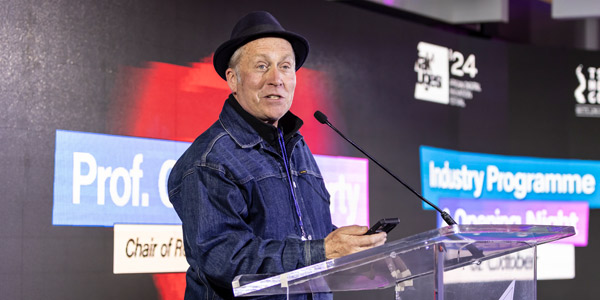
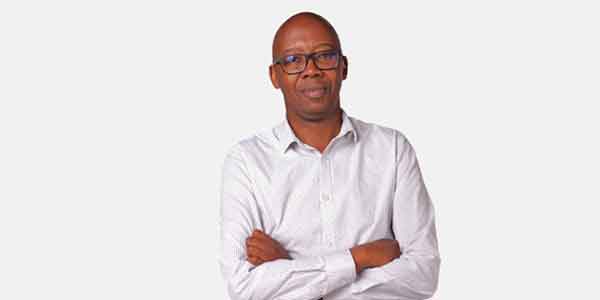







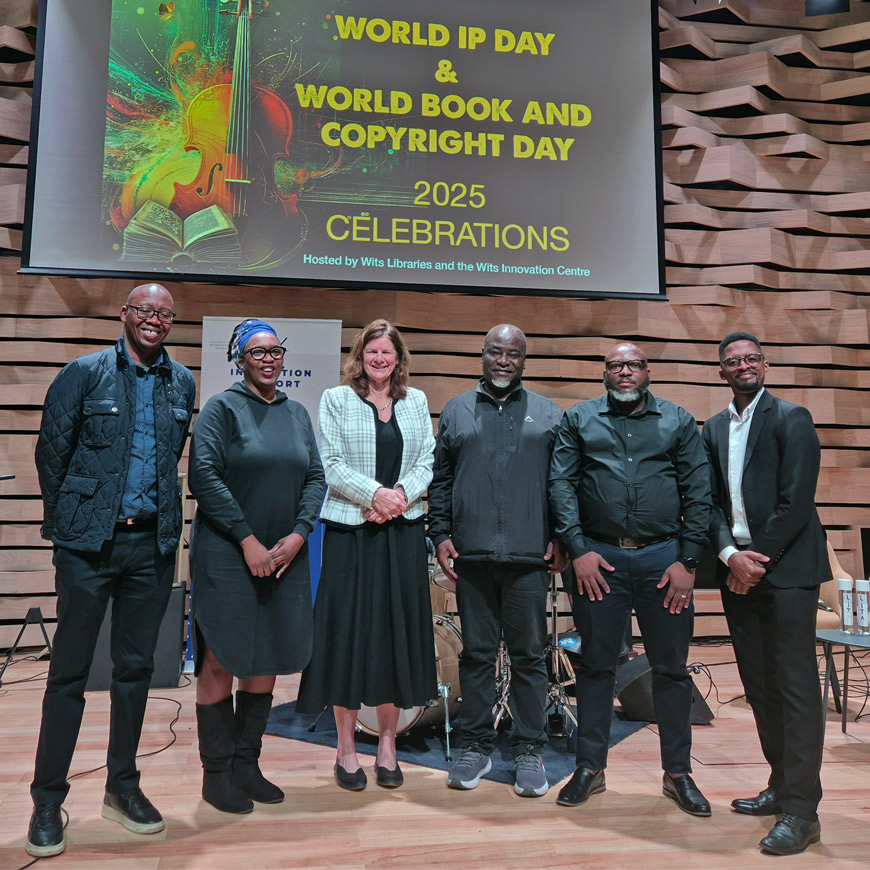
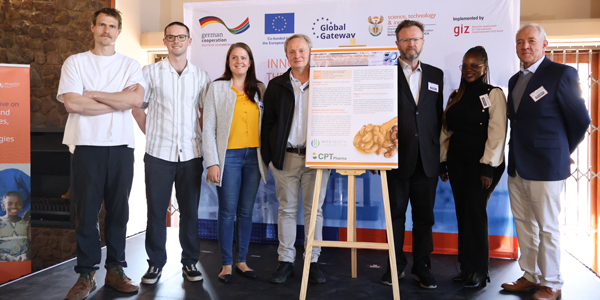


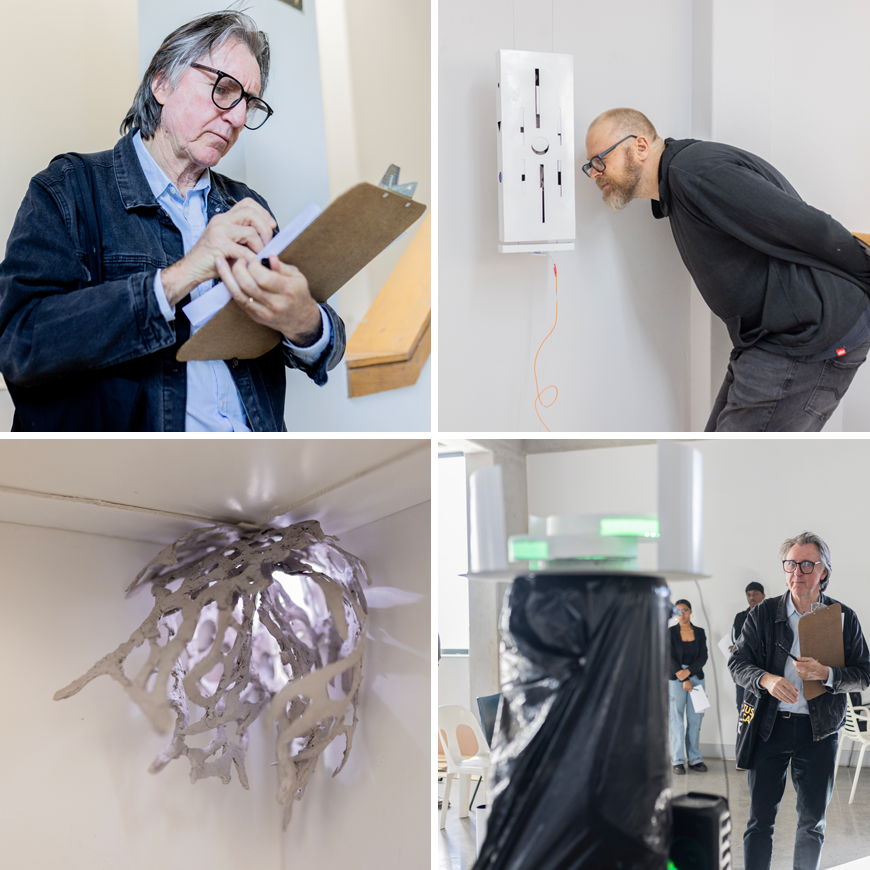

 Many people ask how we can tell if an image has been changed, but that’s fast becoming too difficult. Instead, here I suggest a system where creators and users of images openly state what changes they’ve made. Any similar system will do, but new rules are needed if AI images are to be deployed ethically – at least among those who want to be trusted, especially media.



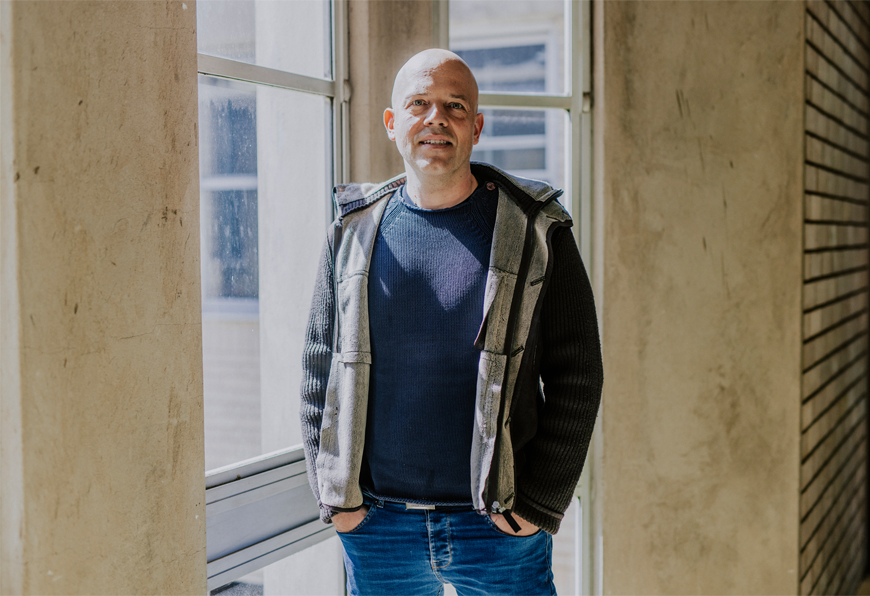
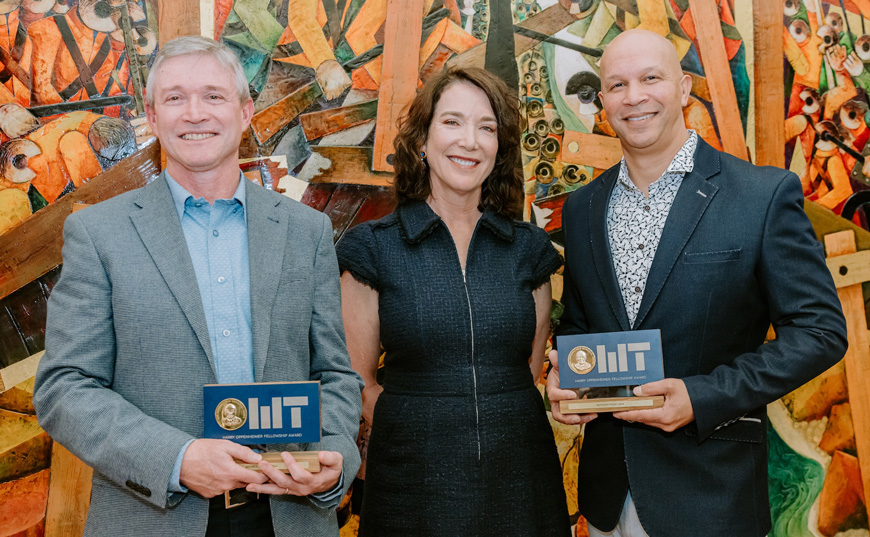
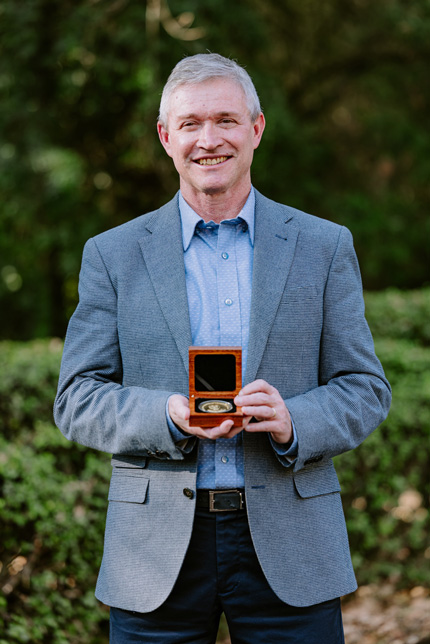
.png)


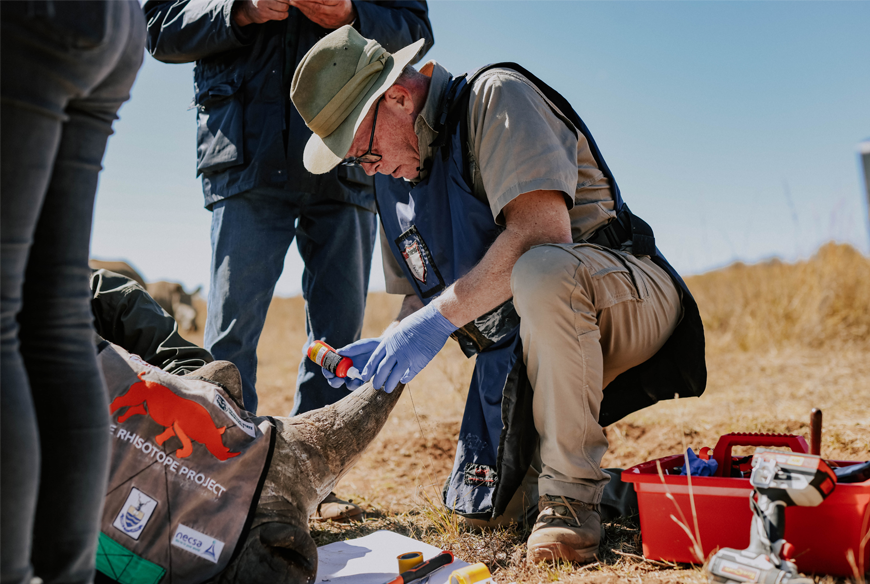
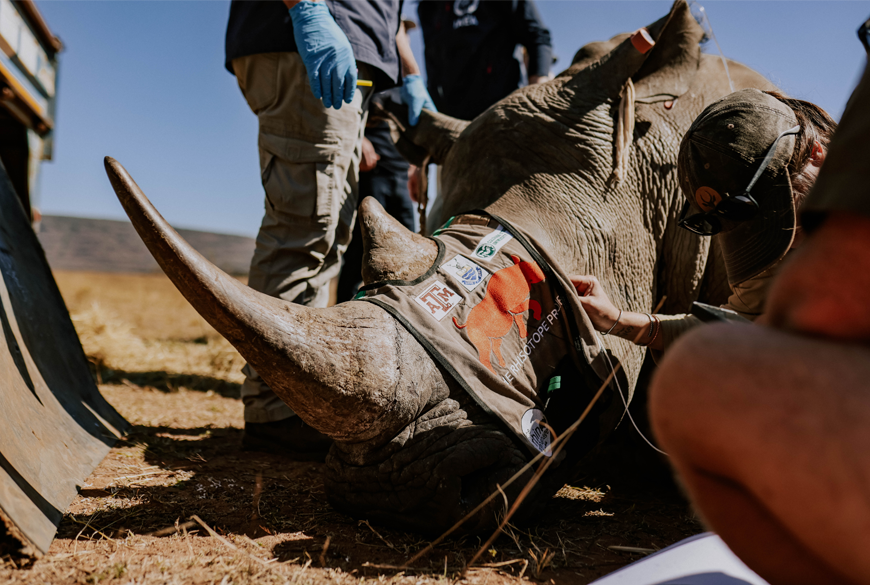
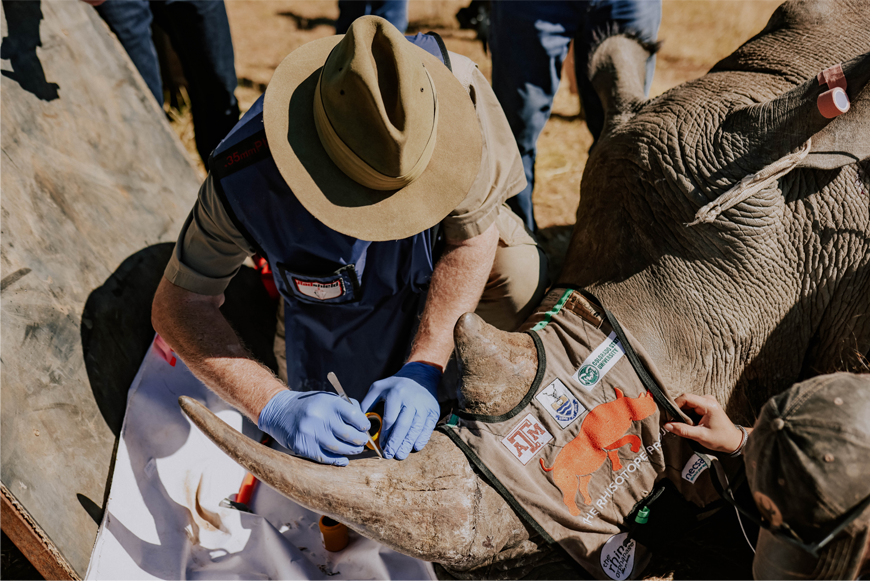
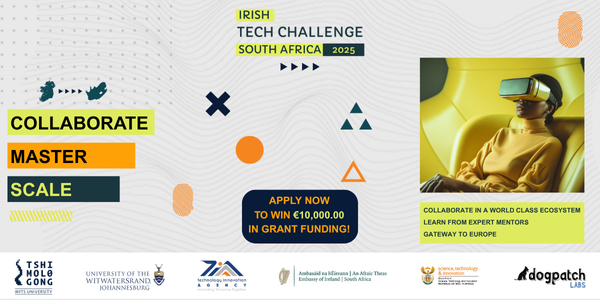
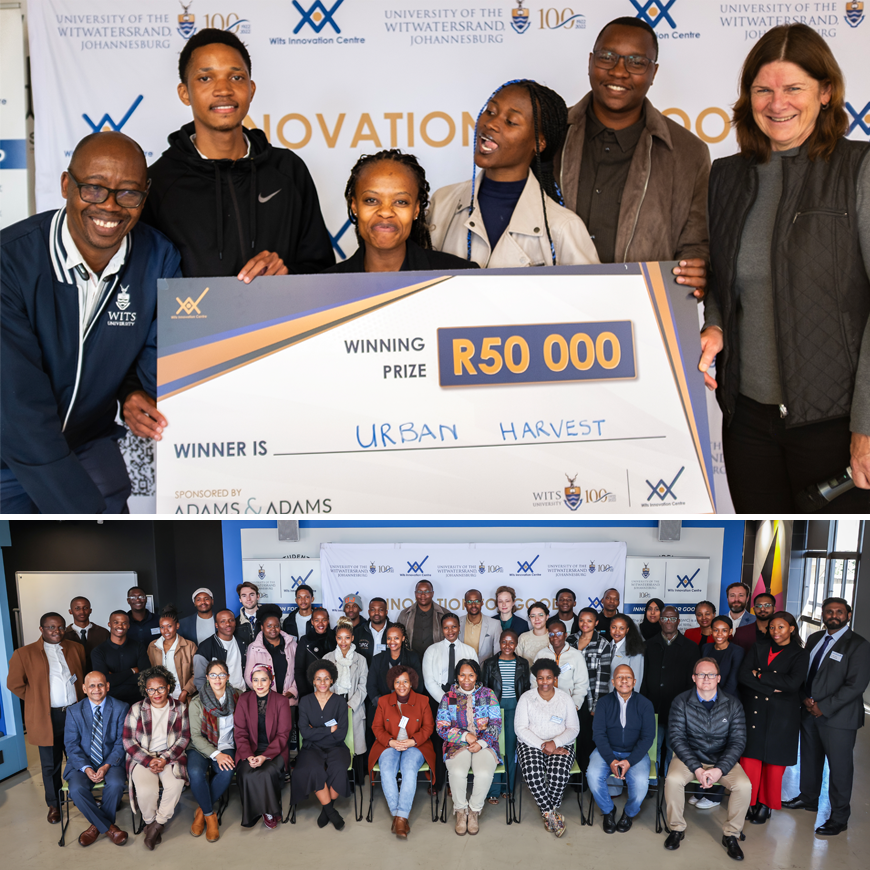

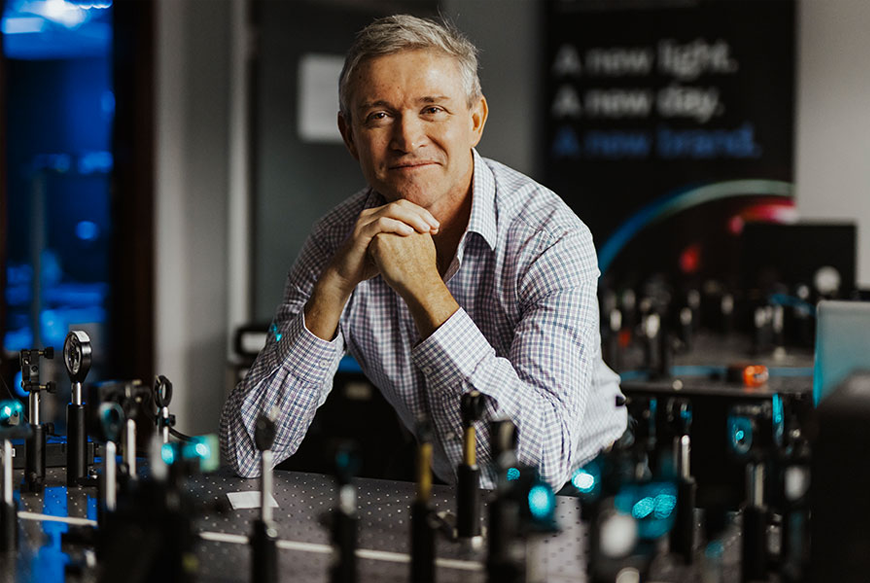
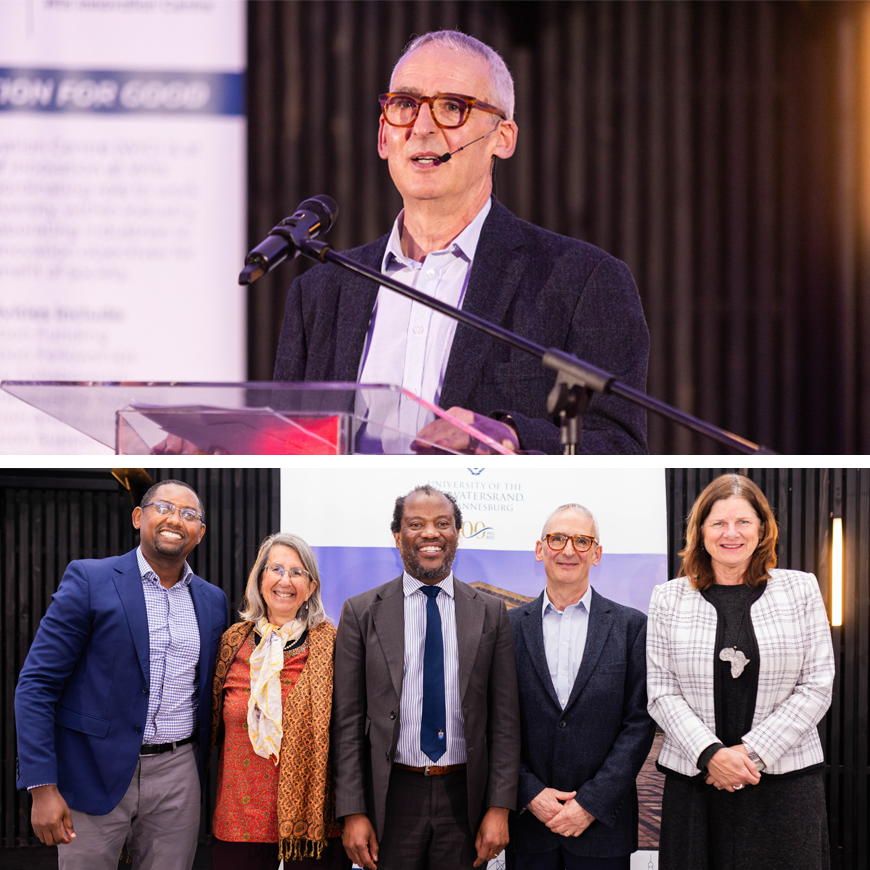
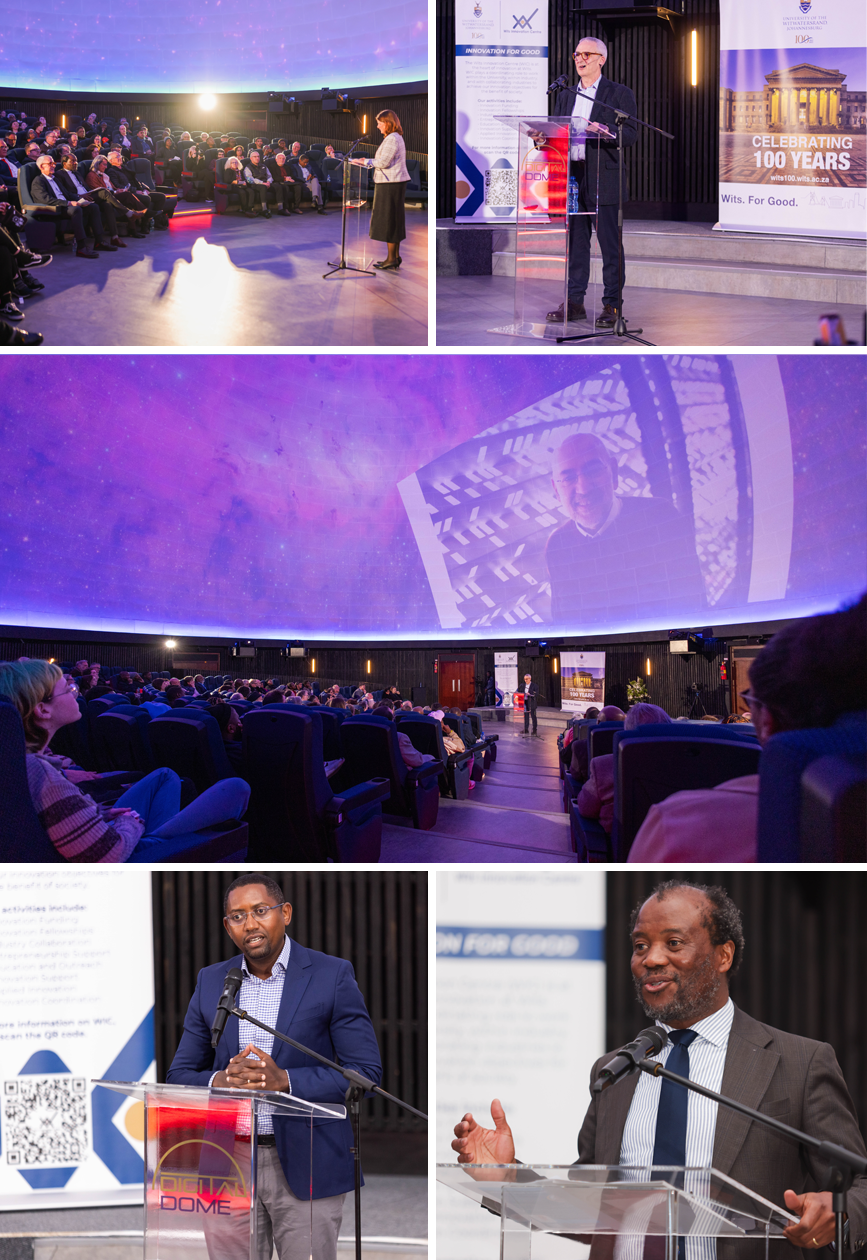

 “The task ahead is not to resist AI, but to ensure that it evolves within a multi-stakeholder governance framework that protects creative labour, enables innovation and scales with the velocity of the disruption. AI services and human content creators must coexist and both be allowed to thrive,” says the author of the paper,

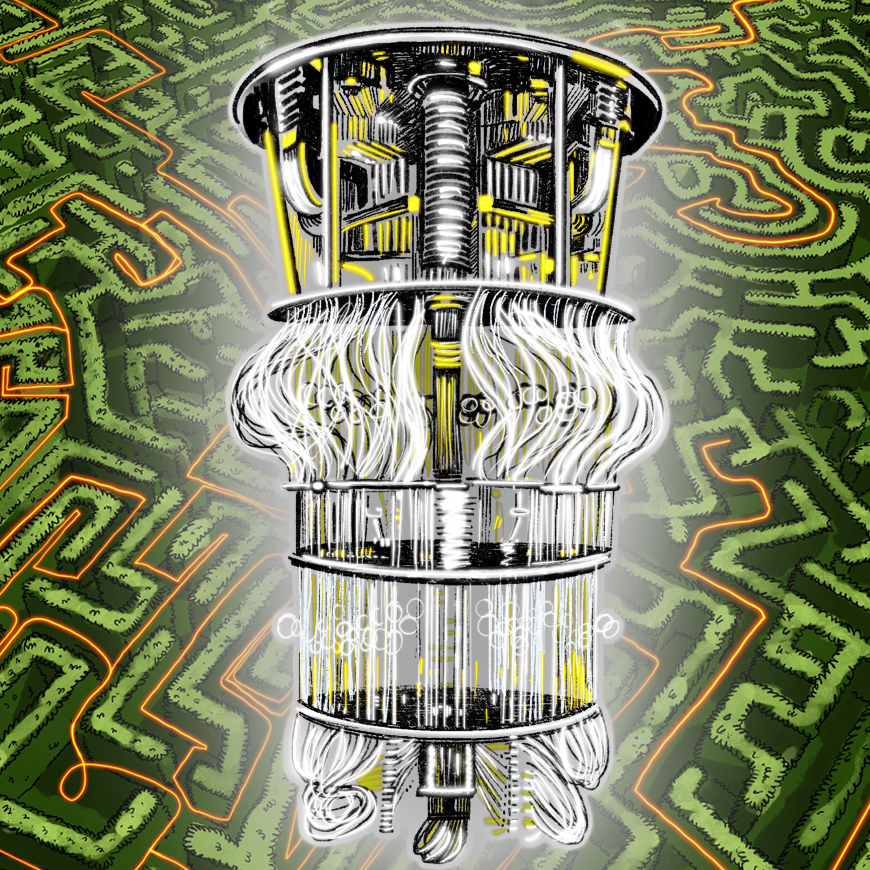

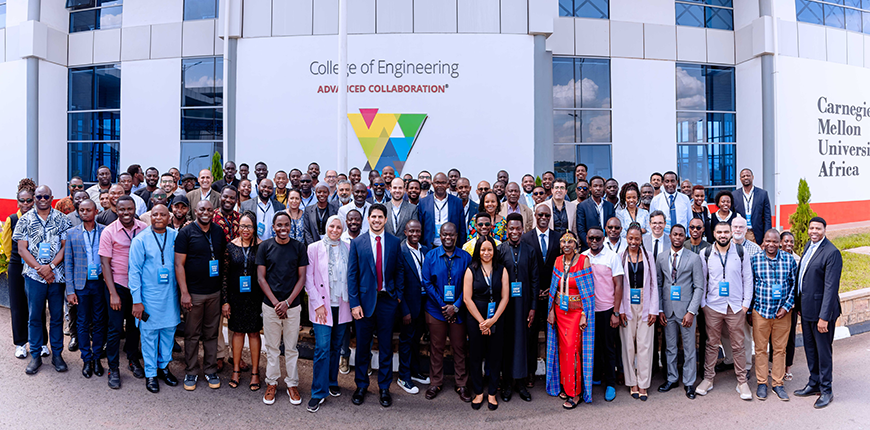

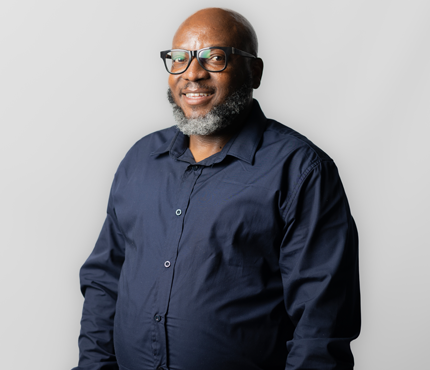 Tebogo Machethe joins as the Head of
 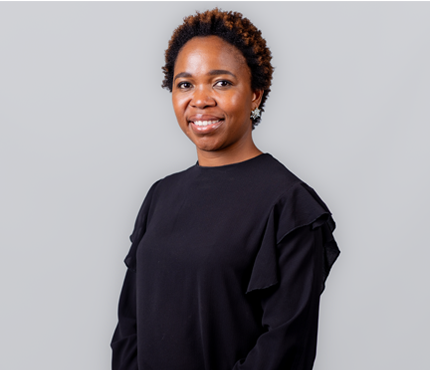 Another new face in the WIC is the Innovation Development Officer, Thandeka Mhlanga. She will be coordinating the


_870px.png)