Wits School of Molecular and Cell Biology lends a hand with glove donation
- Wits University
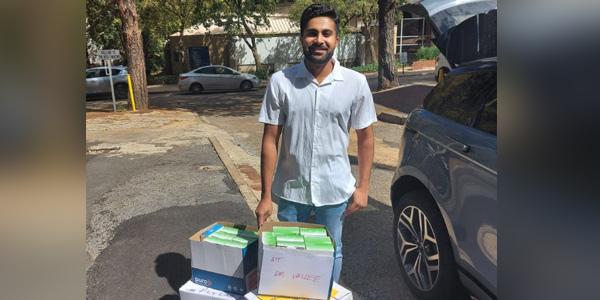
The Wits School of Molecular and Cell Biology has donated medical gloves for frontline healthcare workers at Chris Hani Baragwanath Hospital in Soweto.
Healthcare workers treating COVID-19 patients urgently require medical gloves for their own protection and to avoid contamination. However, gloves and other personal protective equipment (PPE) is in short supply.
Protective equipment saves lives
The Director-General of the World Health Organisation (WHO) highlighted in his media briefing on 27 March 2020 that the chronic global shortage of PPE is one of the most urgent threats to our collective ability to save lives.
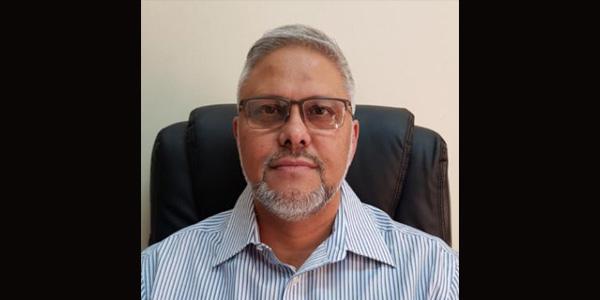
Prof. Yasien Sayed in the Protein Structure Function Research Unit (PSFRU) in the School of Molecular and Cell Biology coordinated the donation effort. Sayed was alerted to the critical need after Wits Medical School graduate, Dr Naeem Vallee, a first-year intern doctor at the hospital, relayed the shortage via a colleague whose wife is a Wits PhD candidate whom Sayed supervises.
Through the collective efforts of Sayed, Dr Pieter De Maayer, Dr Angela Botes and Dr Vanessa Meyer, a total of 56 boxes each containing 50 pairs of gloves were donated.
“At the moment, the Department of Internal Medicine at Chris Hani Baragwanath are full in the swing of preparing to deal with the impending COVID onslaught. Three wards have been specifically isolated to host and rehabilitate and treat the patients that will come back as COVID positive. It’s an extremely tense time. The lack of personal protective equipment is huge challenge we as healthcare practitioners face in dealing with this pandemic,” said Vallee, who took delivery of the donated gloves. Vallee graduated MBBCh from Wits in 2019.
“I’m extremely grateful to Prof. Sayed and his colleagues for recognising that we on the frontline need help, and for his generosity. This is a time where we all need to work together to prevent the spread and flatten the exponential growth curve of the COVID pandemic.”
Sayed, who personally delivered the boxes to the hospital, says: “The donation of gloves represents a small token of our appreciation of our healthcare workers’ selfless and admirable efforts, and we hope that these gloves will afford them some measure of protection against the virus.”
Fingering coronavirus ‘spike’ protein
The SARS-CoV-2 virus, the novel type of a coronavirus that causes coronavirus disease (COVID-19), has several glycoproteins on its surface. One of these proteins is referred to as the ‘spike’ protein, which is responsible for binding to receptors on the host cell prior to infecting the cell and hijacking the host’s cellular machinery for replication and reproduction of new viral particles.
The PSFRU investigates the structures, dynamics and energetics of a variety of proteins using a multidisciplinary approach that relies on the principles and methodologies of biochemistry, biophysics, molecular, and structural biology and bioinformatics.
Keeping Witsies safe
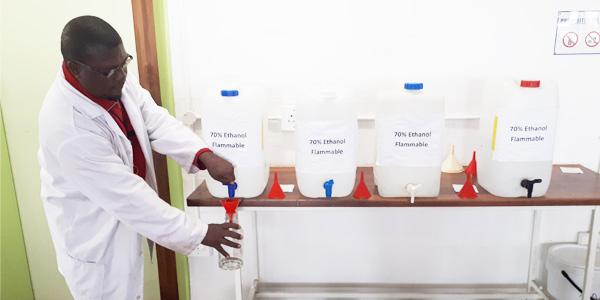
Prior to announcement of the lockdown on 26 March 2020, the School had manufactured and dispensed 70% EtOH (ethanol) surface disinfectant freely to Wits staff to minimise contamination by the coronavirus. The disinfectant comprises 95% industrial ethanol (also called alcohol) diluted with distilled water to a ratio of 70%. Alcohol kills germs effectively, as long as alcohol comprises 60% to 95% of the solution. This is a ratio shown to be effective against germs. Alcohol attacks and destroys the ‘envelope protein’ that surrounds some viruses, including coronaviruses. This protein is vital for a virus’s survival and multiplication.
“We use 70% ethanol to sterilize surface areas when we are required to work under sterile conditions in our laboratories, for example, when we do tissue cell culture work. The ethanol is effective in killing a number of germs, including viruses. Cleaning all objects and surfaces that we come into daily contact with is a sensible practice to protect against coronavirus,” says Prof. Marianne Cronjé, Head of the School of Molecular and Cell Biology.
COVID-19 UPDATE (19) – TEACHING AND LEARNING (STAFF)
- Wits University
Message from the Deputy Vice-Chancellor: Academic on the resumption of the academic programme.
Dear Colleagues
I hope that you are all well and that you are taking the necessary precautions to keep safe!
I write to you in my capacity as the Deputy Vice-Chancellor: Academic to share the thinking of the Senior Executive Team (SET) on the resumption of the academic programme and also to solicit your ideas and advice on best practices in your area as we move into an online teaching mode. Please read carefully through the attached Emergency Plan for Teaching.
The SET met yesterday and agreed to the following schedule:
1-14 April 2020
All faculties will prepare to take the academic programme online.
I know that many faculties are already off the starting blocks.
15-19 April 2020
This period will serve as the online orientation period for staff and students. All course outlines, lecture notes, reading lists and additional audio-visual material should be uploaded and tested during this period.
20 April 2020
The University opens for the second term and delivery of the academic programme begins online.
Please note that the almanac is currently being updated (we are consulting with faculties) and will be finalised early next week.
I know that many academics are enthusiastic about taking the academic programme online while others are anxious about doing so. This is new for many people and I would like to assure you that we have established both central- and faculty-based teams to assist you through the process. I would like to acknowledge the great coordination that is taking place between colleagues in CLTD, ICT and the Library to ensure that staff and students are fully supported and assisted as we transition to online teaching. The Emergency Plan for Teaching (attached) provides a step-by-step guide on how to begin this journey.
We have also ensured that all our Learning Management Systems (LMS) including Wits-e (Sakai) and Moodle will be hosted in the Amazon cloud to ensure that our systems have sufficient infrastructural support and are able to cope with the large numbers of users accessing the systems.
We are mindful that approximately 10% - 15% of our students may not have access to smart mobile devices (according to the results of biographical questionnaires conducted over the last four years by our Business Intelligence Unit), and Deans have been asked to develop plans to take this reality into account.
There is no doubt that we will have to consider additional support for students when we are able to resume contact teaching. This could take a variety of formats including additional lectures, boot camps, comprehensive laboratory sessions and tutorial support as required.
Conclusion
These solutions have been necessitated by the pandemic and have had to be devised quickly. We know that they are not perfect, and we are acutely aware that there is unevenness across disciplines, schools and faculties in the adoption of online teaching. In many cases, this is dictated by the particular demands of the programmes offered. However, we have to do all that we can to provide our students with a quality teaching experience so that we do not lose the academic year.
I am confident that we have some of the best academics in the sector, and coupled with our determination, resilience and ability to adapt to change, we will without a doubt succeed in these endeavours.
I envisage that there may well be some barriers along the way, but I also believe that we are well positioned to find solutions to the challenges that we may face.
Please feel free to write to me at Ruksana.Osman@wits.ac.za to share any suggestions or best practices that could be useful during this time.
Keep Safe!
Professor Ruksana Osman
Deputy Vice-Chancellor: Academic
1 April 2020
COVID-19 UPDATE (19) – TEACHING AND LEARNING (STUDENTS)
- Wits University
Message from the Deputy Vice-Chancellor: Academic regarding the resumption of the academic programme.
Dear Students
I hope that you are all well and that you are taking the necessary precautions to keep safe!
I know that many students are anxious about resuming the academic programme and doing so online.
The Senior Executive Team (SET) met recently and agreed to the following schedule:
1-14 April 2020
All academics will prepare to take lectures online.
15-19 April 2020
Online orientation begins this week for staff and students. All course outlines, lecture notes, reading lists and additional audio-visual material will be uploaded and tested during this period.
20 April 2020
The University opens for the second term and delivery of the academic programme begins online.
The almanac is currently being updated (we are consulting with faculties) and will be finalised early next week.
Learning Management Systems
All our Learning Management Systems (LMS) including Wits-e (Sakai) and Moodle will be hosted in the Amazon cloud to ensure that our systems have sufficient infrastructural support and that they are able to cope with large number of users accessing the systems at the same time.
Access to Smart Mobile Devices
We are aware that approximately 10% - 15 % of students may not have access to smart mobile devices (according to the results of the biographical questionnaires conducted over the last four years by Wits’ Business Intelligence Unit), and Faculties and Deans have been asked to develop specific plans in this regard.
Broadcast Options
We are exploring working with the SABC (Radio and Television), DStv and eTV to determine if it is feasible to broadcast key lectures on-air, particularly for those who do not have access to devices or data.
Access to Data and ICT Support
Wits has worked with Telkom, Vodacom and MTN to ensure that students can access selected learning sites without using data. Cell C is due to come on board shortly. All services will be activated within the next ten days. For a complete list of the zero-rated sites, visit: https://www.wits.ac.za/mywits/zero-rated-data-to-students-and-applicants/. Please note that students must have at least R1 worth of data loaded on a SIM card in order to access these sites. If you have any queries or concerns, please contact the ICT Service Delivery team via ithelp@wits.ac.za or call (011) 717-1717 or log a call via https://witshelp-ism.saasiteu.com/.
Faculty Support
You will receive a more detailed letter from the Dean of your respective Faculty later this week, followed by additional information from your School/Department and/or course coordinators. Please feel free to share your views on potential online/digital learning solutions with your respective faculties.
Additional Support
There is no doubt that we will offer additional support for students when we resume contact teaching. This could include additional lectures, boot camps, comprehensive laboratory sessions and additional tutorial support as appropriate.
Conclusion
We live through extraordinary times and have to develop extraordinary ways of teaching and learning. Our solutions may not be perfect but I would like to assure you that our academics and professional staff are working hard every day to ensure that we deliver a quality teaching and learning experience under the current circumstances. I know that you too will try your best to succeed. I have no doubt that we can overcome the many barriers that we will face and that together we can succeed.
Keep safe!
Professor Ruksana Osman
Deputy Vice-Chancellor: Academic
1 April 2020
Hay’khona Corona! Spreading the word, not the virus
- Wits University
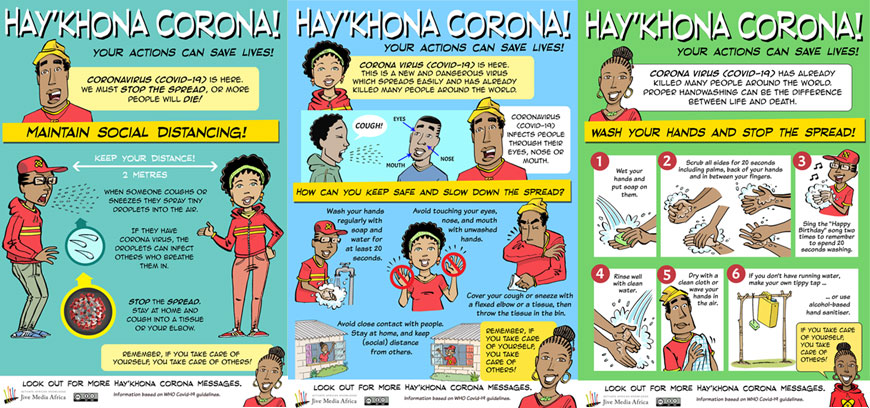
A poster series to action South Africans on how to care of themselves and others.
Wits University students who participated in the South African leg of FameLab, an international science competition, helped to translate a series of posters with a key messages on how every South African’s actions can save lives.
The multilingual posters were produced by research communication specialists Jive Media Africa, and are published with a Creative Commons license so you are free to copy, print and share them (provided no modifications are made).
“Altruism is a strong motivator” says Jive Media Africa Director Robert Inglis, “People are looking for ways they can help, and sharing relevant, relatable messages is one of those ways.”
Hay’khona is an isiZulu expression signalling strong negative sentiment. Inglis says the posters say:
No, not here! to COVID-19
The posters have been translated into a number of languages from South Africa and other African regions, including IsiZulu, IsiXhosa, Setswana, Sesotho, Sepedi, SiSwati, Tshivenda, Xitsonga, Afrikaans, Yoruba, Luo and French.
Tests will be conducted in an NICD approved, SANAS accredited laboratory with feedback to the NICD electronically. The turnaround time for results is between 24 and 48 hours.
Who can be tested?
Patients must fit the NICD case definition criteria and must have a doctor's referral before testing. This reduces contamination risk and contact time in the best interests of all concerned.
HPCSA rules require that the patient has to consult his/her OWN doctor if it's a telephonic consultation or any doctor if it's a face-to-face consultation.
Cost
The COVID19PCR testing costs R750, and payment is due via EFT before testing.
Bookings and operating times
Please note: Testing is strictly BY APPOINTMENT ONLY. NO WALK-INS permitted.
Bookings: Call the toll-free number on 0800 786 911
Operating times:Monday - Friday: 07:45 - 17:00
No fees will be earned by Wits University or Gift of the Givers. The fee simply facilitates a more affordable price for the public.
COVID-19 UPDATE (20) – WELLNESS UPDATE
- Wits University
The University’s wellness support services are here to help staff, students and the Wits community in dealing with the disruption of our normal lives.
Dear Colleagues and Students,
South Africa is about to complete its first week of the national lockdown. We wish to remind Witsies to continue protecting themselves, their families and the broader community by observing the call to #StayHomeSA in a bid to slow down the number of infections in the country. Sadly, many individuals and families are finding it hard to deal with the disruption to normal life during this period. It is normal and expected during difficult times.
The University’s wellness support services such as the staff counselling line, the Counselling and Careers Development Unit (CCDU) and the Gender Equity Office are available to assist during the lockdown.
The following services are thus available to Witsies:
Help for students
The CCDU Lockdown Wellness Chronicles offers daily coping strategies that can be used by all. The site has daily prompts to help structure and regain control of life and also to prepare for normalcy. Visit the CCDU website for more information on various mental health and wellness topics.
Students who would like to contact a counsellor for either personal, career or life coaching purposes can email the CCDU and leave their contact details and one of the team’s professionals will respond. Email info.ccdu@wits.ac.za.
The Wits Student Crisis Line is available to all Wits students for counselling 24/7/365 on 0800 111 331.
The Campus Health and Wellness Centre is available to assist with primary healthcare and mental health enquires:
- Primary healthcare enquiries – Call 0743077259 or 0824832251
- Mental health enquiries – Call 0766093924
Help for staff and immediate family members
The Impil’enhle programme launched by the University in September 2019 offers free services for staff and their immediate families to receive counselling for stress, anxiety, relationship and marriage problems, parenting, abuse, trauma as well as legal and financial advice. This independent service offered through Kaelo Lifestyle is provided in all South African languages 24/7 days a week.
Call 0861 635 766 OR dial *134*928 OR Send a ‘Please call Me’ to 072 620 5699 OR email asknelson@kaelo.co.za
COVID-19 Medical Line
Should you suspect that you have COVID-19, please contact the COVID-19 Medical Line during work hours for medical-related advice on prevention, diagnosis and treatment options - call 0861 493 587 and select option 2 for members and then select option 6. Alternatively, contact the National Institute for Communicable Diseases (NICD) on 0800 029 999. Still unsure about how to monitor yourself for symptoms of COVID-19?
Gender Equity Office
During this time of lockdown and looking after ourselves and our communities, we realise that there are some who will be in spaces where they are not safe. The Gender Equity Office is available via email info.geo@wits.ac.za or call (011) 717 9790. Alternatively, call the national gender based violence command centre on 0800 428 428 or send a "Please Call Me" to *120*7867#. It is important to remember that should you require a restraining order, courts continue to operate for this purpose. The GEO is available to guide you through the process and prepare you for what to expect when you apply for the order.
ADDITIONAL RESOURCES
Busting Myths
There are many myths circulating around the transmission and prevention of the coronavirus. Wits Lecturer Neelaveni Padayachee from the Department of Pharmacology explains the myth around drinking alcohol to prevent the virus.
Helping children cope with changes
The impact that Covid-19 might have on children will vary and their responses could be influenced by factors such as gender, social support, inherent resilience and the level of exposure to the virus. Dr Ajwang' Warria, a Senior Lecturer in the Department of Social Work offers guidelines on how to help children during this period. Read the article.
Coronavirus posters in multiple languages
There is a series of educational posters (some translated by Wits students) on coronavirus is available in multiple languages. Download, print or share the following resources in Sepedi, Sesotho, Setswana, siSwati, Tshivenda, Xitsonga, Afrikaans, IsiXhosa, IsiZulu and English.
Remember to practice good hygiene and to maintain physical distancing.
Stay safe
Wits COVID-19 Management Committee
2 April 2020
Centre for Deaf studies breaks the silence on COVID-19
- Wits University
The Centre for Deaf Studies (CFDS) at Wits is contributing to society by keeping the Deaf community informed about the coronavirus pandemic.
Thee COVID-19 pandemic has spread at an alarming rate over the past few weeks in the country. To date, over 1400 cases of COVID-19 cases have been confirmed in South Africa.
Government, media houses and various institutions have been disseminating important information and updates with the public around COVID-19 through various platforms.
To ensure that the Deaf community gained access to crucial information on the global pandemic, the CFDS at Wits has been playing an active role through a number of initiatives that filtered information to the Deaf and hard of hearing communities in South Africa.
When the President addressed the nation on 15 March, the CFDS ensured there was a full live stream interpreting by a Deaf person through the use of relay interpreting – a practise of translating messages from one language to another through a third language for a targeted audience.
“Deaf to Deaf communication is the best way of getting such crucial information across,” says Professor Claudine Storbeck, Director for CFDS.
In an effort to raise awareness around COVID-19, the Centre also produced “Corona Info for kids”, an educational video for children teaching them about the deadly virus. The aim of the video was to make information accessible for deaf children in a deaf appropriate way that would make an impact, which also included a fun handwashing-alphabet clip.
In recent weeks, since the coronavirus outbreak in South Africa, CFDS has been offering and sharing information through these videos in South African Sign Language (SASL) to ensure the Deaf Community could access information in their first language.
“In any form of crisis or trauma, people communicate best in their 'mother tongue' and therefore we are making sure that information is available in SASL. ‘If you talk to a man in a language he understands, that goes to his head. If you talk to him in his own language, that goes to his heart.’ This quote from Madiba is so appropriate when it comes to including the Deaf community in our planning around this pandemic,” says Storbeck.
While the focus is on the Deaf community, the Centre has added subtitles to the videos to create inclusivity and enable Deaf and hard of hearing people to watch and share these videos with their hearing family and friends. Here is a list of the videos produced by CFDS for the Deaf community:
With a week into the 21-day lockdown to reduce the spread of coronavirus, the Centre has cancelled their contact home-based support for families of deaf infants and young children (HI HOPES) and will be offering support via WhatsApp and videos. A five-week online SASL course will be released next week for hearing people wishing to learn about Deaf culture and how to communicate with the South African Deaf community without leaving their homes. A dedicated WhatsApp hotline (074 029 2764) has also been set up for Deaf children and adults to send their questions on the lockdown via either text or video. The hotline can be accessed via WhatsApp. Enquiries: claudine.storbeck@gmail.com
“Test, test, test!” says Wits academic
- Wits University
Best way to tackle COVID-19 remains physical distancing, substantially increased testing and quarantining.
Professor Shabir Madhi (*) delivered the following presentation to the Wits University Council on Friday, 3 April 2020. He emphasised that the best way to tackle COVID-19 is through physical distancing, substantially increasing testing and quarantining.
Wits engineers make face shields to protect healthcare workers
- Wits University
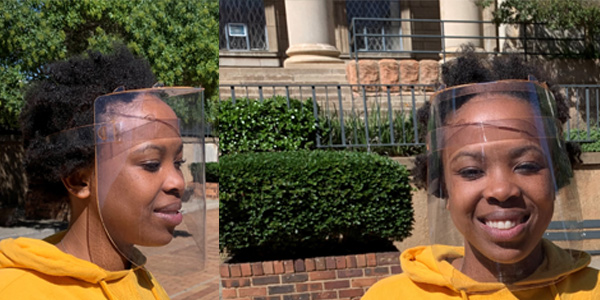
A team of innovative Witsies is using their design and engineering skills to create face shields in aid of the fight against COVID-19.
An amazing sense of social solidarity and patriotism has pervaded South Africa recently with many people offering their knowledge and skills to aid the country in its fight against the coronavirus.
The escalating spread of the virus has increased the demand for personal protective equipment (PPE) and medical supplies as more people test positive for COVID-19 daily. Healthcare facilities in the country are seeing a shortage in these supplies for their staff.
On Friday, 27 March 2020, Netcare 911, one of the healthcare facilities currently experiencing a massive shortage of protective gear, called on the 3D printing community to assist with printing head rings for face shields for use by medical staff treating patients with COVID-19.
Teams at Wits from the Digital Incubator at the Tshimologong Precinct, the School of Mechanical, Industrial and Aeronautical Engineering (MIA) along with the Transnet Centre of Systems Engineering (TCSE) and the Transnet Matlafatšo Centre (TMC) heeded the call and used their engineering prowess to assist with a solution to the problem.
Recognising that each head ring for the face shields would take approximately 90 minutes to produce and with limited 3D printing capacity, a team – made up of Guy Richards, Letlotlo Phohole, Moses Mogotlane, Palesa Riba and Randall Paton, ,decided on a laser cut solution that would save time.
“Netcare was going to provide the actual shield and clips to put it together. We were not happy with the limitation and wanted to use what is readily available to us, cheap to make, and light-weight. Most of all, we wanted to produce a complete product. We also anticipated long printing times with a 3D printer and possible filament shortages given the national drive for face shields and masks,” said Letlotlo Phohole, Acting Director of TCSE and TMC.
After numerous attempts on Monday, 30 March to cut the shield from downloaded files from GitHub and Thingiverse – a software development platform where over 40 million developers collaborate online to host and review code, manage projects, and build software – the Wits team re-designed the original designs, applying rapid prototyping processes, which they then cut using their laser cutter.
The face shields, which are made from polyvinyl chloride (PVC) sheeting, are a flat pack consisting of two pieces that can be rapidly assembled. “The School had stock of the PVC sheeting from another earlier project. The shields are therefore being provided at no cost to the hospitals”, says Paton.
Adhering to best safety practices is crucial in the production of these face shields.
“We ensure that after production they [face shields] are washed, rinsed, and dried to remove any potentially harmful residue from the laser cutting. This is done in a production line fashion and is now the tightest bottleneck in the project, given that we only have one working laser cutter,” added Paton.
With an average production time of 3 minutes (including setup time) to cut a set of pieces for each face shield, the team anticipates making 200 to 500 shields a day to help meet the growing demand of protective gear for medical staff.
“We have developed a system that lets us feed the rolled plastic directly into the cutting bed and draw more through when done so speed is climbing,” said Paton. The team has reduced the cutting time to 90 second per shield but the washing and drying still add to that time.
Four days since the call from Netcare 911, by Tuesday, 31 March, the Wits team had produced 140 face shields and distributed 120 to the Wits Donald Gordon Medical Centre and another 20 to the Wits Protection Services staff. An additional 300 face shields have been produced to date, of which 200 will be donated to Charlotte Maxeke Johannesburg Academic Hospital and 100 to Rahima Moosa Mother and Child Hospital. The Wits engineers hope to distribute face shields to Helen Joseph and Chris Hani Baragwanath hospitals, which are also Wits teaching hospitals.
Head of MIA, Professor Robert Reid hailed the team for their extraordinary contribution to society saying that they are upholding one of the five core values of the School, botho (humanity).
“A core value of our School is botho. We strive to nurture and develop the community of which we are part. During this time of national crisis, it is imperative that we use our skills and facilities in any way that will serve our community. I am therefore delighted that we are able to help keep safe the healthcare workers on the frontline in their fight against this awful pandemic.”
Paton said the nationwide response to the call had inspired him.
“I think that many South Africans, as a nation of ‘make-a-plan’, are frustrated by not being able to help in a tangible way during the lockdown and this has channelled that energy somewhere. This has been as inspiring to be a part of as watching everyone trying to help Netcare with 3D printing for the face shields. These are extraordinary people in extraordinary times.”
The Faculty of Engineering and the Built Environment plans to develop other medical equipment, including respirators, devices to prevent people from touching their faces, and medical masks (with filters made out of vacuum cleaner bags and make-up cotton pads designed by students of their own volition). These cross-disciplinary projects will involve people from different faculties at Wits and other stakeholder groups.
Over R100 000 has been raised for this initiative from 68 donors. If you would like to make a tax-deductible donation towards this cause or other initiatives at Wits University against COVID-19, please follow https://wits.devman.co.za/devman/covid-19/giving/ and donate directly to the Wits Covid-19 Discretionary Fund or donate to the Wits Foundation. Bank details:
Wits University Foundation Standard Bank of South Africa Ltd Current Account number: 002900076 Branch code: 00 48 05
Message from Professor Zeblon Vilakazi, Vice-Principal and Deputy Vice-Chancellor: Research and Postgraduate Affairs.
Dear Postgraduate Students
I hope that you are all well and keeping safe. This is a difficult time for all and I hope that you remain in high spirits.
You should have received an email earlier this week pertaining to the commencement of the academic programme, which is scheduled to resume online on 20 April 2020. As postgraduate students, and particularly those conducting research at the Master’s and Doctoral levels, your course of action is slightly different. Due to the diversity of research being conducted and the great breadth and scope of the disciplines being explored, it is impossible to address postgraduates as a homogenous cohort.
I would therefore like to advise you to work directly with your supervisor during the lockdown period and beyond, in order to ensure that your research continues from wherever you may be geographically located. A number of online resources have been made available to you during this period to make it easier for you to work from where you are.
Should you have any problems or issues, please raise them with your supervisor or with your relevant Faculty Dean.
Regards
Professor Zeblon Vilakazi
Vice-Principal and Deputy Vice-Chancellor: Research and Postgraduate Affairs
3 April 2020
Resources for postgraduate Students
Access to Data and ICT Support
Wits has worked with Telkom, Vodacom and MTN to ensure that students can access selected learning sites without using data. Cell C is due to come on board shortly and all services will be activated within the next ten days. For a complete list of the zero-rated sites, visit: https://www.wits.ac.za/mywits/zero-rated-data-to-students-and-applicants/. Please note that you must have at least R1 worth of data loaded on a SIM card in order to access these sites. If you have any queries or concerns, please contact the ICT Service Delivery team via ithelp@wits.ac.za or call 011 7171717 or log a call via https://witshelp-ism.saasiteu.com/.
Learning Management Systems
All our Learning Management Systems (LMS) including Wits-e (Sakai) and Moodle will be hosted in the Amazon cloud to ensure that our systems have sufficient infrastructural support and are able to cope with a large number of users accessing the systems.
Access to Smart Mobile Devices
We are also aware that approximately 10% - 15 % of students may not have access to smart mobile devices (according to the results of the biographical questionnaires conducted over the last four years by our Business Intelligence Unit), and Faculties and Deans have been asked to develop a plan in this regard.
Access to Digital Library Resources
There are several resources available to students, including:
Search NWU Accredited Journals and click open on 3rd field down. This will give a list of all the DHET OA accredited journals.
Access to the Wits University Press eBook collection
In this time of unprecedented crisis, when universities are developing online teaching systems and academics are working from home, Wits University Press is joining a large number of international university presses and academic publishers in providing free access to content for students and researchers.
Wits switches to remote online teaching and learning from 20 April 2020
- Wits University
Wits institutes an emergency remote teaching and learning programme as one measure to help minimise the time lost in the academic project.
Dear Colleagues and Students
We are living through an unprecedented era which has tremendous implications for humanity and for us as the Wits community. We know that through our collective efforts we can stave off the coronavirus, and that through physical distancing, testing and quarantining, we can flatten the curve and eventually overcome the disease. But what we do not know, is exactly how long this will take and the exact nature of the resources that will be required.
As the Wits community, we are thus left with some difficult options – wait out the pandemic (and potentially lose the 2020 academic year) or switch to emergency remote teaching and learning alongside a range of other contingency and continuity plans. After consultation with our various constituencies, we have opted for the latter.
We are cognisant of the tremendous effort that has been expended by academics and professional and administrative staff in recent weeks, who have tirelessly prepared online material, who have learnt to switch between pedagogies, and who now have a better understanding of our learning management systems.
At the same time, we are acutely aware of the anxiety and uncertainty that this mode of learning presents for both our colleagues and students. The world as we know it is in flux, and it will take our collective courage, dexterity and commitment to fend off the effects of this pandemic and to adapt to new ways of teaching and learning.
We are aware that the playing field is uneven and that whilst many in society and our community enjoy greater levels of privilege, the consequences of the pandemic have illuminated and amplified the existing inequalities in our society – with the poor, marginal, precarious and under-resourced disproportionally experiencing its fallout. We understand that our emergency remote teaching and learning plan has to take into consideration the different learning environments of our students and their access to learning resources, appropriate devices and data.
Our success is dependent on how we respond as a community – our Senior Executive Team members have to be agile enough to ensure that requisite plans and resources are in place to switch to the emergency remote teaching and learning programme. Our Deans, Heads of Schools, academics and professional and administrative staff have shown that they are able to adapt to a changing environment and are now going beyond the call of duty to ensure student success. Our students will have to exercise their own agency and will have to make an extraordinary effort to adapt to remote online learning with the requisite support from faculties, particularly over the next few months. We acknowledge the importance of the University to provide support but it is also important for our students to develop their own agency to overcome the challenges that confront us today.
Wits re-opens online on 20 April 2020
The next few days (15-19 April 2020) will be used to transition to the online environment with the University officially opening for the second block on 20 April 2020. The almanac has been revised but is dependent on how the crisis unfolds in the months ahead. To be clear, the University is not transitioning to a permanent online modality for all courses, nor are we becoming a correspondence institution. We are instituting an emergency remote teaching and learning programme as one measure that will help us to minimise the time lost in the academic project.
We are clear that the emergency remote teaching programme will not serve as a comprehensive solution to our current challenges. There are specific disciplines that may be patient-based, laboratory-based, studio-based or involve creative practices that cannot be undertaken online. In these instances, we will have to explore high intensity immersion classes when we resume contact teaching, resequencing the academic year to allow for theory to be taught online upfront followed by the practical and laboratory-based components later in the year, and perhaps even recalibrate the almanac.
Access to devices, data and learning resources
Multiple surveys across the institution have revealed that between 10% and 15% of students do not have access to appropriate computing devices, adequate access to data or conducive learning environments. To this end, we are putting in place the following measures to ensure that the majority of students are able to learn remotely:
Wits has established a Mobile Computing Bank (MCB) which will enable qualifying students who do not have access to appropriate mobile learning devices to loan basic devices from the MCB. These basic computing devices will be suitable for educational purposes and will be pre-loaded with the required learning resources before being delivered via the South African Post Office to students who absolutely need them. The cost of the device will be added to students’ fee accounts and will be reversed if the device is returned in good order at the end of the 2020 academic year. The students most in need will be prioritised when devices are allocated.
The University has finalised an agreement with four telecommunications service providers: Telkom, MTN, Vodacom and Cell C to zero-rate Wits’ library and learning management sites from 15 April 2020. The full list of zero-rated sites is available via this link:https://www.wits.ac.za/mywits/zero-rated-data-to-students-and-applicants/
We are working through Universities South Africa to reach agreement with telecommunications service providers to ensure that other products and sites like Microsoft Teams, Zoom and other learning sites are either zero-rated or reverse billed to the University. These sites may have to be accessed via the Wits VPN. Negotiations are underway and we will keep the University informed of these matters in the coming days.
In cases where students do not have access to any device or data, other options are being explored, including the possibility of using the South African Post Office to deliver paper-based material to our students. Additional support will be made available for students when contact teaching resumes, and particularly for students who will have had difficulty in transitioning to online learning. It may be necessary for face-to-face lectures to be extended through the September and December vacation breaks and for some cohorts, to extend the academic programme into 2021.
Students who have queries related to the academic programme should contact their respective schools. Students who do not have access to adequate mobile computing devices and cannot secure them elsewhere, should contact the following Faculty representatives:
As per the communique sent to all postgraduate students on the 6th of April 2020, those students pursuing their Masters or PhD degrees should engage directly with their supervisors to ensure that their research continues. A list of the library sites that have been zero-rated has already been shared with all postgraduate students. In cases where patient-based, studio-based or laboratory-based work is required, these matters should be discussed with the supervisor, Head of School and/or Dean of the respective Faculty.
Conclusion
The next few weeks are going to be challenging for us as a country and as a University. We have no choice but to stand strong in order to overcome this common invisible enemy. We should galvanise our resources to achieve one common goal – to see our students succeed and complete the academic year, despite the inequalities that pervade our society. In so doing, we will develop the high level skills to rebuild our country and produce the problem-posers and problem-solvers needed to tackle the complex problems that confront our society.
We will emerge from this crisis – stronger and more resilient than ever. This is a complex challenge that will require multiple responses from all of us. Let us use this time to find each other and to work together towards a common goal for our students, our staff and our common humanity.
Keep healthy and stay safe.
SENIOR EXECUTIVE TEAM
14 APRIL 2020
Process to apply for mobile computing devices
- Wits University
This communique outlines the process through which students who require assistance with a loan device can apply.
MESSAGE FROM THE DEAN OF STUDENT AFFAIRS
Dear Students
This communication follows the email that you received yesterday and will specifically outline the process through which students who require assistance with a loan device can apply.
COVID-19 is challenging us all to do things differently and to adjust to a “new normal”. We do this from very different circumstances. The University acknowledges these disparities and is doing all it can to ensure that our students are supported during this difficult time. As previously indicated, the remote online teaching and learning programme will start on 20 April 2020.
Whilst we have addressed the majority of the issues related to data access, we understand that some students still do not have access to devices appropriate for online and remote learning. We have thus secured a limited number of devices suitable for educational purposes that will be made available to students in need. Applications will be considered on a case by cases basis, and will take the needs of each applicant into account. These limited number of devices will be delivered to students in need.
Please note these are basic devices, will be on loan to students and will be charged to fee accounts. The charges will be reversed if the device is returned in good working order at the end of the academic year. Whilst we acknowledge that it may be difficult for some students to do so, we want to encourage those students who are able to, to continue their own efforts in securing an appropriate device.
Who may apply for a loan device?
Students registered for a full-time degree in 2020;
NSFAS funded and “missing middle” students with a family income of less than R600 000 annually. Bursary/scholarship funded students who have not received devices from their funders. (Please note that all information supplied will be verified); and
Students who do not have their own device, or who do not have access to a device.
Due to the challenges with delivery, regrettably only students residing within the borders of South Africa are eligible for this assistance.
Devices will be allocated in the following order of priority: final year undergraduate students, first year students, other undergraduate students and then postgraduate students.
Conditions
Devices will be made available on a case by case basis, and decisions are made on the basis of the information available and/or provided. In addition:
All devices must be returned by the end of the 2020 academic year. Where devices are not returned, students will be charged for the full cost of the device;
Where a device is damaged and/or lost, a student will be liable for the full repair and/or replacement cost of the device; and
Wits takes no responsibility for maintenance or the insurance of the device.
Application process
Students in need may approach their respective faculties for assistance, provide all the information required and note the conditions for assistance. Recommendations for assistance may also be made to faculties through student leaders (the SRC, school councils and class representatives) and the Division of Student Affairs, provided that all the relevant information is supplied. Incomplete applications will not be considered.
As the academic programme starts on 20 April 2020, those needing assistance are urged to apply through their faculties as soon as possible.
Students must make sure that they provide the following information:
A brief motivation (including proof of income, if possible);
Name and Surname,
Student Number,
Identity Document Number,
Year of Study,
Physical delivery address details (including province) on the application for assistance, including providing their up to date contact mobile numbers; and
Name and contact details of a next-of-kin, parent, or guardian (the University may contact the next of kin / parent/ guardian to verify information provided).
Applications are made through Faculties, via the details listed below:
We hope that these loan devices will go a long way in supporting students in need. Online and remote learning will require some adjustment to your way of learning. It won’t be easy. Some mistakes will be made and lessons will be learnt. We will do our best to support you towards your academic success and the realisation of your dreams.
Stay safe!
Jerome September
Dean: Student Affairs
COVID-19 Update 23: Wits opens online on Monday, 20 April 2020
- Wits University
Wits will commence with emergency remote online teaching and learning from Monday, 20 April 2020.
Dear Students
We hope that you are all in good health.
As you know, Wits will commence with emergency remote online teaching and learning from Monday, 20 April 2020. Whilst many students are looking forward to starting the second teaching block, we understand that many of you may feel uncertain and anxious about learning online. We would like to reassure you that we are on hand to support you as we embark on this different learning journey together.
A phased approach to online learning
The academic programme will be introduced in phases over the next few weeks, so that you have time to adjust to the new learning environment. All lectures will be available on our learning management systems and can be downloaded at any time. If you are still waiting for your mobile computing device to be delivered or your data to be connected, do not despair – you can access your lectures and other resources from Sakai or Moodle as soon as you are connected. Whilst we will be resolute in our efforts to recover the lost elements of the 2020 academic year, we remain committed to you, our students who are an integral part of the Wits community.
Tests and assignments
No assignments or tests will fall due or be scheduled until the 4th of May 2020. These measures will ensure that students are not academically disadvantaged in any way.
Mobile Computing Devices dispatched
We are cognisant of the digital and related learning inequalities in our society and we are doing our best to ensure that we address your needs. Hundreds of mobile computing devices have been pre-loaded with the requisite software and have already been dispatched. Staff are working through this weekend to ensure that the remaining devices are pre-loaded and dispatched, so that they reach students on Monday or during the course of next week.
Zero-rated sites
Wits has negotiated with telecommunications service providers to have learning and library sites zero-rated so that you can access them at no cost to users. You may require R1 of data to be loaded before you access these sites: https://www.wits.ac.za/mywits/zero-rated-data-to-students-and-applicants/. (P.S. Zero-rating means that you are not charged when you access these sites.)
Access to data
The University has signed a contract with MTN to provide 30 gigabytes of data (10GB Anytime and 20GB Night Express) at no cost to you (Wits students) for one month, to kick-start your online learning journey. It is imperative for your mobile number to be updated on the student self-service portal if you wish to make use of this service, as these numbers will be provided to MTN.
Help is a click away
Please direct academic enquiries to your respective faculty as follows:
Our academics and professional, administrative and support staff have worked tirelessly over the past few weeks to prepare to go online. We have galvanised our resources to support you over the next few months and your success is our priority. We accept that this is a new learning experience and that there may be some challenges, but we are on hand to solve them together. Please feel free to share suggestions on how we can improve emergency remote online teaching and learning over the next days, weeks and months.
Look after yourself and keep healthy and safe.
SENIOR EXECUTIVE TEAM
17 APRIL 2020
COVID-19 Update 24: How to access your data
- Wits University
Dear Students
ACCESS TO DATA – MTN and VODACOM
Yesterday we informed you that the University had signed a contract with MTN to provide 30 gigabytes of data (10GB Anytime and 20GB Night Express) at no cost to you (Wits students) for one month, to kick-start your online learning journey.
We are pleased to let you know that Vodacom came on board this morning with an equivalent offer and will provide details on this in the course of the next 48 hours.
MTN is in the process of verifying information and will be activating the data before Monday morning. Please access the attached information for MTN users to see how to check balances.
If you are using an alternative service provider you may wish to purchase a sim card and then get yourself on to either the MTN or Vodacom network. Please bear in mind that you would then need to update your cell number on the self-service portal. Your new number will only be relayed to MTN and Vodacom on Monday.
It is imperative for your mobile number to be updated on the student self-service portal if you wish to make use of this service.
Please note that this offer runs for one month from 20 April 2020, so please use the data responsibly for educational and learning purposes.
Should you encounter any problems – please contact the service provider in the first instance and then the University via ithelp@wits.ac.za or log a query via https://witshelp-ism.saasiteu.com on Monday.
SENIOR EXECUTIVE TEAM
18 APRIL 2020
COVID-19 Update 24: Data access: All four major mobile service providers on board
- Wits University
Students will get 30GB of data if registered on MTN, Vodacom, Cell C or Telkom.
Dear Students
Wits University is pleased to announce that you can now access 30GB of data (10GB Anytime & 20GB at night) if you are registered with any of the four networks - MTN, Vodacom, Cell C or Telkom. This service is at no cost to students. The offer is valid for one month starting on 20 April 2020, and should be used wisely for online learning and educational purposes.
Here are some tips to maximise your data usage:
Streamline social media apps to save bandwidth. Visit https://wits-e.wits.ac.za/x/FZjd2e to find information on how to reduce data usage on YouTube, Twitter, Instagram and Facebook.
Turn off automatic media downloads in apps such as WhatsApp
Turn off auto play in video apps like YouTube
When viewing videos, select low resolution options. High Definition (HD) videos use high volumes of data.
Turn off automatic system updates and if possible, choose critical updates only. Schedule these to take place at night.
Email documents in a zipped format but use email as a last resort. Content should rather be loaded on Moodle/Sakai where possible.
Turn off cloud storage and syncing options such as iCloud.
If your device has low data or data saver modes, activate them.
Use the following links to streamline data usage on your devices:
Android devices
Tips on how to reduce data usage for Android devices.
Tips on how to reduce data usage for iOS devices. These steps will vary depending on the model of the device that you are using as well as the version of iOS you have installed. Please refer to the online user manuals if your version isn't covered here.
Turning on low data mode
Limiting apps using data
Limiting background data usage
Turning off the iCloud drive
Turning off automatic downloads
We hope that these are helpful. We wish you all the best on your online learning journey.
SENIOR EXECUTIVE TEAM
19 APRIL 2020
[COVID-19 UPDATE 25] Wits VC wishes students well as online learning begins
- Wits University
Video: Professor Adam Habib wishes students well as they begin their online learning journey.
Habib speaks on social justice and the inequalities in our society and elaborates on Wits’ efforts to ensure that all students have access to mobile computing devices, access to data and free access to Wits’ library and learning management systems and sites.
He elaborates on the 5 000 laptops that are being delivered to students who are disadvantaged and the 30GB of data available to every Wits student (at no cost to students) on any of the four major networks for one month from 20 April 2020, in order to kick-start the online learning process.
Habib also explains why it is important to complete the academic programme and encourages students to rise to the challenge and to defeat the effects of the pandemic through online learning. He concludes by saying that Wits University is ready to support students and to walk this journey together.
Wits adopts global ethics code to make research more equitable
- Wits University
Wits University has adopted the Global Code of Conduct for Research in Resource-Poor Settings (GCC) to curtail the practice of ethics dumping.
‘Ethics dumping’ refers to practices that would be ethically unacceptable in high-income settings but that are used in low- and middle-income countries, where strong legal frameworks and ethics compliance mechanisms may be lacking.
Ethics dumping has become more prominent in the 21st century because of increased researcher mobility. Whilst it can be based on purposeful exploitation, it is often a case of lack of cultural sensitivity or knowledge.
The code, which is directed at all research disciplines from the Arts to zoology, requires close collaboration between partners from both high-income and middle-lower income settings, from the planning stage, through research dissemination to evaluation.
Wits School of Law Professor Pamela Andanda, co-author of the Global Code of Conduct for Research in Resource-Poor Settings (GCC), says: “Wits made a valuable contribution to the development of the GCC by establishing an ethics working group to streamline procedures used in handling ethics issues across faculties. The experience from the working group enhanced the TRUST project’s work in engaging with stakeholders to co-develop the GCC.”
TRUST was a pluralistic project which concluded in 2018. It aimed to foster adherence to high ethical standards in research globally, and to counteract the application of double standards in research (‘ethics dumping’). In this regard, TRUST co-developed with vulnerable populations the tools and mechanisms for the improvement of governance structures.
By adopting the code, Wits joins a number of high-profile adopters including the European Commission, the European and Developing Countries Clinical Trials Partnership, the University of Cape Town, the Dutch National Research Council and the University of Central Lancashire, where the lead author of the GCC, Professor Doris Schroeder, is based.
“It is particularly exciting for me that Wits adopted the GCC, because my interest in equitable research partnerships started in the Steve Biko Centre for Bioethics at Wits. It’s like returning to Wits after many years with a result. My sincere thanks to my long-term collaborator Prof. Pamela Andanda, whose mission is to leave the world a better place than we found it”, says Schroeder.
Saluting all Witsies combating the COVID-19 pandemic
- Wits University
These Wits heroes represent just a fraction of the clinical, academic, professional and administrative staff, alumni and students responding to this disaster.
The COVID-19 pandemic has disrupted life as we know it. But it has also galvanised our rapid adaptation to change and the adoption of new technologies.
This newsletter acknowledges all those Witsies on the frontline in testing stations, hospitals, laboratories, computer centres, innovation labs and those who from their homes confront this pandemic and its effects on South Africa and the world.
The Wits heroes mentioned here represent just a fraction of the clinical, academic, professional and administrative staff, alumni and students who are contributing in multiple ways to respond to this disaster.
We salute them all.
Practical protection for people
With personal protective equipment (PPE) in short supply globally, Wits engineers and students last week custom designed, manufactured and delivered their first batch of laser-cut face shields to protect healthcare workers. As COVID-19 infections and hospitalisations increase, respiration and ventilation become literally a matter of life or death.
These same Witsies have now turned their engineering prowess to devising assistive breathing devices for patients. We invite you to contributeto this life-saving innovation.
Combatting contamination through biomedical engineering, PhD candidate Michael Lucas pioneered a revolutionary self-sanitising surface coating. This infection control solution helps mitigate hospital-acquired infections and Lucas’ biomedical alchemy can prevent COVID-19 contamination.
Diary of a disease
Understanding the coronavirus pathogen is critical to protection and prevention. In concert with the National Institute of Communicable Diseases (NICD) and the National Department of Health (NDOH), Wits epidemiologists, virologists, biologists, and others at the vanguard of science are working to decode, predict, tame, and suppress COVID-19, and manage the public health and socio-economic impact.
Wits Professor of Epidemiology Cheryl Cohen analyses the distribution, patterns and determinants of disease. Now a household name, Cohen is at the forefront of COVID-19 case-finding, diagnosis and public health response, management and coordination. She recently delivered an on-air COVID-19 masterclass.
Cohen works closely with Dr Kerrigan McCarthy, a clinical microbiologist explaining here how the coronavirus is transmitted:
Amongst the virus sleuths is microbiologist Lynn Morris, a Research Professor in the School of Pathology and the Interim Executive Director of the NICD. Morris explains in this in-depth interview why COVID-19 is one of the greatest challenges of our time.
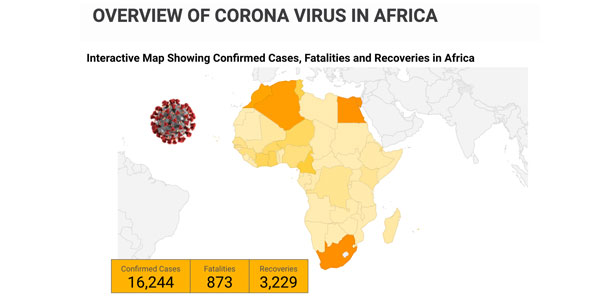
Predicting and anticipating the trajectory of the virus to mitigate casualties and inform policy requires number crunching, modelling, and analysis of Big Data. Physics Professor Bruce Mellado leads a multidisciplinary team that developed the comprehensive COVID-19 South Africa Dashboard – a data dashboard to help track and visualise local COVID-19 infections, as well as in Africa, and the monitoring tool can be used to provide predictions for the virus’ spread and impact.
“Test! Test! Test!” is the message from Professor of Vaccinology Shabir Madhi, who advocates physical distancing, mass testing for COVID-19, and quarantining the infected as the optimal public health strategy.
Expert analysis informs us of the impact COVID-19 will have on our world but how will our healthcare workers in hospitals cope?
Professor Feroza Motara is the Academic Head of Emergency Medicine in the School of Clinical Medicine at Wits and the Charlotte Maxeke Johannesburg Academic Hospital. She has prepared her team and the hospital to care for those infected with COVID-19. Feroza explains how healthcare workers on the frontline cope.
Physical distancing, hand-washing, and cough etiquette govern our mobility and behaviour like never before. Listen to renowned HIV scientist and activist Professor Francois Venter, Director of Ezintsha and Deputy Executive Director of the Wits Reproductive Health and HIV Institute (Wits RHI), discussing the fundamental role that behaviour change plays in reducing COVID-19 infection.
President Cyril Ramaphosa has appointed Professor Martin Veller, the Dean of the Faculty of Health Sciences to a Ministerial Committee to provide clinical management advice on COVID-19. He, together with five leading Wits professorsproposed a blueprint to replace the current lockdown.
Several other Witsies including Professor Glenda Gray have also been appointed to government committees or sub-committees.
The COVID-19 crisis is first and foremost a health and humanitarian crisis that we are all living through, which is likely to have lasting impacts on how we live.
He explains how we can manage the economic impacts in a way that does the least long-term harm and writes with David Francis, that South Africa won’t flatten the curve unless all citizens have the means to stay home.
Wits researchers and academics across faculties have articulated the impact of COVID-19 in their disciplines and displayed social leadership to educate, advocate, influence, and inspire:
There are numerous other experts from Wits who comment regularly in the media.
Keep informed, safe and healthy
Visitwits.ac.za/covid19regularly for the latest updates, news, analysis and expert opinions in our fight against the coronavirus.
Witsies are tackling the COVID-19 pandemic on all fronts and we laud each and every person who is playing a role in combating this pandemic. We are in a crucial moment in the life of this pandemic and it is important that we work as a collective for the benefit of our society.
We urge all members of the Wits community to heed the words of President Cyril Ramaphosa:
This epidemic will pass. But it is up to us to determine how long it will last, how damaging it will be, and how long it will take for our economy and our country to recover. It is true that we are facing a grave emergency. But if we act together, if we act now, and if we act decisively, we will overcome it.
SA faces food riots and breakouts from the lockdown
- William Gumede
Getting food to the vulnerable, needy and poor during the COVID-19 lockdown is now increasingly urgent.
Getting food to the vulnerable, needy and poor during the Covid-19 lockdown is now increasingly urgent.
If not, South Africa face the specter of slowing down the spread of Covid-19, but large numbers of people dying of starvation, and possible food riots and breakouts of the hungry from the lockdown.
The overwhelming majority of South Africans are either unemployed, eke out a living in the informal sector or survives on one form of government social grant. Those who are unemployed, working in the informal sector or are self-employed have no income during the movement, trading and buying restrictions of the lockdown.
The restrictions on movement of the lockdown makes it difficult for civil society organisations who distribute food to assist the needy. Even so, civil society organisations and charities do not have the funds and resources to distribute food to all who need it.
So far, even the few food parcels being distributed by the state, private sector and civil society organisations, hardly reaches those who need it most.
Large numbers of poor South Africans get their food from community feed schemes every day; whether run by the state, civil society organisations or the private sector. Furthermore, millions of children from poor families who received their meals from the state school feeding scheme now are at home under lockdown with no food.
Roughly 10 million school-going children get their basic daily food from school feeding schemes. During lockdown such daily meals are not available. They face mass starvation. Not providing food to millions of needy, is a shocking omission in government’s Covid-19 emergency plan. There has to be a simple way of food reaching the needy quickly.
Providing food to the needy during the lockdown is a government responsibility, but the private sector, and well-off individuals who can contribute, should also do so. Individuals of means can donate food to the needy. As part of a solidarity social pact, government, private sector, civil society and ordinary citizens can club together to provide and distribute food to the needy over the lockdown period.
Government must partner with civil society organisations, charities, churches, business and citizens to distribute food to the poor. Retailers could make unused food available to the poor, rather than it to be allowed to go to waste.
Food must be distributed door to door to vulnerable families. Civil society organisations and charities who are traditionally involved in distribution food to the need must be given essential service status, given government and business funding. Well-off private citizens must also donate to such food distribution civil society organisations. They must also volunteer their expertise, if practical.
The private sector involved in logistics could help with the transport of food. Retailers almost everyday transport food from depots to stores. Food distribution to the poor in outlaying townships and informal settlements could for example piggy-back on such transport.
Telecommunications companies could help with either a short message system, social media application or an easy toll-free number for the needy to request or make application for food relief.
Every city, township or village could have a coordinating committee of civil society organisations, private sector, government and private individuals which can coordinate the receiving and distribution of food into the community. Government halls, community centres, churches or schools could be used as local food distribution hubs.
Although a better food relief strategy during the Covid-19 lockdown for the poor given the complexity of distributing food to the vast numbers of the poor, is to make food vouchers available which can be redeemed at certain retailers. The success of providing food relief to the poor during the lockdown will ultimately determine whether the lockdown explode into social upheaval, riots and breakouts.
Off course, the best strategy to provide food is to give a basic income grant to all the unemployed and poor, over the period of the lockdown, which will give people cash in hand, which could be paid out at Post Offices, banks or retailers. As for the argument that there is no public money to provide regular food, a food voucher or a grant to the needy over the lockdown period; the R50bn that government has set aside to foster “big” black economic empowerment (BEE) industrialists should instead to be used to feed the poor.
The terrifying social costs of not providing food to the needy: food riots, people dying of starvation and the deaths that will be caused by an accelerated spread of Covid-19 because the hungry break out of lockdowns, makes it crucial that money be found for food for the needy.
William Gumede is Associate Professor, School of Governance, University of the Witwatersrand, and author of Restless Nation: Making Sense of Troubled Times (Tafelberg). This article was first published in the Daily Dispatch.
Complaints against SANDF
- William Gumede
The SANDF and SAPS should not enforce the COVID-19 lockdown at the expense of undermining human rights, personal dignity and common sense.
The South Africa’s Military Ombudsman received at least 33 complaints from the public of excessive force, physical abuse and brutality against the military during the COVID-19 lockdown.
The Independent Police Investigative Directorate (IPID), which monitors police abuse, has registered 39 cases of complaint against police wrongdoing, with six incidents of “death as a result of police action” during the first week of the lockdown, and is investigation 13 complaints related to police shooting and 14 of police assault.
In the first few days of the lockdown, more people died from police and military heavy handiness then from the coronavirus itself.
A number of videos have circulated of police and army enforcing the lockdown who were beating people they believe were not confirming to lockdown rules. In Hillbrow in the Johannesburg inner city police sjambokked people they believed were not following lockdown rules. In Soweto, soldiers have forced people do push-ups for not adhering to the lockdown rules.
One policeman has so far been arrested for a killing a citizen who was shot dead by police after following the man from a bar to his house.
After 26 years since the end of apartheid, the South African police appear still not to have been trained, neither have they inculcated a culture of human rights-policing. Equally, the army, although it is now involved in numerous peace making missions abroad, are also not at times performing their duties in such a way to respect basic human rights, dignity and compassion.
It does appear that both the police and army culture is based on using violence, humiliation and aggression to enforce rules.
Nosiviwe Mapisa-Nqakula, the Minister of Defence said in response to the death of an Alexandra man allegedly assaulted by SANDF soldiers: “We hang our heads in shame.”
But there has been incidents where the police and the army go against common sense and arrest law-abiding citizens who are within the rules. There has been a number of cases where people have legitimately gone to the shops, pharmacy or other essential business who have been then been arrested for contravening the rules.
Last week Allan Kirby, a diabetic, from Somerset West was fined by the police for going to his local pharmacy, because he did not have his prescription on hand.
The South African Human Rights Commission (SAHRC) has urged the South African Police Service (SAPS) and the South African National Defence Force (SANDF) to “exercise greater tolerance and apply minimum force in the execution of their duties as has been urged by the President”.
The police and army should not discriminate against people based on race, religion or class in their enforcement of the lockdown rules. Poor communities, already vulnerable people and the homeless appear to be particularly at the mercy of police and army abuse.
It was important that Minister of Communications, Telecommunications and Postal Servicers Stella Ndabeni-Abrahams was charged with contravention of regulation 11B of the Disaster Management Act; because the lockdown rules must be seen to be enforced without discrimination based on privileged, political connectedness or influence.
The family of an Alexandra township man, Collins Khosa, who died after allegedly been assaulted by soldiers during the lockdown enforcement in the township, has gone directly to the Constitutional Court to hold government accountable, have the soldiers involved fired and to seek compensation for his death. It is important that citizens use the courts to hold government accountable if other official oversight institutions do not so.
Freedom of expression during the lockdown must be defended. Criticism of the president or the government’s measures to tackle Covid-19 or the behaviour of the police or army is not illegal. Off course, spreading fake news is unacceptable, and should be dealt with by the authorities.
Citizens must report police and army abuse even if they may not be able to precisely identify a particular individual responsible for manhandling them. The media, civil society organisations and oversight organisations such as the Human Rights Commission must monitor police and army abuse.
The media, civil society and oversight organisations must support vulnerable, marginalised and powerless communities and citizens who appear to be on the receiving of disproportional police and army brutality.
All complaints against the police and army must be thoroughly investigated. Police and army officers found to have to be abusive should be disciplined. They should be held to account publicly.
In the long-term, the training curriculum of the police and army must be overhauled to make it more human rights based.
The organisational culture of the police and army, which clearly is based on humiliation, aggression and abuse should be thoroughly shaken up to focus on compassion, human rights and decisions based on common sense.
William Gumede is Associate Professor, School of Governance, University of the Witwatersrand, and author of Restless Nation: Making Sense of Troubled Times (Tafelberg). This article was first published in the Daily Dispatch.
Communities, not government, can and are fighting COVID-19
- Karl von Holdt and Tasneem Essop
The heavy-handed, top-down approach during the lockdown has not worked; NGOs, coalitions and community networks have.
A popular movement has arisen with extraordinary rapidity in response to the Covid-19 pandemic. With the announcement of a state of disaster, activists in communities across the country mobilised to protect their communities.
For example, the Amadiba Crisis Committee, established to fight against the destruction of land by mining on the Wild Coast, formed teams to move from household to household distributing sanitiser and talking about the necessity for physical-distancing.
In Khayelitsha, Cape Town, the Social Justice Coalition formed a community action network (CAN) and mobilised to demand water tanks from the city — which actually arrived within a week. The CAN, too, organised teams to inform community members about how to respond to the pandemic. The broader CAN movement in Cape Town has expanded to play a similar role.
In Ekurhuleni, the General Industries Workers Union of SA and the Casual Workers Advice Office printed 700,000 pamphlets about the coronavirus, distributing these at taxi ranks and in communities, and also made their own sanitiser for distribution. The street patrollers in the Yeoville Community Policing Forum marshalled at the long queues at local supermarkets, encouraging physical-distancing and resolving conflicts.
These few examples show faster, more agile and more effective responses than most state activities.
Meanwhile, at the national level, a diverse network of activists came together with the aim of co-ordinating a popular response to the state of disaster and the pandemic.
They were motivated by three overriding concerns: to strengthen community responses; ensure government responses did not exacerbate inequality and exclusion; and propose measures that would not only counter the immediate social and economic crisis, but also lay the foundations for a different kind of future.
Within a week they had established a broad coalition, which, by now, is supported by 250 movements, NGOs, trade unions, informal sector workers, feminist groups, faith-based organisations, research centres and public health networks — the biggest coalition SA has seen since the 1983 formation of the United Democratic Front.
The coalition has about 20 working groups, undertaking work ranging from building community organisation to distributing food parcels, and from policy work to repression monitoring and gender organising.
These and other initiatives that are not part of the C19 People’s Coalition reveal a vibrant and resourceful set of movements and networks with deep roots in communities and workplaces. Yet despite efforts, and notwithstanding some ad hoc local collaborations, there has been no systematic engagement from a government which, it is increasingly clear, is too distant and disorganised to directly access communities and ameliorate desperation and social distress.
Its food parcel efforts are hindered by bureaucratic processes to limit beneficiaries to the “deserving poor”, and failed promises have provoked tensions and food riots in some areas.
Indeed, the state’s most visible presence in communities is in the form of the police, municipal law enforcement, and the army, which has been set the often unattainable task of enforcing the lockdown in communities where compliance is impossible. This has led to many instances of brutal, illegal and unjustifiable force being used against people across the country.
These have turned fatal in some cases — the death of Collins Khoza in Alexandra, who was allegedly assaulted by soldiers; the death of Sibusiso Amos in Vosloorus allegedly from the intervention of Ekurhuleni metro police and private security; and the Independent Police Investigative Directorate is now investigating the death of a man in Soweto, who was allegedly assaulted by police. Multiple reports received by the coalition provide a snapshot of the abuse of power, corruption, human rights abuses, humiliating treatment and violent assaults perpetrated by security forces.
Colonial roots
To make matters worse, local governments, together with security forces, have also carried out illegal evictions in Cape Town, Johannesburg and Ethekwini, where the ANC authorities have continued their vicious vendetta against Abahlali baseMjondolo [a shack-dwellers’ movement that campaigns both against evictions and for public housing]under cover of the lockdown.
In all three metros there are reports and images from informal settlements and land occupations of people being assaulted, shot at and dragged out of shacks by law enforcement who have been sent out to tear down these structures. Cape Town’s mass internment camp for the homeless in Strandfontein has also been severely criticised for being overcrowded, unsafe and flouting the health requirements for curbing the spread of the coronavirus.
This is not the way to fight the pandemic. Quite the opposite — it is more likely to accelerate the pandemic and produce non-compliance in alienated and starving communities. These failures by the government suggest it is still trapped in a view of its poor and working-class as passive recipients of charity incapable of agency; generally undeserving of support, unless at starvation’s door; sources of infection who must be quarantined; and “dangerous classes” who pose a threat to authority and order.
These attitudes have deep colonial roots. Using repressive state machinery for public-health purposes serves to further entrench the historic frictions that already exist between the police, army and society. It weakens the relationship between state institutions and communities even further and increases the frustration of individuals and communities.
If President Cyril Ramaphosa and his government are to have any hope of managing the public healthcare crisis they need to decisively dispense with this apartheid heritage and work closely with popular movements, unions and civil society to educate, provide services and food, and devise appropriate public-health strategies and lockdown codes for precarious, overcrowded and desperate communities.
WITS COVID-19 UPDATE 27 – FINAL YEAR MEDICAL STUDENTS RETURN TO CAMPUS
- Wits University
Final year medical students will return to Wits on Monday, 11 May 2020.
Following the directive issued by the Minister of Higher Education and Training on 30 April 2020, final year medical students will return to Wits on Monday, 11 May 2020. This will require a limited opening of the Wits Junction Residence Complex and the Faculty of Health Sciences building, as well as the clinical training platform in various hospitals.
The University has prepared for the return of 314 medical students in their final year of the MBBCh and GEMP programmes. 91 students from this group will be housed in the Wits Junction on a self-catering basis.
An additional 142 medical students on the Mandela Castro programme will also be returning to continue their clinical training in hospitals. These students will be housed, as usual, in the Witwaters Building and at various hospitals.
We have implemented the following safety measures in compliance with all regulations and protocols, and with the advice of experts:
Residences and related facilities, offices and teaching venues have been decontaminated, including surfaces, equipment and ventilation systems. This has been confirmed by Wits’ Occupational Health and Safety Director and his team.
Sanitisers have been installed at all entry points, as well as at the entrances of all buildings.
Buses have been decontaminated and screens have been installed to separate bus drivers from students. Bus drivers have been instructed to ensure that buses are no more than two thirds full when transporting students to hospitals, in line with transport regulations. Physical distancing must be maintained on buses and masks must be worn at all times.
All students and employees will be expected to complete a confidential screening questionnaire every day (via an app) before being allowed onto campus, in line with national protocols. Temperature screening may be undertaken at the gates if this becomes necessary for any reason.
Staff and students will be issued with the proper Personal Protective Equipment, including the appropriate masks for medical students. At least two cloth masks will be issued to all other staff and students, who will be responsible for ensuring that they wear a newly-washed mask every day. It is compulsory to wear masks at all times when in open spaces, whilst using University transport and in clinical settings.
Physical distancing and good hand hygiene (preferably by washing hands with soap and water for 20 seconds at a time and drying properly) is compulsory.
In order to ensure our collective wellbeing, students and staff members are required to adhere to the stringent measures outlined above and to report immediately any violations of protocol to the Office of the Dean of Health Sciences via david.gray@wits.ac.za. Anyone who does not adhere to these requirements may be escorted off the premises by Campus Protection Services.
We would also like to extend our appreciation to our returning students, and to all Wits’ staff members who have meticulously prepared f or the return of this cohort, and who will continue to support them in the months ahead. These include in particular staff members from the following departments: Student Affairs; Services; PIMD; ICT; Protection Services; OHS&E; Finance; Faculty of Health Sciences staff, and other supporting units.
Remember to wear your masks and to practice physical distancing and good hand hygiene.
Keep healthy and safe!
SENIOR EXECUTIVE TEAM
8 MAY 2020
Wits Covid-19 Screening Tool
- Wits University
Information pertaining to the screening of staff and students entering University campuses and premises.
Government Directives pertaining to Covid-19 obligate employers to implement a Covid-19 Screening Tool to ensure that employee / student health condition is monitored.
In view hereof,
Staff / students must use the Covid-19 Screening Tool on a daily basis to monitor whether they are showing any Covid-19 symptoms.
This must be done before staff / students leave their homes to come to Campus.
Assuming staff / students have completed the forms to indicate that they do not display any of the symptoms – including having not been exposed to or in contact with any individuals who may have been diagnosed, been in self-isolation or in quarantine for the past 14 days, and do not suffer from any other risk factors; please drop the completed form in dedicated boxes at the entrances.
Further notes regarding the Covid-19 Screening Tool:
Please conduct daily self-screening before leaving home / residence and before coming onto Campus. Follow the flow diagram should symptoms be experienced.
If any symptoms mentioned in questions A1 to A10 are experienced then don’t attempt to enter the University. Consult your Healthcare Worker to determine whether further testing / self-quarantine will be necessary. If cleared by your Healthcare Worker only then may you enter the University. If you reside on Campus and experience Covid-19 symptoms then please remain in your room and seek advice telephonically from relevant CHRL staff and/or your Healthcare worker.
If tested positive for Covid-19 (and, if you do not require hospitalisation) then self-isolate for 14 days. Follow your Healthcare Worker’s advice.
If you are not able to come to Campus due to experiencing Covid-19 type symptoms, or due to being tested for Covid-19 (or after being positively diagnosed) then urgently notify your Supervisor/ relevant Manager about your situation / absence.
If you answered “YES” to any of the questions in Section B1, B2, C1 and C2 (but have none of the usual Covid-19 symptoms mentioned in sections A1 to A10, then this does not mean that you will be refused entry onto Campus (but a decision may be necessary as to whether this requires further intervention).
If “YES” is answered for the questions in sections A1 to A10 then this does not mean that you definitely have Covid-19. This screening tool is used merely as a pro-active precautionary indicator to establish whether further tests should be carried out in order to make a definite diagnosis.
If you reside on Campus then please follow the CHRL protocols on notification / quarantining should you experience Covid-19 symptoms.
Nothing prevents a person that experiences any of the usual Covid-19 symptoms to immediately bring these to a Healthcare Workers attention at any time of day / night should these symptoms present themselves.
Service provider and contractor employees are expected to have a Screening process in place for their staff (preferably using the same standard of screening that Wits staff / students are using).
A flow diagram has also been developed and which explains the Covid-19 screening / testing / management process to be followed at Wits. This process flow must please be adhered to:
Covid-19 Update (28) - Wellness services for students and staff
- Wits University
A reminder to all students and staff about Wits' mental health and wellbeing services that are available to you during the Covid-19 pandemic and lockdown.
The majority of our staff and students have been home for 50 days now and given the many changes, it is expected that some individuals and families may be finding it difficult to deal with the disruption to normal life. We remain concerned about your well-being and want to remind you of a number of services available to staff and students during this period.
Help for students
The Wits Student Crisis Line is available 24/7/365 on 0800 111 331 to all Wits students who require counselling, including those feeling anxious or uncertain during the lockdown.
Students who require personal, career or life coaching counselling services can email the Counselling and Careers Development Unit (CCDU) via info.ccdu@wits.ac.zabetween 08:00 and 16:30 on weekdays. A professional team member will respond with assistance. Zoom sessions and some group sessions are also available, depending on the need.
The CCDU Lockdown Wellness Chronicles offers daily coping strategies that can be used by all. The site has daily prompts to help structure and regain control of life and also to prepare for normalcy. The May Motivation seriesis a useful resource to assist students. Visit the CCDU website for more information on various mental health and wellness topics.
The Campus Health and Wellness Centre is available to assist with primary healthcare and mental health enquires:
Primary healthcare enquiries – Call 0743077259 or 0824832251
Mental health enquiries – Call 0766093924
A satellite Campus Health and Wellness Office is open on the Wits Education Campus from 08:30 to 12:00 on weekdays, in order to assist the final year medical students who have returned to campus.
Help for staff and immediate family
The Wits Impil’enhle programme offers free services to staff and their immediate families who require counselling for stress, anxiety, abuse, trauma, parenting, relationship and marriage-related problems. They also offer legal and financial advice. This independent service is offered through Kaelo Lifestyle and is provided in all South African languages 24/7. Call 0861 635 766 OR dial *134*928 OR send a ‘Please call Me’ to 072 620 5699 OR Email asknelson@kaelo.co.za for assistance.
Gender-based harm
During this time of lockdown, we are aware that there are some people who will find themselves in spaces where they may not feel safe. The Gender Equity Office (GEO) can be reached via email on info.geo@wits.ac.za. Alternatively, call the national gender based violence command centre on 0800 428 428 or send a "Please Call Me" to *120*7867#. It is important to remember that should you require a restraining order, courts continue to operate for this purpose. The GEO is available to guide you through the process and prepare you for what to expect when you apply for the order.
Cyberbullying
Cyberbullying involves the use of the internet or technological devices to send, post text or images intended to hurt, embarrass, discriminate, threaten, torment, humiliate or intimidate an individual or a group of people. Cyberbullying and harassment may become more common as the digital sphere expands and technology advances. For confidential reporting, consultation and support, contact the Transformation and Employment Equity Office via Cecilia.Smith@wits.ac.za or Advocate Mahlako Neo on neo.mahlako1@wits.ac.za. The Anti-Discrimination Policy can be accessed viawww.wits.ac.za/transformationoffice.
Covid-19 resources
Read more about the coronavirus at www.sacoronavirus.co.za or call the emergency hotline on 0800 029 999. The WhatsApp support line is 0600 123456. The website of the National Institute for Communicable Diseases also hosts a wealth of information on the coronavirus. Visit www.nicd.ac.za for daily updates and more information.
Remember to always:
Wear a face mask in public areas,
Practice physical distancing,
Wash your hands for at least 20 seconds with soap and water (and dry it properly) or sanitise,