

What next after Casablanca?
- Wits University
Wits is an associate member of CIVIS, which for the first time held a forum in Africa, in March. Wits ‘CIVIZENS’ explain the value of this network.
CIVIS, Europe's Civic University Alliance, unites 11 leading research-intensive higher education institutions across the continent, forming an academic community of over 470,000 students and 58,000 staff.
In recognition of the deep interconnection between Africa’s and Europe’s futures, CIVIS signed an agreement on 11 March 2022 with six African universities – including Wits University.
In September 2024, these African institutions became associate member of CIVIS, committing to a shared agenda that fosters cooperation in education, research and societal outreach.
Wits University is the only South African CIVIS associate member.
The first African European CIVIS Forum for Research and Education took place in Casablanca, Morocco from 25 to 27 March 2026.
Charting a course for Africa
This was the first time that CIVIZENS convened for this forum. The Alliance signed the Africa Charter for Transformative Research Collaborations.
The Charter articulates 10 principles on how research collaborations need to be configured to redress the multi-layered power imbalances in the global-Africa production of scientific knowledge.
It further outlines 6 aspirations for policy change by higher education institutions, networks, funders, research assessment and science governance bodies, to ensure that such a transformative collaboration mode is established as best and standard practice.
Dr Samia Chasi, Head of the Wits Internationalisation and Strategic Partnerships Office (ISPO) signed the Africa Charter on behalf of the University.

“By applying the Africa Charter across its growing joint research and education activities, and by creating spaces where knowledge and best practices flow both ways, CIVIS has an important role to play in advancing equity and transformation,” said Chasi, who was a panellist in the plenary session at the Forum, titled, Towards equitable and transformative science partnerships: Which role for CIVIS?
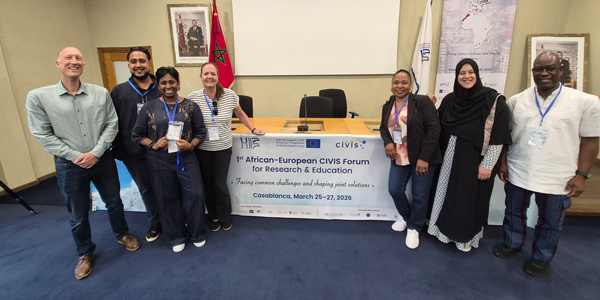
(L to R) Prof. Malte Brosig, Mr Zaahid Kahn, Prof. Dinesh Balliah, Dr Ute Schwaibold, Dr Oluwakemi Ajayi, Dr Naeema Reis, and Prof. Emmanuel Ojo.
Associate Professor in the Wits School of Education, Emmanuel Ojo was in Morocco as a member of the CIVIS Alliance consortium awarded funding to co-develop a doctoral micro-credential on Artificial Intelligence and Research: Opportunities across disciplines (see micro-credentials below).
Ojo says, “What struck me about the Casablanca Forum was that equality was not aspirational. It was structural. African and European colleagues sat together as co-creators, not as donors and recipients. The signing of the Africa Charter … was a defining moment: 10 principles for redressing power imbalances in global knowledge production and six aspirations for policy change, endorsed by over 130 signatories worldwide.”
Wits University has been active as a CIVIS Alliance Partner since 2022. Working through CIVIS’s five ‘hubs’, academics across the University have already been working to manifest the principles and aspirations of the Africa Charter.
Hubs are the structures through which CIVIS African European member universities collaborate to address major societal challenges in:
- Climate, environment, energy
- Cities, territories and mobility
- Health
- Digital and technological transformations
- Societies, culture and heritage.
Creating a climate of hub activity
Wits researcher Dr Ute Schwaibold, a scholar of urban ecology and sustainability, was in Morocco as the Wits lead on CIVIS Hub 1: Climate, Environment, and Energy. She has been involved with CIVIS in this capacity since the outset.
“There are issues, as there are with every university collaboration, but I think, generally, those who are participating are really keen to make it work, at least among the people I’ve been engaging with,” says Schwaibold. “In my hub we are equal partners and they [European partners] include us wherever possible. I do feel that the willingness to build a truly equal partnership is there.”
Hub 1 is amongst the most active at Wits of the five hubs. Since 2022, Schwaibold’s hub has focused on co-delivering CIVIS’s TRACEE (Transdisciplinary Studies of Climate, Environment and Energy). This two-year, fulltime master’s programme brings together students from all over the world to study at multiple CIVIS universities. Its curriculum is built around transdisciplinary learning, community engagement, and student mobility.
Hub 1 is also considering a transdisciplinary doctoral collaboration in the future.
“We are innovative, and we have decided that, regardless of potential funding constraints, we are going to continue working together,” says Schwaibold. “We will still run BIPs [Blended Intensive Programmes], we will still offer the TRACEE master’s programme, and we will explore ways to secure funding.”
Finding funding
CIVIS is co-funded by European Union (EU), and the Alliance provides seed funding to researchers. Hubs must apply for this funding, and proposals must be multidisciplinary and include an African associate. Schwaibold concedes that this financial structure has its challenges in terms of equitable partnership but suggests that genuine and equitable collaboration is mutually beneficial.
“A lot of the conversations [in Morocco] were about partnerships, and there is a strong emphasis on equitable partnering. CIVIS and EU funding are very specific in their requirements, but within the system, there are partners who genuinely want to make it work and make it fair, and that’s what makes it worthwhile,” says Schwaibold.
Wits Professor of International Relations, Malte Brosig, was in Morocco as part of the PolyCIVIS Policy work package team, which Wits University and the Université Libre de Bruxelles (ULB) co-lead.
Brosig says partnerships are crucial for Africa: “I think African universities should try to more strategically get, for example, EU funds, but often lack the expertise, administrative capacity and network to be successful applicants. Without access to extra continental funding, research cannot grow.”
Brosig points out that neither the European Union nor the African Union have signed the Africa Charter on equal partnerships. “They should, of course,” he says.
Dr Dinesh Balliah, Director of the Wits Centre for Journalism, was in Morocco to co-present a tandem talk with her CIVIS European counterparts on a CIVIS micro-programme. She describes the micro-programme co-designing process as “a pleasure, as both [University of Edinburgh] colleagues were incredibly generous with their time and expertise.”
However, the programme does not financially support the participation of staff from the Global South, says Balliah, “So on two occasions, while my colleagues travelled to meet each other, that support was not available to me as a Wits colleague.”
Despite mobility funding challenges, Schwaibold points out that research infrastructure partnerships now exist. “Say, for example, you want to do something really cutting-edge, but we don’t have the money to buy millions of rands worth of equipment to do it here. One of the European universities might have that equipment, and you can approach them and say, ‘can I come over and do my research?’. It’s about sharing research infrastructure.”
PolyCIVIS
For those committed to navigating network and funding complexities to do impactful African- European research, PolyCIVIS provides one such avenue. The PolyCIVIS collaboration foregrounds global polycrisis to enable better understanding of the impacts of several concurrent major societal crises challenging the world.
The Policy work package, of which Brosig is the Wits co-lead, produces evidence-based policy briefs that provide African institutions and policymakers and the European Commission with up-to-date, practical insights and strategies for navigating polycrisis complexities.
In Morocco, Brosig co-presented on what the Policy work package has produced between March 2025-2026. Their output includes webinars and a series of 15 Policy Briefs. From Polycrisis to Polysolutions: An interdisciplinary approach to complex global challenges was Foundational Policy Brief 1.
Brosig says that the Africa Forum provided the momentum to begin an application for a Polycrisis joint master’s, under the European Erasmus Mundus Joint master’s programme, which Wits University will lead. “This is the first time that an African university is submitting an application to this programme as a lead institution,” he says.
Teaching and Mobility
Although CIVIS is a research network, a significant focus is on teaching. The Blended Intensive Programmes (BIPs) are a format of Erasmus mobility through which staff and students travel abroad to study at other CIVIS institutions.
Balliah co-presented a tandem talk with CIVIS European colleagues on the micro-programme, Equitable and Just digital Society: developing interdisciplinary skills and knowledge.
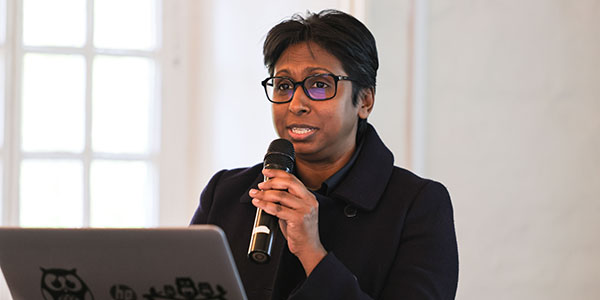
Co-taught for the first time in the 2024/5 academic year, the micro-programme empowers students to become interactional experts in research for an equitable and just digital society.
“I was involved in co-designed a micro-programme with Professor Jane Duncan and Professor Brigitte Wessels, both at the University of Edinburgh. I found the students – who hailed from places like Romania, Italy and Germany – receptive and engaged despite the virtual classes, which can be very isolating,” says Balliah.
“The programme is a wonderful opportunity to expose students from the Global North to the specific experiences of people in the Global South, through co-teaching modules.”
Micro-credentials
Associate Professor Emmanuel Ojo was in Morocco as a member of the CIVIS Alliance consortium awarded funding to co-develop a Doctoral micro-credential on Artificial Intelligence and Research: Opportunities across disciplines.
“I work alongside colleagues from Madrid, Rome, Athens, and Glasgow co-designing curriculum, co-authoring the consortium agreement, and sharing decision-making at every stage. That is what equality looks like in practice,” says Ojo, who is a researcher in the Educational Leadership, Policy and Skills Division in the Wits School of Education, of which he is Deputy Head.
“Our micro-credential consortium is now finalising the consortium agreement and refining academic content, with a view to offering the module to doctoral students across five universities on two continents,” he says.
Communities of Research Practice
Although focused on teaching and student mobility, CIVIS remains fundamentally a research network. The value lies in teaching to both advance research as well as empower (emerging) researchers. A case in point is another very active CIVIS Hub at Wits – Hub 3: Health – which is led at Wits by Professor Yahya Choonara.
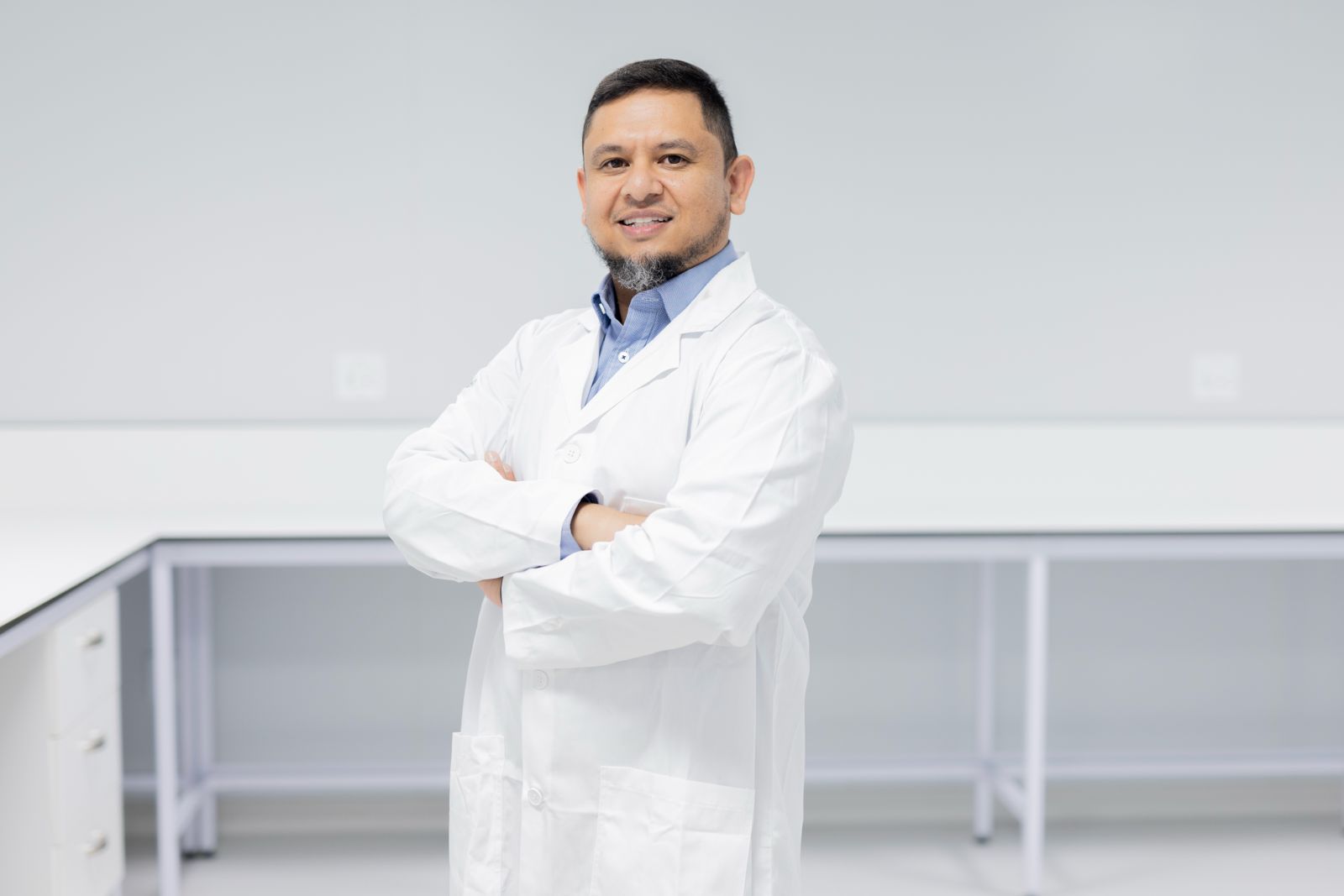
“The CIVIS Health Hub is unlike traditional ‘North-to-South’ transfer of science but rather stimulates co-design of innovative research projects. I engage as a recipient of expertise, and shape research priorities that are relevant to both European and African healthcare. This approach makes the collaboration more sustainable,” says Choonara.
Although Choonara was not in Morocco, he and his CIVIS European counterparts later co-presented a webinar, on 10 June, titled CIVIS meets The African Cancer Immunology and Infection Initiative.
“We are now exploring two follow-on joint concept notes on AI-guided drug delivery systems that could be piloted in both contexts and, as part of the VaxHub, we are optimising vaccine formulations through engineered lymphatic transport for enhanced immune responses,” says Choonara, who is Director of the Wits Advanced Drug Delivery Platform (WADDP).
“CIVIS has strengthened WADDP’s global reach while keeping our work rooted in South African health needs,” he adds.
According to Choonara, the CIVIS network fosters sustained multidisciplinary engagement – more like a community of practice. Researchers, clinicians, and students have access to shared training, funding opportunities, and mobility grants that embrace the local context within the network.
“It is pragmatic and links lab science to implementation and policy,” he says. “The network also has a culture to mentor early-career researchers across institutions.”
Emerging Scholars
One such researcher is Dr Naeema Reis, a Senior Lecturer in Physiotherapy at Wits. Reis was in Morocco as a first-time ‘newbie’ in the CIVIS network, which she describes as “a really positive experience.”
Reis had responded to the call for abstracts, which also required applying for funding. She credits Schwaibold with helping her navigate the proposal process: “Ute mentored me through it – she played a big role,” says Reis, who found the CIVIS application process itself to be very streamlined.
In negotiating a complex global network, Reis advises, “Funding is a huge thing. Assert yourself and explain the basics [of what Africans need].”
In Morocco, Reis co-presented research findings from a paper on the role of rehabilitation in global pandemic preparedness, with counterparts from the University of Barcelona. The presentation was well-received, she says, despite therapeutic sciences and rehabilitation not always immediately considered the realm of policy.
Reis has taken her Morocco experience forward by collaborating with the University of Madrid. “I’m hoping that, through PartiCIVIS, I can start a new project looking at a comparative analysis of rehabilitation health system needs in the management of non-communicable diseases in Europe and Africa,” she says.
PartiCIVIS is Participatory Research for Action, Facilitating Transformation and Innovation in African European Perspectives. Reis says, “Driving equitable partnerships is also about how we present the findings. It’s about being intentional.”
Reis recognises the value of the CIVIS network particularly for emerging scholars and early-career researchers: “Emerging scholars must stop shying away from taking up space in international spaces. Collaborations are the way that you build a research portfolio. It’s about not waiting but seeking out opportunities.”
Schwaibold concurs that creating connections is key, which also informs prospects to balance the teaching-with-research aspects of CIVIS. “There’s a database that they’re fixing up and including Africa now, for postgraduate research. So if a European student, for example, wants to work in Africa, you can find supervisors through that portal and connect with someone. Or if you’re looking for a PhD, again, using the network to connect people with people. If requests were to come through a CIVIS portal, I’d be more likely to respond. It’s about building a network and creating connections.”
‘From silent stacks to headline acts’
Arguably the backbone of any research and teaching ecosystem is libraries. Wits University librarians are active in CIVIS Libraries. The African and European CIVIS libraries team hold monthly 45-minute Zoom sessions, at which topics proposed by the members are discussed.
Dr Daisy Selematsela, University Librarian of Wits Libraries, says: “This CIVIS team operates as a Community of Practice and what is key is that there is no ‘rank’ when we are in discussions. We [all] understand the principles and fundamentals of librarianship.”
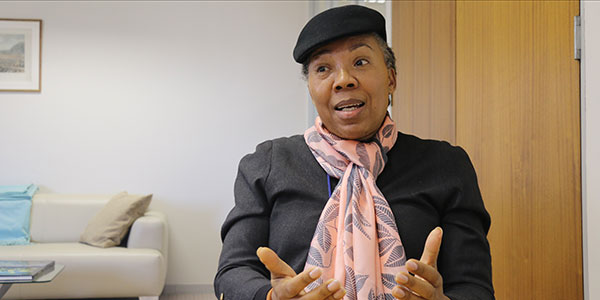
Wits Libraries have twice made presentations at these meetings, on CIVIS: Key competencies for librarians – the transitionary role of LIS professionals in the Open Science era and Building capacity for open science. Wits Libraries also contributed to the Coalition for Advancing Research Assessment (CoARA) documents.
Selematsela says that Wits Libraries are the only African CIVIS associate library that participates “religiously” in the monthly Zoom sessions. “This has actually cemented our ‘not your typical librarian’, pushing-the-boundaries perspective. My vision is to see opportunities for observation visits for emerging professionals, collaborations in article publications, and co-presentations at conferences,” she says.
‘Equity is not generosity; it is architecture’
One direct outcome of the Forum for Professor Emmanuel Ojo was a PolyCIVIS policy brief he wrote, titled Equitable Partnerships as Governance Infrastructure in an Era of Polycrisis, which proposes a triad framework of agenda equity, governance equity, and benefit equity as design imperatives for funders, universities, and multilateral actors.
“Equitable partnerships are not relational add-ons. They are governance infrastructure," says Ojo. "Equity is not generosity; it is architecture. CIVIS is among the partnerships getting closest to that standard.”
Professor Ruksana Osman, Senior Deputy Vice-Chancellor: Academic, represents Wits on the CIVIS Rectors Board. Osman says, “The CIVIS alliance of universities opens opportunities to advance new knowledge and collaboration architectures that are vital for the future of higher education.”