
Biomedical Engineering Engineering solutions that read, understand, and restore the human body

Start main page content

Biomedical Engineering Research Group

We build engineering solutions that read, understand, and restore the human body.

The Wits Biomedical Engineering Research Group works at the intersection of neural engineering, medical instrumentation, assistive robotics, and artificial organs — turning signal processing and imaging research into tools clinicians and patients can use.

We design instruments and algorithms with direct applications to clinical care. Our work spans acquiring signals from the brain, imaging the body more precisely, and building systems that help people with disabilities. We work closely with clinicians in the Faculty of Health Sciences so that what we build gets tested against real clinical need.

Our research concentrates on three areas:
Medical Instrumentation & Imaging
Biomedical Measurements & Signal Analytics
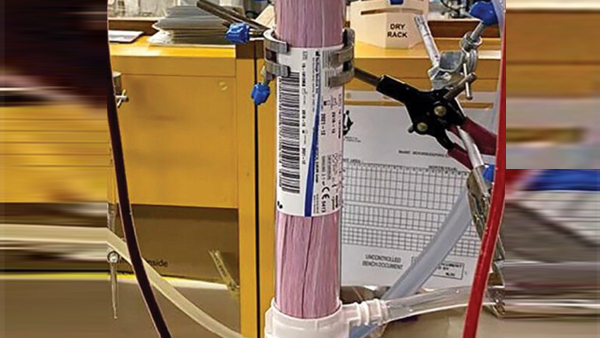
Quantitative Physiology & Artificial Organs

WATCH: Assistive technology in action

Eye-gaze devices as assistive tech have the potential to empower people with disabilities by improving their independence at home.

WATCH

Discovering how humans interact with machines

We are set for unprecedented change not just in technology, but in the way we interact and interface with technology. In the Biomedical Engineering Research Group we are leading innovation and conversation around how our changing world will influence us, and how we will influence our changing world. 

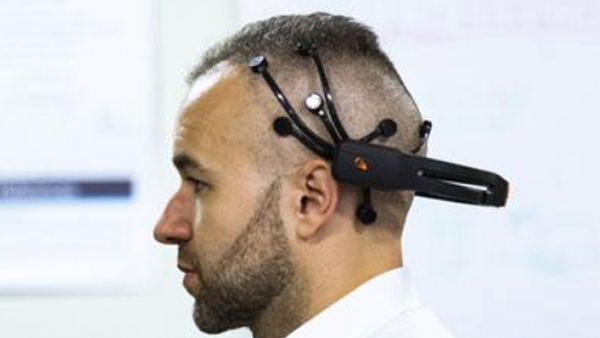
  • Our world first social impact project, Brainternet, in which we livestreamed electrical brain signals onto the internet, sparked very necessary conversations about how we progress in terms of data sharing and connecting ourselves into networks. This simple brain computer interface allowed a human being to directly participate as an active Internet of Things node.
  • By using flashing light to transfer information, we were able to incorporate the human brain into a computer network and transfer information between two distinct computers.
  • We have built a variety of technologies around interfacing with devices for disabled people and for our general interactions with computers.

These include:

  • An eye movement controlled wheelchair;
  • A computer that performed visual sign language interpretation;
  • An AI based feedback system for CPR quality improvement;
  • An eye-controlled mouse cursor which allows the user to track the mouse in a natural way; and
  • A robotic arm controlled entirely by the brain, including activating it using light as a switch.

Frugal innovation for African challenges

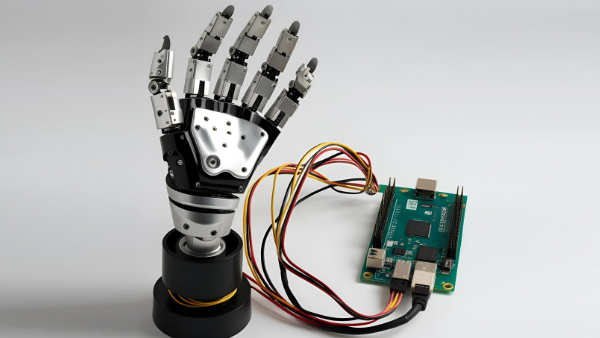
Much of the group's research is conducted under what is known as  frugal innovation, where low-cost equipment and innovative approaches keep costs down. One prototype robotic hand cost roughly R1 800 to build locally, against a budget of close to a million Euros for a similarly functioning device in Europe. There is potential for us in Africa to advance digital interfaces and other assistive technologies, which could empower people with disabilities to control their environments with greater ease — and their homes are one context in which this can be life-changing.

Movement Disorder Studies

Distinguishing between movement disorders and determining tremor severity from scanned hand drawn spirals using Artificial Intelligence.

  • Since the distinguishing properties of Parkinson's Disease (PD) and Essential Tremor (ET) are very similar, disease diagnoses and tremor severity evaluations performed by physicians are prone to high degrees of subjectivity and error.
  • From spirals drawn by PD, ET and control subjects, a computer can automatically learn features to diagnose the diseases from the spirals and to automatically determine tremor severity.
  • By performing movement disorder diagnosis and tremor severity evaluation in this way, patients are more likely to be diagnosed correctly and for a fraction of the current cost, ensuring that they can be treated appropriately.
People and Research interests
Name Position Research Interests ORCiD Profiles
Prof. David Rubin Adjunct Professor,
Group leader and Colin Caro Director of Biomedical Engineering Research
Medical instrumentation and imaging, artificial organs, and quantitative physiology and modelling. https://orcid.org/0000-0003-0316-9197 
Prof. Vered Aharonson Professor Speech analytics for medical diagnosis and biometrics; signal processing for rehabilitation robots; physiological signal processing https://orcid.org/0000-0002-4406-6525 
Dr Xriz Richards Lecturer Biomedical modelling and medical education https://orcid.org/0000-0001-6479-3757 
Helen Wright Lecturer Brain computer interfaces; prosthetics https://orcid.org/0000-0002-1300-2967 
Kirsten Smith Lecturer Medical instrumentation and imaging; computational modelling; frugal innovation in biomedicine https://orcid.org/0000-0003-1938-2566 
Dr Shamin Achari Senior lecturer Communications Engineering with biomedical applications; medical education https://orcid.org/0000-0003-3914-4530 
Prof. Adam Pantanowitz Visiting Adjunct Professor Machine learning; computational techniques; medical education https://orcid.org/0000-0002-4080-6389 
Dr Robyn Letts Visiting Lecturer Medical imaging; computational modelling; medical education https://orcid.org/0000-0001-6770-5070 
Dr Tony Lange Visiting Associate Professor Control engineering with biomedical applications  
Prof. Michiel Postema Honorary Professor Ultrasound and bubble physics https://orcid.org/0000-0001-5887-1739 
Share