

WitsiesForGood: Zandile Mkwanazi
GirlCode founder is building a more inclusive tech future, one woman at a time. By Heather Dugmore
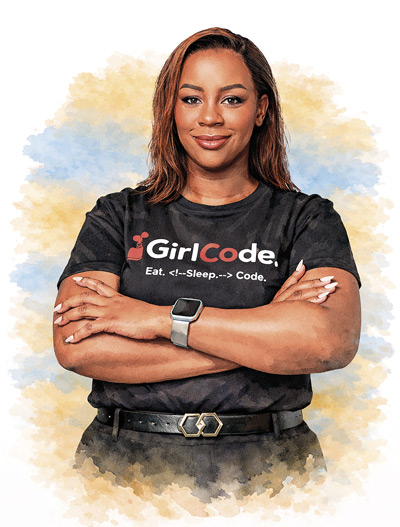 Zandile Mkwanazi (BSc 2012, BSc Hons 2013) has an ambitious goal. The computational applied mathematics graduate, who founded GirlCode, aims to equip girls and and women across Africa with technology skills – ten million by 2030.
To achieve this, the GirlCode’s 12-member team teaches coding and tech skills to schoolgirls and equips female university students to thrive in the tech industry across six African countries: South Africa, Kenya, Botswana, Tanzania, Uganda and Ghana.
It all blossomed at the GirlCode hackathon while Zandile was working for a software development company in Pretoria called Boxfusion. “When I started working there in 2014, the first thing I asked my boss, Ian Houvet, was ‘where are the women?’ as there were only a few female software designers,” Zandile says. “He said it deeply concerned him, but that he didn’t get many applications from women. He was an incredible boss, open to new ideas, so I said we could change the situation by creating a GirlCode hackathon for female university and college students. The talent that emerged from this could then be offered jobs or internships. He loved the idea and sponsored the first hackathon in August 2014.”
Where techies meet
The GirlCode Hackathon has become an annual event, which Zandile now runs independently after launching GirlCode as a standalone enterprise. Each hackathon has a different theme, and groups of two to four female students compete in a 30-hour weekend tech innovation competition every August as part of Women’s Month.
There are superb prizes for the hackathon winning teams, ranging from cash prizes to laptops to trips to Silicon Valley and attendance at international tech conferences.
In 2017, with Standard Bank as the headline sponsor, the winning hackathon team went with Zandile to Silicon Valley. “It’s tech heaven,” she says. “For the 2018 hackathon, we partnered with the international tech company Cisco, and the winning team from Johannesburg went to Amsterdam to a Women in Tech Conference, where they met very senior women in tech from all over the world.” The trip led to American Express interviewing GirlCode alumni and in 2019 the company came to South Africa and made job offers to eight of them.
“A large number of our students have been employed by banks and tech companies, or have been sponsored to incubate their tech innovations as startups.”
Innovation for every day
 At its campus in Midrand, GirlCode offers an eight-month software development learnership for young women between 18 and 35, with a matric as the minimum qualification.
“Our third cohort started in April 2025, and it includes 12 months of training for up to 30 women at a time, followed by a six-month internship at one of our partner tech companies, like the Mint Group.”
In 2025, Absa sponsored the hackathon in GirlCode’s six participating African countries, with the theme ‘AI for FinTech’. Zandile went to Kenya for this one. “One of their innovations was an easy-to-use saving wallet app for older women who still put their money under their mattresses. Absa was looking for solutions, and it offered a way for women to easily manage their money and earn interest.”
Zandile explains that in all the African countries they serve, many learners and students are from financially stressed backgrounds and do not have laptops or smartphones. “We are constantly approaching corporates, tech companies and other sponsors to donate their second-hand devices.”
Submitting proposals to potential sponsors takes up a lot of her time in addition to teaching. “We have started partnering with better resourced and private schools who can pay for either our in-person or online tech tutoring, and their payment covers the tuition for learners and students who cannot afford it.”
They have a GirlCoder Club on Saturdays at schools in Soweto, Diepsloot and Tembisa, and online classes for learners across the country, from grade 3 to matric.
Four thousand students attended in 2025. Zandile says: “This year we are expanding to more schools and more provinces.”
A talent for maths and connecting people
The road to GirlCode had its origins at Wits, Zandile explains. “At high school in Midrand my teachers suggested I apply for actuarial science as I am good at maths, and it’s a lucrative profession. I didn’t make the final selection into actuarial science at Wits, and landed up taking computational and applied mathematics instead. It wasn’t a conscious decision, it just happened that way and I found I really enjoyed it.”
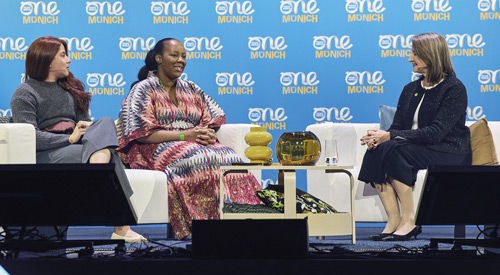 Coming from a home environment where she studied very hard, achieving several distinctions in matric, as a first-year student Zandile found herself in an environment with a lot of freedom.
“In a lecture hall of 300, no one is calling your parents to ask why you’re not there, and it is so easy to think ‘I don’t feel like class today’ and to rather go and sit on the lawns with your friends.
“The next thing you know you are missing a lot of classes and having a lot of fun, but by exam time you are so far behind you start cramming and scraping through. When I saw my terrible first-year performance up there on the board, it was a wakeup call and I cried as I had been an A student all the way through. Also, my university studies were being covered by bursaries and I had put these at risk.”
In first year she commuted from home, but in second year she moved to student accommodation in Braamfontein and got stuck into her studies.
“Part of my personality is a drive to bring people together for the common good, and a group of us in the same class would then study together and stay at the library until late and walk back together. We all passed and I did well from second year onwards, getting distinctions.”
In third year Zandile started a non-profit called RIOT (Radically Impacting Our Time). On Saturdays, she and students in her class would help grade 11 and matric learners at a school in Soweto with their maths, science and accounting. “Many learners struggle with these subjects and we wanted to help them understand they are not difficult.” These learners subsequently achieved a 90% pass.
“The maths teacher at the school was highly supportive of us, but, tragically, she was stabbed, and we were told that when she went to hospital, she first had to fill out the admission form and she died while doing this. I remember being so angry that you die because you must fill out a hospital form.
“That’s when I decided to develop an online, centralised government patient registry system where each patient’s full medical history is on one system. In my honours year, I submitted my prototype to the Innovation Summit in 2013 and made the Top 10.
“I also tried to get an audience with the Department of Health but as a student you generally don’t have much influence. The department still doesn’t have a system like this but they are slowly digitising.”
At that stage, Zandile had decided to become a quantitative analyst at a bank, and applied to participate in the programme led by the late Professor Barry Dwolatzky (BSc Eng 1978) at Wits’ Tshimologong Digital Innovation Precinct, which offered internships with big companies like Hollard. “During that time I worked on an app for Wits to help students navigate around campus. I really enjoy coding and software that creates real solutions.”
Entering the world of work in 2014, Zandile applied to RMB and Boxfusion. “At RMB I would have been part of the quantitative analyst team, while at Boxfusion I could build all sorts of software, which I decided suited me better,” she explains. “That’s the direction I chose. I was very happy there for five years and it ultimately led to me establishing GirlCode.”