
Start main page content

Projects


Extremist Mythologies

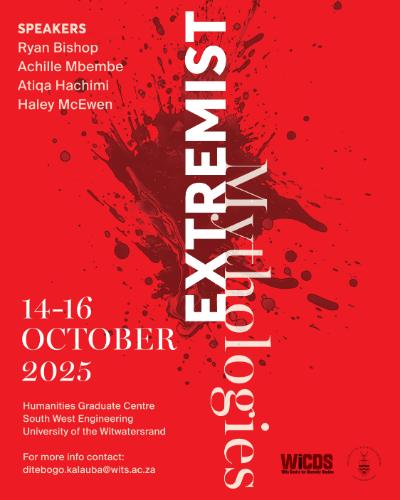
Much contemporary scholarship and public conversation are concerned with the global rise of populism and extremism, as well as their causes and consequences. Such scholarship provides empirical evidence through case studies that reveal how populism and extremism manifest in political parties, social movements, grassroots movements and communities of various sorts, whether ‘real’ or ‘imagined’.  Despite the abundance of this scholarship, less attention has been paid to the particular ways in which extremist political positions support and mainstream themselves, and how they activate sameness and difference as part of their symbolic arsenal. Based on conversations emerging from the 2025 WiCDS annual conference, this project shifts our understanding of extremism beyond the overly simplistic far right/far left binarism that characterises much public discussion, showing the ways in which varying forms of extremism manifest and embed themselves in a variety of contexts and locations. It is interested in the narratives, discourses, symbols, myths and images that are pervasive throughout current cultural and political polarisation, and which appear in multiple contexts beyond the USA and Europe. It aims to ask not just why, but also, from a granular perspective, how extremism is formed, marketed and transmitted, how it attains virality, and how it uses myth to foster emotion.

This project has resulted in an edited book and a journal special issue, currently in development. 

Mapping Gender-Based Violence Among Black Women Living with Disabilities in Selected South African Townships

This project seeks to map out the experiences of and perspectives on of gender-based violence (GBV) of black women living with varying disabilities (BwDs) in selected South African townships. The landscaping analysis includes their accounts of their experiences, how they understand the risks they face that increase the likelihood of violence against them, the causes of violence perpetrated against them, the strategies they engage in to avoid violence when they can, and the interventions they believe might help them.

This project is funded by the Ford Foundation and led by Kudzaiishe Vanyoro.

Elites and Whiteness in the City: From Southern African to Latin America

This project is a collaboration between the SARCHi Chair and colleagues at the Public Affairs Research Institute and LeHigh University in the US. It offers a unique approach to the study of race and class by focusing on how whiteness and privilege intersect and manifest in specific locations in the urban global south.

WICDS-Convivial Thinking (CT) collaboration

The CT Collective is an independent, international community of scholars who engage with issues of post development and decoloniality through research, activism and publications. In 2021, CT and WICDS began a collaborative publication series of short blog articles on aspects of conviviality and critical diversity literacy, published on the CT blog, as well as releasing a podcast. The collaboration also led to a recent issue of the open access International Journal of Critical Diversity Studies, titled ‘Conversations on Conviviality and Critical Diversity Literacy: Overlaps, Tensions and Grey Areas’, coedited by Kudzaiishe Vanyoro and Sayan Dey.

ARUA-The Guild Clusters of Excellence on Gender, Health and Sexualities

WiCDS is part of The Cluster of Excellence on Health, Gender, and Sexualities which aims to generate ground-breaking interdisciplinary research to address health disparities among gender and sexual minority populations and to integrate public health and social sciences to understand the complex interplay of social, cultural, and healthcare-related factors affecting health outcomes and access to care. Partners include Addis Ababa University, Muhimbili University of Health and Allied Science, University of Mauritius, Uppsala University, King’s College London and Centre for Sexual Health and HIV AIDS Research (CeSHHAR), Zimbabwe.

Perceptions of White People

This long-term project concerns black people’s perceptions on whether and how white people are changing. This is a longitudinal study based in two township areas outside of Cape Town. We have collected focus group and interview data over ten-year intervals (1997, 2007, 2017) and now are completing a final round, so that this project will have spanned 25 years.

Colonial times are present: Whiteness and colonialities in White peoples’ discourses in contemporary Mozambique

Based on the concepts of whiteness and colonialities, this postdoctoral research project aims to analyse the social context of contemporary Mozambique, especially the capital Maputo, to deepen our knowledge of ​​binarity, distance, hegemony, hypervisibility, black inferiority, norms, privilege and white supremacy in southern Africa. Through a discourse analysis and  participant methodology, it asks whether there a potential presence of whiteness and colonialities in White people’s discourses in contemporary Mozambique, and if so, what this presence is like. It considers the impacts of whiteness and colonialities in Mozambican lives and ask whether the categories of whiteness and colonialities are applicable to White people's discourses when they are born and/or living in Mozambique.

Becoming Political in Exile

Patterns of Political Self-Education and the Role of Political Emotions Among Indigenous Peoples of Russia Under a Non-Liberal Regime

This research focuses on understanding the political self-education of Indigenous peoples of Russia, who, due to the non-liberal regime and persecution, currently live in exile and engage in political activism. The study aims to analyse how ethnic identity of Indigenous peoples transforms into political identity, and to explore the role of political emotions in this process. This two-year research project is funded by the Spencer Foundation.

Public Leadership for Gender Equity

WiCDS is participating in the Public Leadership for Gender Equity programme (PL4GE), designed to enhance high-level government officials’ commitment to, and capacity for, developing public policies and leading initiatives that contribute to increased gender equality. Public leadership is essential in social change, and pivotal in transforming social and institutional norms related to gender, challenging gender injustices and institutionalising gender transformative policies and programmes in public health.

Share