

Witsie Rockstar: A vision for sport, health and research at Wits
- DFO
Professor Jon Patricios and his vision for the Brian and Dorothy Zylstra Sports Complex.
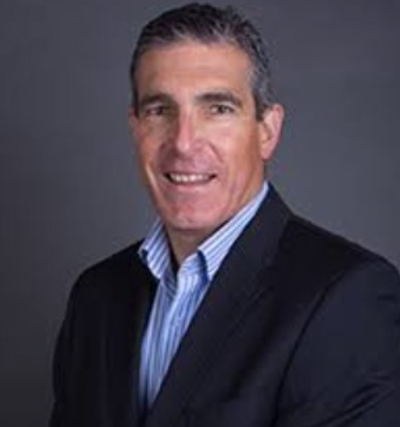 When Professor Jon Patricios first proposed the idea that would eventually lead to the development of the Brian and Dorothy Zylstra Sports Complex, it was more than a concept: it was a vision that had been brewing for over a decade.
Around 2017, Patricios proposed to the Dean of Health Sciences the concept of WiSH - Wits Sport and Health - as a way of bringing together the considerable but often fragmented expertise in sport and exercise medicine across Johannesburg. The idea rested on three interconnected pillars: academic teaching, clinical service and research.
“What we wanted to do was integrate as much of the expertise in Greater Johannesburg around sport and exercise medicine as possible,” Patricios explains.
The concept brought together specialists including sports medicine physicians, orthopaedic surgeons, physiotherapists and sports scientists to share knowledge, develop research proposals and explore better ways of treating injuries and medical conditions.
“We really needed a home,” he says. “We needed that facility where we could come together and teach, offer sports medicine services and conduct research.”
Then, as Patricios puts it, “the stars aligned”.
The Wits Foundation’s connection with the Zylstra family, whose ties to Wits stretch across generations, provided an opportunity to present the concept to the family.
The family wanted to give back to the university in the name of their parents, who had been among the first generation of the family to study there. Brian and Dorothy Zylstra were both Wits alumni and had met at the university. Brian had captained the Wits First XV, earned Transvaal Colours and received a Wits Full Blue.
The Skye Foundation, the Zylstra’s’ philanthropic foundation, was established in 1997 following the sale of Skye Products, the successful South African cosmetics, footwear and apparel business, co-founded by Brian Zylstra in 1964. Skye Products had been sponsoring sports scholarships at Wits since 1987.
Brian Zylstra died in 2012, and the foundation is now chaired by their son, Philip, also a Wits graduate.
When Patricios and his colleagues presented their vision for an integrated centre for sport and health, the Zylstra’s embraced it. The result was an unprecedented R250 million gift to Wits and the development of the Brian and Dorothy Zylstra Sports Complex - a facility designed to bring clinical practice, research, teaching and high-performance sport together under one roof.
For Patricios, integration is central to the project.
A patient with a serious knee injury, for example, needs more than a diagnosis or operation. They need treatment based on the best available evidence, rehabilitation that enables them to return to their highest possible level of function, and care that can contribute to future research and improved treatment for the next patient.
At the same time, students and young clinicians need to learn within that environment. Patricios says that the ambition is also to make the Centre relevant across a wide spectrum of South African society.
The facility will serve Wits students and university sports teams but is also intended to offer services to the wider community, elite athletes and international sporting organisations. Patricios envisages a Centre that could support national teams while also treating a Wits student with an ankle injury or helping a Johannesburg runner prepare for their first Comrades Marathon. The Springboks completed their training for the Greatest Rivalry against the All Blacks on the adjacent fields.
Access to high-level sports science and sports medicine has historically been uneven, with resources often available only to a privileged few. He stresses: “If we can get this concept right of having a world class facility that treats international athletes, student-athletes and community athletes equally effectively, then I think we’ve really achieved something - not just for the University, but for the city and for South Africa as well.”
The Centre’s scope extends well beyond traditional sports medicine.
Exercise is the common denominator, says Patricios, with disciplines ranging from medicine and sports science to psychology, nutrition, law, ethics, sociology and biomedical engineering. An important focus will be para-athletes and adaptive sports, whom Patricios describes as an under-resourced, under-supported and under-researched group.
The facility has been designed to be accessible and to support athletes across the full spectrum of ability.
It will also include a sports injuries clinic and a chronic disease and rehabilitation programme for people living with conditions such as cardiac and lung disease, osteoporosis and arthritis, using exercise as part of treatment and recovery. Facilities will also serve healthy members of the public, university teams and professional sporting organisations.
Professor Georgia Torres, Head of the Department of Exercise Science and Sports Medicine, has been appointed to oversee operations and the allocation of resources across the Centre’s different users.
For Patricios, however, the Brian and Dorothy Zylstra Sports Complex is not simply a sophisticated sports clinic or training facility. Its academic mission is equally important.
Wits intends to integrate exercise medicine more deliberately into undergraduate medical education, encouraging future doctors to consider the role of exercise in patient care. Postgraduate opportunities in sports science, exercise science, biokinetics and physiotherapy are also expected to expand, with a longer term ambition to develop specialist training in sports and exercise medicine.
Looking ahead, Patricios has an even larger goal.
Within five years, Patricios hopes that the facility will develop into a recognised Wits Institute of Sport and Health. “That is really what I’d like us to achieve.”
For Patricios, the building is only the beginning.
The real challenge now is to turn the physical facility into a living network of clinicians, scientists, teachers, students, athletes and communities.
The vision that began as an idea in 2017 has been given a home. The next chapter, he says, is about making it work.