

Business skills boost for Bushbuckridge’s entrepreneurs
- Wits University
In rural Bushbuckridge, Mpumalanga, people run businesses and find ways to earn a living where formal jobs are scarce.
For many, the challenge is developing the skills to keep those enterprises going and grow them into a more secure source of income.
A partnership between BANKSETA, the SAMRC/Wits-Agincourt Research Unit and the Wits Entrepreneurship Clinic is responding to that need.
Sixty participants received six months of intensive entrepreneurship training, with businesses ranging from hair salons and fashion design services, to agricultural products.
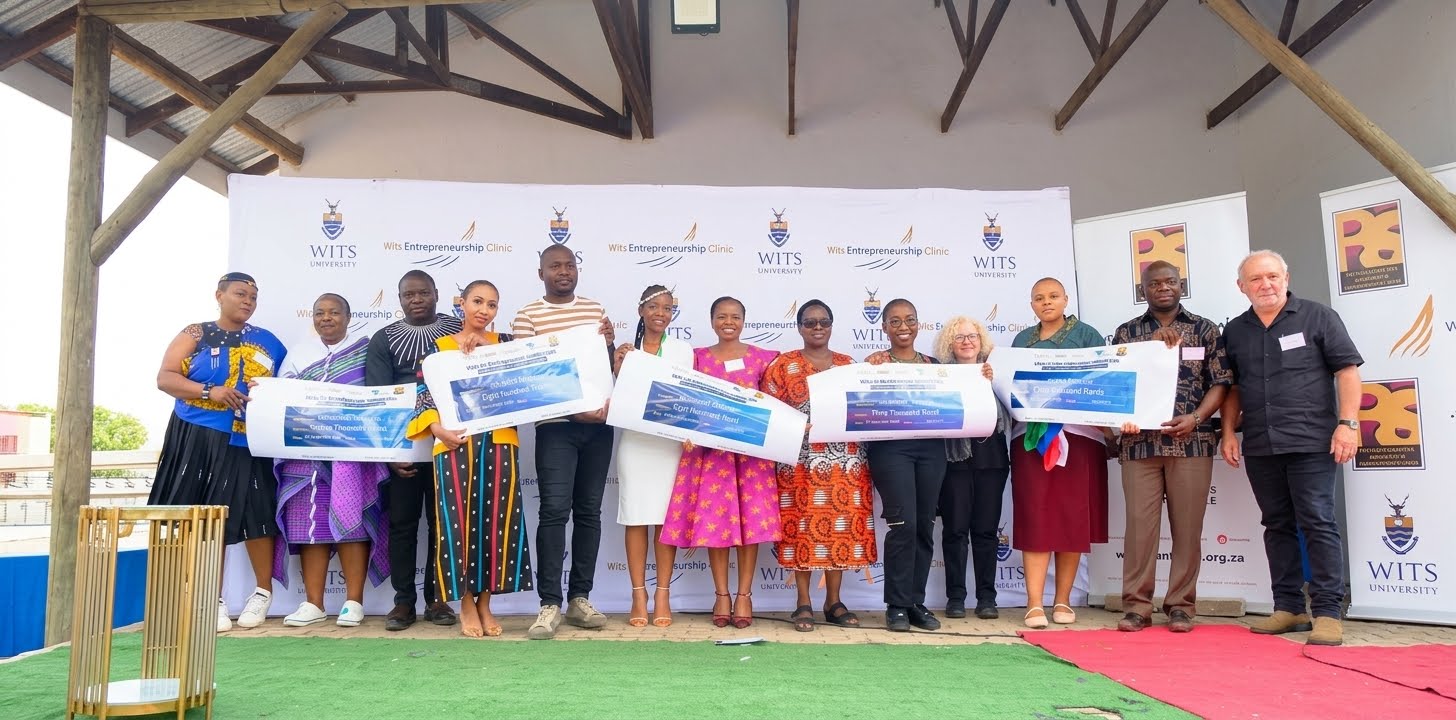
Among them is Nhlamulo Chawana, winner of the 2026 BANKSETA Entrepreneurship Programme, who is expanding his funeral service business.
Participants were recognised at the programme’s closing ceremony in Agincourt on 19 September.
The partnership builds on relationships established through more than three decades of research and community engagement. The Agincourt research area covers rural villages in Bushbuckridge, in north-eastern South Africa, where the SAMRC/Wits-Agincourt Research Unit has studied changes in people’s health and living conditions since 1992.
For Ngoni Ngwarai, the Unit’s Assistant Director of Systems and Operations, supporting local enterprise responds to economic pressures that are familiar from this work.
“The area continues to experience high levels of unemployment especially amongst the youth leading to high levels of poverty,” he says.
Community members are already starting small businesses, Ngwarai explains, but many lack the skills needed to manage and grow them. Helping owners develop those skills is part of building more resilient communities, so households can better sustain an income through difficult times.
Building on existing enterprise
BANKSETA’s funding brings business development support into communities through the Wits Entrepreneurship Clinic, which is hosted by the School of Business Sciences.
Says Elelwani Netshituni, BANKSETA Regional Manager for Limpopo and Mpumalanga, “Rural entrepreneurs are already finding ways to earn a living in difficult conditions. Our role is to help them develop the skills to build more sustainable businesses. Through this partnership, we can bring university expertise into communities where access to business support is often limited. We want this investment in training to help entrepreneurs support their households and, as their businesses grow, create opportunities for others.”
The 2026 cohort follows an earlier group of 60 learners trained in 2024. The collaboration combines the Clinic’s business expertise with Agincourt’s understanding of local circumstances and its established community relationships.
“Entrepreneurship training has to connect with the decisions a business owner makes every day, from setting prices to managing cash flow and finding customers. Working with Agincourt helps us understand the conditions in which these businesses operate, so that the support is relevant to participants’ circumstances. The partnership also gives us an opportunity to learn from entrepreneurs themselves and bring that understanding into our teaching and research,” says Dr Khosi Radebe, Director at the Wits Entrepreneurship Clinic in the Wits School of Business Sciences.
Putting community relationships to work
For Agincourt, the programme creates a practical link between its research and the livelihood needs of the households it works with.
Ngwarai says the collaboration demonstrates how the Unit can “deliver structured, high-quality skills development and entrepreneurship programmes to communities”.
Its contribution is to connect local demand for business skills with the expertise and funding needed to provide them. The longer-term aim is for enterprises, such as Chawana’s funeral service business, to provide more dependable household incomes and, as they expand, opportunities for local employment.