

Wits postgrads showcase solutions for real-world impact at cross-faculty symposium
- Wits University
The Wartenweiler Library on Braamfontein Campus East buzzed with intellectual energy as Wits hosted its 17th Cross-Faculty Postgraduate Symposium.
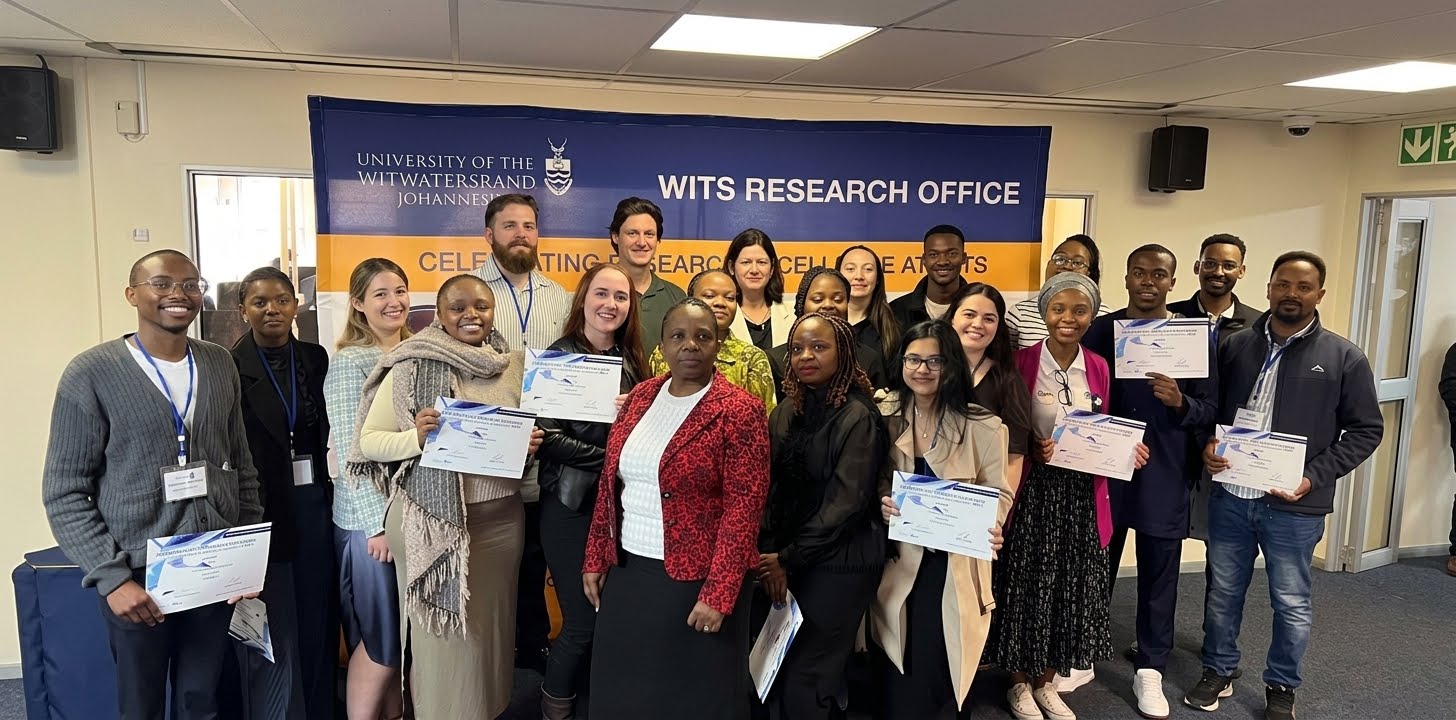 The annual flagship event brought together over 80 master’s and doctoral researchers across all five faculties to pitch innovative solutions to some of society’s most complex challenges. The symposium provides a crucial platform for postgraduate students to break out of their disciplinary silos and articulate their research to a broader audience.
Presentations spanned various formats, from traditional oral sessions and poster exhibitions to the high-stakes "GradFlash" competitions, where researchers had to condense complex multi-year studies into punchy, high-impact pitches.
"What makes this symposium remarkable is the sheer breadth of ingenuity on display," noted Professor Jennifer Fitchett Head of Postgraduate Studies and Researcher Development, who chaired the opening sessions. "We are seeing a generation of scholars who are not just doing research for the sake of publication, but who are deeply invested in tangible, real-world translation. From medical training environments to clean water technologies, these students are bridging the gap between basic scientific discovery and practical patient or community outcomes."
Evaluating these diverse presentations was an expert panel of seven cross-faculty judges who reviewed the abstracts and evaluated the live presentations. The 2026 judging panel comprised Drs Brigitta Stone-Johnson and Tsepang Leuta (both from the School of Architecture and Planning), Christopher Ealand (Microbial Innovation and Research Advancement Hub – MIRAH), Associate Professor Dannielle Cerbone (Margo Steele School of Accountancy), Dr Pierre Mubiayi (School of Chemistry), Sylvia Fanucchi (School of Molecular and Cell Biology), and Associate Professor Thobeka Nkomo (School of Human and Community Development).
In a powerful keynote address titled Partly Cloudy, Fully Committed: A Researcher’s Journey Through Academia, Dr Ogone Motlogeloa, from Demography and Population Studies in the Faculty of Humanities, shared personal reflections on navigating the systemic and emotional terrains of higher education.
"The road through advanced research is rarely a straight line; it is often weathered by uncertainty and cloudiness," Motlogeloa told the attendees. "But the true value of an academic lies in staying fully committed to the communities we study, ensuring our scholarship remains locally grounded and inclusive."
The awards ceremony on Friday, 11 September, at the Postgraduate Research Hub in Solomon Mahlangu House celebrated outstanding achievements across several specialised categories. The symposium closed with a sense of collective momentum, reinforcing Wits’ strategic mission to nurture globally competitive researchers who remain deeply responsive to local contexts.
Here are the prize-winners and their research interests:
PUBLICATION AWARD
Mankomile Vinolia Ntjikelane is a Researcher at the Health Economics and Epidemiology Research Office (HE²RO). Her work focuses on differentiated models of care for HIV treatment, with a particular interest in improving patient outcomes through patient-centred service delivery approaches. She contributes to projects that examine the design and effectiveness of tailored care strategies to enhance treatment adherence, retention in care, and overall health outcomes among people living with HIV. She is also involved in research examining the impact of global funding cuts on HIV programmes, including how changes in funding influence service delivery, healthcare providers, and patient experiences.
GOLD Engagement Award
Nadine Fahr-Becker is an MBA and MPhil graduate, and part-time PhD student at Wits Business School’s African Energy Leadership Centre. She works at the intersection of strategy, governance and risk, leveraging cross-functional energy experience to her research. Her PhD explores South Africa’s energy transition through a multi-level perspective, with specific interest in energy modelling, systems stochastic approaches to uncertainty, Large Language Models (LLMs) and energy citizenship. She is energised by interdisciplinary complexity, crafting chaos into connections and finding unexpected possibilities within wicked problems.
MASTER’S ORAL
1st Prize, Grace Chota is an MSc Chemistry student at Wits. Her research focuses on using nanomaterials to address pharmaceutical contaminants in water. She enjoys exploring how chemistry can contribute to solving real-world environmental challenges and is passionate about growing as a researcher and making a meaningful contribution to the field.
2nd Prize, Phumudzo Matsila is a storyteller, theatre-maker, researcher, and Master of Arts graduate from Wits University. Through Drama for Life, he developed Echoes of the Unseen, a practice-led research project asking how we can stage trauma without causing more trauma. His method – Narrative Exchange – is grounded in Ubuntu and is a method through which performers are invited to embody each other's stories, creating distance, witnessing, and collective healing.
3rd Prize, Sinovuyo Halana investigates how cardiovascular disease begins before it becomes clinically apparent. An MSc (Medicine) candidate in Physiology at Wits, his research examines the impact of metabolic syndrome on vascular health in young South African adults, with a focus on arterial stiffness and subclinical vascular injury.
MASTER’S GRADFLASH
1st Prize, Safeera Sabjee is an award-winning Master’s student at the Wits Research Institute for Malaria, within the Faculty of Health Sciences at Wits. Her research focuses on Anopheles funestus, a key mosquito vector driving malaria transmission and infectivity across Africa. Driven by a deep passion for science, Safeera is dedicated to translating rigorous academic research into impactful, real-world health solutions. By masterfully condensing her complex thesis into a first place, 1-minute pitch across all faculties, she has demonstrated the tenacity and drive to push the boundaries of scientific discovery.
2nd Prize, Mihle Sopam is a Wits ICT staff member and also completing her Master’s in Digital Arts at Wits. Her research explores the intersection of art and technology. Her interests have been shaped by her grandmother, who shared ancestral encounters and taught her to recognise divine intervention. Those early conversations sparked curiosity about African spirituality and collective identity leading to her interest in African art.
3rd Prize, Boithuso Phale is a final-year MSc Applied Bioinformatics student whose work combines data science and biology to understand how monocytes and macrophages respond to viral infection. She has a passion for using biological data to gain meaningful insight into human immunity.
MASTER’S POSTERS
1st Prize, Bukisa Boniswa is a Geographic Information Systems (GIS) and urban planning researcher with interests in GIS, transport planning, spatial accessibility, urban inequality and spatial justice. Her MSc research examined how accessibility to the MyCiTi BRT system shapes mobility-enabling opportunities and transport equity in Cape Town, combining GIS analysis with the lived experiences of MyCiTi users. She is currently developing her MSc research for publication and is interested in using geospatial technologies and urban analytics to contribute to more equitable and inclusive cities.
2nd Prize, Warwick Brown is an MSc student in the School of Electrical and Information Engineering, where he works in the Optical Communications Laboratory. His research treats multimode optical fibre as a physical computing medium: light scattered through the fibre produces a complex speckle pattern, and a simple linear model trained on that pattern recovers information that would otherwise demand substantial digital signal processing. The approach moves computational load out of the electronics and into the optical channel itself, which matters for high-capacity links where power and latency budgets are tight.
3rd Prize, Vanessa Visser is completing her Bachelor of MBBCh in the Faculty of Health Sciences. Her research interests are in neuroscience and clinical medicine; she is fascinated by the phenomenology of the conscious mind and its entanglement with the underlying neuronal matter. Yet, she remains grounded in the clinical care and prevention of neurological and psychiatric disorders. She hopes to advance both the revolution of personalised medicine, and the understanding of the human experience in neurophenomenology.
PhD POSTERS
1st Prize, Itumeleng Tshwane is a PhD student in Political studies and a WESAF Fellow. She holds a master’s in Geosciences from Wits y and an interdisciplinary master’s on sustainability from the University of Edinburgh. With a deep commitment to understanding and solving the challenges faced by mining communities, Itumeleng’s research explores how local communities, mining companies and government construct and contest the meaning of development in the context of one of South Africa’s largest mines, centering local voices to inform more inclusive development.
2nd Prize, Musawenkosi Buthelezi is completing (currently under examination) his PhD in Geology in the School of Geosciences at Wits. His doctoral research integrates multi-source geoscientific datasets with novel machine-learning models for predictive mineral prospectivity mapping in South Africa's Northern Cape Province. As part of his PhD, he authored two published peer-reviewed papers in Ore Geology Reviews and the South African Journal of Geology, with two additional papers under review, adding to his prior published work in Bushveld Complex thermometry. His scholarly expertise bridges analytical geochemistry, igneous petrology, geophysics, and computational data integration for predictive geoscience modelling.
3rd Prize, Abebaw Gedef Azene is a PhD Fellow in Biostatistics at the School of Public Health, sponsored by SSACAB II. His PhD dissertation focuses on diabetic complications among people with type 2 diabetes mellitus in South Africa, using joint longitudinal and competing survival analysis. Before commencing a PhD fellowship, Abebaw worked as an assistant professor of Biostatistics at the School of Public Health, Bahir Dar University, Ethiopia. His research interests are survival analysis and machine learning on public health data.
PhD ORAL
1st Prize, Matthew Estment is a PhD candidate in the Environmental Geochemistry Lab in the School of Chemistry. His doctoral research investigates the trophic transfer of emerging contaminants, per- and polyfluoroalkyl substances (PFAS) and microplastics, in critically endangered African penguins and vulnerable sea turtles (Green and Loggerhead). He has a keen interest in analytical chemistry and the instrumentation, such as HPLC-MS, used to quantify pollutants. He is passionate about applying high-resolution instrumental methodology to aid conservation efforts. While mastering trace analysis of PFAS and mass spectrometry is intellectually fulfilling, the true impact of this work lies in its real-world application. Investigating how persistent, bioaccumulative contaminants move through food webs and helping uncover the lesser-known stressors facing endangered marine life. He aims to generate new insights into the threat posed by these pollutants, the results of which will improve our understanding of how marine pollution affects endangered species in southern African waters and provide crucial information to guide conservation strategies and pollution mitigation efforts.
2nd Prize, Courtney Jeffrey is an intercalated MBBCh-PhD candidate in the School of Physiology. Her doctoral research focuses on unravelling neuropathic pain pathways in keloid scars. Being immersed in medical training while conducting doctoral research provided a unique perspective on bridging the gap between clinical patient care and basic scientific discovery, ensuring that her scientific findings can translate directly into real-world patient outcomes.
3rd Prize, Lesego Masenya is a PhD candidate and Economics Lecturer in the School of Economics and Finance in the Faculty of Commerce, Law and Management. She is passionate about teaching and research, with research interests in inequality, poverty, development, political economy, and gender dynamics. Her research seeks to better understand the economic and institutional factors that shape inequality and development, particularly in the South African context.
GRADFLASH PhD
1st Prize, Simisola Ayodele is a PhD candidate in the Wits Advanced Drug Delivery Platform research unit at Wits. Having completed both his Bachelor of Pharmacy and Master of Pharmacy degrees with distinction at Wits, his academic career is deeply rooted in advancing pharmaceutical sciences. His doctoral research focuses on the digital design and 3D printing for targeted, palatable nanomedicines to improve treatment adherence in paediatric HIV patients.
2nd Prize, Chanel Blignaut is a PhD candidate in the School of Molecular and Cell Biology in the Faculty of Science. Her research profile spans biochemistry, computational pharmacology, and analytical protein chemistry. A central pillar of her recent laboratory work involves evaluating the structural, optical, and biophysical properties of Cannabidiol (CBD). Her research investigates how CBD interacts with biological proteins and how the compound behaves in standard physiological buffers (such as HEPES matrixes)
3rd Prize, Dr Moyahabo Julius Rampya is a medical doctor and PhD candidate in Public Health. His research examines the implementation of acute stroke programmes at public tertiary hospitals in Johannesburg. Using patient-level data, interviews with patients, caregivers and clinicians, and policy analysis, his work explores where delays occur along the stroke-care pathway and why many patients do not reach time-sensitive treatment. His broader interests include implementation science, health-system strengthening, stroke policy and improving equitable access to evidence-based stroke care in South Africa.