Disability Rights Unit celebrates 40 years of student success
- Wits University
The Unit has been lauded for pioneering access to higher education by removing barriers that impede disabled students from succeeding.
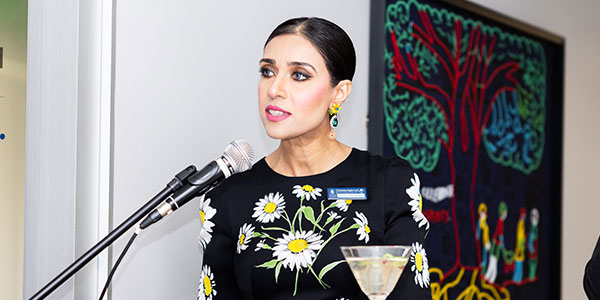
The Disability Rights Unit (DRU) marked four decades of advocacy and supporting student success with an event that brought together stakeholders who have been part of its journey.
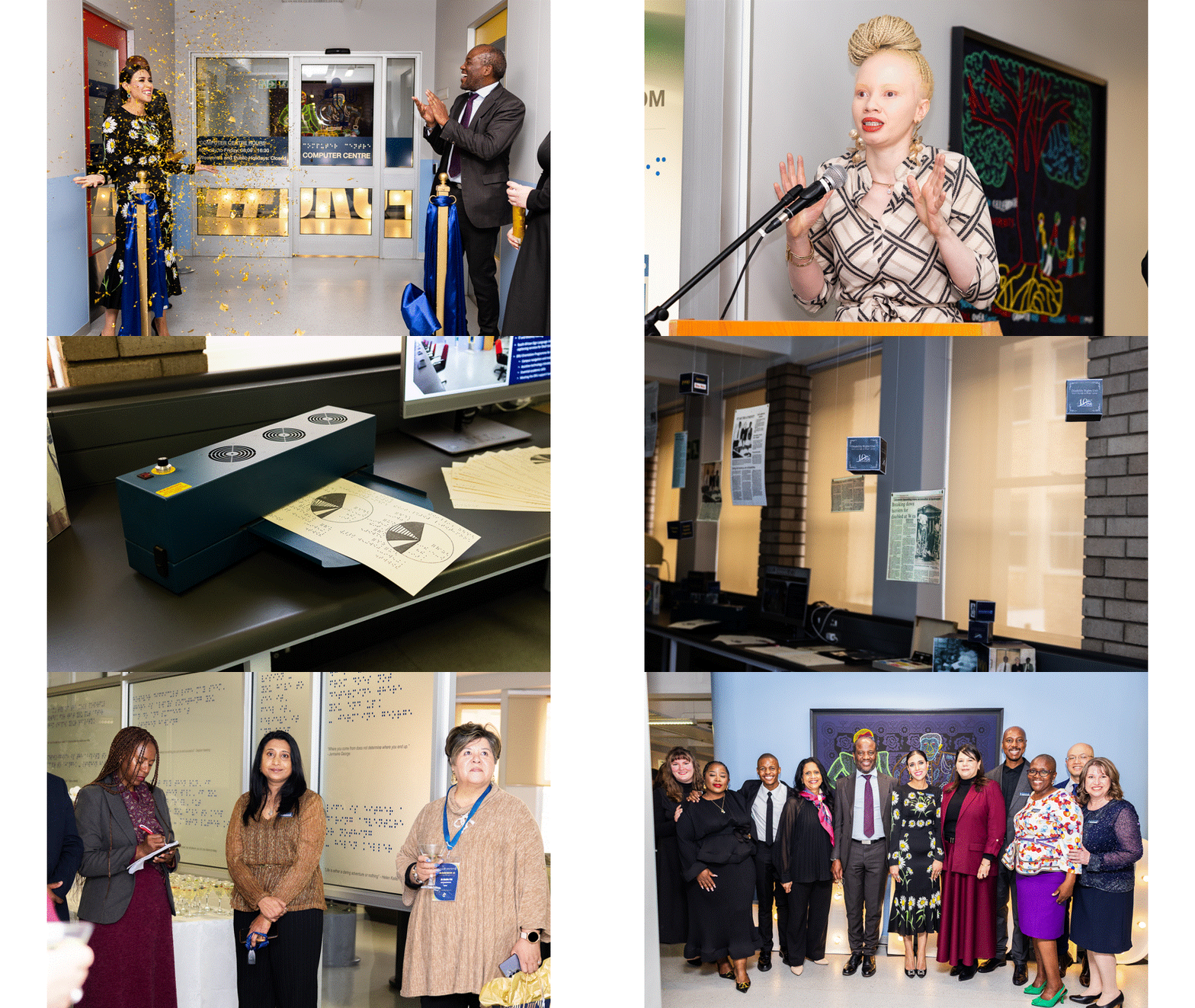
The anniversary celebrations included the opening of a commemorative exhibition showcasing the Unit’s history, alongside reflections from University leadership, former directors, staff, and alumni.
Established in 1986 with just nine students, the Unit has grown into one of South Africa’s leading university disability support services, supporting more than 1 126 students in 2025 alone.
In her opening remarks, Head of the Disability Rights Unit Dr Leila Abdool Gafoor said the anniversary was about far more than marking a date on the calendar.
“We celebrate the people who have made this journey possible — the pioneers who established the Unit, the students who challenged barriers, and the colleagues, academics, partners and allies who have supported the journey towards disability inclusion at Wits.
“Behind every policy, every accommodation and every statistic is a person whose university experience has been changed because a barrier was removed.”
Pioneers of social justice
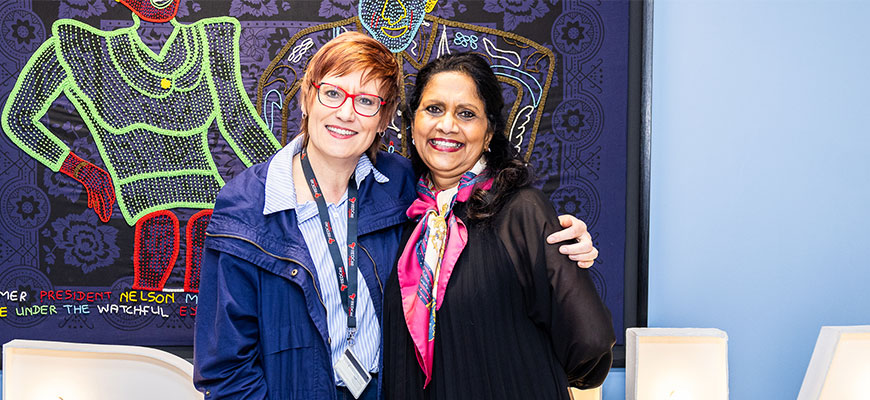
Former head of the Unit Dr Nita Lawton-Misra, who led the Unit from 1999 to 2009, reflected on its core mission and the advocacy that has guided its development over the decades.
“Back then, our daily work was a mix of intense advocacy, resourcefulness, and sheer determination. We fought tirelessly.”
“We were adamant that access is not just physical ramps, braille translation or accessible technology, but a fundamental recognition that accommodation is not a charity or a favour, but a basic human right.”
“We demanded that this be a place where talent and intellectual potential, not physical or sensory barriers, dictate a student's success.”
Lawton-Misra, who is now a registrar at the University of the Western Cape, also reflected on the Unit’s name changes over the years and how these mirrored its evolving mandate — from the Disabled Students Programme (DSP), to the Disability Unit (DU), and now the Disability Rights Unit.
“While to many this may sound like semantics, it goes deeper than that. Language can be a means to empower or establish barriers. The DSP defined students as not being able to. We all know that it's not our disabilities that limit us, but the social structures and physical barriers placed by society on us.”
She explained that the change to the Disability Unit reflected a growing emphasis on supporting and empowering people. Under Dr Anlia Pretorius, who led the Unit from 2009 to 2023, its role expanded beyond providing support to include research, education and advocacy for human rights.
Lawton-Misra noted that the challenges facing disability inclusion have evolved. Digital accessibility, neurodiversity support and systemic inclusion are among the new frontiers, and she expressed confidence in the Unit’s current leadership to take this work forward.
Disability is part of human diversity
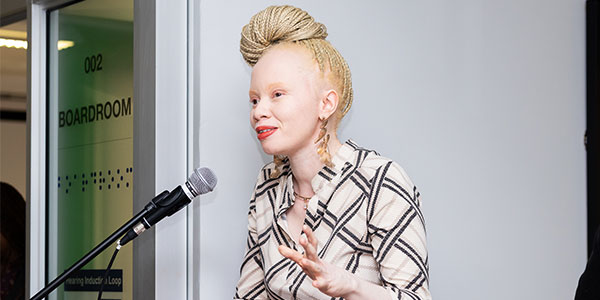
Thando Hopa, a Wits graduate, model, activist, and lawyer who champions global conversation around albinism and diversity delivered a profound speech on how different cultures and environments across the world understand disability and difference.
Irregular bodies are always confronted with the dichotomy of whether they are good luck or bad luck; normal or abnormal with the underlying intention being to extract benefit from irregular bodies, she said.
She added that it was essential that the world move towards viewing disability as simply part of human diversity.
Hopa, paid homage to the DRU, crediting it for creating an inclusive environment that allowed her to flourish.
Joining Wits as a student meant she could focus on ‘becoming the professional she wanted’ as opposed to spending her energy on combating stigma, discrimination, and inaccessibility to resources.
The inclusive experience facilitated by the Unit has informed her advocacy and provided her with a template of how disability inclusion can be structure, said Hopa.
Inclusion enriches and transforms society
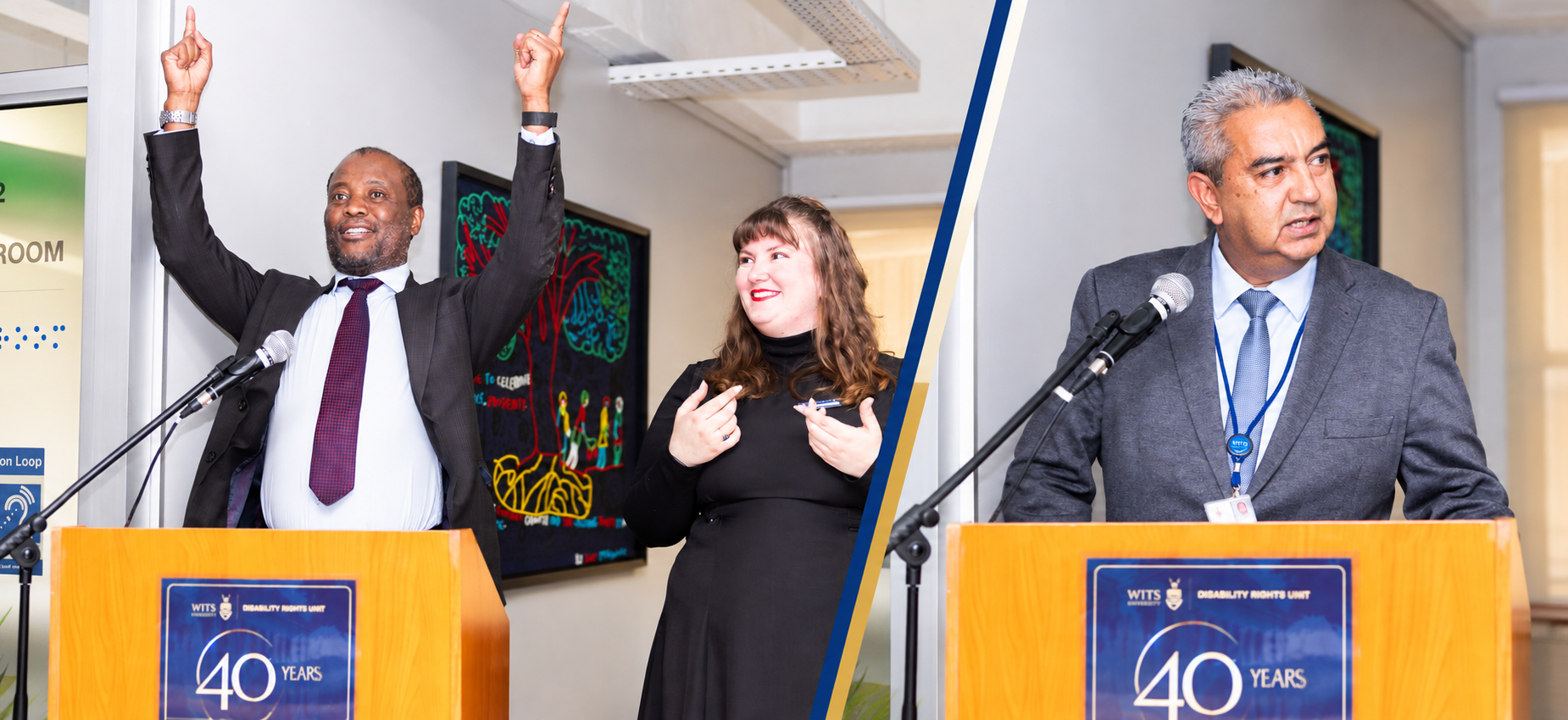
In his address, Wits Vice-Chancellor and Principal Professor Zeblon Vilakazi reflected on the pioneering work of the Unit, which was advancing disability inclusion at a time when South Africa was still in the grip of apartheid.
In 1986, the year the DRU was established, disability inclusion was rarely part of public discourse.
Vilakazi also paid tribute to Wits academics with disabilities who have overcome societal barriers and contributed to research excellence.
Professor Garth Stevens, Deputy Vice-Chancellor: People Development and Culture, highlighted the Unit’s contribution to Wits culture and called on its current custodians to be good stewards.
“Steer it well, preserve it for future generations, and know that when you leave that you leave it in a better state than when you find it.
“For those of you in the future, you represent the horizons that you all aspire to. So be bold, be passionate, and be resolute in the way that you aspire to those horizons.”
A sentiment echoed by speakers throughout the celebration is that inclusion enriches not only the University community but society more broadly.
Related Content