

Coming of age with HI HOPES
- Wits University
Young adults reflect on the early support that helped them and their families find ways to communicate and connect.
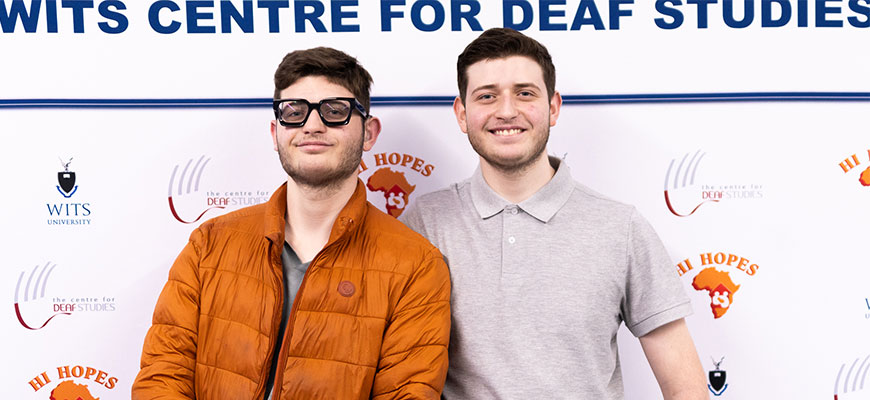
When HI HOPES celebrated its 20th anniversary on 18 September 2026, some of the young adults at the gathering had known the programme since childhood. Their stories showed how support for a deaf or hard-of-hearing child can shape family life long after the early years.
Based at the Centre for Deaf Studies at Wits University, HI HOPES works with families of deaf and hard-of-hearing babies and young children. The celebration took place during Deaf Awareness Month, bringing attention to Deaf culture, sign language and the rights of Deaf people.
Teghan Shaer was the second baby to join HI HOPES. His family learnt that he had hearing loss when he was three months old, and the programme helped them find ways to support and communicate with him. Shaer, who matriculated in 2025, has autism and uses a cochlear implant and a hearing aid, has stepped up in various to bring awareness around Deafness and championed fundraising campaigns to expand access hearing aids for children. He thanked HI HOPES for the foundation it gave his family. His twin brother, Liam, also became part of that learning, helping the brothers to connect as they grew up.
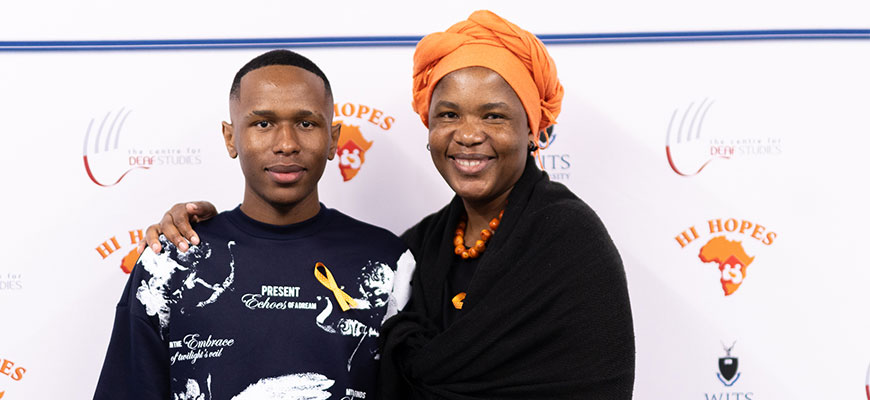
Another former participant, Tumisho Mabulela, joined at the age of three. His hearing loss was identified later, which delayed his early access to language. However, with support from the programme and teachers, he went on to complete his schooling at St Vincent School for the Deaf. Unlike Teghan, South African Sign Language is his only language. His message to other Deaf young people is simple: never give up. He lives by this motto and hopes to open a bakery in Alexandra where he lives, using the skills acquired from school.
A friend in a time of need
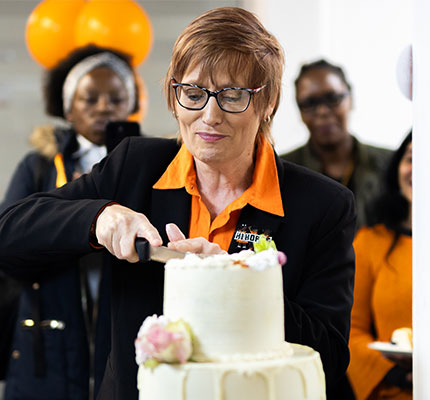 The experiences of Shaer and Mabulela brought the programme’s purpose into focus. HI HOPES Founder and Director Professor Claudine Storbeck says early support helps children develop language and reach important milestones. The programme offers families up to three years of home-based support at no cost. Home interventionists work with families, while Deaf mentors can share their knowledge of language, culture and life as Deaf people.
Over two decades, HI HOPES has supported more than 4,000 deaf and hard-of-hearing children and their families, reaching more than 18,000 relatives and community members. In 2025, it received 210 new baby referrals across six provinces and worked with 57 trained home interventionists and 22 Deaf mentors.
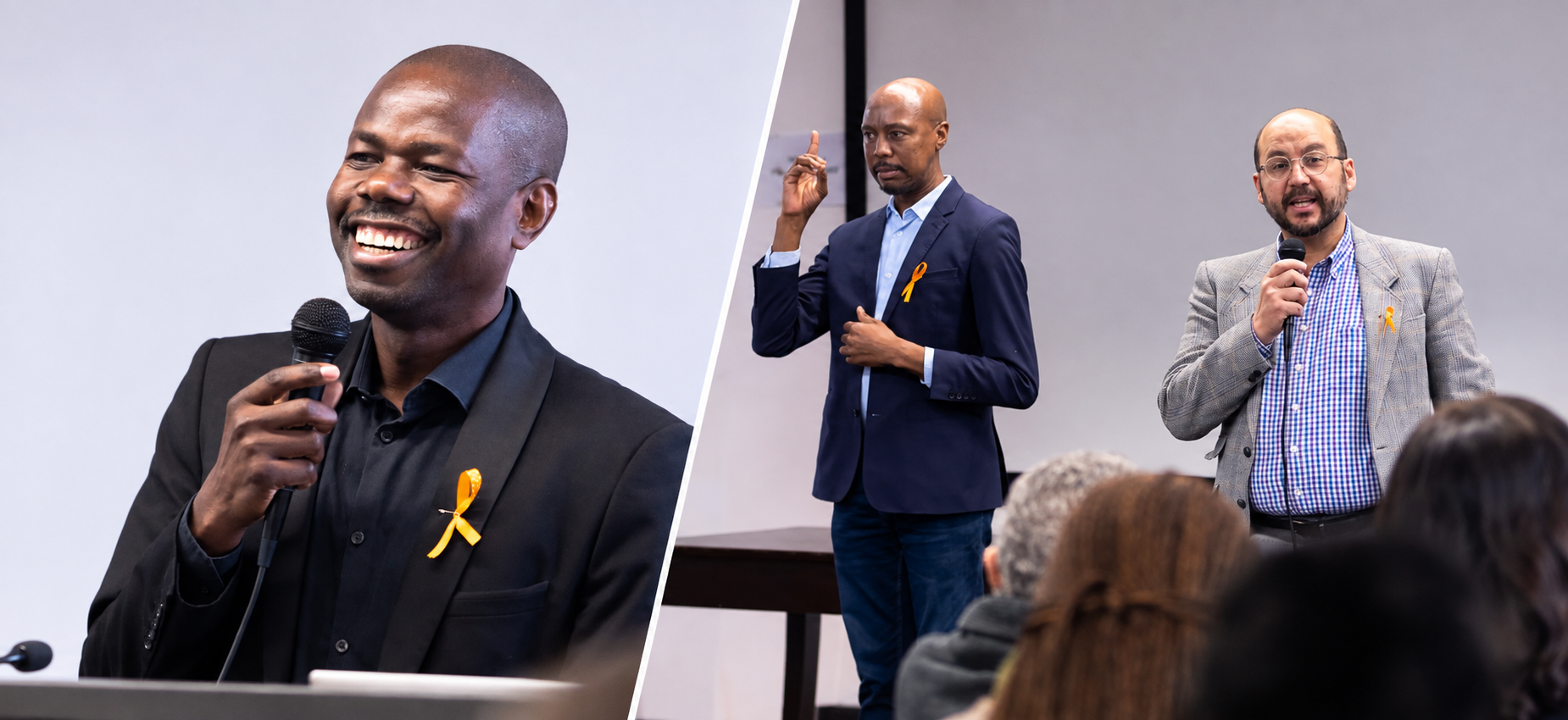
At the anniversary event, Winner Shishenge, Principal at St Vincent School for the Deaf described HI HOPES as a bridge between discovering that a child is deaf and recognising what is possible for that child. Early access to a shared language, Shishenge explained, can help children express themselves and arrive at school ready to learn, while allowing teachers to focus on teaching rather than first establishing basic communication.
That shared language matters at home, too. Professor Victor de Andrade, an audiologist and Assistant Dean for Research and Innovation in the Faculty of Humanities, recalled meeting deaf children who knew their own names but were unsure of their family surnames or addresses. His point was that gaps in communication can leave children without access to parts of their family history and sense of belonging, even when their families care deeply for them.
"This is where HI HOPES plays a role. High Hopes mediates all of these challenges through deaf mentors, home interventionists who guide and help families to build bonds and anticipate the child’s needs as they go through various stages in life," said de Andrade.
Be part of the impact
HI HOPES, is an early intervention programme aimed at providing support to families of deaf and hard-of-hearing babies. One of the simplest ways to support the HI HOPES programme is to nominate HI Hopes as the beneficiary on the Woolworths MyDifference loyalty programme through the Woolies App or in-store. Donations assist the parent interventionists and Deaf mentors to travel and provide services to all the deserving families with Deaf children.
At the very core of the programme is a collaborative partnership between the family and the parent interventionists (the early interventionist that provides the service) in order to enhance the development of the infant or young child with a hearing loss. The home-based support is offered for 3 years at no cost the family. In addition to the parent interventionists the team may include Deaf mentors. These are trained members of the Deaf community, who act as a role model for the family and baby, often answering intricate questions about their language, culture and their personal experiences of being Deaf.
Committed to research-led intervention, HI HOPES conducts active research and maintains an 18-year longitudinal dataset on deaf child development — the largest of its kind in Africa. This work produced 13 peer-reviewed publications in 2024/2025 alone, including six co-authored papers as part of an international Family-Centred Early Intervention consensus panel.
In a quest to promote SASL not only as a language for the Deaf and hard-of-hearing persons but as a language for all South Africans, the Wits Centre for Deaf Studies offers a course in South African Sign Language through Wits Plus. HI HOPES and the Centre have been at the forefront of championing disability equity, protecting human rights and eliminating systemic exclusion.
Related content
NGO brings high hopes to the world of deaf children
Help twin boys assist the hearing impaired
Disability Rights Unit celebrates 40 years of student success