Who We Are


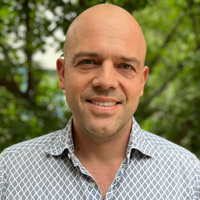
Iginio Gagliardone is Professor of Media Studies in the School of Literature, Language and Media, Faculty of Humanities, at Wits University and the inaugural SA-UK SARChI Chair in the Digital Humanities. His works have explored the evolution of distinctive models of the information society in the Global South, with a specific focus on Africa.
Over time this has taken the form of research on the relationship between digital technologies and nation building; China's role in shaping digital infrastructures in Africa; and how hate speech and conspiracy theories take on distinctive forms at different latitudes.
He is the author of "Countering Online Hate Speech" (2015), “The Politics of Technology in Africa” (2016) and “China, Africa, and the Future of the Internet” (2019). His most recent work examines the international politics of Artificial Intelligence and the emergence of new imageries and materialities of technological evolution in Africa and the Global South.

Didintle Maphoto is the Administrative Officer for the SA-UK SARChI Chair in the Digital Humanities at Wits University, where she supports the Chair's research and public engagement activities through project coordination, administration, event management, and stakeholder engagement.
She also serves as the Production and Community Coordinator for the Future in the Humanities (FITH) initiative, supporting the delivery of creative projects and community-focused programmes.
Didintle holds a Bachelor of Arts degree, double majoring in Communication and Media Studies and Psychology, as well as an Honours degree in Journalism. She is currently a Master’s candidate in Communication Studies. Her work is driven by an interest in the intersection of media, technology, and society.
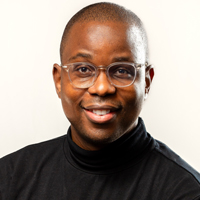 Andile Masuku serves as both strategic advisor to the Chair and executive editor of Future in the Humanities (FITH), the Chair's affiliated public engagement platform.
He is co-founder and executive producer of African Tech Roundup, a technology media platform known for bringing an African vantage point to the forces reshaping markets and industries worldwide.
Based between South Africa and the United Kingdom, he works with investors, founders, and institutional partners on ecosystem strategy, stakeholder engagement, and the narratives that shape capital decisions.
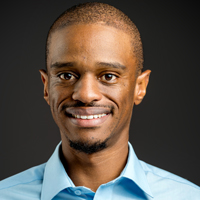
Gwinyai Regis Taruvinga holds a PhD from the Political Studies Department at the University of the Witwatersrand in Johannesburg, South Africa.
He is currently a post doctoral fellow in the SARChI Chair for the Digital Humanities, where he is exploring the impacts of Artificial Intelligence on governance in Africa within the context of the African Union’s (AU) Agenda 2063.
Dr Taruvinga is also a sessional lecturer in the Wits Political Studies Department, where he teaches Introduction to Political Studies, Introduction to Comparative Politics in Africa, and Research Methods.
Dr Taruvinga’s work primarily focuses on governance on the African continent, with particular emphasis on institutions and water governance in African countries. He has published extensively on the role of the military in West Africa, the governance of water resources in Southern Africa, and the institutional legacies of apartheid and colonialism in South Africa and Zimbabwe.
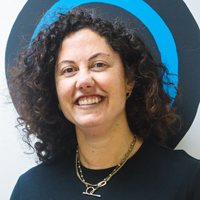 Maya Loon is a post doctoral fellow for the SA-UK SARChI Chair in the Digital Humanities at Wits University and has a background in Fine Art (MFA) and Media Studies (PhD). Her recent work has explored online representations of mothering in middle class South Africa with particular focus on anxiety and communities of trust, display and performance.
Current work within the chair extends this interest into themes of displays of eco-feminism in middle class South Africa and narratives of the mistrust of science, and boutique alternative health offerings marketed via social media.
Maya is also engaged in the Mental Health project within the Chair, working alongside associated scholars and postgraduate students to develop research relating to mental health language and visual representations online.
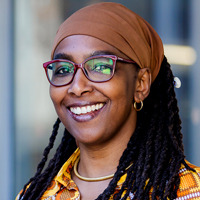
Geci Karuri-Sebina is a scholar-practitioner working at the intersections between people, place, technology, and time.
She is the ICESCO Chair on Innovation and Futures in Africa, and serves in various other capacities, including with the MIND Institute (Fellow); African Centre for Cities (Adjunct Professor); the School of International Futures (Principal); the African Foresight Network / SA Node of the Millennium Project (Founding Director); and the postactivist movement Dancing With Mountains (Curator).
She is widely recognised and published in the fields of urbanism, governance, innovation, and anticipation. Geci holds undergraduate degrees in Computer Science and Sociology (Coe); dual Masters degrees in Architecture and in Urban Planning (UCLA); and a PhD in planning and innovation studies (Wits).
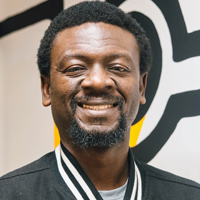
Samuel Olaniran is a computational social scientist whose research examines mis- and disinformation, information integrity, and the toxic online environments that increasingly shape public discourse, social values, and political life across sub-Saharan Africa.
His approach treats digital platforms not merely as sources of data, but as cultural artefacts and spaces of meaning-making that require both computational analysis and humanistic interpretation. His research also explores the societal challenges posed by Geographic Artificial Intelligence, focusing on how spatial narratives are created, contested, and weaponised in an era characterised by growing uncertainty over truth and authority.
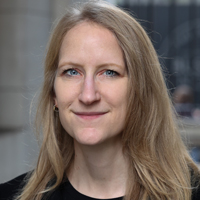
Stephanie Diepeveen is a Senior Lecturer in Global Digital Politics in the Department of Digital Humanities at King’s College London. Her research interrogates power relations between citizens and states, and how they are mediated in a digital world.
Her works spans political theory and policy, including previously as the lead of the Digital Societies Initiative at ODI Global, a Global Affairs thinktank.
Her research, teaching and policy engagement is driven by an interest in the intersection of power, scholarship and global inequalities and injustices, and possibilities for disruption and change. She has led on multiple multi-country and multi-disciplinary research projects, and served as Co-Lead for the Think20 Taskforce on Inclusive Digital Transformation for South Africa’s G20 presidency.

Matti Pohjonen works at the intersection of anthropology, philosophy and AI. His research interests have revolved around finding new ways to understand emerging digital cultures in comparative global contexts.
This has included work on blogging cultures in India, interactive radio and SMS methods for hard-to-reach populations in East Africa, comparative research on social media extreme and hate speech in Ethiopia and in Finland, the global politics of platforms, and the use of AI in social sciences and humanities research.
Matti currently works as a Research Fellow in AI in Social Research on Diversity and Senior Researcher for the Helsinki Institute for Social Sciences and Humanities (HSSH), University of Helsinki, and co-leads ARM, an EU Horizon-funded project on authoritarian information suppression globally.
He received his MA and PhD from SOAS, University of London, where he also worked as a Lecturer in Global Digital Media (2018-2020). He has more than 10 years of teaching experience, including being awarded the SOAS Directors Teaching Prize for Innovative Teaching in 2020.