

About Us
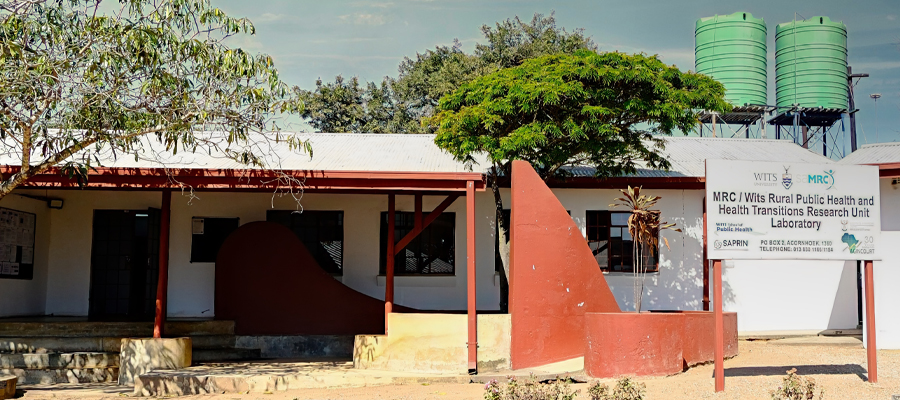
Established in 1992, the SA Medical Research Council/Wits Rural Public Health and Health Transitions Unit (Agincourt) is a globally recognised health, population and development research initiative based in rural South Africa.
The unit is one of Africa's longest-running health and demographic surveillance systems.
Agincourt's research areas address four fundamental questions:
- How can we better understand and anticipate rapid, unpredictable shifts in health, population, and social transitions?
- What are the complex interactions between social, environmental, behavioural, and biological factors that shape vulnerability and resilience across the life course?
- When, where, and how can we intervene most effectively to drive meaningful change?
- What are the implications for health, social, and developmental policies to create a more equitable, socially cohesive, and economically productive society?
Our primary research base sits in a fast-changing rural region, 500km northeast of Johannesburg, near Kruger National Park and southern Mozambique.
Pioneering data infrastructure and tools
- Making well-characterised data available to research and policy communities is a priority.
- The Agincourt Health and Socio-Demographic Surveillance System (HDSS) holds high-resolution longitudinal data that drives new discoveries and cutting-edge research. Spanning genomic, physiological, and clinical data, it supports groundbreaking studies, cohorts, and trials across the life course.
- Once limited to high-income settings, advanced technologies now shape our work—smartphone apps tackle adolescent depression, DXA scans assess osteoporosis, and MRI scans unlock insights into dementia.
- We are a founding node of SAPRIN, a national research network uniting public and academic institutions to drive high-impact science. Generating critical data supports evidence-based policy and shapes a more resilient, responsive research ecosystem for the country.