 Oloo Allan Thomas is an accomplished research and monitoring & evaluation (M&E) professional with over seven years of experience coordinating and implementing research projects across the health, social protection, and development sectors in Kenya. He holds a bachelor’s degree in Sociology with IT from Maseno University, a Higher Diploma in Project Management from the Kenya Institute of Management, and a Certification in Data Analysis (RStudio, SPSS). His work spans quantitative and qualitative research design, Monitoring and Evaluation, and the translation of complex findings into actionable insights for programs and policy.
He has been a Research Associate at the USAID funded Palladium, Health Policy Plus (HP+) , where he strengthened research design systems and supported the National Health Accounts survey, followed by a role as Research Associate at Save the Children International, coordinating qualitative and quantitative stakeholder assessments under the MEAL framework. Most recently, as Assistant Research Officer at LVCT Health, he coordinated the “Integrating Female Genital Schistosomiasis into Sexual Reproductive Health (FGS-SRH) project,” leading data quality audits, capacity-building, and analysis that informed uptake strategies and improved health systems.
Oloo currently serves as Research Coordinator for the African Climate-Care Nexus Research Hub (ACACIA), “Assessing the Direct and Indirect Effects of Climate Change on Care Work in Kilifi, Kenya,” at Aga Khan University, an IDRC-funded initiative focusing on the climate-care work nexus in Kenya for sustainable and equitable economies. In this role, he coordinates activities across AKU, consortium partners, advisory group members, and external collaborators, supports stakeholder mapping across Kenya to identify key care–climate actors and policy entry points, and liaises with Health and Demographic Surveillance System (HDSS) teams to support data access processes, documentation, and coordination of research activities. He also supports data preparation workflows, including documentation and coordination of climate-data matching processes, and leads the preparation, submission, and renewal of ethical and NACOSTI approvals in line with AKU, national, and partner requirements.







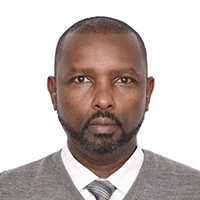 Dr Anthony Ngugi is a Professor of Epidemiology and Population Health with 18 years of experience in health research in Africa. He is currently the Chair, Department of Population Health and Associate Dean for Research at the Medical College, Aga Khan University – East Africa. His interests range from healthy ageing in LMICs, epidemiology of epilepsy, community health information systems, and application of data sciences to population health challenges. He trains and mentors students and faculty of research methods, application of principles of epidemiology in research and epidemiological analyses. Dr. Ngugi is a MPI of the NIH funded study to establish a Longitudinal Study of Health and Ageing in Kenya (LOSHAK) as a platform for long-term population-based cohort studies of health trajectories and their determinants in a rapidly ageing population in a LMIC context. He is also a Kenya CO-PI of the MRC (UK) funded Multi-National Implementation of Multimodal Strategies to promote Healthy Brain Ageing in Sub-Saharan Africa (The AFRICA-FINGERS Project). He is also a key member of the NIH/NIA and HCAP- International Network supported efforts to establish a HCAP-Africa Network. Dr. Ngugi also has a key focus on strengthening local health systems by providing technical data solutions in low resource settings. He is the architect and PI of the Kaloleni-Rabai Health and Demographic Surveillance System (KRHDSS) in the coast of Kenya, a demographic and health data infrastructure and 100k plus cohort that supports the local health system in data generation and use while also serving as a population health research platform. His interests also include the application of data science approaches to predict population health outcomes, improving the allocative efficiency of health interventions and developing and testing precision public health tools useful to community and local public health officials.
 Dr Felix Oluoch
 Dr Jackim Nyamari is an Assistant Professor in the Department of Population Health at Aga Khan University. He holds a Ph.D., a Master of Philosophy, and a Bachelor of Science, all in Environmental Health. Dr Nyamari has extensive experience in research and capacity building, with scholarly expertise spanning climate change and health, occupational health and safety, injury prevention, and food and water sanitation. He has been actively involved in various multidisciplinary and collaborative research projects, working with partners both within and beyond Africa. Dr Nyamari brings to this team a strong methodological expertise and a demonstrated ability to engage meaningfully with local communities, co-designing contextually relevant and sustainable approaches to addressing complex local and global health challenges.
 Dr Rosebella Iseme-Ondiek is an Assistant Professor in the Department of Population Health at Aga Khan University. She holds a PhD in Clinical Epidemiology and Community Medicine, a Master of Public Health (Distinction), and a Bachelor of Biomedical Science. Her research spans food systems, nutrition, non-communicable diseases, and health systems, with a strong emphasis on capacity building and applied, policy-relevant research in low- and middle-income settings.
 Natasha