

Why AI still needs humans: key lessons from the Wits FHS Prestigious Lecture 2025
- FHS Communications
In the near future, people, pharmacists and employers won’t need to decipher difficult-to-read doctors’ scripts and sick notes.
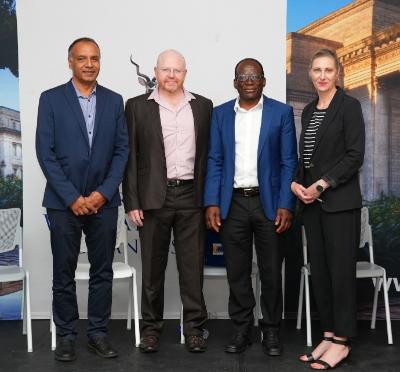
An ambient scribe, an AI tool that listens in on a medical consultation and automatically generates a written document, could also cut hours of administrative work, ease doctors’ burnout, and redirect more time to actual patient care. This was relayed by Professor Bruce Bassett, AI Chair at the Wits Machine Intelligence and Neural Discovery (MIND) Institute, who presented at the Wits Faculty of Health Sciences’ 2025 Prestigious Research Lecture, “From Data to Diagnosis: Rethinking Medicine in the Age of AI.”
There’s little doubt that AI is reshaping medicine, but pertinent questions and challenges remain, including reliability and ethics. Encouragingly, human expertise and locally-generated data remain at the centre of any meaningful healthcare interaction.
“Tools such as the ambient scribe are only as reliable as the data that feeds them. The adage ‘garbage in, garbage out,’ will continue to be true,” said Professor Bassett. He explained that flawed or incomplete data can lead to misdiagnosis, biased treatments and inappropriate treatment. “AI can’t compensate for the absence of African genomic information or inconsistent health records, for example. Humans will always provide the necessary quality.”
Therefore, human-led expertise, and particularly, AI trained on African-specific data, was central to the prestigious lecture’s overall message. Professor Collen Masimirembwa, Senior Scientist at the Sydney Brenner Institute for Molecular Bioscience at Wits, who also presented at the lecture, reminded the audience that should AI be meaningfully used in healthcare, data reflecting African biology, epidemiology and treatment responses are critical.
“Africa has the highest genomic diversity in the world, but remains underrepresented in global medical datasets. African populations have about 200 times more genetic variation than Europeans, but diagnostic tools, risk scores and pharmacogenetic studies are based on non-African data,” explained Professor Masimirembwa.
He has done extensive work on the antiretroviral drug, efavirenz (EFV). When African patients took the standard 600 mg dose of EFV, they reported neuropsychiatric symptoms, including increased suicidal thoughts. Professor Masimirembwa found that patients from Zimbabwe and Botswana carried a gene variant that increases EFV metabolism, making the standard dose (tested in non-African populations) toxic. Indeed, genomic studies in Botswana showed that 13.5% of the population would not benefit from EFV-based therapies at all.
“Lower genomically guided doses at 400mg led to increased treatment compliance and better HIV viral control. These results have profound impacts on national HIV policies. Indeed, Botswana shifted to dolutegravir-based regimes,” said Professor Masimirembwa.
Professor Bruce Bassett shifted the discussion to multimodal AI systems which can influence diagnostic reasoning and patient management. He used the example of doctors missing pulmonary embolism diagnoses, which AI systems successfully flagged. “We see a rapid rise of digital biology and the growing ability of AI to synthesise radiology, pathology, genomics and clinical histories to generate preliminary diagnostic hypotheses.”
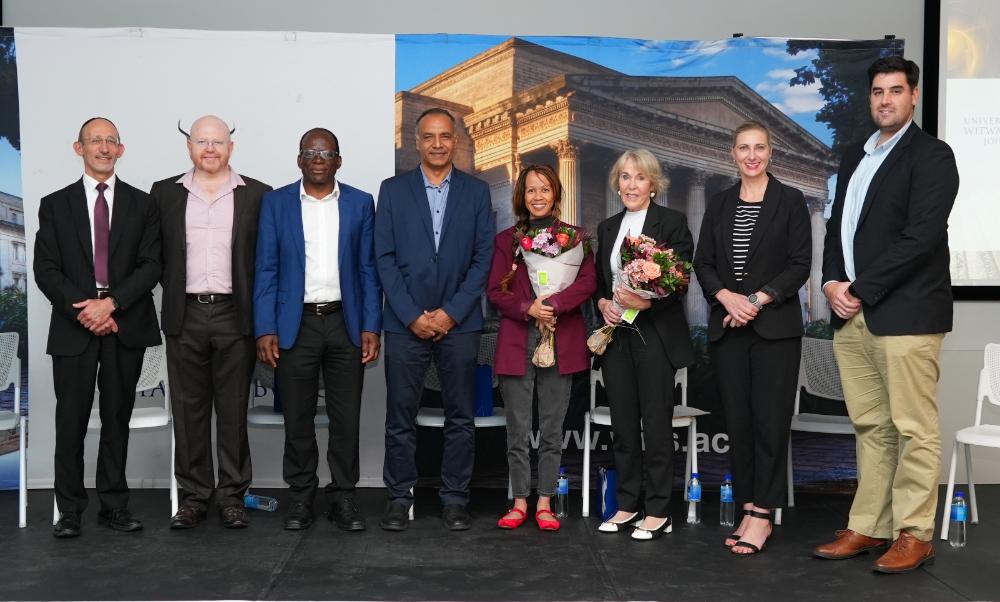
The presentations were further deliberated on during a panel discussion chaired by Professor Helen Rees, the executive director of Wits RHI. Panellists included Dr Maurice Goodman, Discovery Health’s Chief Medical Officer, Dr Scott Mahoney, Senior Programme Officer for AI and Health at the Gates Foundation and Dr Aisha Pandor, co-founder and CEO of Pandora Health.
Dr Goodman spoke about the need to equip health professionals with the skills to interpret AI outputs. Dr Mahoney reflected on Africa’s severe health workforce shortage, noting that the continent holds only three percent of the global health workforce, while carrying 24% of the total burden of disease. He positioned AI as a potential ‘reach extender’, particularly in areas where many communities remain far from healthcare facilities. But AI can only succeed, he said, if the continent’s data systems are strengthened.
Dr Pandor stressed the important of building community trust, ensuring equitable access and avoiding AI technology that reflects top-down assumptions rather than local realities. Professor Rees highlighted that data quality, regulatory capacity and clarity, and training are as important as the technology itself.
Closing the event, Professor Shabir Madhi, Dean of the Faculty of Health Sciences, reminded the audience that AI presents a unique opportunity to reimagine clinical care, research and education. But he emphasised that Africa must become a producer rather than a consumer of AI-driven health solutions. “AI’s power lies in elevating the quality of human decision-making, but only if the data, context and values shaping these systems are rooted in Africa’s realities.