
Alumni spotlight: Professor Nicole De Wet-Billings
- Heather Dugmore
Senior director of academic affairs says her career trajectory mirrors that of many Witsies who've developed in ways ‘they never could have imagined.’
“My parents dropped me off at Wits in my first year and never picked me up,” smiles Professor Nicole De Wet-Billings (BA 2007, BA Hons 2008, MA 2009, PhD 2013). “Wits is home, it’s where I want to be, and I have always felt very fortunate about the opportunities afforded to me here.”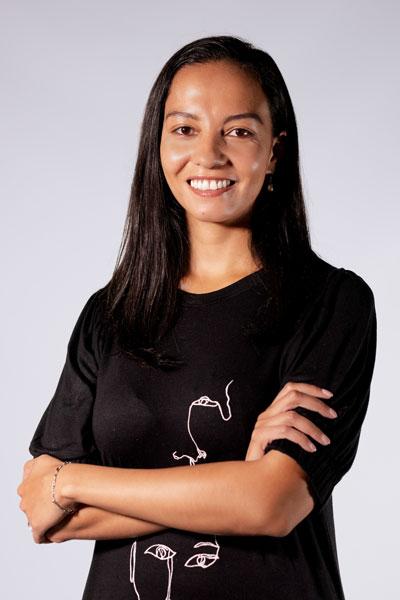
She is now the senior director of academic affairs, the division responsible for all the courses and course development at Wits, teaching and learning development and academic support, including the Gateway to Success programme for first-year students.
“I've always had a research interest in youth and youth development, and this has extended to my position in academic affairs, which is youth-centred and my area of expertise,” says Nicole. “It’s so satisfying to see our students developing in ways that they could never have imagined. I, too, am an example of this.”
Growing up in Yeoville
Nicole explains that she and her older brother, Ryan De Wet (BAS 2002, BArch PG 2006) are first generation university graduates. He is now an architect in Australia. Her two older sisters, Genevieve and Robyn, work at KPMG and BDO respectively in Johannesburg.
“Our family home was in Yeoville, which was very different to how it is now. It was the end of the apartheid era, and we could finally move out of the areas where we had been forced to live, which is when we settled in Yeoville. It was wonderful. It was very multicultural and safe, and we would go to the family-oriented side of Rockey Street with the library, public pool, bakeries and restaurants. The lower side of Rockey Street was where the clubs and pubs were.”
Their late mother Brenda was an administrator and their father Richardo was in information technology. “I remember the first time he brought a computer home. We were fascinated as we had never seen one before,” says Nicole. She attended Sacred Heart College in Observatory. “It was amazing, a politically aware and religious school that set me on the path to higher education.”
From law to sociology
After completing her first year in law, she switched to sociology and thrived. She raced through her undergraduate, honours and master’s degrees and then completed her PhD in three years. At Wits she also met her husband, Dr Brendon Billings (BSc 2003, BSc Hons 2004, MSc 2013, PhD 2019) who is now a senior lecturer in the School of Anatomical Sciences.
“My PhD was in demography and population studies, with a thesis titled Levels, causes and determinants of adolescent mortality in South Africa, 2001 to 2007,” she says. “The aim was to advance adolescent health by understanding who was dying and why they were dying in their teenage years, which should be one of the healthiest times of their lives.
“The research established several reasons, including motor accidents, suicide, self-harm, TB, early cancers and HIV/AIDS, for which there was limited access to antiretroviral drugs at the time. All these called for far better education for teenagers to help them understand what they are going through at that age and how to manage themselves.”
Nicole’s career trajectory has been remarkable. Within a few years she became head of the Department of Demography and Population Studies, assistant dean for research in the Faculty of Humanities and head of the School of Social Sciences. She says being part of the Female Academic Leadership Fellow programme helped: “It was invaluable, with personalised coaching, support, mentors and research funding, which also facilitated participation in conferences in Africa, Europe, the UK and the US.”
In June 2024, she took up the position of senior director of Academic Affairs. One of her priority focus areas is the Student Success Committee. Another is the continuous development of the 2025-2029 Teaching and Learning Plan. “There is also the perennial issue of funding, related to the socio-economic circumstances that so many students are facing. We need to ensure that students can stay at university and complete their degrees,” says Nicole.
“We need to graduate students who are not only highly trained in their field, but also appropriately trained for the future world of work. We call them Graduates of the Future, and it requires being critical thinkers and problem solvers who are digitally literate, socially and self-aware, self-motivated and self-directed.”
Digital literacy skills in all faculties
She adds that digital literacy skills are now taught in all the faculties. “There’s the technology side, but there is also a very important communication side, such as how to engage online. This includes online language training and etiquette, and how to respectfully air their point of view.”
It’s all part of the rapidly changing world of work. “For example, working from home part- or full-time has become a common practice but it requires a different way of collaborating with colleagues and a lot of self-discipline, and we need to prepare our graduates for this.
"As a university we take a pro digital technology stance as it is a huge part of the world of work today and it also enables more graduates to get jobs or create jobs in a wide range of areas. In 2025, for example, we introduced an online postgraduate degree in cyber security, developed with industry partners. It’s an open global career path for graduates, and it includes creating policy and participating in the legal direction of data privacy.”
AI and it's impact
Over the past three years AI has altered the university landscape. Nicole says: “There is still a lot of hesitation about the use of it, but we are taking a developmental and collaborative approach. We are not using AI detection tools; our approach is for students and staff to work together to understand the use and misuse of AI, the advantages and disadvantages, and to have students explain how and why they used AI in their essays rather than ban it or punish them for using it.
“We also teach students that they need to constantly verify what AI produces as it can be wrong. What one AI produces might also differ from what another produces. We also find that a research paper might not exist even though it’s referenced.
“For formal exams,” she continues, “we still have invigilated in-person exams, and for the few online exams, the questions are tailored for students to explain why they have taken a particular angle or how they see the problem in their own words. Lecturers know their students and how they express themselves, and can generally pick up if the language they are using in an essay is AI generated. Of course, these platforms are getting increasingly sophisticated, so we will continue to assess this.”
Gateway to Success for first-years
During the orientation programme, Nicole oversees two compulsory online courses for first years: Digital Abilities; and Climate Change and Me.
Wits does still get first-year students who have never used a laptop or are not familiar enough with how to use one. They learn how to access emails and information, and how to use the Learning Management System (Ulwazi). Tutors sit with them in the computer lab to assist them, and they then practise in their off time.
The eight-month climate change course introduces first-years across all faculties to this critical social and economic topic, and encourages them to engage across disciplines online. Tutors are from all the different faculties.
Passionate about students
“I am so passionate about our students and all young people, and it greatly pleases me that at Wits we have wonderful mental wellbeing and crisis services for all our students,” says Nicole.
Last year she was a contributor to the second Lancet Commission on Adolescent Health worldwide. “We are still seeing issues like suicide and self-harm, and in many communities there is a lack of access to mental health services. ARVs are now readily available in South Africa but we continue to see a lot of TB and early brain cancer in young people.
“Another major factor today is gender-based violence against teenagers and young women. It’s a multi-faceted challenge, and as a country we have done well to focus on female empowerment, but we need to include males far more proactively in knowledge sharing about GBV.
“We hold conversations about GBV with our male students in the residences and we bring in counsellors to hold sessions with male and female students together. This helps them to better understand each other, and to understand what patriarchy means, and discuss their different interpretations of it.”