

Wits and the making of an AI global leader
- Wits University
Alumnus Dr Shakir Mohamed, Director of Research at Google DeepMind (UK), roots his “AI with social purpose” philosophy in a strong Wits engineering foundation.
Mohamed’s journey began when he left Lenasia, a ‘little township’ in the south of Johannesburg, to study engineering at Wits University in 2002. Here he was confronted, for the first time, with the realities of South Africa: its full diversity, its tensions, its opportunities and its problems.
“It’s ultimately one of my enduring memories, to come to Wits and (during that time) see the changes in the country playing out around you. The University helped me grow in a way that I simply hadn’t experienced before,” Mohamed remembers.
He then found a ‘home’ in the School of Electrical and Information Engineering where the Electrical Engineering department gave him ‘a sense of stability’, and a “really powerful” degree that exposed him to many different fields.
“The skills I learned prepared me for wherever I wanted to work, whether it was machinery, high-voltage electronics, software development or data science. It opened a range of options and a great deal of empowerment.”
In retrospect, he values the design philosophy embedded in the degree, and that it informed how he understands the world today. “It teaches you how to take a very complicated problem that might otherwise paralyse you, and turn it into something focused, something that you can actually tackle, something where you can see success and start building on it. I think the ability of the degree to open minds, while also creating the right kinds of constraints for you to make progress, shaped the way I approached other fields of technology, including AI, and allowed me to grow from there.”
Today, Mohamed is considered one of the leading minds in AI globally, named among TIME Magazine’s “100 Most Influential People in AI” in 2023. As the Research Director at Google DeepMind, Mohamed is a scientist and engineer in the fields of statistical machine learning and artificial intelligence.
While based in the UK, his African roots remain pivotal. With Professor Benjamin Rosman, Director of the Wits Machine Intelligence and Neural Discovery (MIND) Institute, Mohamed is one of the co-founders of the Deep Learning Indaba, a non-profit aimed at strengthening African machine learning and artificial intelligence. It currently has members from 49 African countries and will be celebrating its 10th anniversary next year.
Make and build – North meets South
Mohamed has a unique approach to the warning that Africa is in danger of only being a consumer of AI technologies from the Global North, while it should be building its own.
“Global North-South collaborations are important, and Africa has made significant progress in the past 10 years. It is hard and complicated work, and it is slow and challenging because our countries are dealing with many other issues. So the questions become: Where do we want to consume? Where do we want to build? Let’s use the North-South collaborations where we can, and consume technologies where they can give us an advantage, and build where others are not going to build for us.”
But what do we build?
‘AI with social purpose’
While alarm has been rife in recent months that AI development is heading towards human annihilation, Mohamed’s work is rooted in the philosophy of “AI with social purpose”, and he believes it is the choices we now make that will determine our future. And that humans can still make those choices.
“What worries me most at the moment is that there is a sense that we are on a runaway train (with AI), and that people no longer have choices. Yes, there are increasing concerns around security risks and bias, who the technology works for and who it doesn’t, who gains an economic advantage and who doesn’t, and whether it increases disparity rather than reducing it. But there are choices we can make around the institutions we work in, the values we espouse and the standards to which we hold people.”
“My concern is that we need to reinvest in the fact that we do have choices. We need to explore more deeply what those choices are and keep reminding everyone that they are part of making them,” he says.
‘Barefoot scientist’
The choices, he says, are to invest in our local capacity and strength, and have close participation with our communities.
He strongly believes in what he calls the ‘barefoot scientist’ - the scientist who leaves the lab and goes into the communities that science is meant to serve, to understand the lived reality of the world they are in.
“Every day, those of us in leadership are required to think again, make new choices, work with people and go back to the communities we claim to represent. When we fuse their knowledge with that of communities, we get something much richer and stronger,” he says.
Wits scholarship
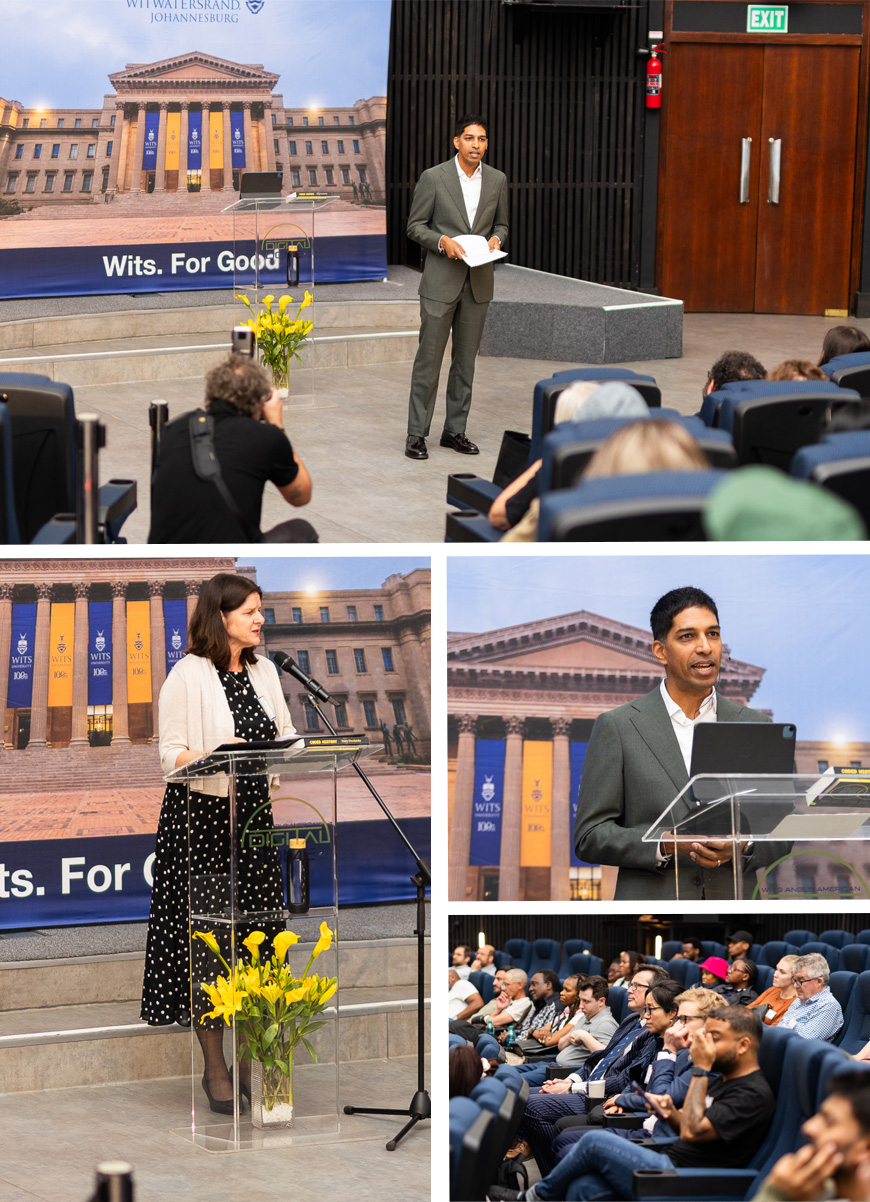
True to his ‘social purpose’ philosophy, Mohamed recently announced that he will be establishing a Wits scholarship. Delivering the keynote address of the 3rd annual Professor Barry Dwolatzky Memorial Lecture, he said the scholarship details are still being ironed out, and that it will be for students from Lenasia, Eldorado Park and Soweto.