

Trust ís the technology
- Wits University
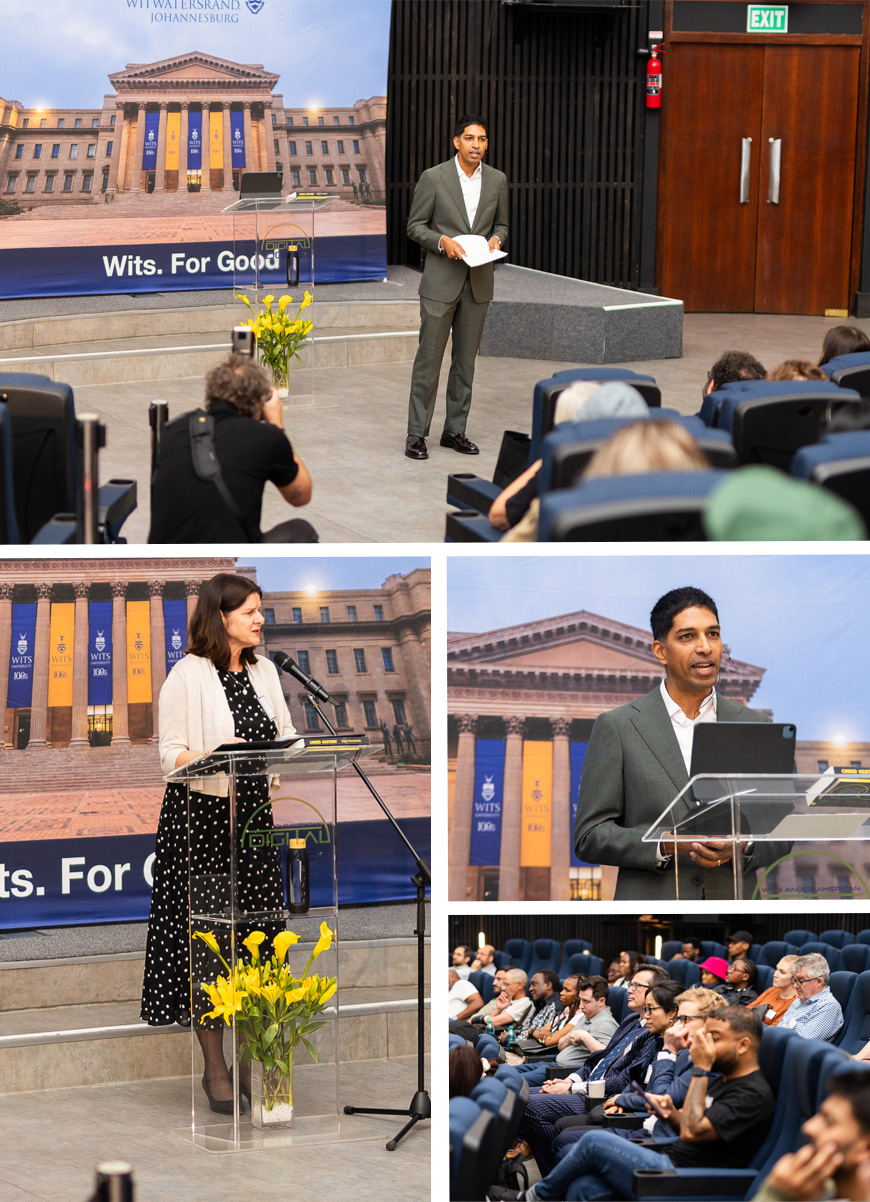
Dr Shakir Mohamed, Wits Alumnus and Director of Research at Google DeepMind, delivered the 3rd annual Barry Dwolatzky Memorial Lecture.
Mohamed titled his lecture: Trust is the Technology: Building high-trust AI from Johannesburg to the World. A scientist and engineer in the fields of statistical machine learning and artificial intelligence, Mohamed studied in the School of Electrical and Information Engineering at Wits, the same School where Professor Barry Dwolatzky, affectionately known as Prof. Barry, spent 50 years of his academic life. (Read more about Prof. Barry below.)
We need trust
At a time when humanity is faced with the breakneck speed at which AI is developing and the existential threat this technology is posing, there is a much-needed ‘technology’ that will shape our future: Trust.
We build trustworthy AI by developing local credibility, participation and independent institutions, said Mohamed.
“What matters most now is not to build software or even AI, but to build trust. Trust is the willingness to rely on what you cannot see, cannot check. It is an act. Trust is not what we add to the technology once it works. Trust ís the technology, and the argument I'm putting forward is that this is the part of AI that Africa can build for the world, not the part you wait to receive from it,” he said.
To illustrate what was at stake, Mohamed imagined two futures for an engineering graduate leaving the lecture hall in 2046. In one, she relied on sophisticated AI systems developed elsewhere, without meaningful opportunities to question their suitability or challenge their effects. In the other, research and development happened locally, communities helped shape the technology, and their objections could change the work. The difference was not substantially better machines, but whether people retained the power to decide rather than merely defer.
“Let me tell you the first thing I think we should build. There is not an independent institution on the continent to evaluate the AI systems being deployed in our schools, clinics, courts, weather services; to test them, to audit them and to say publicly whether they work. It does not exist.”
Mohamed said it is precisely because he works for one of the companies building these AI systems that he thinks such an institution needs to exist outside of these companies. “This University exists where the city meets the campus, research meets industry, and where things get built. There is no better place for it on the continent. It is about what is deployed here and whether it works,” he said.
He proposed three practical foundations:
- an independent evaluation institute, a place where systems get tested in localised conditions, publishes what it finds, and that anyone can point to.
- a national deployment observatory, where and when an AI system is deployed.
- a public-interest lab, because you cannot evaluate what you cannot make.
He ended his talk with a call to honour Prof. Barry by not only admiring what he built but to “do what he did. Act before you have all the evidence. Stay correctable. Bring people in and let them change it. Build an evaluation for a system nobody has tested here. Start a community that doesn’t exist in your discipline. Take a local question seriously that everyone tells you is too small to matter. That is the size of beginning. None of it will be easy. None of it will be finished quickly, but we shouldn’t wait for the perfect finishing”.
Scholarship
Mohamed also announced that he will be establishing a Wits scholarship for students from Lenasia, Eldorado Park and Soweto.
Deep Learning Indaba 2027
Together with Professor Benjamin Rosman, Director of the Wits MIND Institute, Mohamed is one of the co-founders of this non-profit whose mission is to strengthen African Machine Learning and Artificial Intelligence. Next year the Deep Learning Indaba will celebrate its 10th anniversary at Wits University.
New Research Chair to honour Prof. Barry
Professor Lynn Morris announced that the University will establish a Research Chair in Dwolatzky’s name. The Chair will be based in the School of Electrical and Information Engineering and linked to the Wits Machine Intelligence and Neural Discovery (MIND) Institute.
The Chair will support outstanding research, develop the next generation of African researchers, and strengthen the connections between engineering, AI, and innovation.
Dwolatzky had left a profound impact on all he met, and in his 50 years as a student, lecturer, researcher, innovator, mentor and visionary at Wits University.
“Barry was always thinking ahead. He understood long before many of us that universities needed to connect excellent research much more deliberately with innovation, entrepreneurship, and impact. He believed in bringing people together – engineers with entrepreneurs, academics with industry, students with innovators, and in using technology to solve real problems,” said Morris, who is the Deputy Vice-Chancellor: Research & Innovation.
Morris said this year’s lecture also speaks to another part of Dwolatzky’s vision: “Barry’s belief that Africa should be at the forefront of the digital future, and it could hardly come at an extraordinary moment for AI. The pace of development is becoming difficult to anticipate, even for those at the frontiers. We are beginning to ask whether AI could fundamentally change how we do mathematics, discover drugs, understand disease, model climate systems, perhaps even how we conduct science itself. At the same time, there are profound concerns about increasingly powerful AI systems, from safety and misinformation to employment, intellectual property, human agency, and even existential risk. The same technology is being discussed as a means of tackling some of humanity's hardest problems, and as something we need to govern with exceptional care.”
She added that the bigger question is who gets to shape this future, and this is where universities have an important responsibility, especially in Africa. “We cannot simply adopt technologies developed elsewhere. Our languages, our health systems, our cultures, our economies, and our knowledge need to be represented in the systems that will increasingly influence them.”
At Wits, the MIND Institute is bringing together expertise across disciplinary boundaries with the ambition to ensure Africa shapes AI’s future, including the questions it addresses, the knowledge and the data on which it draws, and the values that guide its development.
“I think Barry would have understood that ambition immediately. He believed deeply in crossing boundaries, building African capability, and ensuring that this was not simply watching the digital future unfold, but helping to create it.
Prof. Barry’s legacy: Builder of bridges
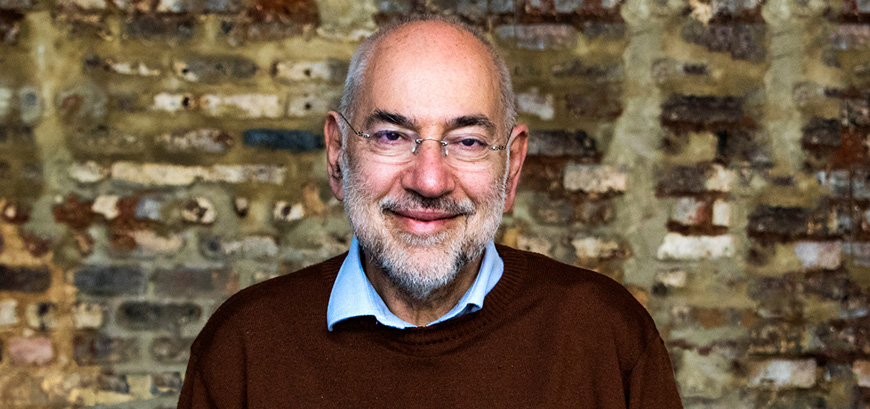
Known as the ‘Grand Geek’ of digital innovation in South Africa, Prof. Barry was a passionate believer that young people have the creativity, energy, drive and reason to build a new South Africa, Africa and the world.
He dedicated 50 years of his life to Wits in various capacities, including as Emeritus Professor in the School of Electrical and Information Engineering in the Faculty of Engineering and the Built Environment; Founder and Director of the Joburg Centre for Software Engineering (JCSE); and Founder of the Wits Tshimologong Digital Innovation Precinct, the University’s digital innovation hub located in Braamfontein.
Prof. Barry passed away less than a month after the Wits Innovation Centre (WIC) was launched in 2023.
- The Memorial Lecture is an annual event to celebrate Prof. Barry’s legacy and to build on his vision for the University to be an innovation leader where academics and students can use their knowledge to advance our community, city, country, continent and the globe. The inaugural Memorial Lecture was presented by Professor Solomon Assefain 2024, followed by Sir John Lazar’s lecture in 2025.