Wits researchers recognised with NRF awards, ratings
- Wits University
National Research Foundation Lifetime Achievement, Science Team, and Emerging Reseacher awards for Witsies, as well as two global recognition A-ratings.
Wits RHI’s Professor Helen Rees received the National Research Foundation (NRF) Lifetime Achievement award while the Wits Advanced Drug Delivery (WADDP) won the special recognition Science Team award.
Professor Yahya Choonara, director of WADDP, was awarded an NRF A-rating, as was Professor Bruce Mellado in the School of Physics.
Dr Isaac Nape, also in Physics, was awarded for his research excellence in the Early Career/Emerging Researcher category, as was Ms Nthabiseng Mabale who is based at the University of Johannesburg but pursuing her PhD in Media Studies at Wits.
The awards were presented at the NRF Awards Ceremony in Gqeberha, Eastern Cape, on Thursday, 3 September 2026.
Lifetime Achievement for HIV, vaccines, pandemic research
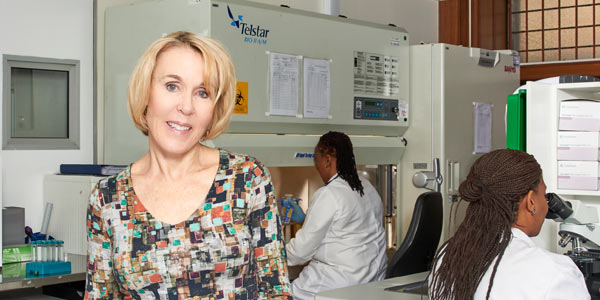
The NRF Lifetime Achievement Award honours individuals who have made extraordinary, world-class contributions of international standard and impact to the development of science in and for South Africa over an extended period.
Professor Helen Rees, founder and Executive Director of Wits RHI – amongst Wits University’s most prestigious and enduring research institutes – won the 2026 NRF Lifetime achievement Award, the NRF’s highest honour. She shares the award with Professor Jonathan Jansen from Stellenbosch University.
"While a lifetime achievement award is a wonderful recognition of one person’s career, it really reflects the contributions, achievements and shared efforts of so many people across so many projects over the years,” says Rees.
“Life throws opportunities at us, and it is the choices we make that ultimately determine the path we follow. We may end up on one path or another, and often life is remarkably serendipitous. I never set out to become a scientist or researcher. I found my way into research through a belief in what communities needed for better health, and at a pivotal moment in South Africa's democratic journey when research was needed to serve the majority of our population.”
Rees’s research and leadership have had a profound impact on HIV prevention, immunisation programmes, maternal and child health, and the development and implementation of evidence-based health policies.
She has played a leading role in the response to major contemporary health crises, including the Ebola, Covid-19, and Mpox epidemics.
Her work has directly influenced healthcare policies and programmes that have improved health outcomes for millions of people worldwide.
Under her leadership, Wits RHI has driven the development, evaluation, and large-scale implementation of medicines, vaccines, therapeutics, diagnostics, and prevention technologies that have shaped national, regional, and global policy.
Rees’s substantial scholarly contribution is reflected in more than 280 peer-reviewed academic publications and a research portfolio that has shaped both scientific knowledge and public health practice.
She chairs the World Health Organization’s African Regional Immunisation Technical Advisory Group and the Boards of MedAccess and the International Vaccine Institute, the latter two being not-for-profit global entities aimed at increasing access to vaccines and health products for lower-middle income countries.
Rees’s contributions to global health and science are evident in significant accolades over the decades. These include, amongst others, the WHO’s 2025 Dr Lee Jong Wook Memorial Prize for Public Health, one of the highest global honours in the field of public health. In 2022, she received the National Platinum Batho Pele Award for contributions to Covid-19 research. She was made an Officer of the British Empire (OBE) in 2001 and an Officer of the French National Order of Merit in 2022.
Rees says, “It's never ‘I did’, it's always ‘we did’, because it truly is. It doesn't matter what field you’re in, whether it’s research, solving a problem, or policy. It is teamwork that actually promotes solution-finding.”
Science Team award for pharmaceutical innovation
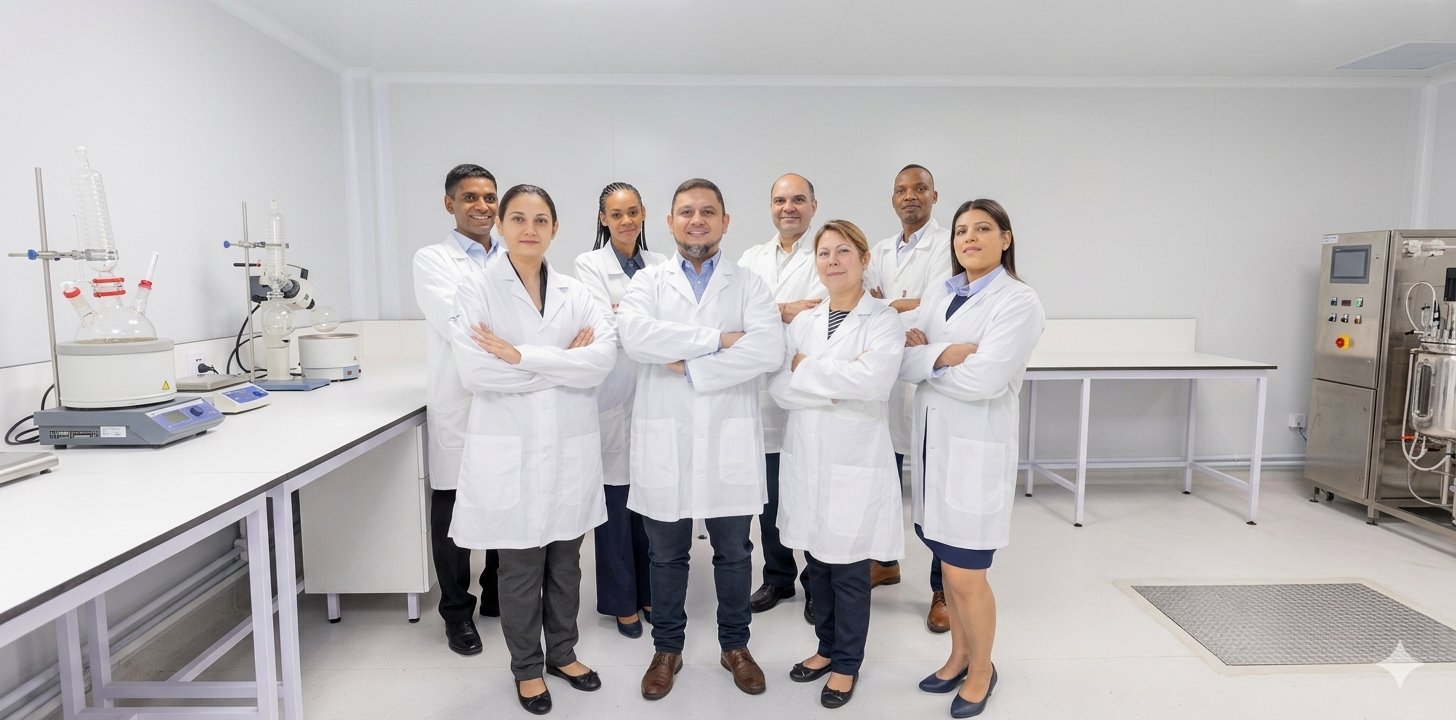
NRF Science Team awardees left to right: Prof. Mershen Govender, Dr Poornima Ramburrun, Dr Gillian Mahumane, Prof. Yahya Choonara, Prof. Pradeep Kumar, Prof. Lisa du Toit, Dr Hillary Mndlovu, and Prof. Thashree Marimuthu.
The Wits Advanced Drug Delivery Platform (WADDP), under the leadership of Professor Yahya Choonara, received the NRF Science Team Award for research expanding the boundaries of pharmaceutical science in Africa. The WADDP shares this award with the Human Evolution Research Institute at the University of Cape Town.
The award recognises WADDP’s collective scientific achievements, the potential of its research to improve people’s lives and its contribution to strengthening South Africa’s international standing in pharmaceutical innovation.
The Science Team Award is one of the NRF’s Special Recognition honours. Unlike other NRF awards, it recognises the achievements of a collaborative and interdisciplinary research team based at a South African public institution.
“This award is particularly meaningful because WADDP was built on the understanding that difficult health problems cannot be solved by one discipline or one researcher. Our scientists work across pharmacy, chemistry, materials engineering, molecular biology and clinical medicine to develop technologies that can make treatment safer, more precise and more practical for patients,” says Choonara.
“This recognition belongs to the entire team, including the postgraduate researchers and postdoctoral fellows whose passion for creativity and energy drive our work. It also shows that Africa can develop its own pharmaceutical intellectual property, shaped by the continent’s health needs and be internationally competitive.”
WADDP researchers are developing advanced therapeutics that can carry medicines more precisely to where they are needed in the body. By controlling where, when, and how a medicine is released, these technologies aim to improve treatment effectiveness, reduce side effects, and make medicines easier for patients to use.
WADDP’s strength lies in its team-based approach. Developing a new medicine or drug delivery system requires expertise across several scientific and clinical fields. A promising material created in a laboratory must be tested, refined and evaluated before it can move towards practical use.
WADDP brings together pharmaceutical scientists, chemists, engineers, molecular biologists, clinicians, postdocs and postgraduate researchers to develop safer, smarter, affordable, and more effective medicines and therapeutic interventions.
The platform creates an environment in which researchers can work across these boundaries, connecting fundamental pharmaceutical science with engineering, molecular biological research and clinical needs.
WADDP research has produced first-in-the-world technologies with a substantial body of pharmaceutical intellectual property developed in Africa. It demonstrates that advanced medicines can be designed around the continent’s health priorities while remaining internationally relevant.
Globally recognised A-rating in pharmaceutical product design, nanomedicine
As an internationally recognised pharmaceutical scientist, WADDP Director and co-founder, Professor Yahya Choonara, also received an NRF A-rating at the awards ceremony.

An A-rating recognises him as a globally recognised pharmaceutical scientist for the quality and impact of his research. This accolade makes Choonara the first pharmacist in South Africa to be NRF A-rated, and amongst just 134 A-rated researchers in the country.
As a pharmacist and NRF SARChI [South African Research Chairs Initiative] Chair, Choonara leads research that integrates pharmaceutical product design, nanomedicine, and translational science, to address unmet needs in infectious diseases, cancer, neurotherapeutics, and lifestyle-related illnesses.
His research has produced first-in the-world technologies that enable precise drug and bioactive delivery, reduce side effects, and improve patient usability.
Choonara holds Africa’s largest pharmaceutical patent portfolio, comprising 51 patents, 38 of which were granted internationally.
His contributions have earned him the FIP Distinguished Pharmaceutical Science Award, the Olusegun Obasanjo Prize, and National Science and Technology Forum and South African Medical Research Council gold awards.
International A-rated recognition in particle physics
Professor Bruce Mellado, in the Wits School of Physics, is an internationally recognised particle physicist. The NRF awarded him an A-rating, denoting his international standing in his field.
Mellado serves in senior leadership roles at the European Laboratory for Particle Physics (CERN), having chaired the Institutional Board. He currently serves as Deputy Project Leader of the Tile Calorimeter of the ATLAS experiment.
He was a leading contributor to the discovery of the Higgs boson, which culminated in the 2013 Nobel Prize in Physics, and he now leads research into the prediction and search for new bosons.
Mellado says, “Much of my career has been devoted to fundamental questions in particle physics, from the discovery of the Higgs boson to the search for new particles and phenomena beyond our current understanding. This [A-rating] recognition gives us further impetus to pursue ambitious new research and to strengthen Wits and South Africa’s position in international science. I am particularly proud that world-class research of this kind can be led from Africa while developing the next generation of African scientists.”
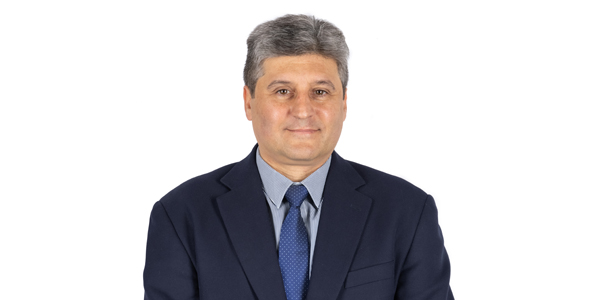
After decades of building systems to detect subatomic particles, Mellado has turned the same scientific thinking towards air quality. The result is that AIrSynQ, an AI-powered system that brings together affordable sensors, wireless communication and artificial intelligence to help organisations detect poor air quality before it becomes hazardous.
Amongst many others, Mellado’s recent notable accolades – all for AIrSynQ – include the National Science and Technology Forum- South32 TW Kambule Innovation Award in 2026 and, in 2025, the Pierre Fabre Foundtion’s ODESS Prize, and the Wits Vice-Chancellor’s Innovation Award.
Mellado says, “For me, the A-rating is especially meaningful because it reflects the international standing of the research we have built at Wits over many years. I see it not only as a personal milestone, but also as recognition of the extraordinary students, postdoctoral fellows and colleagues with whom I have had the privilege to work.”
Early career research excellence in structured light
Dr Isaac Nape received an NRF Research Excellence award in the Early Career/Emerging Researcher category. This award recognises outstanding research performance and exceptional achievements by current early-career researchers who hold an active NRF grant.
Nape holds an NRF Thuthuka grant (2024-2026). He is a Senior Lecturer in the School of Physics at Wits and a researcher in the Structured Light Laboratory.
His research is advancing next-generation quantum technologies through the development of innovative imaging, secure communication, and computing techniques powered by quantum science.
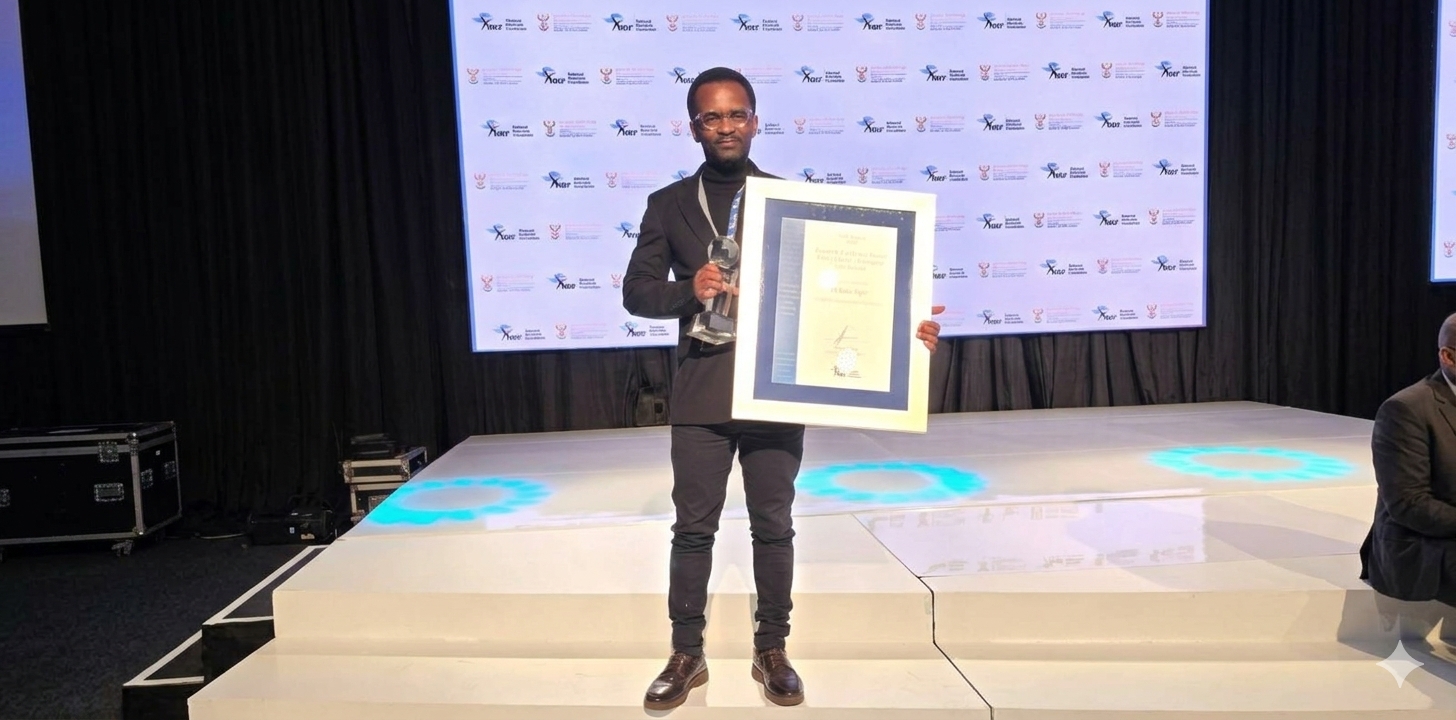
Nape says, “I’m delighted to receive this award. It is encouraging to see that my research in quantum technologies and structured light is making an impact. The support of the NRF, the South African Quantum Technologies Initiative, and Optica has made many of these research outputs possible and has contributed to my recognition among the country’s leading young scientists.”
Nape is a Wits MIND Institute Fellow, a Friedel Sellschop Fellow, and a South African Quantum Technology Initiative [SAQuti] Emerging Leader Fellow.
He has published approximately 75 peer-reviewed journal articles, including in high impact journals such as Nature Photonics, Nature Communications, Light: Science & Applications, Science Advances, and Optica.
Several of Nape’s papers have been highlighted through journal covers and editorial selections:
- His 2025 Photonics Research paper on emulating a quantum Maxwell’s demon and his 2025 Advanced Quantum Technologies paper on quantum ghost imaging were selected as journal covers.
- His 2024 Nature Photonics work on nonlocal skyrmions was selected as an issue cover and recognised among the top 30 optics findings globally for 2024.
- His 2024 APL Photonics paper on optical matrix multiplication was selected as an Editor’s Pick.
Nape has graduated five MSc students (four 4 with distinction), and he currently supervises approximately eight postgraduate students.
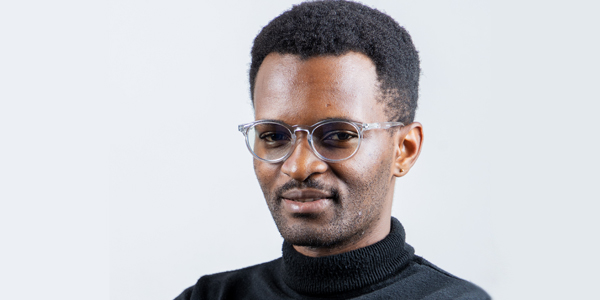
Recent accolades, amongst many, include recognition as a Rising Star in Optics by the Journal of Optics and the Royal Society of South Africa’s Meiring Naudé Medal in 2024. In 2023, the South African Institute of Physics awarded Nape its Silver Jubilee Medal and he was named as one of the Mail & Guardian’s Top 200 Young South Africans in Technology and Innovation.
Nape’s future contributions will centre on structured light as a platform for quantum information processing. By controlling the spatial structure, phase, polarisation, orbital angular momentum and topology of light, his work will continue to develop new methods for encoding, transmitting and measuring information. This is important because high-dimensional photonic systems can increase information capacity and may provide new forms of resilience in quantum communication and quantum imaging.
Nape says, “Looking ahead, I hope to continue my journey with SAQuti and the Wits MIND institute in seeing how quantum mechanics, optics and machine learning can be combined to drive new innovations.”
Emerging research excellence in digital media and Indigenous Knowledge Systems
Ms Nthabiseng Mabale is a Lecturer in Digital Media Design at the University of Johannesburg and a PhD candidate in Media Studies at Wits University. Mabale received an NRF Research Excellence award in the Early Career/Emerging Researcher category.
Mabale’s research advances digital storytelling as a participatory methodology for exploring social impact, African epistemologies, Indigenous Knowledge Systems (IKS), design education, and the empowerment of women and marginalised communities in the Global South.
Her interdisciplinary Arrival of Myth project explores Johannesburg’s urban folklore across Architecture, Graphic Design, and Digital Media Design.
Mabale is a member of the Global Excellence and Stature 4.0 for Societal Impact (GES 4.0 SI) award team working with the African Reclaimers Organisation, integrating students into community-based co-design processes in which communities are positioned as co-creators.
She also leads Digital Media Design in the newly awarded GES 4.0 SI Catalytic Initiative: Eldorado Park Green Infrastructure and SDG Living Lab.