

Powerful players derail GBVF responses
- Wits University
The attitudes and actions of those in power are contributing factors to gender-based violence and femicide in SA.
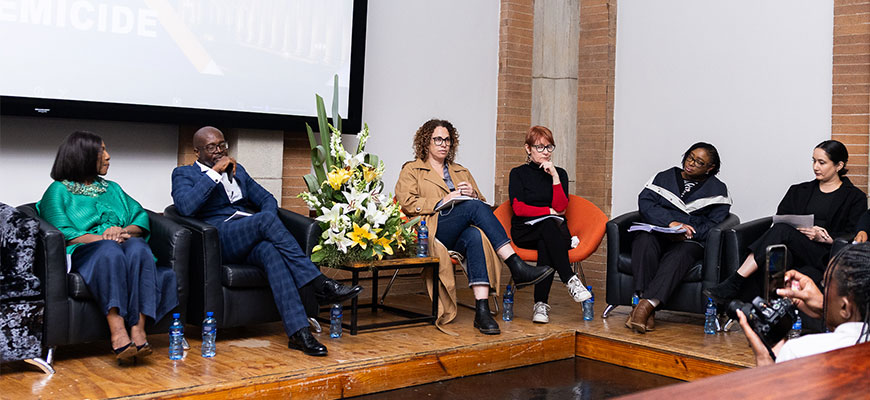
This was one of the key arguments at the Gender-based Violence and Femicide (GBVF) symposium hosted by the Faculty of Humanities. The discussion on 5 October, came amidst the murders of 12 women in Ekurhuleni, bringing into sharp focus the ongoing violence against women in the country.
Human rights advocate and Chairperson of Kwanele-Enuf Foundation, whose case dragged over 15 years, shared chilling facts about the number of GBVF cases since the start of the year.
“SAPS has reported 569 deaths and 9 201 rape cases between April and June this year,” she said reflecting on the criss in the country.
Many of the sexual assault cases are not reported due to fear and the lack of trust in the criminal justice system.
The symposium featured remarks by Dr Judy Dlamini, Wits Chancellor and a panel moderated by Prof. Moletsane, inaugural holder of the FALF-WITS-NRF Research Chair on GBVF. Panellists: Dr Nechama Brodie (Wits Centre for Journalism); Dr Thokozani Chilenga-Butao (School of Social Science); Prof. Nicky Falkof (Wits Centre for Diversity Studies); Dr Leyya Hoosen (School of Social Sciences); Prof. Malose Langa (School of Human and Community Development); and Lisa Vetten (Southern Centre for Inequality Studies).
Dangerous power players and institutional targets
The central argument emerging from the symposium was that South Africa’s failure to address GBVF is not simply a lack of policies, but a failure of governance, accountability and institutional systems. Despite progressive legislation, implementation is undermined by officials who perpetuate violence, institutions that dismiss complaints and poor coordination between government departments.
The disgraced former Deputy National Police Commissioner for Crime Detection Shadrack Sibiya being a case in point amongst many officials who perpetuate GBFV.
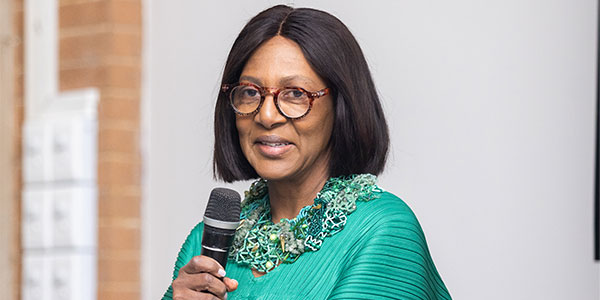
“IPID recorded 116 alleged rape cases by police in 2025-2026, up from 95, but research shows that fewer than 1 in 10 officers reported for rape are convicted, and only about 1 in 20 are unconditionally dismissed,” said Kawa.
“When the people entrusted to prevent gender-based violence are themselves perpetrators, it shows a deep institutional failure. This is not just individual bad behaviour. It is a system that does not effectively prevent, detect or punish those harms, and that erodes public trust.”
Alarmingly, a news report indicated an increase of statutory rape cases taking place in schools throughout the country. Citing statistics released by the Education Labour Relations Council, the report stated that 176 teachers were found guilty of sexual misconduct involving the harassment of girls and boys from 2021-22 to 2025-26. Furthermore, out of 211 reported cases of sexual misconduct, 35 teachers were found not guilty.
Panellists argued that GBVF must be recognised as a broader societal and governance issue rather than a private matter.
The discussion also challenged government’s reliance on performance targets and statistics to measure progress in dealing with GBFV.
“When you ask them (officials) to do things they cannot do, and you put performance measures on that, and you put, even worse, people's performance bonuses attached to that, you're going to get strange outcomes,” said Lisa Vetten referencing how police and other entities of government have started hiding rape dockets and manipulating stats to create an impression that rape incidents are decreasing in the country.
Panellists warned that pressure to improve conviction rates can encourage police and prosecutors to manipulate figures or prioritise cases likely to succeed.
Leadership and Policies at Universities
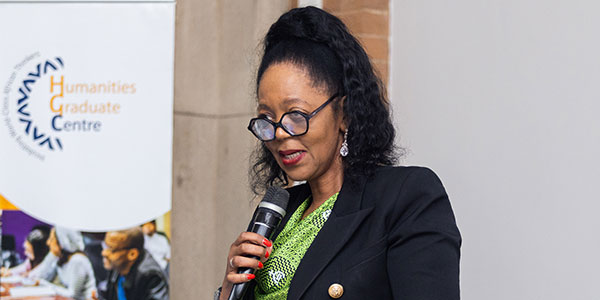
Wits Chancellor Dr Judy Dlamini brought the conversation closer to home, focusing on the role of leadership and institutions in transforming society. As the titular head of the University, who, among other responsibilities, serves as its moral compass, she reflected on the responsibility of leaders to confront GBVF through meaningful action rather than policy commitments alone. She argued that institutional accountability is measured by how effectively leaders protect survivors, prevent retaliation, uphold constitutional rights and ensure that those in positions of power are held to the same standards as everyone else. Read her speech.
Speakers further highlighted that there is a need to focus on families, the rearing and socialising of children.
Kawa aptly said: “We need to shift our response from asking, “What do we do after the violence?” to asking, “What do we do before the violence?. Healing cannot happen only through the courts. We need to ask how families heal, how communities heal, how we help children process what they have witnessed, and how we stop today's trauma from becoming tomorrow's violence.”
The discussion and engagements with attendees also called on greater individual and collective responsibility highlighting that each one of us is a player and can disrupt the cycle of violence against women and children.
Related Content
Social media posts won’t stop violence against women. Here’s what might - Dr Nechama Brodie (Wits Centre for Journalism);
GBVF declared a national disaster. Now the statistics disaster must be fixed - Lisa Vetten (Southern Centre for Inequality Studies, Wits)
New Chair confronts Gender-Based Violence and Femicide, Wits University
WBS launches Chair in Gender Equality, Wits University