

Planting seeds of change at Wits
- Wits University
A motor mechanic turned farmer, Tshepo Thipe, manages food gardens on campus that supply fresh produce to students with limited funding.

Thipe manages food gardens at Wits that help provide fresh produce to students from backgrounds with limited resources and funding. He joined Wits in 2025 and was immediately moved by the needs of students. Seeing a long queue of students waiting to receive food was one of the experiences that strengthened his resolve to make the gardens productive. As a result, each Tuesday, vegetables harvested from the gardens supplement the non-perishable food parcels distributed through the Wits Food Bank.
The thriving food gardens, two located at West campus and one at East campus, are an initiative of the Wits Citizenship and Community Outreach (WCCO) and Copac – a civil-society organisation that works on issues including food sovereignty, climate justice, cooperatives and sustainable alternatives.
A mechanic turned gardener
Born and raised in Soweto, Thipe initially trained as a motor mechanic because of his love for cars. Gardening, which had been part of his childhood, felt more like hard labour than a possible career. Eventually, however, he realised that engines were not where his passion lay. He returned to the lessons planted years earlier by his grandfather and later received training in permaculture and agroecology.
His grandfather was an avid gardener who grew vegetables for the household. Like many men of his generation, he was not much of a talker. Knowledge was passed on by doing – with young Tshepo working alongside him and learning through observation.
Thipe fondly remembers his grandfather making home remedies from herbs and other ingredients when family members had colds or flu. To him, his grandfather was the family’s “in-house doctor”. The household also rarely needed to buy vegetables because spinach, tomatoes and other produce came straight from the garden.
Today, Thipe is passing that legacy to his seven-year-old son, Tshepo Junior, but with one important difference: he talks him through the process. Rather than simply showing him what to do, he wants his son to understand why things are done in a particular way.
His son follows him voluntarily into the garden and has visited Wits to see his father at work.
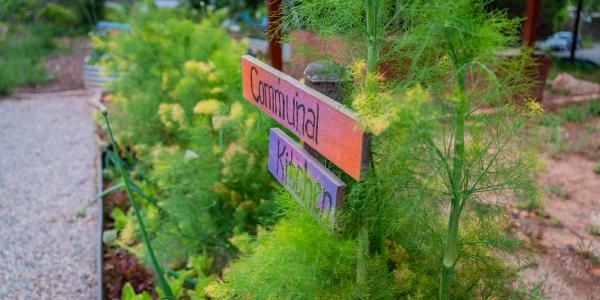
Planting seeds of change
At his Soweto home, Thipe has his own garden and shares the harvest with neighbours, an act that reminds neighbours that food security does not require hectares of land.
As food prices and the cost of living increase, he encourages households to use whatever space they have. A balcony can accommodate pots or recycled containers, herbs can grow on windowsills, vertical gardens can make use of walls, and potatoes and other tubers can be grown in sacks.
At Wits, Thipe is planting these same ideas among the students who volunteer in the gardens. Working alongside them, he shares practical knowledge about growing food and encourages them to see what can be achieved with the resources and space available to them. For him, the gardens are not only helping to put fresh produce on students’ plates today – they are also growing knowledge that students can carry into their own homes and communities.
It is a fitting continuation of what began years ago in his grandfather’s Soweto garden and the values of Copac and WCCO.
Related content