

Nature’s 10 names Witsie for role in global pandemic treaty
- Wits University
Wits’ Precious Matsoso is one of Nature’s 10, a list of people who shaped science in 2025.
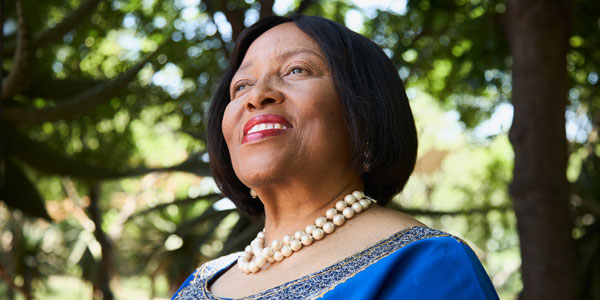
The Director of the Health Regulatory Science Platform (HRSP) in the Wits Health Consortium (WHC) and an Honorary Lecturer in the Wits Department of Pharmacy and Pharmacology, Ms Precious Matsoso is one of the 10 individuals named for her contribution to science in 2025, notably for her leadership in brokering the first global pandemic treaty.
Compiled by Nature’s editors, the list highlights an array of people who had a role in some of 2025’s most significant moments in science.
Nature’s 10 is a list published annually in Nature, the prestigious and high-impact journal published by Springer Nature. Nature published the 2025 list on December 8.
The list is not an award or a top 10 ranking. Rather, it highlights individuals who have made significant contributions to science during the year.
Modern science is conducted by teams, often large ones, but the world of research is filled with human stories of individuals at work. Precious Matsoso is one of these individuals.
Matsoso says, “The historic adoption of the Pandemic Agreement, which I led, is a testament of how we can collectively reshape global health architecture and strengthen pandemic, prevention preparedness and response.”
The first global pandemic treaty — and the woman who made it happen
A visionary leader in public health, a pioneer in regulatory science, and a dedicated advocate for global health equity, Matsoso’s career has focused on strengthening health systems, shaping transformative policies, and ensuring access to essential medicines for all.
According to Nature’s 10, “Matsoso, an experienced figure in global health, was well placed to navigate the sometimes fractious negotiations [of the first global pandemic treaty]. At several points in her career, she had helped to expand access to HIV medications, including as director-general of South Africa’s health department from 2010 to 2019.”
As Co-Chair of the World Health Organization (WHO’s) Intergovernmental Negotiating Body for the Pandemic Prevention, Preparedness, and Response Treaty, Matsoso played a critical role in steering global discussions to protect future generations from health crises.
Presidentially pioneering regulatory science
In February this year, Matsoso received the South African Medical Research Council President’s Lifetime Achievement Award for work that “embodies the highest ideals of scientific merit and public service”.
Professor Hellen Myezwa, Head of the School of Therapeutic Sciences at Wits, where Matsoso’s HRSP is located, says, “We are proud to celebrate Ms Precious Matsoso’s inclusion in Nature’s 10. Her leadership in advancing the first global pandemic treaty reflects the same depth of expertise and principled commitment she brings to our programmes and collaborations at Wits. Through her direct involvement in the Dossier Assessment for Clinical Assessors in Africa short course, and her sustained engagement in regulatory science teaching and postgraduate research, she has helped to anchor several of our key capacity-building initiatives.”
Leadership training empowers Africa’s health regulators
Matsoso’s HRSP, along with Wits RHI and Supporting Health Initiatives (all WHC divisions), in March this year collaborated with the Harvard T.H. Chan School of Public Health to establish the first African Regulatory Leadership Programme (ARLP), inspired by the Harvard Ministerial Leadership Programme.
The ARLP was a step towards regional harmonising and establishing the African Medicines Agency. Matsoso said then that the ARLP aims to ensure health equity and access in Africa. For this to happen, robust systems need to be in place that will then assist the African Centres for Disease Control and Prevention to respond swiftly to public health processes.
Commenting on Matsoso’s inclusion in Nature’s 10, Professor Helen Rees, Executive Director of Wits RHI, says, "As a long-standing friend, I’ve had the privilege of witnessing Precious’s remarkable career journey - first as a dedicated medicines regulator and now as an exceptional global negotiator. She is profoundly deserving of this Nature listing, which rightly recognises her vital contributions to global diplomacy and to strengthening pandemic preparedness worldwide.”
Rees is recognised as a global leader in global health security and a steering committee member of the Coalition for Clinical Research for Pandemics in low- and middle-income countries. She is a member of the Lancet Commission on evidence-based implementation.
Professor Lyn Morris, Deputy Vice-Chancellor for Research and Innovation at Wits, says, “We are extremely proud that Precious Matsoso has been honoured among Nature’s 10 as having made a significant contribution to science in 2025 through brokering the global pandemic treaty. This recognition speaks to her enormous impact on global health and exemplifies the calibre of leadership and excellence within the Wits academic community.”