

Wits researcher awarded prestigious Google PhD Fellowship
- Wits University
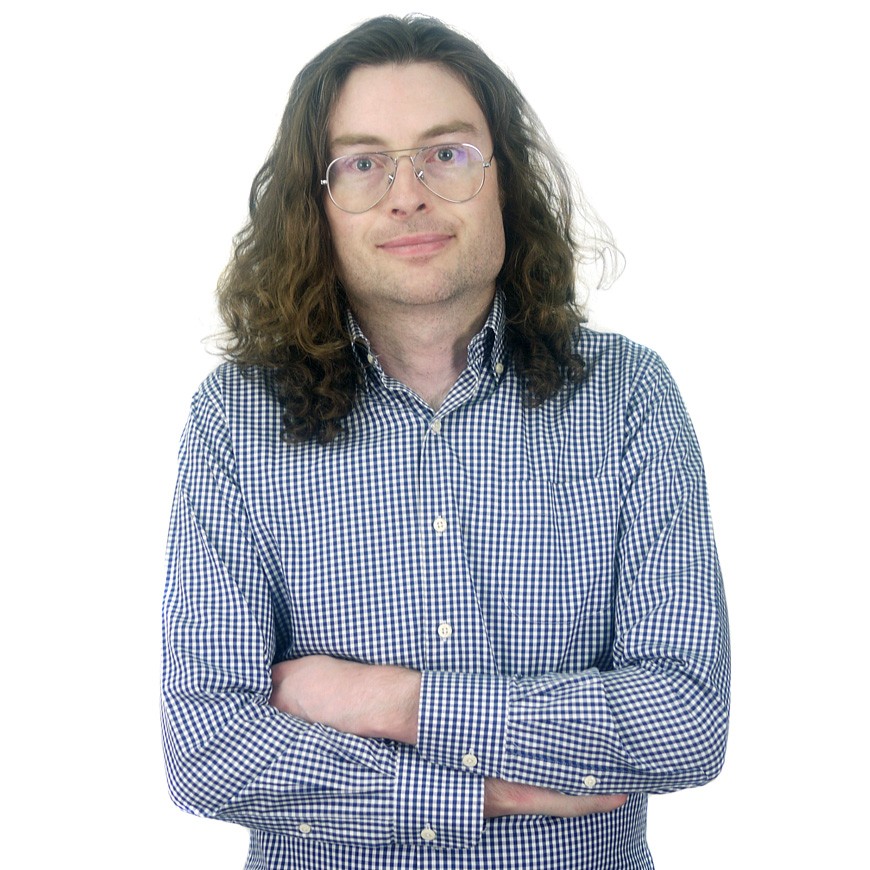
Liam Culligan is the fifth Google PhD Fellow from the School of Computer Science and Applied Mathematics.
The University of the Witwatersrand (Wits University) is proud to announce that Culligan, from the School of Computer Science and Applied Mathematics (CSAM), has been awarded the prestigious 2026 Google PhD Fellowship in the category of Machine Learning and ML Foundations, supporting his doctoral research from 2027.
Culligan joins an exceptional international cohort of 148 researchers from 38 countries recognised for their potential to advance foundational scientific knowledge and shape the future of technology. This year's programme represents a US$13 million investment by Google.org in early-career researchers pursuing ambitious scientific questions with the potential for meaningful global impact.
The Google PhD Fellowship programme provides researchers with financial support, access to computing resources and opportunities to engage with Google's global research community, enabling them to pursue innovative research at the frontiers of computer science.
"Every major leap in technology starts with a researcher asking a bold question long before the world sees the answer," said Leslie Yeh, Director of Scientific Progress, Google.org. "The 2026 Google PhD Fellows are asking those questions today. With funding and a global community behind them, exceptional early-career scientists like Liam Culligan at the University of the Witwatersrand have the freedom to pursue ambitious ideas and help build a stronger, more representative scientific landscape for everyone."
Advancing the foundations of machine learning
Culligan's research lies at the intersection of theoretical machine learning, computational neuroscience and human cognition. His work explores how intelligent systems learn structured representations of knowledge from complex sensory experiences, drawing inspiration from the mechanisms through which the human brain develops concepts and consolidates memories.
Through this research, Culligan aims to contribute to a deeper understanding of how artificial intelligence systems can acquire meaningful representations of the world and generalise their knowledge to new situations. This incorporates a mathematical model of how brain activity while humans sleep can shape memories and learning. These questions lie at the heart of machine learning foundations and are central to developing more capable, adaptable and reliable AI systems.
Reflecting on the award, Culligan states, “I am honoured and incredibly grateful to have been named a 2026 Google PhD Fellow. With support from Google.org, I will be able to pursue my PhD, spending the next three years attempting to answer questions that I really care about. The fellowship also gives me access to computing resources and Google’s global research community, which I’m excited to be a part of.” He goes on to add, “The fellowship is especially meaningful for me since my own supervisor, Dr Devon Jarvis, was also a Google PhD Fellow. So much of what I have learned as a researcher is thanks to his guidance and the community that he’s built in the CAandL Lab. It’s a privilege to join a growing list of Google PhD Fellows from the School of Computer Science and Applied Mathematics."
A generational impact on South African research
Culligan conducts his research within the Cognition, Adaptation and Learning (CAandL) Lab at Wits University, under the supervision of Jarvis, a Lecturer in CSAM and Director of the CAandL Lab, who was himself awarded the Google PhD Fellowship in 2022 for research in computational neuroscience. Having benefited from the fellowship during his own doctoral studies, Jarvis is now mentoring a new generation of internationally recognised researchers. This progression highlights the lasting, recurring impact of Google's research fellowship in developing scientific talent and strengthening academic institutions.
Through its sustained investment in early-career researchers, Google is helping to create a multiplier effect that extends well beyond individual fellowship recipients. The progression from Google PhD Fellow to research supervisor demonstrates how the programme can support successive generations of scientists, strengthen research capacity and contribute to lasting institutional development.
Google's continued support also plays an important role in developing and retaining scientific talent in South Africa. By providing talented researchers with the resources, recognition and international connections needed to pursue ambitious scientific questions, the fellowship helps institutions such as Wits University build internationally competitive research groups while creating opportunities for future generations of South African scientists.
Building sustained excellence in computer science at Wits
Culligan becomes the fifth Google PhD Fellow from the School of Computer Science and Applied Mathematics at Wits University, and the third concurrently supported fellow.
This follows the success of two Wits researchers, Jess Rees and Tristan Bester, who received Google PhD Fellowships in 2025. Another previous recipient is Professor Steven James, who received the fellowship in 2018 and is now an Associate Professor of Computer Science at Wits. Together, these achievements demonstrate a sustained record of international research excellence within the School.
The consecutive recognition of researchers from the School is particularly noteworthy. Rather than representing isolated individual achievements, these fellowships reflect the growing depth, consistency and quality of computer science research being established at Wits.
The School's continued success also demonstrates the value of developing an academic environment in which researchers benefit from strong supervision, international collaborations and an expanding community of talented peers.
Global recognition, institutional impact
Since its establishment in 2009, the Google PhD Fellowship programme has supported more than 1,100 researchers worldwide, many of whom have become leading academics, entrepreneurs and scientists. This lasting impact is evident at Wits where former fellows are now contributing to academic leadership, research supervision and the development of successive generations of internationally recognised scientists.
Culligan's award is therefore both an important individual achievement and a reflection of the broader progress being made in artificial intelligence and machine learning research at Wits. His research has also benefited from travel funding provided by the Wits Machine Intelligence and Neural Discovery (MIND) Institute, demonstrating how targeted institutional investment can be leveraged to develop emerging research talent and facilitate opportunities for international engagement. Together with Google's continued support, this illustrates the value of strategically combining institutional and international funding to build research capacity, foster scientific excellence and advance the study of artificial and natural intelligence at Wits.
It reinforces the University's growing reputation as a centre for internationally competitive research and demonstrates how continued support for fundamental science can generate lasting benefits for South African universities and the wider scientific community. We are excited to see how Culligan will contribute to this trend in the near future.