

Potholes, broken pipes, rubble… This student app is every citizen’s dream
- Wits University
Wits Social Good Hackathon winners’ simple solution to solve nagging municipal service-delivery headaches.
The winning team of this year’s Wits University/AdaptIT Social Good Hackathon developed a community issue-resolution platform aimed at helping residents identify and address micro-infrastructure problems, such as illegal dumping, potholes, overgrown public parks, and blocked stormwater drains. Simultaneously, the country faces a severe youth unemployment crisis. Citizens are willing to pay small amounts to fix their immediate surroundings, but they lack a trusted, transparent mechanism to pool funds and hire verified local labour.
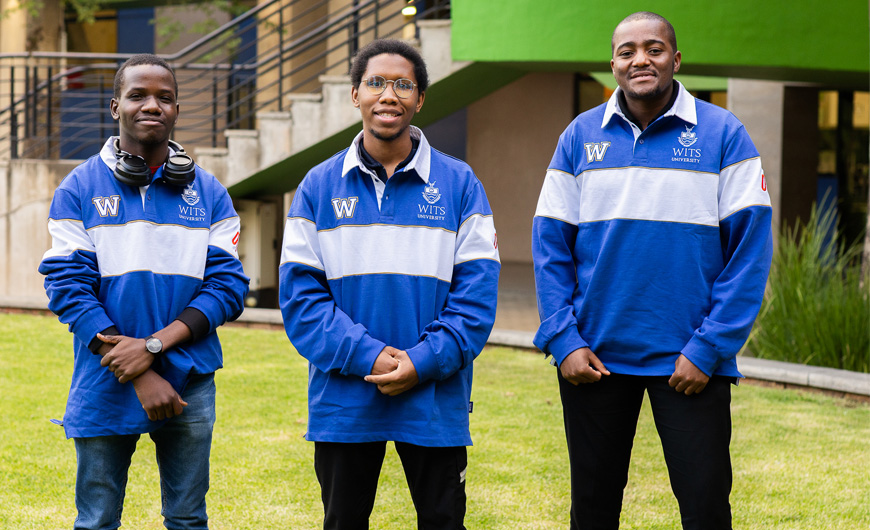
The app called Blockfix, designed by Team Buff Bytes (Ndivho Shilling, Alton Maseko and Paballo Bopape in the School of Computer Science and Applied Mathematics), bridges this gap.
Through the app, users can report an issue by adding its location, a description and photographs or video. Residents can view nearby problems and contribute funding towards resolving them.
The platform also links community-funded projects with registered workers who submit their qualifications and express interest in available jobs. The system is designed to match tasks with suitably skilled workers, and more specialised work requires proof of relevant qualifications. Once a job is completed, workers upload photographs of the finished work for review by the residents who contributed towards the cost.
To support oversight, administrators can review worker registrations, monitor reported issues, view heat maps showing areas of concern and export data for possible use by municipalities. The model is intended to combine community participation, local skills and data-driven reporting to improve the way neighbourhood problems are identified and addressed.
Says Maseko: “Having the opportunity to be part of the core team creating something that could make a meaningful difference is very rewarding.”
Runners-up
Team Buff Bytes was one of six teams, all from the School of Computer Science and Applied Mathematics, that presented their projects on the final day of the Hackathon on Friday, 2 October.
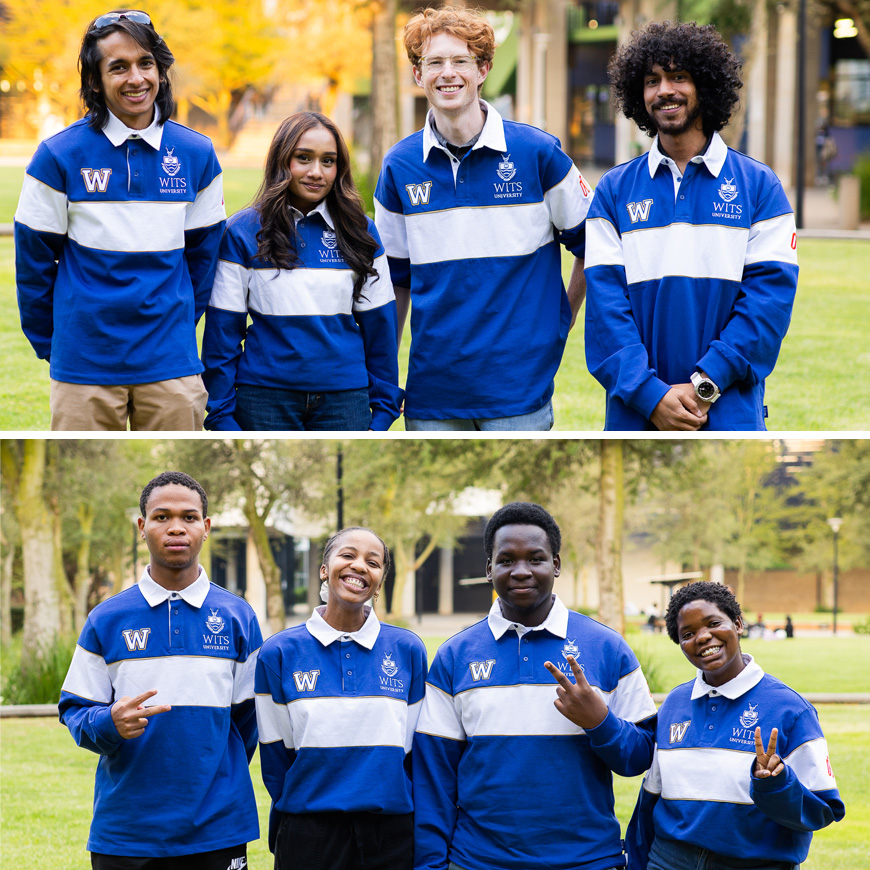
Grabbing second place was the Team Ketnip (Shawal Kassim, Brendan Griffiths, Viasha Morgan and Fakir Zaeem). The team developed a tool to help Johannesburg prioritise water faults and use limited repair budgets more effectively. Using real fault reports from My Smart City, the system can identify which leaks and other problems should be dealt with first.
The team said the tool could help reduce water losses, with about 47% of treated water currently being lost. They added that the same approach could also be used to prioritise other service-delivery problems, such as potholes and electricity faults.
In third place was Team Code // Bear (Neliswa Jones, Marvellous Sambo, Njabulo Ndlozi and Njabulo Khuzwayo). Their app, Mira, was developed as a patient–doctor communication platform aimed at helping patients stay connected to healthcare providers between clinic visits. The app allows patients to log symptoms, medication use and wound images, while doctors can monitor their progress remotely and follow up when needed.
Designed with South African healthcare challenges in mind, Mira also supports people without smartphones or reliable internet through SMS, USSD and community health workers. The team said the platform could help reduce pressure on overstretched clinics while giving doctors a clearer picture of how patients are recovering at home.
Social impact
Now in its seventh year, the Hackathon brought together more than 300 Wits students, as well as industry leaders, corporate partners and social impact stakeholders to develop practical, technology-driven solutions to real-world challenges facing South Africa and the broader continent.
The Hackathon is a collaboration between Wits University’s School of Computer Science and Applied Mathematics and AdaptIT, and this year focused strongly on industry networking, cross-sector collaboration and broader public participation.
Said Ndamu Gumane from AdaptIT and organiser of the Hackathon: “South Africa’s challenges cannot be solved by government alone. We have to play our part, and this year's Hackathon showed what can happen over a weekend when young people, industry and society come together to build solutions.”
“It was one of our strongest Hackathons yet. The ideas were more mature, practical and commercially sound, with a stronger connection between students, industry and the real challenges facing South Africa. The quality of the final solutions showed what is possible when all these different sectors collaborate and use technologies and tools such as AI to solve real-world problems.”
Participating students hailed from various Schools and Faculties for true interdisciplinary collaboration.
Springbok support
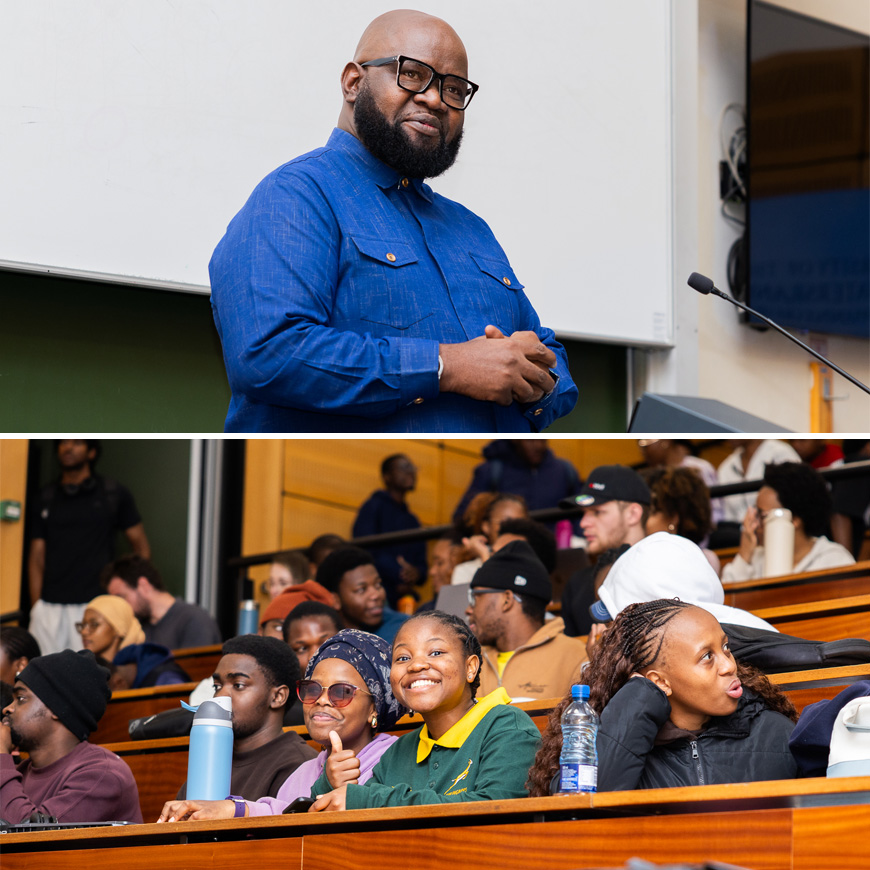
This year’s Hackathon also had support from South Africa’s national rugby team, the Springboks. Representing the Boks was Dr Khaya Mayedwa, Senior Manager: Government & Stakeholder Relations of the South African Rugby Union.
Reflecting on the broader role of the Springboks in inspiring the next generation, Mayedwa said: “We want young South Africans to see the Springboks and understand that it is possible when discipline, diversity, teamwork, resilience, and excellence come together, and that's what we want to show the young people.”
Turning to the role of innovation in shaping a more inclusive future, he said: “Innovation is not simply about creating the future. It's about deciding who gets the possibility in the future. Therefore, dream beyond yourself, solve real problems, and that's what we are doing here.”