

Inside a lion's gut
- Wits University
Scientists know a great deal about how lions hunt, breed and survive, but the microscopic communities living inside them have remained largely unexplored.
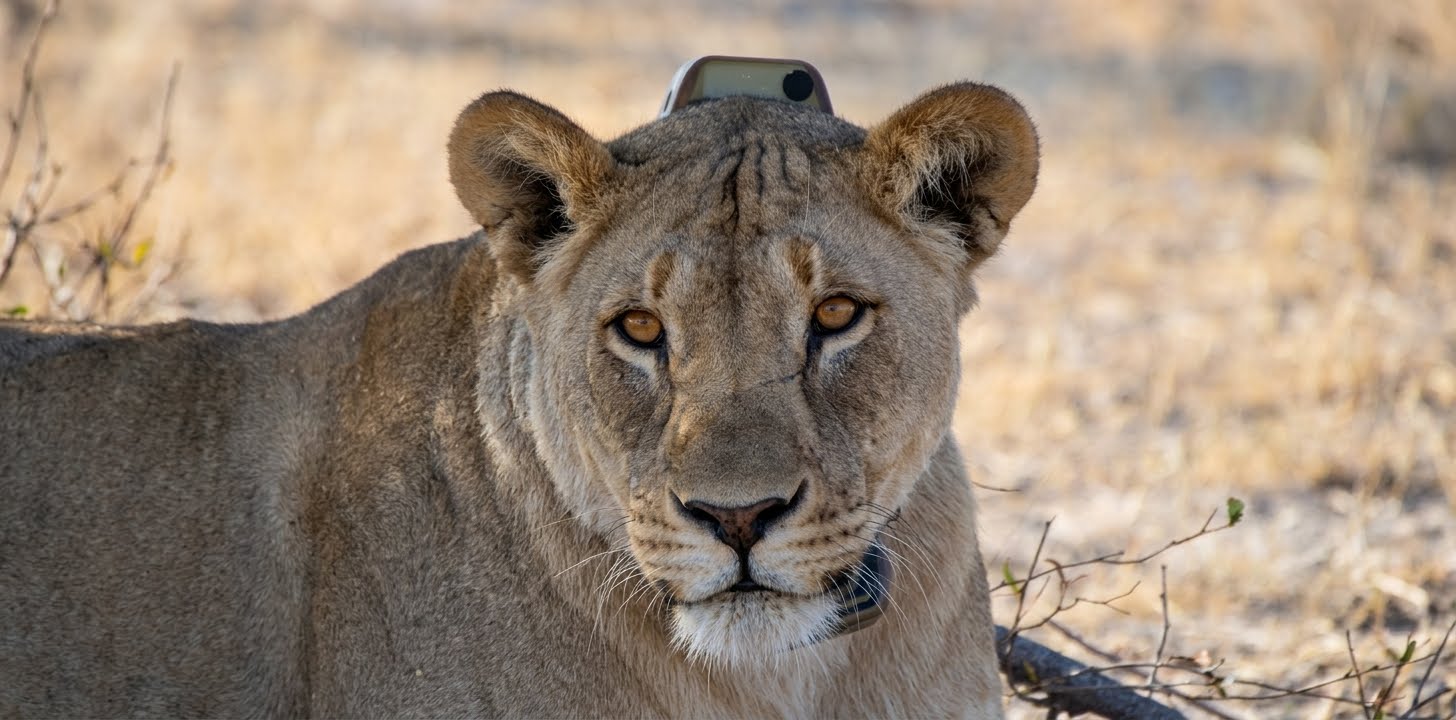 Now, a study of wild lions in Namibia is beginning to change that, while revealing how much biology is still missing from the world’s genomic databases.
African lions are among the continent’s most closely watched animals. Yet when Wits researchers began looking at the microorganisms living inside the guts of wild lions, they entered surprisingly unfamiliar territory.
A study published in Animal Microbiome has provided the first comprehensive, genome-resolved analysis of the gut microbiome of free-living African lions.
Researchers analysed 23 fresh faecal samples from 20 lions in Namibia’s Etosha National Park and reconstructed 318 bacterial and 102 viral genomes from the DNA they found.
Most were sufficiently different from genomes already held in international reference databases to indicate largely novel species.
For lead author Carl Belger, who conducted the work for his Master’s at Wits, that lack of knowledge was precisely what made the project interesting.
“Very few papers had sequenced the gut microbiome of lions before,” he says. “The question was really: what does the gut microbiome of lions look like?”
At the ‘business end’ of a lion
The microbiome study formed part of broader ecological research on Etosha’s lions. When animals were immobilised by veterinarians, different research teams worked together to collect blood, hair and other samples and fit tracking collars, allowing as much information as possible to be gathered from a single immobilisation. Belger was responsible for collecting the fresh faecal samples.
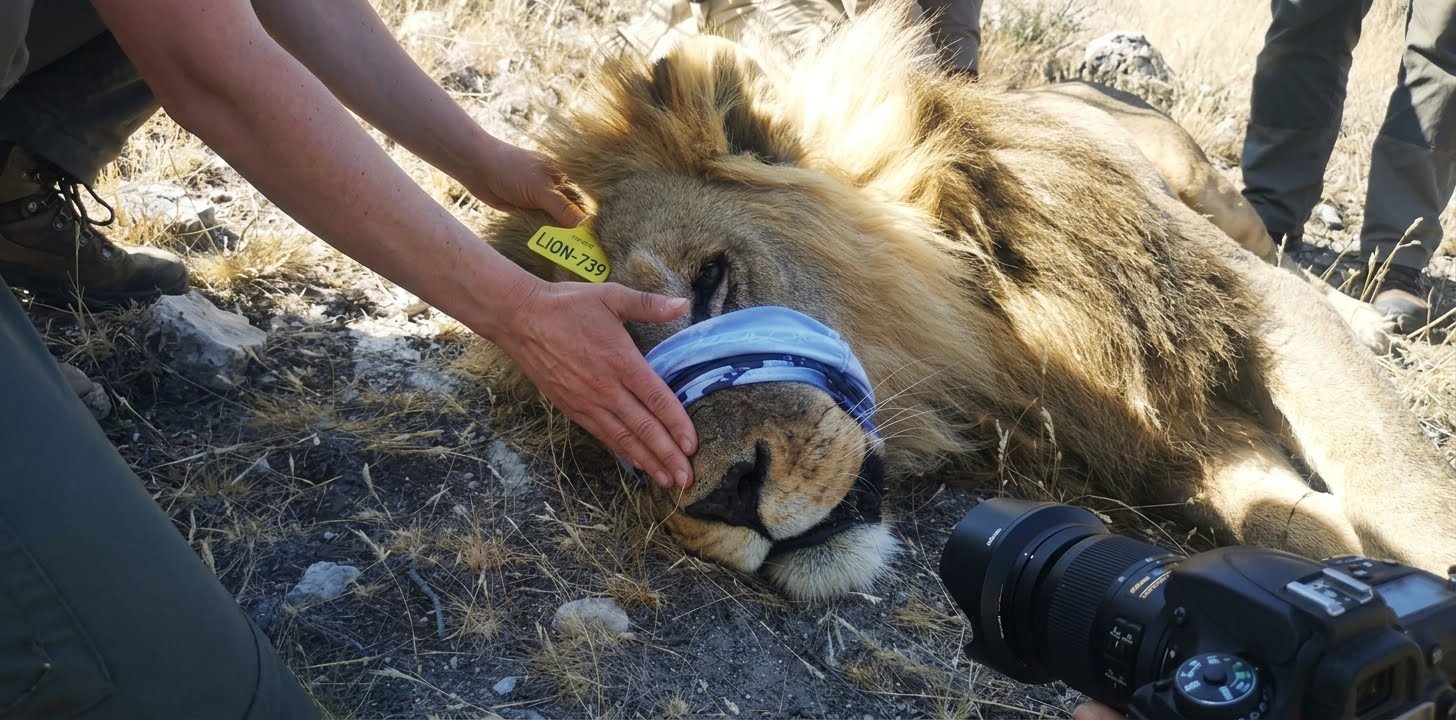 “I was at the back end of the lion – at the ‘business end’, should I say,” he says. On one occasion, the researchers were working on a young lion around sunset while members of its pride stood beyond the vehicles, watching.
Belger says one of the things that impressed him most about the fieldwork was the collaboration: researchers from different countries and disciplines converging on the same animals to collect different kinds of data, rather than repeatedly disturbing them.
Hundreds of jigsaw puzzles mixed together
A microbiome is the community of microorganisms, including bacteria and viruses, living in a particular environment. They contribute to processes such as digestion and metabolism and can be linked to an animal’s diet, environment and health. Modern DNA sequencing makes it possible to investigate these communities without first growing each individual bacterium in a laboratory.
Professor Scott Hazelhurst, a senior scientist and bioinformatician at the Sydney Brenner Institute for Molecular Bioscience (SBIMB) at Wits and co-corresponding author of the study, compares the computational problem to tackling a roomful of jigsaw puzzles at once.
Instead of receiving each puzzle neatly in its own box, some pieces are missing, some are damaged, and some are duplicated. Bioinformatics has to work out which pieces belong together.
Researchers sequence as much of the DNA in the sample as possible and then use computational methods to separate the genetic fragments and reconstruct genomes belonging to different organisms.
“It is computationally intensive. The lion analysis involved tens of thousands of CPU hours and generated tens of terabytes of data,” says Hazelhurst.
The researchers were able to reconstruct good-quality bacterial and viral genomes, even where the organisms themselves had never previously been identified at species level.
What happens when the database does not know the answer?
That process also exposed a fundamental problem: computers can only identify DNA by comparing it with biological information that has already been catalogued.
Much of the lion microbiome had not been.
Belger was struck by how dramatically the results could change depending on which reference database and classification method the researchers used. When the team added the microbial genomes reconstructed from their own lions to the reference data, classification improved sharply.
Adding the newly reconstructed lion microbial genomes to the reference database reduced the proportion of unclassified DNA reads from 24.5% to 4.5%.
For Hazelhurst, this is partly a consequence of how little wild-animal microbiome research has been done. Human genomic and microbiome data are far richer, making computational answers more certain.
“I did expect to find a lot of novel bacteria in the lions. I was surprised by how novel it was,” he says.
What are the microbes doing for a lion?
The study found microbial pathways associated with purine metabolism. Purines occur at high concentrations in meat and animal tissue, making them especially relevant to an almost entirely carnivorous animal. The researchers found nearly complete microbial pathways capable of breaking down the purines adenine and guanine to urea.
“Microbiota are key in any species as a key part of metabolism,” says Hazelhurst. If researchers want to understand lion ecology, metabolism and health, they also need to understand the role played by the organisms living inside the animal.
There could eventually be conservation applications too. Research in a number of animal species has found that captivity can be associated with reduced gut microbial diversity, although Belger cautions that this is not universal. Establishing what microbiomes look like in genuinely wild animals gives scientists something against which future changes can be compared.
The Etosha study was too small to answer questions about differences between prides, males and females, or different stages of a lion’s life. Hazelhurst says future studies could explore how microbiomes change between seasons, during pregnancy or in response to environmental stress.
A new frontier of biology
Asked to imagine explaining the importance of microbiome research in a TED-style talk, Belger kept returning to the same idea: this is still a new scientific frontier.
Microbial communities occur across species and environments. The same organisms can occur in different hosts, interact with diet and surroundings, and sometimes play very different roles. Studying one species therefore contributes information that may help scientists understand others.
“Part of why we were able to classify the lion gut microbiome, for example, is because we’ve done the human microbiome,” Belger says. “It’s really important to think about all the species because they’re all connected.”
For now, the Etosha lions have added hundreds of microbial genomes to that growing map and shown just how much remains to be discovered inside even one of Africa’s most familiar animals.