

The future of malaria control is … more mosquitoes?
- Wits University
South Africa’s malaria elimination teams could soon have backup from millions of decoy mosquitoes, specially bred at Africa’s first mosquito factory.
These insects are part of South Africa’s pioneering Sterile Insect Technique (SIT) developed through a joint partnership between the National Institute for Communicable Diseases (NICD) and Wits University.
NICD scientists have worked for a decade to rear and sterilise male swarms of the Anopheles arabiensis to overwhelm the wild population. The idea is to supplement the country’s existing Indoor Residual Spraying (IRS) efforts, which have helped to shrink malaria spread by a home-dwelling mosquito called Anopheles funestus. Progress toward complete malaria elimination has stalled, though, and Anopheles arabiensis may be the culprit.
The insect can bypass IRS and insecticide treated nets because it bites and rests outdoors.
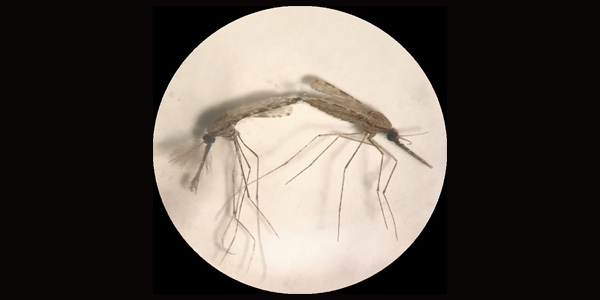
The method that the NICD and Wits University has devised exploits the fact that wild Anopheles arabiensis females only mate once in their lifetime. If they mate with sterile decoys, the resulting eggs won’t be viable, which leads to population collapse.
To demonstrate that this high-tech package works in the real world, the programme conducted a historic 12-week small-scale field trial in Mamfene, KwaZulu-Natal, the first release of an African malaria vector.
Over the trial period, researchers released approximately 50 000 sterile male mosquitoes bi-weekly, during which the target mosquito population declined. Once the releases stopped, the wild populations rebounded, which is an indication that decline was directly driven by the sterile male decoys.
Though findings have not yet been published or peer-reviewed, these early successes in Mamfene are just the beginning, says Dr Givemore Munhenga, lead scientist of South Africa’s (SIT) programme. Munhenga and his colleagues are now gearing up to collect information to satisfy regulators, including larger epidemiological trials, a local elimination trial on Grande Glorieuse Island and eventually, cross-border capacity building in neighbouring countries.
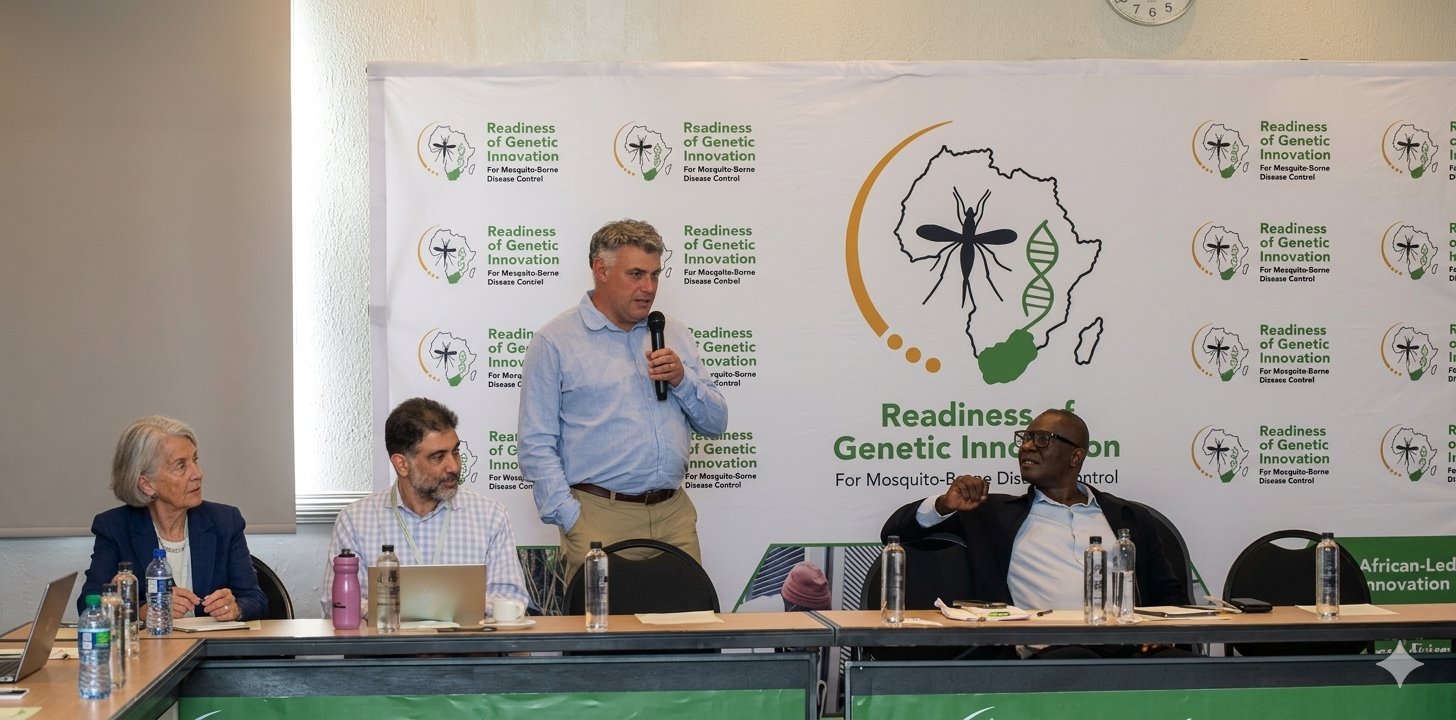
To pave the way for this high-tech future, Wits Health Consortium hosted a scoping workshop between 24 and 28 August with support from the Gates Foundation. The goal of the event was to plot the gaps between contained laboratory trials and operational, real-world deployment across the African continent.
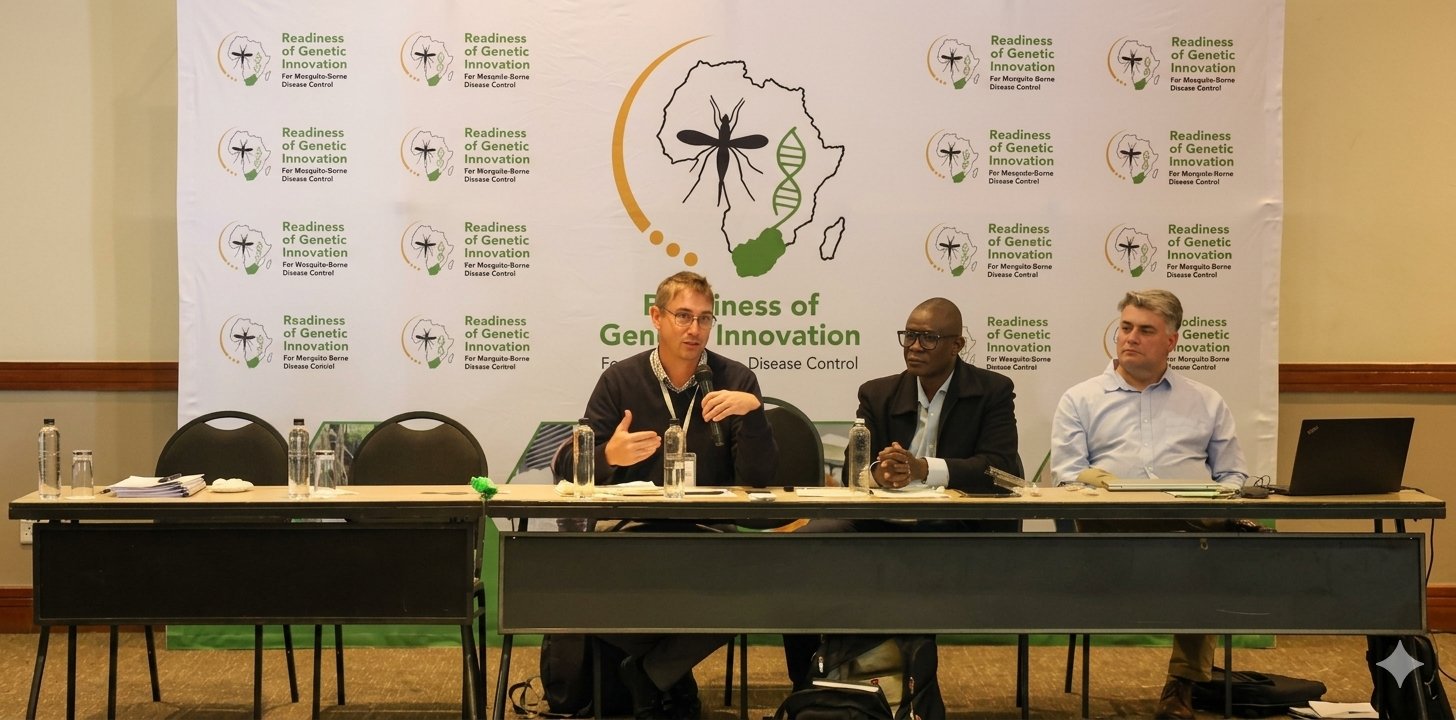
Participants heard about innovations at the cutting edge of biological vector control. In Singapore, for instance, government agencies have fully automated their mass rearing process, producing 24 million eggs per week. Scientists there even use blue flashing lights to mimic the light at dusk when mosquitoes are more likely to mate. The initiative has cut local transmission of dengue fever by 70%.
Rather than releasing sterile adult mosquitoes, a programme in urban Djibouti which also has a mosquito production facility, relies entirely on "just-add-water" deployment of genetically modified mosquito eggs developed by biotechnology firm, Flyttr.
These non-biting mosquitoes are genetically tagged with a glow in the dark marker that allows field researchers to identify the insects, trace the offspring of the modified mosquitoes in the wild, and measure how well population suppression is working.
How does South Africa’s SIT work?
South Africa’s pilot mosquito factory, technically called a Mass Rearing Facility, can produce 500 000 Anopheles arabiensis mosquitoes each week.
To ensure no disease-transmitting females are released into the community, scientists separate the sexes using a “genetic sexing strain” which contains a resistance marker to a specific insecticide (dieldrin).
This marker is linked directly to the Y-chromosome, which means only the males inherit immunity to the insecticide. When the young, aquatic larvae are exposed to a targeted dieldrin chemical bath, the susceptible females are selectively eliminated, while the resistant males swim through completely unharmed.
These male-only cohorts are then loaded into the NICD’s custom 3D-printed canisters and exposed to the precise X-ray beam, safely sterilising them while leaving them healthy, active, and highly competitive to out-court wild rivals in natural swarms.
Transporting fragile, adult insects over long distances is notoriously difficult. Left to themselves in a cage, active mosquitoes will batter their wings, break their legs, and rub off the delicate physical features they need to court wild females.
To solve this, the NICD scientists use a method of chilled immobilisation. By dropping the temperature, they place the adult mosquitoes into a temporary, harmless state of sleep.
It’s a robust cold chain. The researchers successfully transported adult mosquitoes over a distance exceeding 500 kilometers from the mass-rearing facility in Johannesburg to the hot release fields of northern KwaZulu-Natal.
Decoys delivered in drones?
Traditionally, SIT programs have relied on workers walking or driving through communities, opening containers by hand. It’s effective, but slow and labour intensive; workers can’t always get to remote roadless areas.
Drones would be a cost-effective way to deliver sterile mosquitoes to hard-to-reach breeding spots at scale, Munhenga says, but it's not yet clear whether communities would be comfortable with these devices zooming over them. The researchers have however had success translating their complex work into plain language before.
In preparation for the Mamfene pilot trials, they used the Zulu musical genre of Maskandi to convey how the release of millions of mosquitoes can reduce malaria in their community.
A lively sing-along track turned the biological mating game of the SIT into an accessible story and explained why researchers were releasing non-biting male decoys to court wild females. Alongside school dramas and local radio broadcasts, this creative experience built a solid foundation of public trust.