

Targeted HIV drug resistance testing moves into routine care in South Africa
- Wits University
Results of groundbreaking study in Hillbrow and Helen Joseph Hospital change how we manage HIV treatment when standard medications seem to stop working.
Researchers at Wits University, at the South Africa’s National Health Laboratory Service (NHLS), and at University Medical Center Utrecht have developed a new way to help people whose HIV viral load increased while they were taking the standard, highly effective dolutegravir (DTG) antiretroviral treatment.
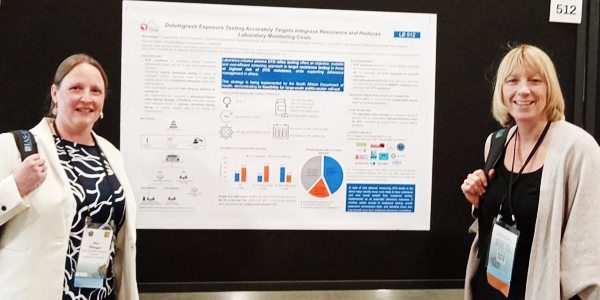
The Intensified Treatment Evaluation and Monitoring Approach (ITREMA-2) implementation study aims to prevent the accumulation and spread of HIV-1 drug resistance in resource-limited settings.
The study was published in The Lancet HIV on 2 September.
About the ITREMA-2 study
A total of 288 people with HIV participated in the study at Hillbrow Community Health Centre and Helen Joseph Hospital, two large public HIV clinics in Johannesburg.
Instead of guessing why dolutegravir wasn't working, researchers used a quick blood exposure test. This test acts like a radar:
- It checks if the medicine is inside the person’s body.
- If the medicine is not in the person’s blood, it suggests that the person has recently not been able to take their pills (adherence issues) so the chance for resistant virus is low.
- If the medicine is in their blood, but the virus is still growing, it means the virus may have changed and become resistant to dolutegravir, and so it is important to do a resistance test.
“An increased viral load does not automatically mean that treatment is failing because of drug resistance,” says lead researcher Professor Annemarie Wensing of Wits Ezintsha and University Medical Center Utrecht. “Measuring dolutegravir in the same sample helps identify who needs resistance testing and provides clinicians and nurses with objective information to better support medication intake.”

Why this strategy matters
When a patient's viral load spikes, doctors face a difficult dilemma. They must decide whether to give the patient strict counselling to help them take their current pills, or immediately switch them to a completely new, more expensive regimen.
Previously, doctors had to wait months, provide repeated counselling, and eventually run very expensive "resistance tests" on everyone to find out what was wrong.
With the ITREMA-2 strategy, the blood exposure test acts as a shortcut. It instantly tells doctors exactly who needs extra support to take their pills, and who needs to be checked for resistance.
Practical application in SA public health
The multidisciplinary research team also studied how this treatment and evaluation strategy could be integrated into routine care.
When incorporated into the care pathway at confirmed virological failure, estimated laboratory monitoring costs were 23% lower than with the previous standard approach, as unnecessary resistance tests can now be avoided.
The South African Department of Health recently implemented an adapted version of the reflex testing strategy in public HIV care.
Co-Principal Investigator of the ITREMA-2 study, Dr Kim Steegen of the NHLS and Wits University, played a key role in supporting the Department’s translation of ITREMA from laboratory research into routine practice in South African public hospitals.
Steegen says, “We have worked with the National Department of Health since the onset of the project and kept them informed on the study results as the project progressed. By doing this, we have been able to include an adapted version of ITREMA-2 into the national guidelines, which means the people who need resistance testing the most can be easily identified”.
Patient-centric benefits
For individuals living with HIV, the ITREMA-2 study introduces three major benefits:
- Faster, Right-First-Time Care: If the virus has become resistant, people won’t waste months taking a pill that doesn't work. Doctors can spot the problem immediately and switch to a working medicine faster.
- Better Support, Less Blame: If people are struggling to take their pills daily due to stress, side effects, or life challenges, the test proves it. This allows clinic staff to offer tailored counselling and support for treatment non-adherence.
- Protected Public Healthcare: Because this strategy saves money on unnecessary, expensive resistance tests, public clinics can stretch their budgets further. This ensures a steady, uninterrupted supply of high-quality HIV medications for everyone in the community.
The ITREMA-2 study was funded by the Amsterdam Dinner Foundation through Aidsfonds and the Dutch Research Council (NWO).