

How prescribing physical activity for cancer could be a gamechanger
- Wits University
Everyone knows someone with cancer, but few consider exercise as a treatment option, as no protocol exists in SA. PhD student Chérien Roux aims to change that.
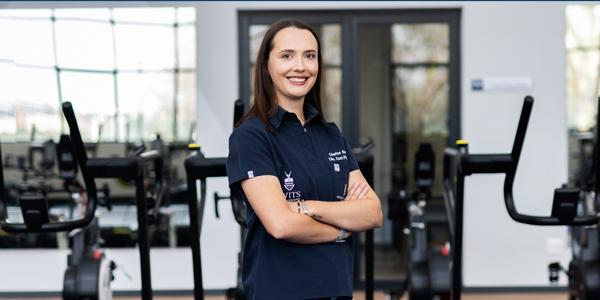
“I came back to South Africa with a goal. My mother had breast cancer …”
Chérien was in high school when her mother was diagnosed with breast cancer. Her mother endured debilitating but necessary chemotherapy, a double mastectomy, and reconstructive surgery. Chérien witnessed first-hand the physical and emotional impact of this devastating disease, with which one in seven South African women will likely be diagnosed.
Now 28-years-old and a qualified exercise physiologist specialising in the clinical population, Chérien practises in the Wits Zylstra Sports Complex and is an external lecturer in Chronic Diseases at Wits. Her first degrees include an undergrad in sport coaching science and an honours in sport science. She also holds certifications from the American College of Sport Medicine in advanced exercise physiology and Exercise is Medicine™ and she’s a certified cancer exercise trainer.
It was during her master’s in exercise physiology at the University of Northern Colorado (UNC) that Chérien’s interest and subsequent research trajectory was piqued. UNC was one of the first universities in the world to open a cancer rehabilitation centre – the University of Northern Colorado Cancer Rehabilitation Institute. Chérien returned home to Pretoria in 2024 and signed up for a PhD in Therapeutic Sciences at Wits on the topic of exercise oncology.
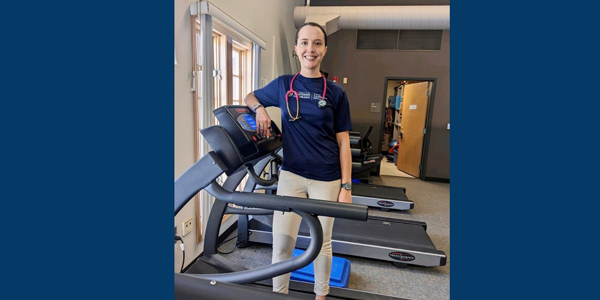
Chérien is completing her doctorate through the Department of Sports Science and Exercise Medicine (DESSM) at Wits. Through this clinical practice, she’s gathering the data required for her PhD in The Use of Exercise Therapy in Managing Breast Cancer-Related Lymphoedema (BCRL) in South African Survivors.
In August 2026, Chérien was invited to deliver a poster presentation at the Inaugural Conference of the International Society of Exercise Oncology (ISEO) in Heidelberg, Germany. She had volunteered to serve on ISEO’s communications committee to help promote the field of exercise oncology, along with members from the U.S, India, Italy, and Australia. Chérien is the only South African on the committee and was one of just two Africans at the inaugural conference.
“What I got from the conference was that Africa, generally, is lacking in research in exercise oncology – there was me, and one guy from Kenya – the only people representing Africa,” says Chérien. “Our continental point of view and socioeconomic status differs from the West; the way we live, our environment, genetics, financial and transportation needs. We’re really lacking research.”
Chérien says that delegates from Australia and the U.S who presented at ISEO all have set protocols for exercise oncology. “They’ve had it for more than 10 years, whereas in South Africa, we don’t actually have a set exercise oncology protocol to guide patients,” she says. “So that was a really big takeaway for me: more things need to be done here. We need a protocol for each cancer type.”
A protocol for each cancer type
An exercise oncology protocol for Africa is exactly what Cherien’s doctoral research aims to produce. “A protocol is an intervention that clinicians can use as a reference to guide them on what to do with the patient with [for example] breast cancer with lymphoedema,” says Chérien.
Phase 1 of her doctorate was a systematic review focusing on randomised controlled trials in breast cancer-related lymphoedema (BCRL). The review unearthed 1,500 studies, but “there was nothing in Africa that I could find,” she says. “I found one qualitative interview study, but I was only looking for randomized controlled trials. I ended up with eight articles, and none were from Africa.”
Phase 2 of her PhD is an international Delphi study. This research methodology builds reliable expert consensus across different countries on the topic of the use of exercise in managing BCRL, through a questionnaire. “The objective of including global experts in the field of oncology – physicians, oncologists, physiotherapists, surgeons – is to see what their ideas are regarding South Africa. Then we’re taking South African professionals’ opinions as well, and then we’re going to do a comparison of what they think compared to what international thinks and based on that, help develop the protocol.”
Data from the Delphi study will inform Phase 3 of Chérien’s PhD, which comprises qualitative interviews with breast cancer patients and survivors. The questionnaire will interrogate whether exercise is offered as an option for patients and, if not, what the needs of these interviewees are compared with those who receive the ‘standard’ treatment that is the status quo. This phase of the research is drilling down into the impact of exercise on cancer patients.
Prescribing exercise
“Exercise oncology is critical if you have or have had cancer,” says Chérien, citing cancer cachexia (cancer-related muscle wasting), involuntary weight loss, and severe fatigue as just a few reasons cancer patients need exercise – within the parameters of mitigating factors which preclude physical activity, of course.
In addition to the lack of exercise prescriptions for cancer patients, Chérien is equally frustrated by a general lack of interdisciplinarity in oncology. Despite the veritable army of experts that a cancer patient requires – from oncology, surgery, radiology, physiotherapy, physiology, psychology – integrated, patient-centric care can be disparate, and clinical exercise physiology barely features.
The reasons, Chérien says, are both a lack of promotion and recognition: “The HPSCA [Health Professions Council of South Africa] doesn’t recognise ‘clinical exercise physiology’ and medical aids don’t see the value, but they should,” she says.
This is why practising from the Wits Zylstra Sports Complex so profoundly supports Chérien’s research. It’s an inclusive and fully integrated training, exercise, clinical practice, and research complex that’s also home to a Centre of Excellence for cardiometabolic exercise rehabilitation for chronic diseases like cancer, cardiovascular disease, hypertension, obesity, and diabetes.
The complex also functions as an exercise rehabilitation and referral centre, connecting hospital clinicians and surgeons directly with clinical exercise programming.
“We are starting to get quite a few referrals from Wits Donald Gordon,” says Chérien, whose practice extends to Chronic Obstructive Pulmonary Disease, oncology, organ transplantation, and bone marrow transplant pre-habilitation and rehabilitation.
“For any patient within these disciplines, we need to know the physician’s treatment plan and any mitigating factors for which exercise is not recommended,” says Chérien, which drives home the importance of cross-disciplinary patient-centric treatment.
Keeping a-breast of advocacy
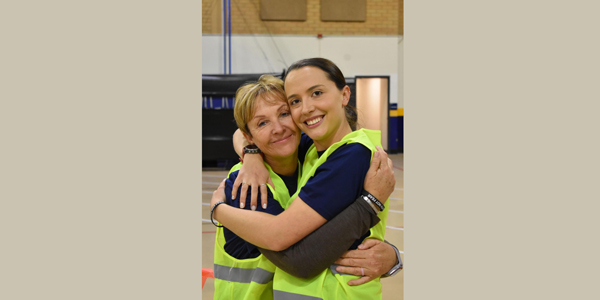
Chérien’s exercise oncology advocacy extends beyond the lab, gym, and clinic. From October, she wears yet another hat; she's an official ILoveBoobies ambassador.
“I’ll be representing the campaign when I participate in races, wearing their gear and helping to create awareness and visibility along the way,” says Chérien. “I’m also passionate about sharing knowledge around the role of exercise in cancer, and I’m looking forward to opportunities to provide education at events and help people understand how movement can form part of a healthy lifestyle and cancer journey.”
ILoveBoobies is a South African non-profit that provides free breast cancer screenings, education, and health awareness to women in underserved and rural communities.
Advocacy for ILoveBoobies is an appropriate and poignant contribution from one of thousands in this country affected by cancer. Chérien says, “I came back to South Africa with a goal – my Mom had breast cancer. I wished my Mom had benefitted from exercise oncology; fewer side-effects, controlled lymphoedema ...”
Chérien’s mother, Dorothy, is undoubtedly benefitting now from her daughter’s passionate pursuit: she remains in remission, still exercising, still thriving.