

Fire as an elephant: Why it belongs in Africa’s savannas
- Wits University
Fire is a natural part of many African ecosystems; a Wits fire ecologist says the task is not to eliminate it.
Professor Sally Archibald at the Wits School of Animal, Plant and Environmental Sciences (APES) compares fire to elephants. Elephants are large, and they can be dangerous and destructive. But when we understand their critical role in grassland environments, humans can learn how to live alongside them.

Meanwhile, fire is hard for us to live with. “In systems full of people, our inclination is to suppress wildfire because it can damage livelihoods and hurt people. But fire is a natural ecological process. The real question is not whether fire is ‘good’, but what kind of fire regime a particular ecosystem needs,” says Archibald.
It is a complicated message at a time when devastating wildfires in Canada, Australia, Europe and the United States have made fire synonymous with climate catastrophe. Archibald is not suggesting that the destruction should be minimised, or that communities must simply accept the loss of homes and lives.
Her argument is that different fires do different things. “Cyclones can cause terrible destruction, but that doesn’t make us scared of a thunderstorm in the karoo: we need to contextualise wildfire in the same way and welcome it into our landscapes as part of the ecology where we can.”
This is particularly important in Africa, where the fire management challenges differ from Europe and North America.
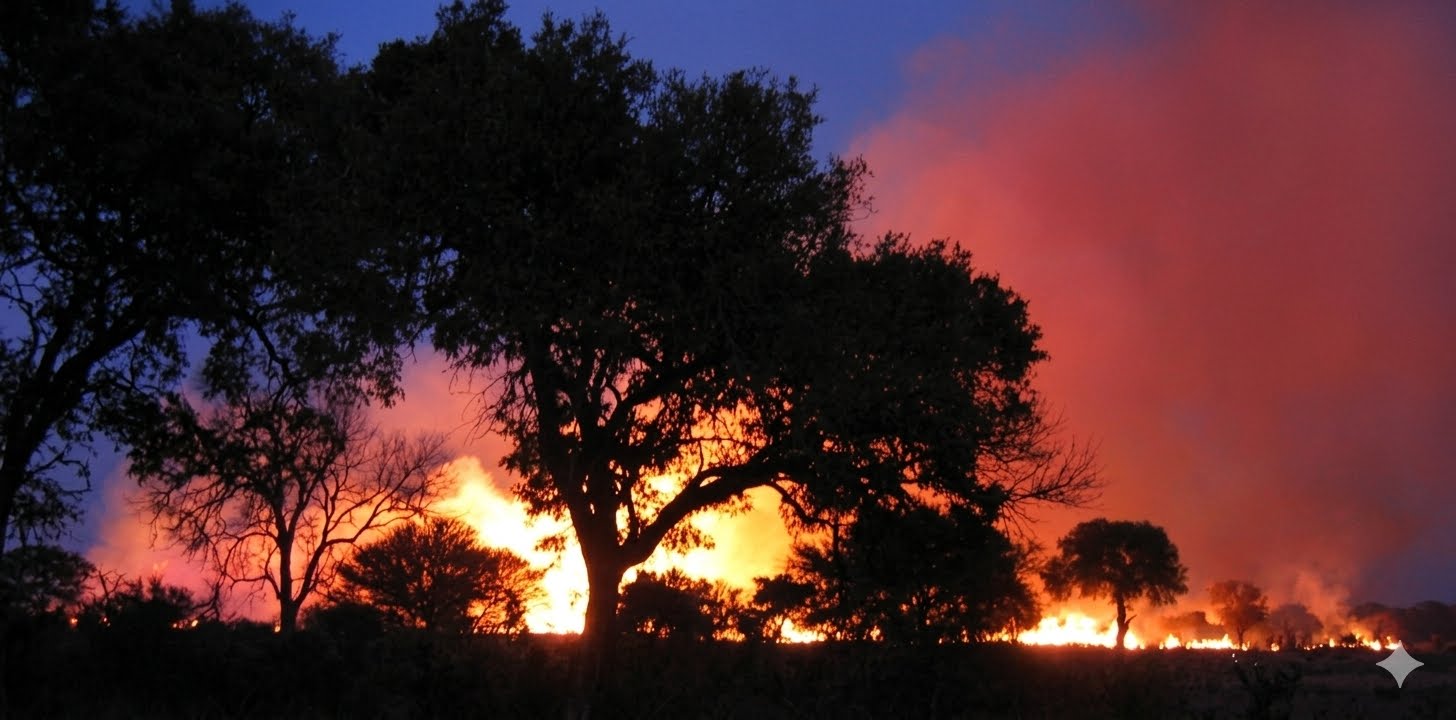
Africa burns differently
African savanna ecosystems need wildfire to create the open landscapes where our unique biodiversity thrives. Many species are what we call “fire-dependent” – they can’t complete their life histories without fire. Examples include that flower and set seed after fires occur, and birds like the whose chicks and eggs have evolved to be camouflaged in burned grasslands.
Many other species take advantage of fires, even if they don’t require them: forked tailed drongos dance through the flames to catch fleeing insects, and Zebras congregate on burn scars to lick the ash and eat the new green shoots. This improves their nutrition when times are tough in the dry season.
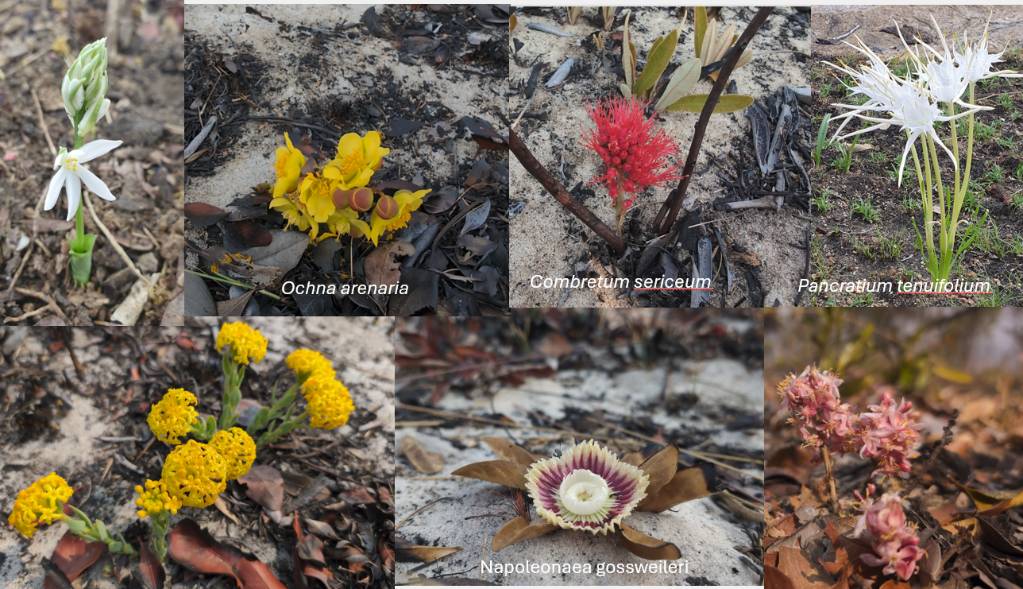
“These examples, together with long-term paleoecological data, show us that fire has been burning in Africa long before people evolved and started lighting fires themselves”, says Archibald.
Removing fire, or suppressing it indiscriminately, can therefore damage biodiversity and change an ecosystem's structure.
African savanna fires also behave differently from the forest fires that dominate international headlines. They generally burn grass rather than trees, occur frequently and are often less intense.
Fire releases the carbon stored in grass into the atmosphere, but the grass grows back during the next rainy season and absorbs much of that carbon again. A severe forest fire, by contrast, can release carbon accumulated in woody vegetation over decades.
The enormous fires in Canada, for example, released vast quantities of carbon dioxide. If hotter conditions lead to more frequent forest fires, the carbon released can contribute to further warming, which then increases the likelihood of more fire.
This does not make every savanna fire harmless. It means that fire cannot be treated as one undifferentiated environmental threat.
“Instead of asking whether rainfall is bad, for instance, we must ask whether this rainfall is damaging for that particular area. The same goes with fire,” says Archibald.
Should we be alarmed by fire?
Much of Archibald’s research combines satellite observations with field-based ecological studies. Both are needed because a satellite can detect that a place has burnt, but cannot, on its own, explain what that fire means.
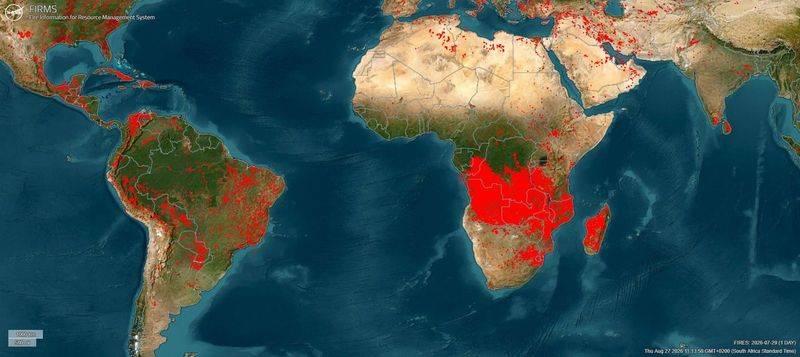
The bright concentrations of fire visible over countries such as Angola can appear alarming on a global map. Yet many of these are small fires lit by people, often using knowledge developed over generations.
In Lisima, in Moxico Province in eastern Angola where Archibald works, these fires that look so alarming on satellite imagery create landscapes of fruiting plants that provide important nutrition for local communities. The fires are not unplanned or unwanted, but an important part of a complex socio-ecological system. Without wildfires, these plants don’t flower and are outcompeted by taller grasses, harming people and biodiversity.
There is therefore no single ‘correct’ fire regime. How fire should be managed depends on the ecosystem and what people are trying to achieve: conserving biodiversity, protecting carbon stores, supporting tourism, maintaining healthy rangelands, or keeping people and property safe.
Data without local context can lead to the wrong conclusions – and policies designed for one ecosystem can harm another when applied elsewhere.
Using fire to manage fire
Because most fires are started by people, and because people have developed considerable technical capacity to extinguish them, we have come to believe that fire should always remain under human control.
Complete fire suppression carries its own risks. When grass, leaf litter and other combustible material accumulate, more fuel is available when a fire eventually occurs. The resulting wildfire may be considerably more intense.
“One response is to use fire proactively,” says Archibald. In most African landscapes, communities burn the grasslands around their settlements and fields early in the dry season. By the time hotter, more intense fires move through the broader landscape later in the year, much of the dry vegetation surrounding their homes has already been removed.
“We can care for nature by lighting fires, and we can care for ourselves by lighting fires,” says Archibald.
Across much of Africa, frequent human-lit fires have created what she describes as “domesticated fire regimes”. Landscapes may burn often, but in many smaller, cooler fires. This reduces the opportunity for the enormous conflagrations seen elsewhere.
Yet domestication can also go too far. If every section of a landscape burns the same way every year, the ecological variation created by occasional larger fires may disappear.
An African fire narrative
Global concern about mega-fires has created an opportunity to talk about fire. But it also risks imposing explanations and solutions developed for European, North American or Australian landscapes on African ecosystems.
Africa accounts for a large majority of the world’s routinely burned area and has deep scientific and community knowledge of fire.
“People ask why we are telling a different story from Europe,” she says. “It is because we are different from Europe. In the case of African fires, we know more about these systems than anyone else.”