

Climate change is redrawing Africa’s infectious disease map
- Wits University
Rising temperatures, floods and changing ecosystems are shifting where and how diseases spread.
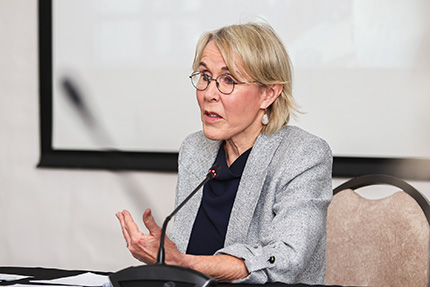 Africa faces a growing threat from infectious diseases as rising temperatures, floods and changing ecosystems create new opportunities for infections to spread.
This is according to Professor Helen Rees, Executive Director of the Wits Reproductive Health and HIV Institute (Wits RHI), who says climate change is altering where diseases occur, how long they circulate and the populations they affect.
Speaking at the 2026 Wits Inter-Faculty Research Symposium on Climate, Sustainability and Inequality, Rees says diseases carried by mosquitoes are among those being affected as warmer conditions allow disease-carrying insects to move into new areas.
“We are seeing more outbreaks, more frequently and larger outbreaks than we saw before,” she says.
Diseases such as malaria, dengue, yellow fever and chikungunya could spread into areas where they have previously posed a smaller risk. At the same time, floods can contaminate water supplies and increase outbreaks of diseases such as cholera.
Rees says climate change does not act alone. Rapid urbanisation, population movement, conflict, poor sanitation and weak health systems can combine with extreme weather to make outbreaks more likely and more difficult to control.
This is particularly important for Africa, where many vulnerable communities are already dealing with limited health services and declining international health funding.
Rees says improved disease surveillance and better use of climate and environmental information could help health authorities anticipate outbreaks before they become major emergencies.
“We need better surveillance,” she says. Predictive tools that combine information about weather, environmental change and disease patterns could help countries decide where to focus resources.
She also points to opportunities for African researchers to develop solutions suited to local conditions, including heat-resistant vaccines and medicines, easier diagnostic tools and technologies such as drones to deliver medical supplies to hard-to-reach communities.
Her seminar formed part of the three-day symposium hosted by the Office of the Pro Vice-Chancellor for Climate, Sustainability and Inequality from 29 to 31 July. The event brought together researchers from across Wits to share work and identify opportunities for collaboration across disciplines.
Research presented at the symposium ranged from pollution in Johannesburg’s Jukskei River and earlier drought warnings for Southern Africa to maternal heat exposure, climate modelling, energy transitions and the development of vaccine components from cashew nutshell waste. Researchers also presented work on heat risks for healthcare workers and pregnant women, water quality, household energy use and ways to improve climate early-warning systems. A climate modelling panel brought together researchers to discuss how stronger forecasting could support better planning and policy decisions.
The programme also examined how climate change intersects with inequality, public health, media, policy and the everyday risks faced by communities and workers. Sessions considered questions around a just energy transition, the impact of climate change on marginalised communities, and how restrictions on media freedom can affect reporting on climate emergencies.