

Wits and Sappi renew climate change Chair
- Wits University
Mary Scholes leads Chair that focuses on forestry research to boost forest resilience to the impacts of climate change.
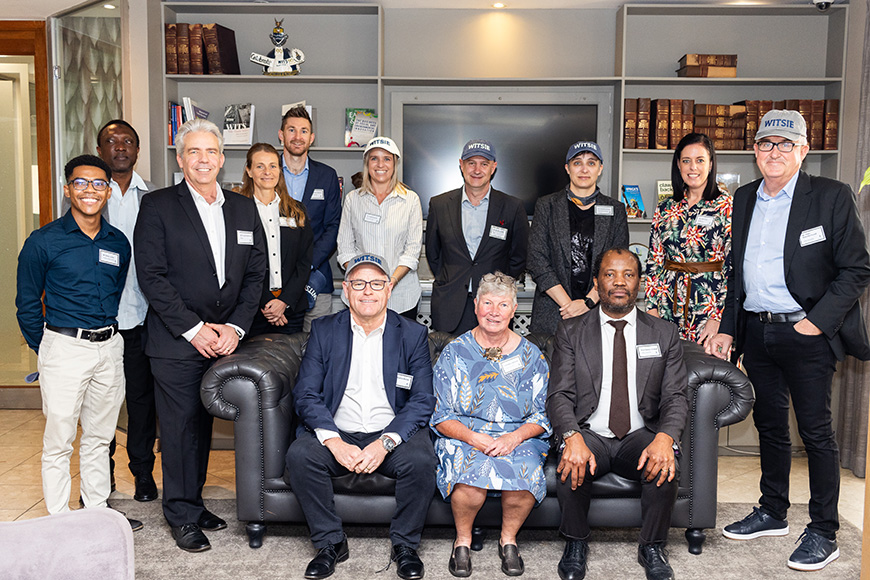
Wits University and Sappi Southern Africa have renewed their research partnership to increase forestry resilience to climate change risks, by extending the Wits Sappi Chair in Climate Change and Plantation Sustainability until 2028.
The new R4.3 million investment was announced during a launch event at Wits on Wednesday (26 Nov 2025). The programme will continue under the leadership of Professor Mary Scholes, with research focused on drought tolerance, fire regimes and tree responses to pests and pathogens in a warming climate.
“Forests are under growing pressure from heat, drought and disease,” says Scholes. “We need data and practical tools to help foresters plan for these changes now – not in 10 years.”
The renewed chair builds on a successful 2023–2025 cycle that provided positive results in supporting forestry resilience. Wits developed high-resolution climate data models tailored for the forestry industry and led a collaborative research project involving three universities and two industry partners. The work, funded by Sappi and the Department of Science and Innovation’s Sector Innovation Fund and supported by Forestry South Africa, took an integrated systems approach to forestry under climate stress. Research included genome analysis, laboratory experiments, pot trials, large-scale field studies and modelling approaches.
Wits coordinated the national project, which aimed to understand and improve how trees respond to drought and other environmental changes.
“I believe that this additional funding has brought researchers together in an innovative and exciting way that I have never experienced in South Africa,” says Scholes.
The Chair also resulted in the development of new methodologies, and instruments and models were developed to better track how trees manage water during drought – a key vulnerability in commercial plantations. The Chair also supported multiple Honours students, two MSc students, two PhD candidates and a postdoctoral fellow.
“The majority of these projects required collaboration, not just between disciplines, but between different universities,” says Giovanni Sale, Head of Sustainability at Sappi SA.
“A single university could not have done this project on its own. They had to create a consortium to work on it in partnership. The results of what we’ve seen, the multidisciplinary approach across the universities, have been an absolute win for us.”
At the launch, Dr Yolandi Ernst, Dr Caroline Hardy and Associate Professor Rob Skelton from the Global Change Institute and the School of Animal, Plant and Environmental Sciences demonstrated a new plant mechanistic modelling tool, coupled with climate modelling, to aid in the selection of tree species which may perform well under future heat and drought conditions.
“This platform helps answer practical questions like: which trees should be planted where – and how will they cope in 20 or 30 years?” says Skelton.
“There are critical drought thresholds beyond which trees won’t recover. Our models help identify these risks early.”
Sale noted that Sappi is breeding trees today for climates four decades into the future.
“Trees take up to 20 years to breed and another 20 years to grow, so the work we do now is for conditions that will exist in 40 years’ time. We cannot rely on the traditional way of doing things, which was observation – based on current conditions,” says Sale.
As Hardy’s presentation showed, in 40 years’ time, South Africa’s mean temperature will be around 5 degrees Celsius hotter, with decreased rainfall figures.
Sappi CEO Steve Binnie said the forestry industry in South Africa is globally competitive and a major rural employer, contributing R10 billion to the economy.
“For Sappi, this type of long-term academic partnership is essential. Our business operates on decades-long cycles, and our role as an anchor in the bioeconomy demands that we invest in the science, people and innovation that will shape the resilience of our plantations and value chain,” says Binnie.
Wits Vice-Chancellor Professor Zeblon Vilakazi said the partnership showed how academia and industry can tackle real-world challenges together.