

Whose brain, whose data, whose say?
- Wits University
The neurotechnology stream of the Darkroom project asks: how might neurotechnology move responsibly from the lab into industry and the community?
Lethu Kapueja
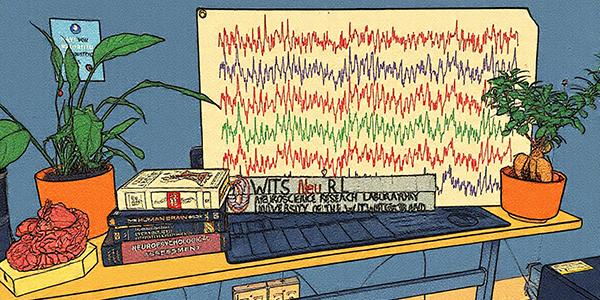
Technologies that monitor and measure the brain and nervous system are already edging towards workplaces, training centres, and policy conversations. The moment that these technologies get there, the most pressing questions stop being technical and become more human.
This is why a Wits project is making neurotechnology everyone’s conversation.
More than just research, the Darkroom project is a case study in why public engagement is not a nice-to-have, but the whole point.
Factualising and humanising ‘science-fiction’
Neurotechnology tends to arrive wrapped in the language of tomorrow. When you hear of brain-computer interfaces, wearable headsets, machines that read attention or fatigue, it is easy to make it sound thrilling, and equally easy to make it sound like a laboratory curiosity that will only matter to the rest of us much later, once the science is firm.
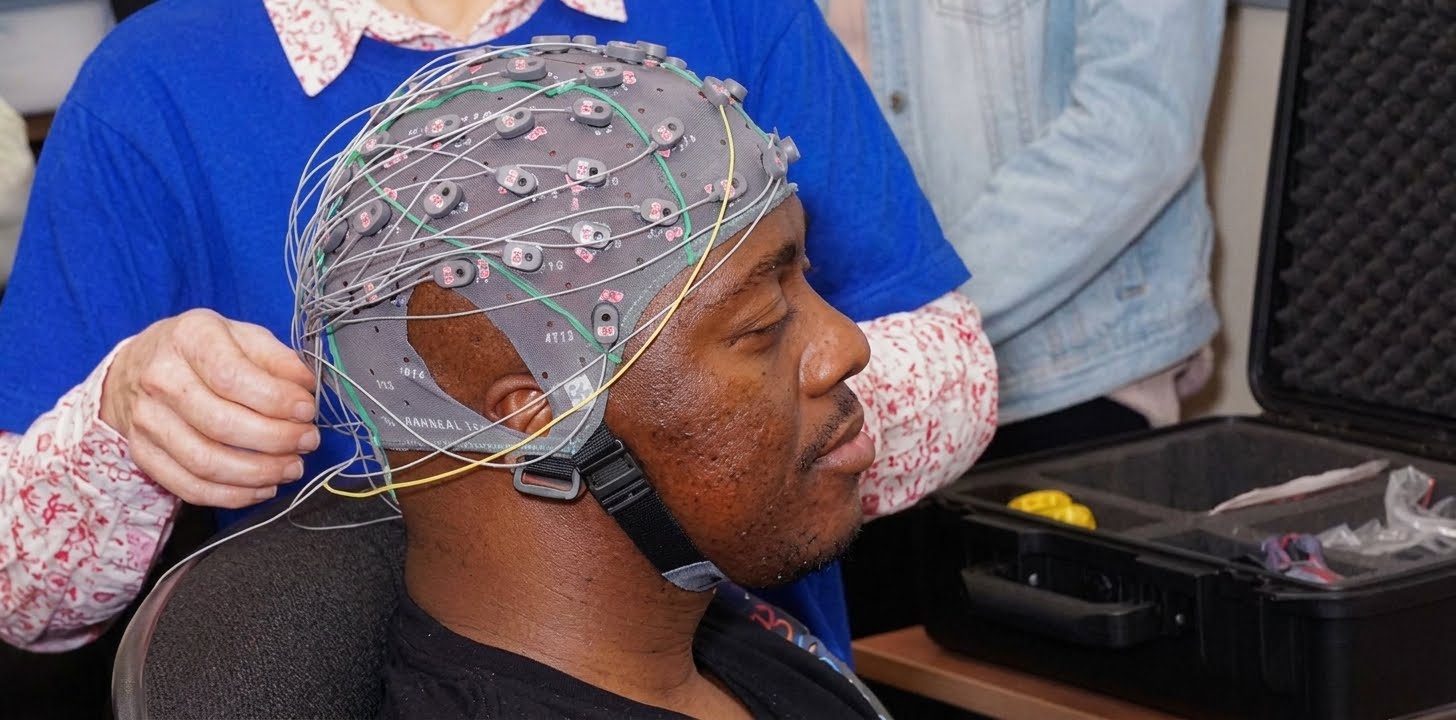
But that framing gets the timing wrong. Technologies that monitor and measure the brain and nervous system are already edging towards workplaces, training centres, and policy conversations, which should ask:
- Who understands what these tools actually record?
- Who owns the data they produce?
- Who benefits, who might be harmed, and who gets to decide?
The people who will live with the answers cannot afford to arrive at the end of that conversation. It is unfair and unjust if they do because people need to be in it from the start.
That conviction sits at the heart of one of the research efforts at the Neurotechnology Workstream of the Darkroom project. Housed at the Neuroscience Research Laboratory (Wits NeuRL), the three-year Darkroom project is led by Dr Sahba Besharati and funded by the Manufacturing, Engineering and Related Services Sector Education and Training Authority (merSETA).
The Darkroom project asks: how might neurotechnology move responsibly from the lab into industry and the community?
The project’s three strands are in themselves revealing: not only whether these technologies are feasible in South African contexts, but how they might support skills development, and how their ethics and safety can be taken seriously from the outset.
The public as partner
A unique feature of this project is not just its research questions, but the seriousness with which it treats the public as a partner in answering them.
Nowhere is that commitment clearer than in a five-part blog series, Neurotech in Society, published during South Africa's inaugural National Science Month in July 2026 by Wits NeuRL researcher and science communicator, Johanné Marais, as part of the Neurotechnology workstream of the Wits-merSETA Darkroom project.
The inaugural National Science Month campaign aimed to strengthen science literacy and the public’s capacity to engage critically with science, technology, and innovation. The Neurotech in Society blog series took that brief to heart.
The Neurotech in Society blog series
Neurotechnology is often sold as a story about the future. This blog series told a different and more important story; a story about who gets to understand neurotechnologies, question them, and help decide how they are used.
It would have been simple to open with a dazzling device or a bold prediction, but instead, the series begins with the unglamorous, generous work of explanation, in ordinary language: what these technologies actually measure with sources that readers can follow for themselves.
The point is not to make hard science sound easy but to make a claim understandable enough that an ordinary reader can check it, question it, and connect it to what they already know.
That is a radical move.
- A factory worker, for example, cannot debate whether an employer should be allowed to collect the worker’s “neurodata” if the word itself remains an opaque technical term.
- A student cannot interrogate a promise about brain-assisted training without some grasp of what is being measured and what remains unreliable.
- A policymaker can't judge a technology fairly when hope, practicality and hard evidence are all blended into one confident-sounding claim.
Kept apart – ‘here’s what's proven, here’s what’s still just promising, here's what we don't yet know’ – those become decisions people can actually make.
If you claim to support people’s involvement, you cannot ask people what they think until you have given them enough with which to think.
A path that runs both ways
Crucially, the Neurotech in Society blog series refuses to treat the public as an audience waiting passively for information.
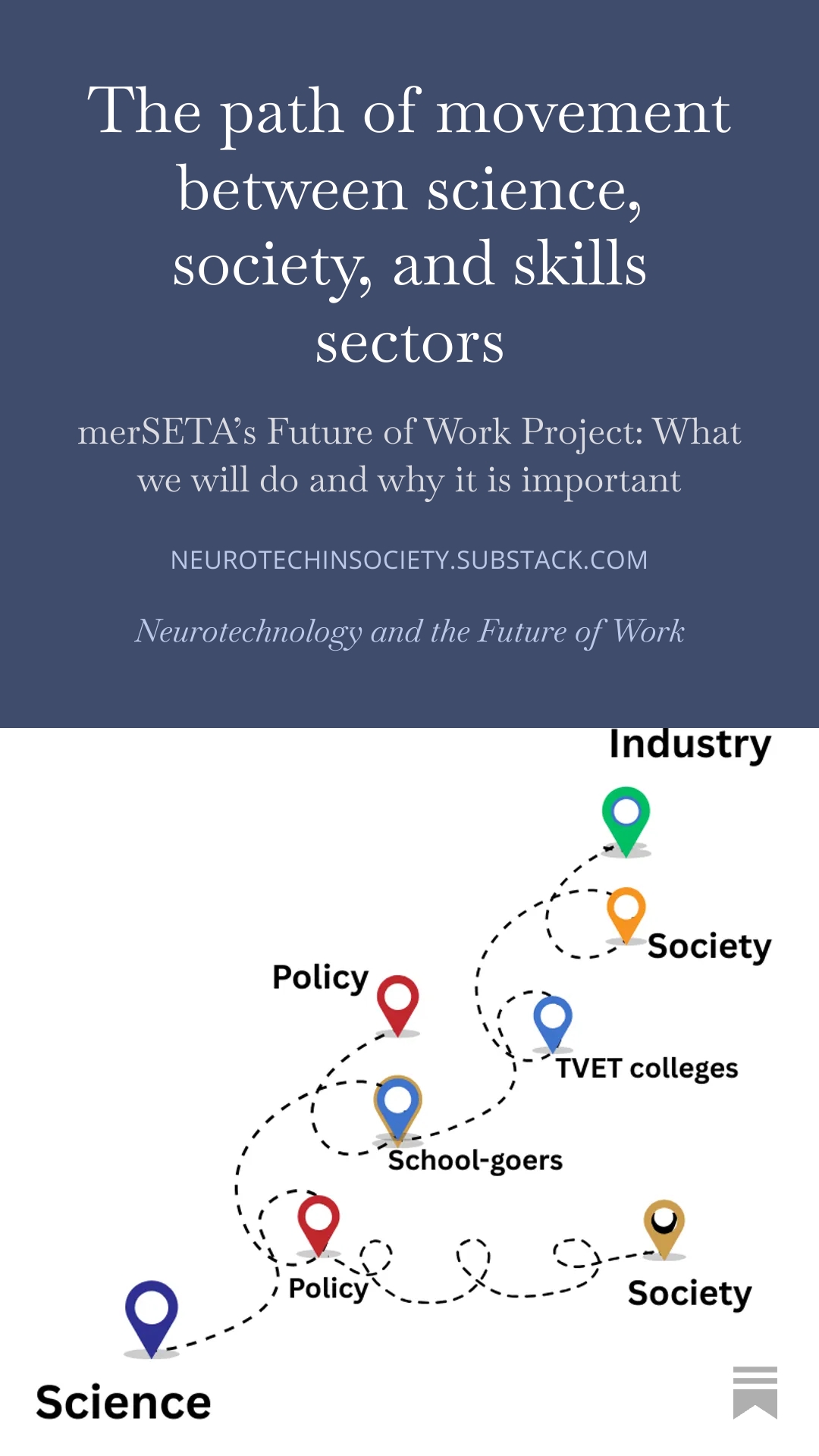
One post maps a "path" of knowledge running between laboratory science, TVET colleges, industry, policymakers, and society and insists the traffic must move in more than one direction. Society should inform science as much as science informs society; industry should inform policy, not simply receive it.
This is where the Darkroom project’s understanding of engagement becomes genuinely valuable. Rather than handing readers a finished definition of "feasibility" and moving on, the series asks them to articulate their own first. It reframes the question itself: feasibility is not only whether a technology can work, but whether it can be applicable, affordable, available, accessible, and fair in a particular South African context.
Those are not questions a laboratory can answer alone; they require the lived experience of the people that the technology is meant to serve, which means the research needs to listen, not only explain.
The questions that matter most
As the blog series develops, it moves from what can this measure? to the questions that keep people up at night. Writing about skills development, it organises the discussion around what it calls the three P's: process, person, and power.
Process concerns the tools and the workplace task.
Person brings in the learner, their data, their responses, their growth.
And power asks the uncomfortable, essential questions: Who has access to the technology? Who can analyse the data, and who owns it? Should an employer be allowed to use neural information when making decisions about a worker?
This is the moment a technology stops being a neutral instrument and becomes a matter of consent, ownership, and institutional power. A device can be scientifically plausible and technically workable while still raising serious questions about who it serves. Naming those questions openly, rather than treating them as an afterthought, is exactly what responsible engagement looks like.
Transparency and ethics
The final blog drives the point home through history. It recalls how psychometric testing and brain-measurement techniques were once drawn into apartheid-era attempts to lend scientific cover to racist policy, including cases where research that contradicted the state's assumptions met political pressure.
It sets these cases alongside more recent African work on governing brain data responsibly.
The lesson is not that the tools are inherently sinister; it is that the same methods can be turned toward safer training or toward injustice, depending entirely on the relationships of trust and power surrounding them.
Transparency, then, is not a courtesy the project extends to the public. It is a debt owed to a country with good reason to ask tough questions of science.
Communication is where engagement begins, not where it ends
The blog is not just a set of essays but a clear invitation to a two-way dialogue with both sides listening and is positioned to be a mechanism through which what people say can reasonably shape research questions and recommendations going forward. This project will publish great research, but publishing on its own is not engagement.
The self-awareness of the series is part of its strength. It is doing the foundational work of building enough shared understanding so that engagement, when it comes, can be substantive rather than performative.
The remainder of the planned engagements activities (co-design workshops, how-to videos, expert podcasts, public exhibition spaces, and short courses, alongside dialogue with students, parents, teachers, industry, and policymakers) will provide more incredible opportunities for credible engagement with multiple publics.
Access the blogs:
- Neurotechnology: the Science, the Technology, the Innovation
Published 3 July 2026. - The path of movement between science, society, and skills sectors
Published 10 July 2026. - Putting neurotechnology to work: a concept note
Published 17 July 2026. - Neurotech skills development: The Process, The People, The Power
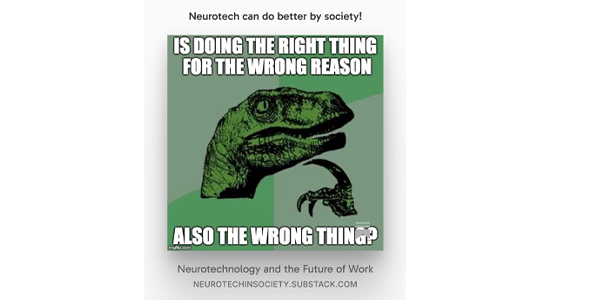
Published 24 July 2026. - Neurotech can do better by society!
Published 31 July 2026.
Lethu Kapueja is a Research Manager at Wits University and the Public Engagement Officer for the Neurotechnology Workstream.