There is arguably no better place in the world to be having a conversation on this topic. South Africa holds the dishonourable title of most unequal country in the world, and Africa’s largest carbon emitter (by far), while also being highly vulnerable to climate change.
These three facts do not occur independently of each other. As Tooze and others have noted, climate change and inequality are deeply intertwined. It is also a relationship that is of increasing interest globally, as both topics have risen in prominence over the past 10-15 years.
So, what is the nature of the relationship between climate change and inequality?
First, climate change worsens inequality. This is a fact that has been acknowledged almost across the board, including by the Intergovernmental Panel on Climate Change, the foremost scientific body on climate change. This happens at different scales. As a whole, poor countries – and particularly African ones – are most exposed to climate change, more likely to be hit by disasters, and more affected by increased temperatures and drought. When this happens, there is massive damage to lives, livelihoods, and social and physical infrastructure.
These countries have fewer resources to cope with the impacts. Resources have to be spent on recovery, or borrowed, rather than making systems more adaptive and resilient. This makes them more vulnerable in the future, becoming less resilient over time, with ever increasing debt burdens.
This applies at household level too. Poor households are more physically exposed to climate impacts but are also less financially resilient, as income is largely spent on meeting basic needs. Wealthier households on the other hand, are able to cope with crises through mechanisms such as insurance, or by simply delaying more luxury purchases. This can similarly lead to debt spirals or positive feedback loops of worsening vulnerability for the most marginalised. The ways in which these dynamics unfold intersects with other forms of inequality, including racial and gender inequality, particularly in South Africa.
Second, inequality worsens climate change and is at the heart of the question on responsibility for its causes. Although widely attributed to “human activity”, the responsibility for climate change is hardly shared by all of humanity. The rich and powerful have overwhelmingly been responsible for and profited from the vast majority of greenhouse gas emissions.
The United States and Europe are historically responsible for the most greenhouse gas emissions. More so, when one considers the impact of colonialism and extractivism which these countries perpetuated around the world and from which their own wealth was built.
This has, at least in theory, been the basis for most global climate policy and debate, around concepts such as the “polluter pays” principle, or the principle of “common but differentiated responsibility”. The costs of loss and damage due to climate impacts are growing and although progress was finally made at COP27 with the agreement to establish a finance facility for loss and damage, how this is implemented will be vital to ensure climate justice.
However, in the past few decades this picture has changed dramatically.
Now, China is by far the largest emitter globally (in absolute terms, not per capita), with India also featuring in the list of the top five. Inequality in emissions within countries now plays a more significant role due to the emergence of local elites, with large carbon appetites, within many parts of the global South. These elites have now become part of the contributing classes globally – both in their consumption emissions, but also as owners and profiteers from polluting activities. As one study has shown, in 2019, the richest 1% globally were responsible for 17% of emissions, while the poorest 50% were responsible for only 11.5%.
This is also true in the case of South Africa. As the most unequal country in the world, this pattern is also reflected in emissions’ responsibilities between income groups here. According to the Stockholm Environmental Institute’s Emissions Inequality Dashboard, in 2015, the top 1% of income earners were responsible for 18% of emissions, more than double those of the bottom 50%, who accounted for only 7%.
While this pattern of emissions’ inequality between income groups has occurred for a long time, it has worsened in the past few decades. Between 1990 and 2015, the contribution of the bottom 50% dropped from 16% to 7%, while those of the top 1% grew from 10% to 18%. This matches the pattern of worsening inequality and increased concentration of wealth that can be seen in almost all parts of the world.
This raises important questions such as who should pay (the global north, new emitters, or local elites?) or more importantly, who will pay?
As Tooze points out, “the climate crisis is a political economy problem”, shaped by “social hierarchy, inequality and class structure”. In South Africa, the context of our status as Africa’s highest emitter is based on our history as a carbon-intensive mining economy, built not only on the cheap and plentiful coal, but also, through apartheid, exploited and oppressed Black workers. In South Africa, the responsibility for our emissions should not be borne by workers and low-income households.
These questions will form the basis of the discussion taking place with Adam Tooze at 4pm, on 14 March at Wits University. Please register using this link to attend online or in person at the Wits campus. These are essential justice questions that South Africa must increasingly grapple with, as the financing debates about the just transition bear fruit. We hope you will join in on this conversation. DM/MC
Professor Imraan Valodia is Pro Vice-Chancellor: Climate, Sustainability and Inequality, and Director of the Southern Centre for Inequality Studies, University of the Witwatersrand, Johannesburg (Wits). Julia Taylor is a Researcher on climate change and inequality at the Southern Centre for Inequality Studies. Katrina Lehmann-Grube is an Associate Researcher on climate change and inequality at the Southern Centre for Inequality Studies.
The real Joburg in 6 powerful photos
- Tanya Zack
From butchers to hawkers, and shelters to miners, this book reveals the informal economy and texture of the city.
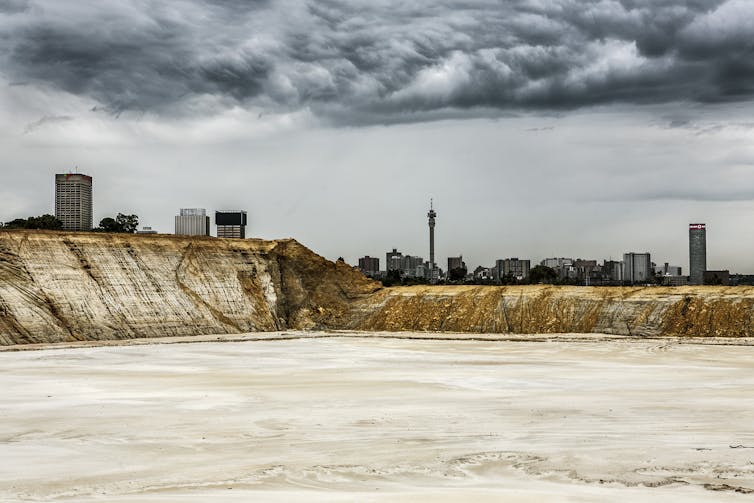
An abandoned gold mine in Johannesburg, South Africa. Mark Lewis/Wake Up, This Is Joburg
Wake Up, This is Joburg is a collaboration between photographer Mark Lewis and urban planner and writer Tanya Zack. Striking images and beautiful texts follow 10 stories the team discovered in urban Johannesburg, South Africa. Each chapter captures many overlapping stories that come together around a character, a place or an activity. The book is an ethnographic portrait of one of Africa’s most vibrant and intriguing cities. We asked for the stories behind six of its images.
1. Chopping s'kop
Chopping cowheads in Kazerne parking garage.Mark Lewis/Wake Up, This Is Joburg
The most marginal of the activities and spaces the stories explore is the informal butchers who chop up cow heads in a disused parking garage in the heart of the inner city. The condemned building is next to formal structures and within view of banking head offices.
The cow heads, or s'kop, are bought for R10 (US$0.55) each by nearby formal butcheries and delivered to them in shopping trolleys. Every part is sold in this marginal economy. Flesh is stripped off the skull, bones are taken to be crushed for bone meal, and skins enter a unique processing operation in invisible spaces in the city and transformed into an edible form.
Andile Nkomo from KwaZulu-Natal province is the most muscular of the six butchers on the day we first visit and, we soon discover, the most active. But he admits his output varies. On mornings after he’s worked as a bouncer at a Hillbrow nightclub, he is not in peak form. “On a good day I chop 60 heads,” he says as he slams his axe repeatedly into skulls on the wooden industrial cable spool that is the butchers’ block.
2. Breakfast on the run
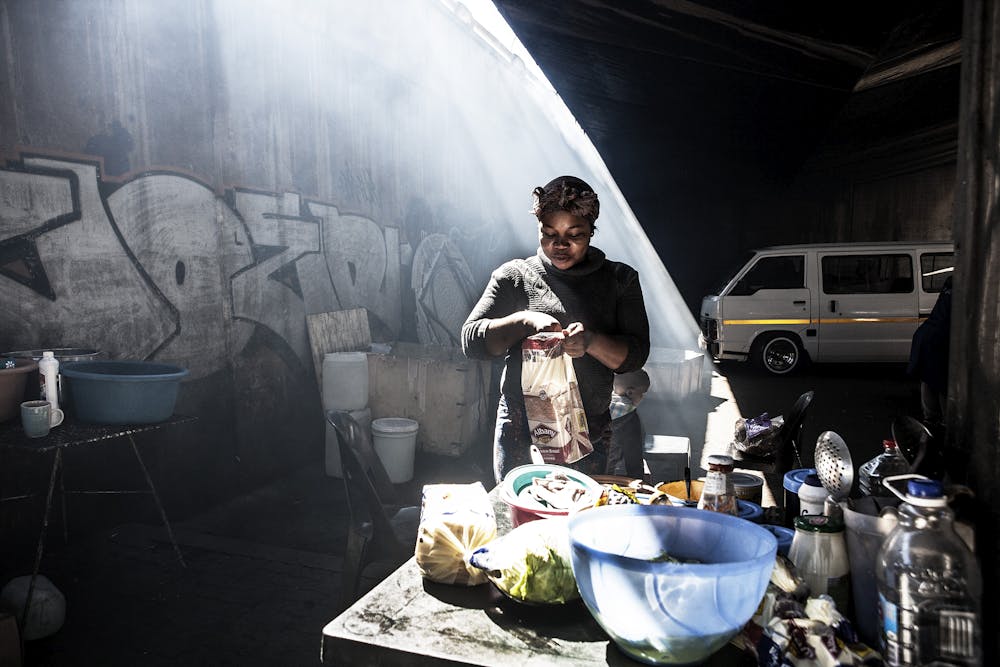
Monica Chauke serves customised breakfasts.Mark Lewis/Wake Up, This Is Joburg
Competition within the informal economy is tight. At the minibus taxi binding point Zola, micro-entrepreneurs offer barber services and sell food, snacks, socks, window wipers, mobile phone accessories and bumper stickers.
Stallholder Monica Chauke, originally from Limpopo province, is unperturbed by the competition for the appetites of the 600 taxi drivers. She knows that by midday she will have sold out of her unique offering and made her US$16 daily profit. Her niche is simple: she serves only breakfast. But there’s nothing simple about it. Monica has, over four years, worked out who likes what and caters to the specific tastes of her customers. This means making six egg-and-tomato, three cheese-and-tomato and four chicken-mayonnaise sandwiches, as well as six cheeseburgers each morning. And baking scones, frying balls of dough called vetkoek, preparing a soup of beans and bones and making a meat stew. Her commitment to providing variety no matter how small the quantity has earned her loyal customers.
Monica wakes at 2am to prepare and package the food and the equipment she brings here. “I want to work here because no one is controlling me. It’s for myself,” she says. “My boyfriend brings and fetches me each day.” In his car? “No, in my car. He drives it.”
3. Bed room
Birthial Gxaleka runs a shelter in a one-bedroom apartment.Mark Lewis/Wake Up, This Is Joburg
From her bed in a small Hillbrow apartment, Birthial Gxaleka – a nurse from the Eastern Cape province – runs a non-governmental organisation and shelter. Her tenants share her one-bedroomed space, sleeping and living on a large raft of beds that leaves only a narrow corridor of standing room. At any one time, there are up to 34 residents, because it is rare for Birthial to turn anyone away.
Each person wants to make their way in the world: find a job, reconnect with lost family, get access to healthcare or simply secure a decent place to sleep.
In the inner city’s high-rise flatland, at human densities 10 times greater than Hong Kong, people find ways to get on with things.
4. Under the city
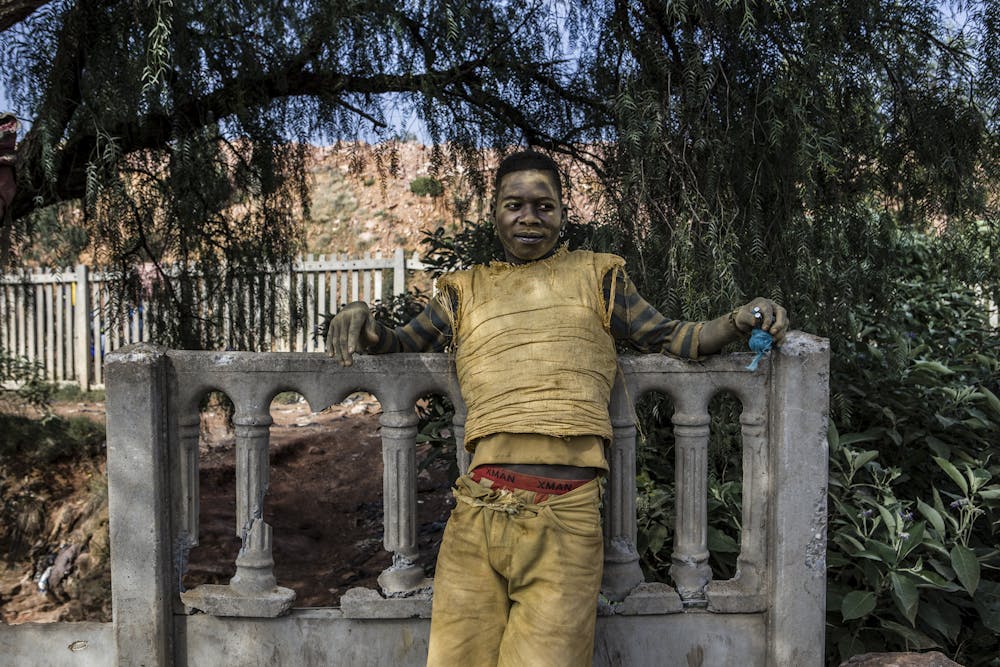
Nandos Simao digs for gold in abandoned mines.Mark Lewis/Wake Up, This Is Joburg
“This park is closed until further notice. Entry strictly forbidden.” This is the sign at the entrance to the place where the metal that would make this the wealthiest gold-producing city on the planet was first discovered. It does not deter anyone. Least of all those with the grit to seek a living or a fortune in the abandoned mine shafts of the Witwatersrand reef.
Known as zama zamas (those who keep trying), they work the dumps and cavities underneath the city. We visit the Langlaagte belt, which contains more unmined gold than any other vein in Johannesburg’s gold reef. They call it FNB (First National Bank). Here zama zamas of all ages, backgrounds and ethnicity use the same ancient pick and shovel method to wrestle with the rock face.
It is Nandos Simao, leaning in elegant repose against the remains of a concrete wall, who catches our attention. The 23-year-old Mozambican lives in the Orange Farm informal settlement with two fellow miners, his cousins. The youngest is 17.
There are many ways to die underground. But it’s a livelihood on which whole settlements depend. Indeed, MaLetsatsi Mamogele is digging for gold under her shack in Fleurhof, a working class suburb west of Johannesburg.
5. Good riddance
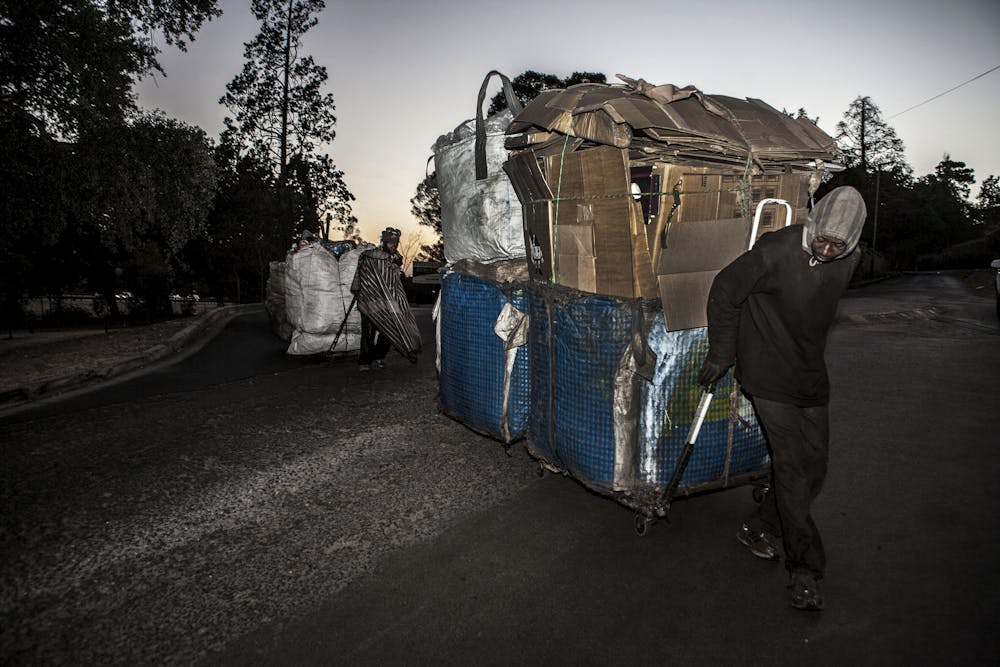
Lucas Ngwenya recycles cardboard.Mark Lewis/Wake Up, This Is Joburg
Young Mozambican Lucas Ngwenya and his two South African friends have lined up. It’s 6am. There’s a cold wind blowing on this open piece of land suspended between the private estate of the Oppenheimers, South Africa’s wealthiest family, and the headquarters of Hollard Insurance. It’s 4℃ as the men begin their 5km trip to the recycling depot in Newtown to sell the materials they’ve collected from suburban dustbins over a fortnight. It will take two-and-a-half hours to drag their gargantuan loads.
Lucas seemingly has the lightest burden, but points out that the cardboard, which occupies double the capacity of his plastic quilted bag, will weigh in at over 150kg. The plastic bottles and white paper will bring this to 265kg. His body mass is 61kg. When he arrives at the depot he will be asked for R10 “for cool drink” as he cashes in his load. Because, the cashier says, she has been generous with the amounts she has recorded.
6. Tony dreams in yellow and blue
Tony Martins creates a palace.Mark Lewis/Wake Up, This Is Joburg
Tony Martins built his first house in Madeira, Portugal, in his early 20s – because his wife’s mother “wouldn’t let me take her until I had a house to live in”. Some 30 years later he’s transforming his modest home in Johannesburg’s “old south” into a veritable castle – using objects he finds at waste dumps. Tony is an outsider artist.
He admits he cannot stop himself. “I sleep for two or three hours, and then I wake and think what else I can do. Then I have to do them in the day.”
The house is a wonder of lights and murals, of manikins in domes and on motorbikes on the roof, of a traffic light and windmill and of multiple staircases with balustrades fashioned from found tennis racquets and bicycle wheels. It is the sort of delightful outcome of a city not intervening in the authentic expression and private worlds that are possible in urban spaces where excess, waste and cosmopolitanism collide.
The repeal of outdated apartheid-era laws would have a far-reaching, positive impact on individual sex workers’ health and well-being.
It is illegal to buy or sell sex in South Africa. But this may soon be a thing of the past if a recently published draft bill to decriminalise sex work is passed. Researchers and activists Marlise Richter and Monique Huysamen set out what’s in the new law, what’s good about it and what still needs work.
What’s envisaged under the proposed new law?
If the Criminal Law (Sexual Offences and Related Matters) Amendment Bill 2022 is passed, South Africa will become only the third country in the world to fully decriminalise sex work. It would no longer be illegal to buy or sell sex. New Zealand and Belgium are the other countries where this is the position.
The draft law proposes the removal of the criminalisation of buying and selling of sex. It also proposes to clear the criminal records of those who have been prosecuted for buying or selling sex.
Predictably, various groups have pushed back against the bill, mostly on moral grounds. Opponents of the bill recommend that either:
the current law that fully criminalises all aspects of sex work remains in place; or
that sex workers are decriminalised but that clients remain criminalised.
This last idea is drawn from what’s called the “Nordic model” – an approach followed by some Nordic countries, including Sweden.
Why is full decriminalisation in South Africa so important?
Women in South Africa face very high levels of gender-based violence. Female sex workers are even more exposed than other women. A recent study showed that 70% of female sex workers had experienced violence in the past year. More than half had been raped by intimate partners, police, clients or other men. Criminalisation normalises violence in the sex work context.
Another argument for decriminalisation relates to health. HIV prevalence of between 39% and 89% has been documented among female sex workers across different areas of South Africa in the last decade. This is extremely high when compared to the country’s national HIV prevalence rate of 13.7%.
Sex workers are particularly vulnerable to HIV infection because of the many dangers associated with sex work in a criminalised context. Sex workers typically have many sexual partners. Their working conditions are precarious and unsafe. And the unequal power relationship between sex worker and client makes it very hard to consistently negotiate safer sex.
The social stigma attached to sex work also means that some healthcare providers hold prejudiced and vindictive views against sex workers. These views can drive sex workers away from health services, including HIV prevention, treatment and support.
If sex work was not a crime, clients and police wouldn’t have the power to abuse sex workers. Sex workers would be able to regularly negotiate safe sex. Police would have to take their complaints seriously. Sex workers would also feel more confident to report discrimination and disrespectful healthcare workers.
Under decriminalisation, sex work would be recognised as work. Occupational health and safety and fair labour principles would apply. Decriminalisation is particularly important for the dignity of poor black sex workers from working class backgrounds, who currently bear the brunt of the stigma associated with the criminalisation of sex work.
What is the Nordic model?
The Nordic model is a legal framework adopted by several Nordic countries, including Sweden and Norway.
According to this approach, selling sex should be decriminalised, but buying sex remains a crime.
The model assumes that criminalising the clients of sex workers would dissuade people from buying sexual services, and thus end the demand for sex work.
If buying sex is illegal, sex workers have less time to screen out dangerous clients and clients can put pressure on sex workers to agree to risky transactions in compromising situations.
South Africans have had painful lessons about why the state has no business in people’s bedrooms. The apartheid-era state prohibited sex across “colour” and “same-sex” configurations which South Africa subsequently strongly rejected under democracy. Yet this same law still survives for adult, consensual sex work.
Why arguments against criminalising clients should be resisted
In our research, very few men self-reported perpetrating violence against sex workers. Most actively distanced themselves from the violence associated with men who pay for sex, making it clear that they did not engage in or condone violence against sex workers.
Based on our research and that of others, we believe that the decriminalisation of clients would have positive spin-offs.
First, recruiting clients who have been identified by sex workers as non-violent and respectful as peer educators could instil and reinforce positive norms among clients.
Second, clients are well placed to serve as whistle-blowers when they notice human rights violations such as human trafficking or child exploitation in the sex industry.
The Nordic model is flawed and demonises clients. Putting sex work clients in jail punishes them for buying a service. This is ultimately bad for everyone’s health.
The draft bill should be passed as it is and as quickly as possible. It will make sex work less risky and dangerous, and our society safer.
This article has been updated to reflect the fact that Belgium decriminalised sex work in 2022.
Major new study on LGBTIQ+ migrants and asylum seekers
- John Marnell, B Camminga and Thea de Gruchy
The absence of reliable quantitative data makes it difficult – if not impossible – to hold Home Affairs, the police and other state entities to account.
Since 1998, South Africa has recognised persecution based on gender and sexuality as legitimate grounds for asylum. This makes it the only African country to formally extend refugee protection to lesbian, gay, bisexual, transgender and intersex (LGBTI+) persons.
However, as research shows, the promise of freedom contained in its Refugees Act is yet to materialise for LGBTI+ people.
Earlier studies show that LGBTI+ people who move to South Africa face unique challenges. But they do not say much about the size and constitution of this population or the degree to which certain social, legal and economic issues affect it.
There are two reasons for this. First, research to date has been qualitative, small in scale and focused on particular cities or subgroups. Second, South Africa, like many refugee-hosting countries, does not release disaggregated data on grounds for asylum.
The absence of reliable quantitative data makes it difficult – if not impossible – to hold Home Affairs, the police and other state entities to account. When reports emerge of LGBTI+ migrants and asylum seekers being mistreated, the government can dismiss these incidents as isolated or anomalous.
To respond to this knowledge gap, we developed a survey tool that could be distributed using WhatsApp. This allowed us to collect data from people who might otherwise be unwilling or unable to participate in research. We sourced information from 381 respondents, making it the largest data set of its kind in South Africa.
Our data shows that South Africa hosts significant numbers of LGBTI+ migrants and asylum seekers – something long suspected but difficult to prove. It also shows that this population is more dispersed and diverse than previously thought. Where someone lives, how they identify and how long they have been in the country can affect their ability to apply for or renew documentation or to generate income. It can also increase their susceptibility to violence and harassment.
The search for more data
Our goal was to collect baseline data that could not only augment existing research but also guide and support future advocacy work. As well as capturing basic demographic information, the survey posed simple questions about respondents’ gender, sexuality, documentation status and reason for migrating.
We wanted the survey to reach as many people as possible so we partnered with three well-known activists: Thomars Shamuyarira, Masi Zhakata and Anold Mulaisho. Each coordinates a network of LGBTI+ migrants and asylum seekers in a different part of the country. The community fieldworkers shared information about the project and enrolled anyone who wanted to take part.
We opened the survey to all LGBTI+ people who have crossed an international border, regardless of their documentation status. We did this because the distinction between migrants and asylum seekers is blurred in South Africa. Failings in the asylum system push those who may be eligible for refugee protection into the migration system or force them to remain undocumented. Official legal categories can also differ from people’s experiences and self-identifications.
Old issues, new insights
The survey results provide further evidence that South Africa is failing to meet its legal obligations. It also offers surprising insights into respondents’ identities, locations, motivations and experiences. We limit our discussion here to five key findings:
Geographic spread
Our analysis shows that LGBTI+ migrants and asylum seekers are dispersed across the country far more widely than first thought. It is commonly believed that LGBTI+ people move to major economic hubs, such as Johannesburg and Cape Town, which are perceived to be more “gay friendly” than other locations. As a result, services targeting them are concentrated in these areas.
The number of survey respondents living outside metropolitan areas suggests a need to reconsider how resources and services are delivered.
Diversity of language
The survey responses show that LGBTI+ migrants and asylum seekers use a wide range of terms to describe their identities. Most remarkable was the use of terms commonly understood to indicate gender – such as “transgender” – to signal sexuality, and vice versa. Of equal interest was the widespread use of “non-binary”, a relatively new term in South Africa, and the limited use of “queer”, a much older term commonly used in advocacy circles.
This finding is of interest to researchers, activists, lawyers, service providers, state bureaucrats and other stakeholders who engage with this population.
Gender-based claims
South Africa extends protection from persecution based on both gender and sexuality. However, previous research indicates that transgender and gender-diverse people have had to claim asylum – or have been classified as claiming asylum – on the basis of sexual orientation.
Our data suggests a shift in this pattern. A number of respondents reported claims based on gender identity or expression. The long-term impacts of this remain to be seen, such as how these claims are treated by Home Affairs and whether they result in refugee status being conferred. It also raises questions about what kinds of advocacy are necessary to ensure these outcomes.
An inaccessible and confusing system
Most respondents reported being undocumented, an anticipated result given the barriers obstructing LGBTI+ people from claiming protection in South Africa. More interesting was the number of answers that seem to indicate confusion over asylum-related terms, categories, systems and processes. This tells us that programmes intended to inform and support LGBTI+ asylum seekers are not reaching all segments of this community.
Limited online access
There were many people who wanted to participate in the project but could not. Sometimes this was due to language issues, but mostly it was because they had a SIM card but no cellphone. This is concerning given how much advocacy and outreach work is delivered via digital channels.
Where to from here?
A survey such as this cannot tell us everything, but it does provide crucial data on an under-researched and largely invisible population. Our hope is that state agencies use these findings to develop sensitisation programmes and improve service delivery. At the very least, this means treating LGBTI+ migrants and asylum seekers with dignity, respect and compassion, and upholding the rights guaranteed in law. Only then will the dream of freedom be realised for LGBTI+ people who move to South Africa.
The first was the COVID-19 disaster declaration in March 2020. This allowed the government to pass sweeping lockdown regulations that encroached on human rights – directly and indirectly - including the rights to dignity, privacy, freedom and security of the person and the right to choose and practise a trade or occupation freely.
More recently it issued another disaster declaration in response to the country’s severe electricity supply constraints. The country is experiencing the worst power cuts on record as the national utility, Eskom, implements longer and more frequent scheduled blackouts, referred to as loadshedding. The outages are having severe social, economic and ecological effects. The declaration aims to address the effects of the power outages and to avert the possible progression to a “total blackout”.
These loadshedding regulations are not likely to encroach on human rights to the same extent as the COVID measures did as they do not restrict movement or trade.
But they come at a time when memory of the overreach of the lockdown regulations is still fresh. Citizens are also enraged at the government’s failure to deal with a 15-year-old electricity crisis and worsening corruption which contributed to it.
The Minister of Cooperative Governance and Traditional Affairs was a respondent in both cases.
All the cases engaged with arguments relating to the principle of legality, which underlies South Africa’s constitutional democracy. (The rule of law guards against the arbitrary exercise of state power, because it requires a rational relationship between the exercise of government power and the purpose for which such power is exercised (the “rational connection” test).
The way in which the courts dealt with legality in the COVID-19 tobacco cases will bind other courts in their deliberations on the same or similar issues. This is in line with the principle of judicial precedent.
At leastthreeorganisations have announced that they will challenge the latest disaster declaration in court.
Based on the COVID-19 tobacco cases, the courts considering challenges to the load-shedding disaster will need to decide whether there is a “necessary and objective connection” between the steps government has taken and what it aims to achieve. This sets a high standard of proof for the government.
The arguments
But a legal challenge to the load-shedding declaration or regulations is not restricted to an argument based on legality. The organisations challenging them could argue, for example, that the definition of “disaster” in the Disaster Management Act does not extend to a government-caused load-shedding crisis. They could argue that other legislation should be used to deal with the electricity crisis.
However, as argued elsewhere, these arguments may not succeed.
Organisations may also rely on infringement of human rights as a cause of action. But this is unlikely to hold water as the measures proposed in the load-shedding declarations are not restrictive in the sense that the lockdown regulations were.
Notwithstanding these other possible approaches, a cause of action based on legality is likely to feature strongly in the forthcoming cases. Courts will be asked to determine the rational connection between the declaration and its regulations and the overarching legitimate government purpose (alleviating, for example, the effects of the power cuts).
There could, however, be different interpretations of the quality of rationality required, particularly if the minister relies heavily on section 27(2)(n) of the disaster management law. This section allows her to make regulations or issue directions concerning “other steps that may be necessary to prevent an escalation of the disaster”.
Because load-shedding is not a disaster in the ordinary sense, this particular power arguably underlies many of the measures in the new regulations.
In the COVID tobacco cases, the courts considered the quality of rationality required for the exercise of powers in section 27.
The Fair Trade court was sympathetic towards the executive. Its judgement set a low bar for the Minister of Cooperative Governance and Traditional Affairs to prove that her decision to ban the sale of tobacco products was rational. It held that to prove the rational relationship between tobacco prohibition and the government purpose (to protect human life and health and reduce potential strain on the healthcare system), the minister needed only to show a “sufficient rational basis” for her action.
The evidence on which she relied did not have to cogently and conclusively establish a direct link between tobacco prohibition and the stated government purpose.
In taking this stance, the court in the Fair Trade case opted for a broad interpretation of the word “necessary” in section 27(2)(n).
The courts in the BAT cases took a different view and set the bar much higher. The Western Cape High Court disagreed with the Fair Trade court, and held that the Constitutional Court’s approach in Pheko & Others v Ekurhuleni Metropolitan Municipality applied. In the Pheko case (which dealt with the declaration of a local, and not a national, disaster), the Constitutional Court held that the use of “necessary” in the similarly worded section 55 of the Disaster Management Act had to be given a narrow construction.
In the BAT case, the High Court held that the minister had to show that the regulation was necessary, and not merely sufficiently rational. Courts also needed to assess this evidence objectively, not on the basis of whether the minister subjectively believed a measure was necessary.
Using this test, the court declared the tobacco prohibition invalid.
The Supreme Court of Appeal confirmed the stance of the Western Cape High Court, and thus over-ruled the approach in Fair Trade.
As court challenges to the load-shedding disaster declaration and its regulations mount, parties should take note that the higher bar of a necessary and objective connection set out in Pheko and the BAT cases applies. Challengers will have to prove that there is no necessary and objective connection between government’s action and its purpose, even if the minister thinks there is. The legality of the load-shedding declaration and its implementing regulations will stand or fall on the basis of this test.
Depression, anxiety and childhood trauma: who's most at risk
- Ashleigh Craig
Adverse childhood experiences are associated with an increased risk of mental health problems in adulthood.
Mental health problems among adults are an ever-increasing public health concern. These include depression, anxiety, and conditions associated with bad childhood experiences such as abuse.
In a recent study we assessed the prevalence of mental health problems among South African adults. We also explored socioeconomic and demographic associations with depression, anxiety and adverse childhood experiences.
We found that South Africans who were exposed to adverse experiences in early childhood had a higher risk of probable depression or probable anxiety in adulthood than people who did not face adversity in childhood. (We say “probable” because our study recorded the presence of symptoms. The respondents weren’t diagnosed by a trained mental health professional.)
We also found that the symptoms of mental illness were more commonly reported by people with certain demographic characteristics. Probable depression and probable anxiety were more frequently reported among adults who were: retired and older than 65 years; widowed, divorced or separated; living in metropolitan areas; and with only primary school education. The characteristics that were significant in our study tend to be associated with relative poverty.
In 2009, nearly 20% of South African adults suffered from impaired mental health. According to a 2013 study, the prevalence of depression was highest in the Eastern Cape (31.4%) – one of the country’s poorest provinces. Research done among informal settlement residents in 2021 found that nearly one in every five women reported moderate to severe levels of anxiety. And more than half of South African adults have been exposed to adverse experiences in childhood and adolescence.
The prevalence of mental illness risk varies across the provinces. The socioeconomic and demographic determinants of mental illness also vary across the provinces. These findings underscore a need for targeted and accessible interventions and counselling programmes.
Mental health problems
We interviewed 3,402 adults across the nine provinces of South Africa between September and October 2021. Most of the participants were under the age of 44. We used clinically validated screening surveys to detect symptoms of depression, anxiety and adverse childhood experiences. Respondents were asked questions about how often – in the previous two-week period – they had been bothered by problems listed in the screening survey.
Probable depression had five levels: minimal, mild, moderate, moderately severe and severe.
More than a quarter (25.7%) of respondents reported moderate to severe symptoms of probable depression. The Northern Cape province reported the highest prevalence (38.8%). The Free State province reported the lowest prevalence (14.7%).
The prevalence of probable depression was highest among:
respondents 65 years or older (39% of this age group showed signs of probable depression)
respondents who were widowed, divorced or separated (32.6%)
those with only primary school education (32.1%)
those who were retired (30.6%)
respondents residing in metropolitan areas (27.0%)
women (26.7%)
those with lower household assets (26.4%).
To estimate probable anxiety, we asked the respondents questions about how often they had experienced general anxiety symptoms.
Our survey suggests that 17.8% of South African respondents had probable anxiety. Once again, the Northern Cape province reported the highest prevalence (29.3%). KwaZulu-Natal province had the lowest prevalence (8.6%).
Probable anxiety was highest among:
respondents aged 65 or older (22.6% of these respondents had probable anxiety)
the unemployed (21.9%)
respondents who had only completed primary school (20.4%)
the widowed, divorced or separated (20.4%)
those living in metropolitan areas (19.7%).
Adverse childhood experiences are potentially traumatic events that occur before the age of 18 years. They can be emotional, physical or sexual abuse, or household dysfunction.
More than one in five respondents reported high exposure to adverse childhood events (23.6%). The Western and Eastern Cape provinces reported the highest mean scores.
High exposure to adverse childhood experiences was also more prevalent among respondents who:
had only a basic level of education (35.1%)
were unemployed (30.8%)
had fewer resources (28.9%)
were aged 45-54 (28.2%)
were married or co-habiting (25.1%)
lived in rural settings (24.9%).
Our findings are in line with existing research. For example the Eastern Cape – one of the poorest provinces in South Africa, with 67.3% of adults living below the poverty line – reported the highest prevalence of adverse childhood experiences.
The importance of our findings
This study provides important evidence of factors linked to depression and anxiety. Our findings could help identify how these associations work, and how to intervene.
Overall, the study found that probable depression, probable anxiety and adverse childhood experience prevalence varied across the nine provinces.
The provincial breakdown of data can inform provincial service provision.
Reports of probable depression, probable anxiety and adverse childhood experiences were drivers. The reports differed markedly based on people’s socioeconomic and demographic characteristics like marital status, age, education attained, employment status and living circumstances. Our evidence suggests that these factors increase the frequency and extent of depression and anxiety independently of one another.
Probable depression and anxiety were associated with adverse childhood experiences and with each other. More than half – 58.1% – of respondents with probable depression also reported probable anxiety.
Our findings, therefore, suggest that reported adverse childhood experiences put people at greater risk of mental health problems in adulthood. That’s another reason to intervene in early childhood.
US-China tensions: how Africa can avoid being caught in a new Cold War
- John J Stremlau
There are fears that escalating US-Chinese tensions could threaten the independence of African and other nonaligned nations.
China’s foreign ministry published a 4,000-word analysis entitled US Hegemony and its Perils on 20 February. It’s an indictment of alleged US foreign interference, intimidation and interventions that began 200 years ago.
This was followed by President Xi Jinping’s accusation at the Communist Party National Congress in March that the US was pursuing an unprecedented global policy to contain and suppress Chinese development.
US official reaction to the Chinese accusations has been muted. But the recent US shooting down of an alleged Chinese spy balloon escalated tensions. There are fears that escalating US-Chinese tensions might threaten the independence of African and other nonaligned nations.
This essay seeks to contribute to an overdue debate among Africans about how to avoid being entangled in US-China global rivalry, while maintaining productive partnerships with both nations. It draws on my many years of teaching and research on Africa’s changing international relations.
I hope it will encourage other scholars and policy makers across Africa to assess the hegemony statement in the light of their own interests and values. Finally, this essay is intended to encourage debate about what each topic realistically implies for Africa continent.
The topics in the statement are:
political hegemony – (America) throwing its weight around
military hegemony – wanton use of force
economic hegemony – looting and exploitation
technological hegemony – monopoly and suppression
cultural hegemony – spreading false narratives.
Although Chinese rhetoric is harsh, the initiatives and interactions of China and the US in Africa under each heading illustrate my general belief that their competition in Africa has been – and can be – both peaceful and productive.
Political hegemony
China’s indictment ranges from US efforts at hemispheric domination beginning in the early 19th century to fomenting the “colour revolutions” – non-violent protests that overthrew autocratic regimes in the three post-Soviet republics Georgia, Ukraine and Kyrgyzstan.
But, China’s vision of the US glosses over the volatility of US domestic politics. Domestic concerns can alter foreign policy, a leader’s ideology, and political and historical circumstances.
Domestically, China too has undergone several political upheavals since the civil war that brought the Communist Party to power in 1949. If China underestimates US domestic swings, US analysts may exaggerate the global impact of Chinese internal pressures. During my election work for the Carter Centre in Africa, from 2006-2015, I was impressed by Chinese and American representatives able to seek common ground and learn from each other.
At higher levels of diplomacy, China and the US have used summits with African leaders to set broad guidelines of cooperation in trade and investment, climate, public health, building infrastructure and other areas. These should help African leaders decide areas of comparative advantage for them, in dealing with the two major powers. The Forum on China-Africa Cooperation differs from US initiatives, the most recent being the US-Africa Partnership in Promoting Peace, Security, and Democratic Governance. Neither major power appears to me to harbour hegemonic presumptions, as African leaders test their abilities to be productively nonaligned.
These high-level channels to both superpowers might yield more if African regional economic communities and the African Union made more concerted efforts to develop complementary and cumulative strategies for pressing African priorities. Extending the US African Growth and Opportunity Act to ensure favourable access to US markets is one example. Managing debt obligations for China’s important “Belt and Road” investments in African infrastructure is another.
Military and economic hegemony
The differences in what Africa had to contend with during the US-Soviet Cold War and today’s US-China rivalry are most pronounced in areas of military and economic hegemony.
Neither China nor the US seem poised to use Africa to test political military resolve, as the US and Soviets did when they fought proxy wars in Angola during the 1970s, for example.
African national and multilateral bodies should lobby China and America to back African-led peace operations within African states.
Globally, economic interdependence between China and the US will remain vital for sustained growth and prosperity for both nations. Presidents Joe Biden and Xi Jinping are committed to reviving their domestic economies. They both want greater equality, less corruption, and sustained growth. Neither appears to want or need to foment conflicts in Africa.
African governments rightly pursue support from both China and the US for regional integration and cooperation, such as the African Continental Free Trade Area. Greater Chinese and US economic engagement in response to African collective appeals could also become a confidence building measure between China and the US. This rarely happened during the Cold War. Back then, the US was aligned with European colonial powers and the apartheid regime in South Africa. The Soviets backed liberation forces. Today, such polarisation doesn’t exist.
The Chinese statement on US hegemony rightly notes the US is plagued by domestic violence and has a history of failures in military interventions. [US analysts acknowledge] this.
African nations should hold America and China to account for their avowed commitments to respecting core UN principles of sovereign equality and territorial integrity. Equally, they must hold Russia to account for blatantly violating those principles by invading Ukraine.
Technological hegemony
Benefits and risks of new technologies are well known. Communication, data retrieval and collection, and artificial intelligence bring both promise and peril that Africa must navigate carefully. This is becoming all the more pressing as progress in artificial intelligence accelerates. Neither China nor the US need to be hegemonic in making available technologies that spur Africa’s development.
More issues of contention need to be resolved with the help of scientists and scholars from China, US, and Africa. The availability of Huawei 5G is a particularly contentious issue. Perhaps interested scientists and members of the African Research Universities Alliance could work with their Chinese and US counterparts to establish guidelines and mediation capabilities.
China does not have similar ties with Africa. But, it has recently become more active culturally across the continent, as evident in its network of Confucius Institutes. China has also become the biggest donor of foreign scholarships, enabling future African leaders to study in China. Graduates enrich African universities and, interacting with graduates of US institutions of higher education, represent potential channels to explore options for three way, useful collaboration in their fields of applied research.
Looking forward
This essay reflects my belief in the value and prospects for greater African agency in response to rising tensions between China and America. I have used China’s indictment of alleged US hegemony only to debunk fear of Africa becoming a pawn in another Cold War. There is no evidence I have seen to suggest that will happen.
South Africans are simply not angry enough, protesting enough and shaming the ANC government and leaders enough for their corruption, state failure and decay.
South Africans are simply not angry enough, protesting enough and shaming the ANC government and leaders enough for their corruption, state failure and decay.
Mediocrity, incompetence and callousness by government and elected leaders are now accepted as commonplace. They do not elicit the requisite national uproar. These ills are now collectively resignedly accepted as normal, acceptable and the way things are and will be.
For another, collective anger are often misplacedly directed at scapegoats, conspiracies and the past or justifications are found for them – rather than at the government and leaders who are responsible. Or the corrupt, incompetent and uncaring government and political leaders are hero worshipped – buttressing their unaccountable behaviour. Resigned acceptance of government corruption, state failure and lack of care makes it acceptable for government and elected leaders to continue to behave corruptly, incompetently and callously.
Nations have dominant national psyches which determine what will be viewed as acceptable, normal and to be tolerated from their governments, leaders, and institutions, what will cause collectively outrage, and what the country will be obsessed with. The collective acceptance of corruption, incompetence and system decay destroys the idea of holding government and leaders accountable – without which corruption cannot be tackled, state performance cannot be improved and decay across society cannot be reversed.
Once we as a country accept these astonishingly low standards as normal from our government, the country will continue on its path to fully fledged failed state like most African countries since the end of colonialism. In post-Second World War postcolonial Africa, many nations slumped into national psyches which find corruption, state failure and decay as the normal way things are in their countries.
In such African post-colonial nations there therefore were no collective societal impetus over time to reverse state failure, systemic corruption and institutional, systems and behavioural decay. This goes to the heart of the reason why the majority of African countries have been failed, broken and lawless states since the end of colonialism. In contrast, societies in successful post-Second World War East Asian developmental states, such as Japan, South Korea and Singapore, shamed corrupt, incompetent and uncaring and government managers and political leaders – which brought these countries high levels of accountability, and was at the heart of their economic success.
The cherished belief that South Africans will rise up against government callousness is a myth. Former ANC and South African President Jacob Zuma was tolerated in government for nine wasted years – in spite of the systemic corruption, state failure and lawlessness under his watch, and which impact will take the country years to recover from.
In South Africa, there appears to be an acceptance that corruption, incompetent and state failure is the identity of South Africa. Paradoxically there is often a celebration if public services are just being delivered, no matter how tardy, mediocre, and inconsistent. Crime is runaway, power outages are now permanent and infrastructure have collapsed across the country.
In fact, there is a danger that the national psyche or the soul of South Africa will be one that associates the country with corruption, incompetence and failure.
We urgently need to rewire South Africa’s national psyche to make corruption, incompetence and decay as unacceptable – sometime against the country would rise up against. We will have to individually and collectively hold honesty, competence and caring government as dear to all our hearts – as part of our national psyche. Our national pride, identity and patriotism must be centred on honesty, competency and caring for others. It must be focused on excellence, merit and justice that goes across colour, political party divide and the past.
And as a nation, we must rebel when government and leaders do not deliver, do not govern in the widest public interests and with honesty - no matter their struggle credentials, colour and their political affiliation. Citizens must be on the streets every day. Organised business, civil society and individual citizens must more strongly voice their disgust against corrupt, incompetent and uncaring government and leaders.
South Africans must shame government and political leaders who are corrupt, incompetent, and uncaring in similar ways that citizens in East Asian developmental states did, which underpinned their economic miracles, from either civil war, colonialism or extreme poverty.
Finally, the ultimate constructive anger against corruption, incompetence and uncaring government and leaders are not to vote for parties and leaders who are corrupt, incompetent and uncaring.
William Gumede is Associate Professor, School of Governance, University of the Witwatersrand and author of Restless Nation: Making Sense of Troubled Times (Tafelberg). This article was first published in TimesLive/Sunday Times.
Profit versus health: 4 ways big global industries make people sick
- Wits University
It’s commonly known that alcohol and tobacco use make us ill. Less known is that just 4 industries account for at least one-third of global preventable deaths.
These industries are: unhealthy processed food and drinks, fossil fuels, alcohol and tobacco. Collectively they cause 19 million deaths every year, according to a recent series of reports published in The Lancet.
These deaths happen because of accepted business practices that prioritise profit over health - and not only through the companies’ products. This include cigarettes that cause cancer, sugary drinks that result in obesity or coal that drives carbon dioxide emissions, for example. The world’s largest commercial companies routinely operate in a way that masks their practices and allows them to continue and expand in the name of neoliberal economic freedoms.
These transnational corporations drive rapidly rising sickness and death levels, disability, environmental damage, and widening social inequities. The Lancet series describes a “pathological system” in which a substantial group of commercial actors are increasingly enabled to cause harm and to make others pay the costs of doing so. They profit without bearing any of the costs of the harmful products marketed to an unsuspecting public.
Commercial actors must meet the actual costs of the harm they cause if further damage is to be prevented. Governments will need to hold commercial actors to account. And norms need to be reshaped in the public interest, drawing attention to the right to health and the governmental obligation to protect health, not just corporate freedoms.
The commercial sector exists to make a profit. In the logic of the private sector, this outweighs public health and well-being considerations. Commercial activity’s health impacts can be positive, such as employing people in communities. But most are harmful. In public health, we call these “commercial determinants of health”.
The commercial practices that lead to these impacts range from legal to illegal, evident to subtle. They often overlap. At the same time, several types of practices used by commercial actors harm us. The most obvious are marketing, reputation management, questioning scientific evidence, and financial manipulation.
This matters because it is the unsuspecting public that pay. They bear the suffering and the costs of the global epidemic of noncommunicable diseases, and the rapidly accelerating climate emergency.
Marketing: making people consume more
The commercial sector uses various “dark marketing” strategies to create demand for brands and increase product consumption. Advertising for fast food and other ultra-processed food (high in fat, sugar and salt) dominates many countries’ advertising space. Nearly half of the advertisements viewed during child or family time in South Africa are for ultra-processed food and drink products.
A case study from South Africa that features in the Lancet series, on Coca-Cola’s marketing of sugar-sweetened drinks, illustrates how seemingly “normal” business practices can have devastating health impacts.
Coca-Cola and other beverage companies operate in South Africa in the context of alarming rates of obesity. Of the obese population, 68% are women, 31% are men and 13% are children. School children aged 10-13 consume at least two servings of sugary drinks daily. This makes South Africa one of the top 10 global consumers of Coca-Cola products.
The company’s marketing practices target mostly poor South Africans, seen as its growth market. Its products are available everywhere, from supermarkets to street vendors and remote rural areas. Branding is pervasive, from school and shop signs to billboards, TV advertisements and social media presence. One under-discussed aspect of this practice is how marketing reshapes cultural norms. It makes a deadly product aspirational – much as the tobacco industry did decades ago.
Reputation management: covering their tracks
Creating brand loyalty can fall into the realm of reputation management, sometimes in the guise of “corporate social responsibility”.
For example, some big food companies distributed unhealthy products with no nutritional value during the COVID-19 pandemic. Coca-Cola donated sugary drinks in Ghana. Krispy Kreme donated doughnuts to frontline emergency workers in the US. South African Breweries claimed to have recycled beer crates to make face shields for health workers.
The commercial sector seeks to influence policies so that they support the trade of harmful products or services. For example, the sugar industry in South Africa successfully lobbied to halve the proposed tax on sugary drinks.
The alcohol industry once formed an interest group, known as the Association for Responsible Alcohol Use, to influence government policies in South Africa.
Skewing science
Commercial influences on the scientific process can be subtle but pervasive. Funding research in non-transparent ways creates bias. Many commercial sectors attempt to manipulate scientific findings in their favour or to hide or falsify results. In 2017, for example, independent researchers uncovered how Exxon Mobil had intentionally misled the public about how extractive activities contributed to climate change.
Pharmaceutical companies use intellectual property rights to keep drugs at a high price. This limits access to medicines. Recently, COVID-19 vaccines were affordable for only the wealthiest countries. The same thing happened two decades earlier with antiretroviral drugs for HIV.
Financial manipulation: tax avoidance and more
Multinational mining companies continue to cheat Africa out of billions of dollars by under-reporting profits and paying lower taxes. In Zambia, for example, copper earns transnational copper mining companies billions annually. It’s estimated that their corporate tax avoidance denies the country US$3 billion in taxes yearly. This is more than 12.5% of Zambia’s entire GDP.
Some companies exploit labour (for instance, in the agricultural sector) and pollute the environment (for example, in the mining sector). These practices harm human and environmental health but were previously considered “normal” modes of doing business.
Looking ahead
Many of these “routine” commercial methods overlap and support each other. Transnational corporations with deep pockets can use them particularly well in weakly regulated low- and middle-income countries.
Individuals and their families, civil society, and governments increasingly bear the costs of harm caused by corporations.
It will take concerted joint efforts, such as an international convention, to change the system. This change needs to be in the direction of prioritsing societal and environmental well-being and health impacts. Until this happens, health and equity will continue to be threatened, causing significant economic damage and declining social development.
Confidence in banking is hard-earned and easily shocked. This makes individual banks and the sector susceptible to knock-on effects from other institutions.
Banks are in the news again. Two bank failures in the US, and the forced takeover of Credit Suisse by UBS in Switzerland, have triggered the worst turmoil in the banking sector since the 2008 financial crisis. There’s talk of a lack of trust, of a collapse in confidence, of contagion and systemic risk. Jannie Rossouw explains why they’re concepts worth understanding.
Trust
The whole principle of banking is built on trust. Clients deposit money with banks to receive interest and trust that their deposits will be repaid at maturity. Banks lend money to borrowers, trusting that lenders will pay the interest on borrowed funds and will repay the borrowed capital in accordance with the loan agreements.
Staff members work at banks, trusting the institution’s ability to pay salaries and provide other agreed benefits. Bank supervisors trust that their models and control mechanisms will raise warnings about liquidity, solvency and other risks facing any bank in a timely fashion. This will allow them sufficient time to step in, for instance by appointing a curator for a bank about to get into trouble.
In South Africa, the South African Reserve Bank is responsible for bank supervision. Stakeholders trust that it will do its job and keep their money safe. They trust that the individuals managing the banks will do so in a proper and sound way, thus not putting the economy or the banking system at risk.
Lastly, shareholders in a bank provide the permanent capital for the institution, based on the trust that their investment will grow in value and pay them dividends over time.
Confidence
All this confidence rests on the ability of banking institutions to manage risks appropriately. The very basis on which banks operate is risky. Banks are exposed to various types of risks that can contribute to failure. This is where confidence is important.
Banks are in the business of taking short-term deposits and converting those into long-term borrowing. Loan duration is longer than deposit (also called funding) duration. Therefore, if all depositors are spooked, and lose confidence in the bank’s ability to keep their money safe, they might start demanding repayment of their deposits on the same day. A bank can simply not meet such a demand for simultaneous withdrawals.
Another major potential hurdle is liquidity risk. Liquidity risk emerges when depositors want their deposits back and the bank can’t repay them all at once. It can trigger other problems.
Liquidity risk can also emerge when the assets of banks drop in value. The assets of a bank are the loans made to the public. Defaults on the repayment of such loans require write-offs. This erosion of asset value can trigger liquidity and solvency risks.
Silicon Valley Bank in the US invested heavily in government bonds. When bond rates increased, the capital value of the bonds held by the bank declined. This resulted in a liquidity shortage and a solvency crisis.
Once sufficient risks are triggered, a bank will run into serious financial difficulty. It might not survive, because trust will be shattered.
Under such circumstances, the authorities appoint a curator to manage the bank’s affairs. A curator will either manage a bank back to sound health, or will wind down its business and bring the bank to a closure.
In recent years in South Africa, VBS Bank and African Bank were placed under the control of curators. VBS Bank was completely insolvent and therefore closed. Many depositors suffered large losses.
In the case of African Bank, the curator could split the assets into a “good bank” (performing assets) and a “bad bank” (non-performing assets). These two parts were managed differently, with the good bank and performing assets moved back into private management as African Bank. The non-performing assets were kept apart and managed with the aim of recovering as much as possible from lenders.
Contagion
Contagion happens when a lack of trust in one banking institution spreads to others. This happened in 2008, when so-called sub-prime mortgage bonds were repriced with higher interest rates and borrowers could not afford larger repayments. Problems at some banks resulted in distrust in the whole banking industry.
In the past two weeks, there was again a risk of contagion after problems emerged at Silicon Valley Bank and at Credit Suisse in Switzerland. In both instances, the regulators stepped in to contain fears about the banking system. It was agreed that Credit Suisse would be sold to UBS, another Swiss bank. The announcement of this sale contained fears of contagion.
Contagion can spread beyond the banking system. Financial contagion refers to the spread of an economic crisis from one market (for instance the banking sector) or one country to other markets (for instance the insurance industry) or other countries.
Under these conditions, confidence in industries or even in countries can dissipate overnight. This is what happened in 2008, when there was doubt about the continued existence of the international banking system. Under such conditions, people revert to cash and keep their savings in banknotes. This in itself places a liquidity squeeze on the banking system, as cash flows out of the system.
Systemic risk?
Systemic risk is linked to contagion. It’s the risk of a breakdown of an entire system rather than the failure of an individual institution. A typical example is where the failure of an individual bank results in the failure of more banks, then the failure of the banking system and then the failure of the entire financial system.
Systemic failure can occur because different financial institutions hold exposures against one another. If bank A has a substantial deposit with bank B or insurer C and any one of the latter two run into financial difficulty, the result can be that bank A also faces financial difficulty.
Confidence in banking is hard-earned and easily shocked. This makes individual banks and the banking sector susceptible to knock-on effects from other institutions.
What can be done to manage these factors?
Risks in banks are managed at two levels.
The management of the bank is responsible for its sound operation. Management must assess and mitigate risk. In the recent case of SVB in the US, reports suggest that the bank didn’t manage its risk portfolio well, putting it at risk from major changes in the market, like sustained higher interest rates.
At the same time, banks are subject to supervision by the authorities. Banks must meet the regulatory requirements of supervisors and manage their affairs accordingly.
In South Africa, legislation makes provision for different types of banks to allow for different levels of sophistication in banking operations.
How vulnerable are banks on the African continent?
Africa is a vast continent of 54 countries. African countries are also at vastly different levels of economic development. It is therefore impossible to pronounce on the soundness of the continent’s banking system.