

Restoring lives, confidence and dignity
- Wits University
Dr Matshediso Mothopi-Peri transforms lives by helping patients who have lost facial structures regain their confidence, dignity and quality of life.
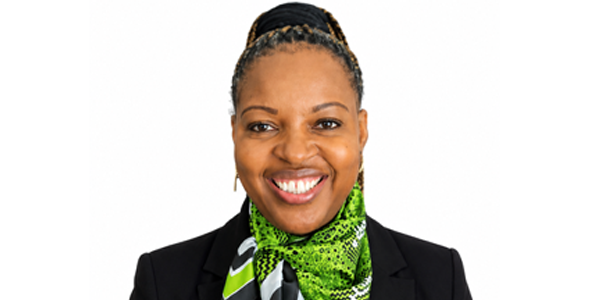
Mothopi-Peri's journey began as a diagnostic radiographer before she pursued a career in dentistry. The cases she encountered along the way have led her to specialise in maxillofacial rehabilitation.
In this Q&A, she reflects on the experiences that shaped her and informs her work.
Please share your background and what stands out about your childhood?
I grew up in a small township called Khuma, near Stilfontein, in the North-West Province. At the time, the gold mines in the region were at their peak. The township was buzzing with activity, businesses were thriving, and life was good, whether you were rich or poor. My home was filled with love and family. My parents, siblings, and extended family lived happily together in a four-roomed house, much like the majority of households in the township. The future was full of possibilities, and as a young girl from those dusty streets, I knew there was a bright future waiting for me on the other side.
The unrest and violence that swept through the township in the 1980s prompted my parents to take my brother and I to the Free State, where we lived with my uncle and later with my grandmother. Life was different there, quieter and more reserved, but it was here that I was encouraged to pursue my education. My uncle, who was a teacher and the only family member with a tertiary education, was the first person to make me believe that I could become a doctor. My grandmother, on the other hand, encouraged me to study “until the books were finished”, something I later interpreted as completing a PhD, a dream that is soon to be realised.
What shaped your career path?
Even as a young girl, I was drawn to the idea of making people feel better. My dolls were often my first patients, and I would use bandages and whatever I could find to nurse them back to health. I could never bear to see someone in pain, and I always wished I could do something to ease their suffering. Little did I know that this childhood instinct to care for others would one day lead me to a profession where I could help restore not only function, but also confidence and dignity.
A career in health sciences was therefore a natural choice. I initially studied Radiography, with the plan of studying Medicine after that. However, after working at Baragwanath Hospital for a short while, I noticed how medical doctors were constantly on duty and often looked exhausted. This led me to reconsider my career path, and I decided to pursue dentistry rather than Medicine.
I applied to Wits and completed a Bachelor of Dental Science degree in June 2001. I later returned to the same institution to specialise in Prosthodontics, which I completed in 2011. As a Prosthodontist, my interests gradually gravitated towards Maxillofacial Prosthodontics and Maxillofacial Rehabilitation, a field that has become my passion and continues to inspire me up to today.
You are currently the Head of the Paediatric and Restorative Dentistry. What are you key milestones and what do you hope to achieve in this role?
From 2012 to 2018, I worked as a Prosthodontics Consultant in the Department of Prosthodontics, School of Oral Health Sciences, Faculty of Health Sciences at Wits, where I taught both undergraduate and postgraduate students. This was a joint appointment with the Gauteng Department of Health at the Wits Oral Health Centre. Today, I continue to supervise postgraduate students (Registrars) in Maxillofacial Prosthodontics in the same department.
In 2019, I was appointed Head of the Department of Paediatric and Restorative Dentistry, taking responsibility for teaching and learning, research, and service delivery. This role introduced me to leadership in an academic and clinical environment, requiring me to guide the department in providing quality dental education, research, and patient care.
My daily responsibilities include overseeing the teaching of students in preclinical settings, where they learn the fundamentals of dentistry using simulation on phantom heads, and in clinical settings, where they treat patients under the supervision of staff. The Department also conducts research, treats paediatric and special needs patients in theatres at Charlotte Maxeke Johannesburg Academic Hospital and Nelson Mandela Children’s Hospital, and teaches and supervises postgraduate research across its three disciplines.
My days are often filled with meetings, preclinical and clinical duties, and research supervision. If I am lucky, I also get to catch up with a colleague along the way.
I hope to make a meaningful difference by contributing to future curriculum development, promoting innovations that will transform our profession, and advancing research that provides evidence for improved patient care.
What value does your field bring to the lives of South Africans?
For my speciality of Prosthodontics, it plays a big role in reducing the burden of disease, rehabilitating patients who are edentulous (missing teeth), and those with maxillofacial/craniofacial defects. Through this, patients who are missing a tooth/teeth or a facial structure such as an eye or nose, or bigger facial structures (such as jaws), get to be offered prostheses which restores what they have lost, giving them back function, aesthetics, and their social life, improving their well-being and quality of life.
Patients that are rehabilitated in the maxillofacial prosthodontics clinic often present with defects that are caused by cancer, trauma, congenital diseases such as cleft conditions, burns, and infections. These patients are often managed by multidisciplinary teams, where a number of health care professionals work together to achieve the best results or outcome for the patients.
On the other hand, the fields of Paediatric Dentistry, Endodontics and Restorative Dentistry are not specialist disciplines in South Africa, but these disciplines are important in reducing the burden of dental diseases (such as caries) in the country, addressing the challenges in both the paediatric (young) patients and adults. Through these disciplines, bigger problems can be prevented, saving patients and the government money by avoiding advanced rehabilitation procedures. The discipline of Paediatric Dentistry also manages patients with special needs, addressing their dental needs.
Prevention is better than a cure, what can people do to avoid some of the common conditions that you see?
To prevent dental problems, it is important to practise good oral hygiene, maintain a healthy diet, and attend regular check-ups with a general dental practitioner. Lifestyle choices are equally important, as some oral cancers are associated with alcohol consumption and smoking.
Oral health is an integral part of general health and should not be viewed in isolation. Conditions such as diabetes mellitus and HIV can affect the presentation of diseases in the head and neck region, as well as the management of affected patients. Maintaining good general health and managing existing conditions are therefore essential in preventing and managing oral and maxillofacial diseases.
Can you share some of the highs and lows of your career?
In the maxillofacial prosthodontics clinic, we often encounter patients suffering from defects that have caused significant facial disfigurement. It is heartbreaking to see how these conditions negatively affect their quality of life. What makes this even more challenging is that many patients cannot afford the prosthodontic rehabilitation they need, particularly when advanced, high-tech treatment is required, which can be very expensive. However, seeing these patients happy and their quality of life improved after treatment is always heartwarming and makes all the challenges worthwhile.
One of the greatest joys of my career is being able to change lives and improve the quality of life of my patients. I also enjoy the opportunities to travel locally and internationally to attend and present at conferences and workshops. Meeting and connecting with people from different backgrounds has always been a highlight of these trips. The knowledge and experience I gain through these interactions continually influence and improve the way I manage my patients.
What is the future of the field?
Prosthodontics is a specialised and diverse field with several areas in which one can develop an interest and expertise. These include removable prosthodontics, fixed prosthodontics, implantology and maxillofacial prosthodontics. It offers opportunities in clinical practice, academia, research, education and specialist training.
The field is evolving rapidly, with technologies such as computer-aided design and computer-aided manufacturing (CAD/CAM), digital dentistry, intraoral scanning, 3D printing and computer-guided implant surgery increasingly taking centre stage. These innovations are transforming how we plan and deliver treatment, improving precision, efficiency and patient outcomes. The integration of digital technologies with conventional treatment approaches is also creating opportunities for more personalised and predictable patient care.
I believe the future of Prosthodontics is exciting, with enormous opportunities for innovation and growth. For students considering this speciality, it is a field that combines science, technology, creativity and the opportunity to make a real difference in people's lives.
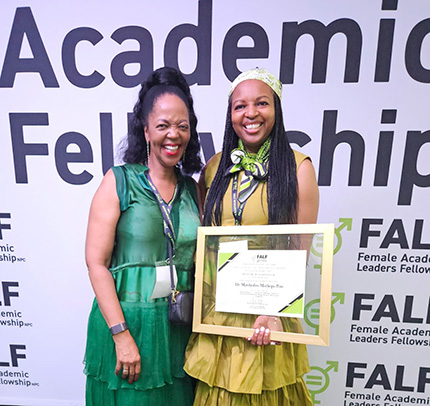 How have you benefited from being a FALF fellow?
I received a Female Academic Leaders Fellowship (FALF) grant in 2024, which was extended into 2025. The grant provided invaluable support for my PhD research, covering essential research expenses, including field trips across the country for data collection, statistician fees, the appointment of a research assistant, and attendance at an international conference.
Beyond the financial support for my research, the fellowship has played an important role in my personal and professional growth as a leader. It has provided access to coaching and mentorship, leadership workshops, training on pathways to professorship, and numerous webinars. These initiatives are particularly empowering for Black and Coloured women in academia, equipping us with the knowledge, skills and tools to navigate the academic environment, overcome barriers and position ourselves for senior academic and leadership roles.
Another aspect I deeply appreciate about FALF is the supportive space it has created for women to connect, motivate, encourage and uplift one another. The Peer Observation and Development (POD) system encourages Fellows to collaborate and co-create projects that can make a meaningful difference in the lives of others. The Fellows live by the mantra, 'Lift as you rise', a philosophy that the FALF founder and Chairperson, Dr Judy Dlamini, also the Chancellor of Wits University, believes in and continuously encourages us to practise.
In my view, FALF is one of the most valuable initiatives supporting Black and Coloured women in academia. It goes beyond developing individual academics; it builds a community of women who empower one another, open doors for others and create opportunities for future generations of women leaders. I feel incredibly fortunate and privileged to be part of this movement.
Who are you outside of work?
Outside work, Matshediso is a fairly chilled and down-to-earth person. I love travelling, both within South Africa and abroad, but above all, I enjoy spending time with my family. My happiest place is home, surrounded by the people I love.
I also enjoy supporting my daughter in the work she does through her Hope for Teens Foundation, which collects and distributes sanitary towels to girls in disadvantaged communities. I strongly believe that our purpose as human beings is to help others and make their lives a little better. This initiative embodies that belief and reminds me that even small acts of kindness can make a significant difference in someone's life.
I aspire to treat everyone with kindness because you never know what a smile or a kind gesture might mean to another person. Beyond that, I want to break barriers and create opportunities so that a young girl growing up in Khuma today can have a better environment and more possibilities than I had.
I wake up every day with a sense of purpose, to make things better, however small my contribution may be. I am motivated by the thought that somewhere, a child in a rural or disadvantaged community may have an opportunity they would otherwise not have had because I made a conscious decision to push boundaries, challenge limitations and open doors for others. Ultimately, I want my journey to mean something beyond my own achievements.
Your final words?
I studied both my undergraduate degree and Masters degree at Wits. I am currently completing my PhD in Maxillofacial and Oral surgery here at Wits. Wits has given me the edge. It is my forever academic home.
When I completed my degrees, I did not just walk away with academic qualifications; I walked away with a passport to opportunities and spaces I had never imagined I would enter. I found myself standing on podiums I once thought were reserved for a selected few, engaging in conversations that shape our profession, and making meaningful contributions in the spaces I occupy.
For me, being a Wits graduate is not just about what I have achieved, but also about what I can contribute and how I can use the opportunities I have been given to make a difference in the lives of others. It is indeed ‘Wits for Good’ !