Student entrepreneurs focus on SDGs
- Wits University
Witsies and founders of Drip Tailors finish strong in Kenya and advance to the SDG Olympiad finals in Switzerland.
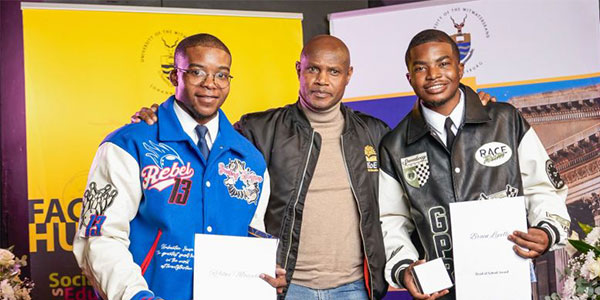
Wits students Brain Makofane and Refilwe Monyela represented South Africa at the 2026 SDG Olympiad Regional Championships in Kenya, where they competed alongside social impact-driven entrepreneurs from across Africa.
The founders of Drip Tailors returned home triumphant and will now proceed to the global finals in Switzerland in November, where they will compete for $1 million.
Drip Tailors earned its place at the Regional Championships after being selected as one of the Top 3 startups in the Hult Prize South Africa 2026 SDG Olympiad. Their achievement reflects a growing culture of student entrepreneurship at Wits that is using innovation to address social, economic and environmental challenges.
From fixing trousers to tackling textile waste
Drip Tailors is redefining sustainability by transforming discarded textile waste into thermal insulation materials that improve living conditions while promoting the circular economy. The business also addresses youth unemployment through a skills academy that trains the next generation of fashion entrepreneurs.
The idea had much humbler beginnings.
In an interview with Wits Vuvuzela, Makofane and Monyela said the business began in 2023 at Barnato Residence after they bought trousers that were too big for them. Rather than finding someone to alter the trousers, they decided to do it themselves. Their alterations worked, attracted customers on campus and eventually developed into an upcycling business aligned with the United Nations Sustainable Development Goals (SDGs).
Drip Tailors is one of several student-led businesses supported by the Wits E-Hub, which helps students and emerging entrepreneurs develop and grow their ventures.
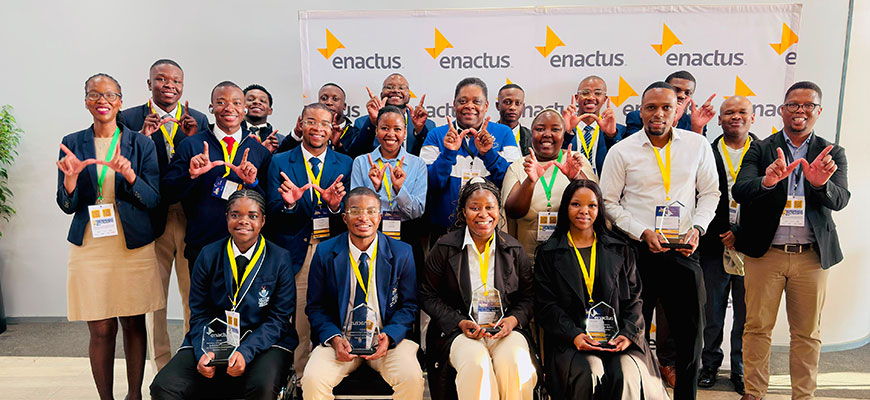
The growing impact of student entrepreneurship was also evident at the 2026 Enactus South Africa National Exposition and Competition, where Wits students brought home seven trophies and secured two further placements in the Schneider Electric Battery Innovation Enactus Challenge.
Tackling South Africa's energy challenge
Among the winners was BioWatt Innovations, a multidisciplinary student team comprising students from electrical engineering, chemistry and education. BioWatt took first place in the Schneider Electric Challenge.
Team member Success Mlangeni says BioWatt grew out of a “shared frustration of the crippling cost of energy in South Africa and the relentless cycle of power cuts (load-shedding) that disrupts businesses, households, and essential services.”
The team initially explored several solutions to different aspects of the energy crisis. Their research, however, pointed them towards an immediate problem: batteries used in solar systems, telecommunications and backup power often fail prematurely, resulting in costly replacements and increasing electronic waste.
This led to the development of the BioWatt Intelligent Battery Management System (BIBMS), which optimises energy flow in real time to improve efficiency and extend battery life.
“In a country where energy is already unaffordable for many, we believe making every stored unit of power last longer is a critical step toward energy justice,” says Mlangeni.
Entrepreneurship with social impact
Together, the student ventures demonstrate how entrepreneurship can contribute to the Sustainable Development Goals by tackling challenges ranging from waste and sustainable consumption to energy access, innovation, skills development and economic participation.
Wits Deputy Dean of Student Affairs Tshegofatso Mogaladi, who oversees student entrepreneurship, commended the students for developing ventures with social impact.
“Student entrepreneurship initiatives at the university contribute to the holistic development of our students and create alternative pathways for meaningful economic participation, especially considering the shrinking employment opportunities. The E-Hub makes a significant contribution to the entire Wits entrepreneurship and innovation ecosystem, preparing students for the dynamic and challenging economic climate.”
The initiatives contribute particularly to SDG 7 – Affordable and Clean Energy, SDG 8 – Decent Work and Economic Growth, SDG 9 – Industry, Innovation and Infrastructure, and SDG 12 – Responsible Consumption and Production.
Related content
Enactus Wits' Drip Tailors Top 3 in Sustainability Olympiad
From fixing trousers to creating impact – story of two Witsies turned entrepreneurs
Wits Enactus makes history at the Enactus World Cup 2025
Wits Student Entrepreneur Takes Innovation Global