

Surprising books by Witsies
- Wits University
Staff reveal their dynamic and creative sides by penning books outside their field of expertise. From an accountant, security exec to an evolutionary biologist
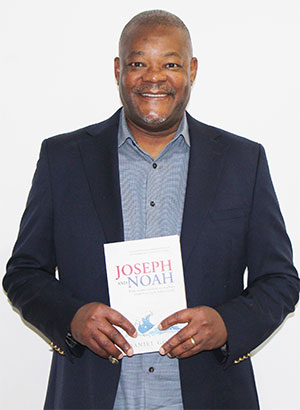
Daniel Gozo, Senior Finance Executive and author of Joseph and Noah: What Ancient Wisdom can Teach us About Thriving in Today’s World
"Accountants are often associated with spreadsheets, so I surprised myself with how much writing I was able to endure - and enjoy. Over time, I became better at it, and the experience pushed me to learn faster than at any other point in my life," says Gozo, speaking about his writing journey.
 What motivated you to write the book?
I grew up watching my family rebuild after my father lost his job during a civil war, an experience that shaped my understanding of resilience and financial vulnerability. Years later, serving as a trustee of the University’s retirement fund deepened my interest in how people prepare for financial independence. After two decades of observing market behaviour - from crises to recoveries - I realised storytelling could be a powerful way to share lessons on success, wealth, and personal growth. Through these two biblical figures, and other featured personalities, I wanted to tell the stories of real people in the modern world who transformed their fortunes from the depths of despair.
Can you share your post-publishing journey?
The post-publishing journey has been a steep but rewarding learning curve. I’ve had to grasp the complexities of book promotion and distribution very quickly, and I’m still learning every day. Seeing Joseph and Noah on the shelves of Exclusive Books across South Africa has been a humbling privilege. Not many titles make it through their stringent selection process, and the achievement is a testament to my distributors, Blueweaver, and their strong belief in the book.
Perhaps the most gratifying part has been the unexpected conversations the book has sparked; doors opening to new relationships, ideas, and reflections I never anticipated.
The book was released globally and locally on 28 March 2025. In South Africa and Gaborone, it is available in-store at Exclusive Books, Clarkes in Cape Town, The Campus Bookstore, and several others. It is also accessible worldwide through major online retailers such as Amazon, Barnes & Noble, Kobo, and more, in both paperback and eBook formats.
Can you mention one or two contemporary figures mentioned in the book that readers can recognise and why you included them?
I included several contemporary figures whose lives offer practical, relatable lessons. For example, New Zealand entrepreneur James Coddington challenges long-held financial myths and encourages people to think differently about wealth creation. Magic Johnson’s story is another powerful example; his childhood lessons about putting in honest, hard work propelled him to an extraordinary basketball career, and despite a profound mid-career setback, he reinvented himself and went on to become a billionaire business leader.
I also highlight Justice Edwin Cameron, who rose to fulfil the high expectations associated with being a Rhodes Scholar, even while facing near-death experiences. His journey reflects resilience, purpose, and the courage to confront life’s harshest trials - qualities at the heart of the book.
What advice would you give to those who have a burning story or idea that they want to write about?
The real power of knowledge is unlocked when it’s shared. Writing a book is one of the most meaningful ways to pass on what you’ve learned and to contribute to conversations that matter deeply to you. But it requires commitment - be ready to work hard, to research thoroughly, and to stay patient through the process. Ultimately, it’s your story to tell. Approach it with intensity, curiosity, and the determination to do it justice.
Please share what you do at Wits and how this adds to the University’s goals
At Wits, I serve as a senior finance executive focused on strengthening the University’s financial sustainability, operational efficiency, and long-term strategic capability. My work spans financial management, governance, systems enhancement, and the development of models that support evidence-based decision-making.
I help ensure that our financial systems, reporting, costing frameworks, and capital investment decisions are robust and aligned with Wits’ academic mission. This includes leading major projects such as establishing the fixed asset register, designing resource-allocation and programme-costing models, and developing policies that improve clarity, compliance, and financial stewardship.
Over the years, I’ve contributed to stronger governance processes, more insightful reporting, and deeper sustainability analyses - both at Wits and within the broader higher-education sector. Ultimately, my role enables the University to plan more effectively, invest wisely, manage risks, and allocate resources in support of teaching, research, and long-term institutional resilience.
Your parting words?
I’ve been deeply humbled by the support from the Wits executive team, many of whom were among the very first to purchase Joseph and Noah. Their encouragement made me feel that the effort behind the book was truly worthwhile. Colleagues across the University have also been wonderfully surprised and delighted to discover the book.
The writing and editing process is where a manuscript truly takes shape, and I must acknowledge Veronica Klipp, publisher at the Wits University Press, for being the first to read the opening chapters. Her constructive feedback in those early days - and her help in facilitating the meeting with my distributors, Blueweaver - made a meaningful difference. My editor, Louise Rapley, helped shape the book into its final form, and my publisher, Vanessa Wilson at Quickfox in Cape Town, was truly phenomenal. A journey like this is never walked alone.
I am grateful to everyone who offered confidence, guidance, and encouragement in what is often a very personal and solitary journey. Thank you for the support. A book only finds its meaning when people read it
 Pierre Durand, an evolutionary biologist and author of Bertha’s Law
What motivated you to write Bertha’s Law?
I have always had a creative desire and studied drama at the University of Pretoria so I always knew I would come back to this kind of work at some point. Specifically for Bertha's law, it is a story that grew in my mind during my travels across Africa.
What’s the book about?
It’s based on oral and written accounts, Bertha’s mysterious life is told through a collection of fictionalised episodes and images. Criss-crossing Africa, she hatches plans to free the animals she encounters–chickens, owls, ostriches, chimpanzees, donkeys, elephants and many others–forming profound friendships with the people she meets along the way like the Tanzanian children Bakari and Amida, her Nigerian rescuer Ifeoluwa, and traveling salesman Alphonse. But there is danger in almost every situation and Bertha must reckon with a bizarre array of characters.
Please tell us how the book has been received and your post-publishing journey?
I am delighted with the performance and this version exceeded all my expectations. Some of the episodes are being used in additional English teaching at a few high schools and colleges. The French version will be launched in February next year. You can order the book online.
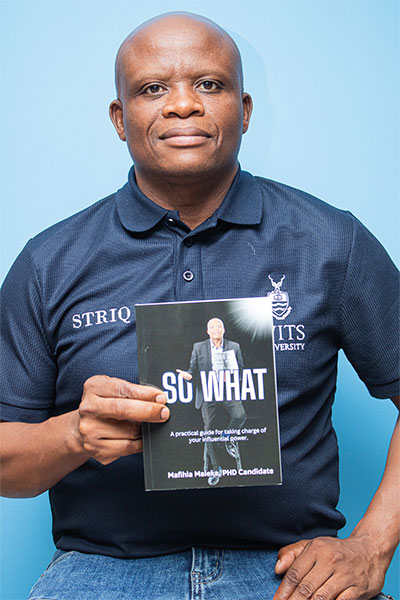 Mafihla Maleka, Deputy Director: Protection Services and author of So What
You have written four books and the most recent being So What published in August. What is the common theme amongst them?
Look no further than within (2023) and The Security Practitioner’s Digest (2024), Fear Not (2024) and So What (2025) are about self-leadership and assist individuals to tap into their own greatness.
The recently released So What is essentially about making peace with what you cannot control; redirecting your attention and energy to something you can control.
What do you attribute your writing success to?
Hard work pays, always. I am a firm believer in continuous self-development and the development of others. I also take pride in having risen through an industry that is often undervalued – security thus demonstrating that with determination, discipline, and purpose, one can rise from any circumstance to achieve success. Personal success requires no justification to others; it is earned, owned, and driven by one’s own commitment.
Since joining Wits in 2021, I have successfully completed my Master’s degree in Security Management and am currently in the process of submitting my PHD thesis for final marking, with graduation anticipated in 2026. I also hold several international specialisations, including Security Governance, Security Director certification/credentials, Security Regulation, Security Incident Management, Security Specialisation for Scientists, Technicians and Engineers, Physical Protection Systems, Certified Security Professional credentials, and Security for Executives (all these at international level), among others.
Please share what you do at Wits and how this adds to the University’s objectives. What’s unique about what you do?
My role directly advances the University’s strategic objective of providing a safe, inclusive, and enabling environment for teaching, learning, research, and student life. My strategic focus is on the prevention and investigation of crime through an agile, responsive, and fully integrated security model that combines people, technology, and processes. I oversee Investigations, the Security Customer Service Centre, and Technical Security Solutions, and I am responsible for departmental security risk assessments and the development of core security governance instruments. What is unique and critical about my role is that it sits at the centre of incident assessment, access control, customer experience, and technology-driven security transformation. Without these functions, incident response, campus access, and stakeholder confidence would be severely compromised. My work directly shapes the safety, image, and reputation of Wits, while driving the professionalisation of Campus Protection Services and embedding a culture of service excellence, inclusion, and belonging.