BEGIN:VCALENDAR
PRODID:-//TERMINALFOUR//SITEMANAGER V7.3//EN
VERSION:2.0
BEGIN:VEVENT
DTSTART:20260826T150000
LOCATION: North Lodge, 2 St Davids Place
DESCRIPTION:The Southern Centre for Inequality Studies (SCIS) warmly invites you to the book launch of Becoming Agarwal: The Manufacture of a Close-Knit Mercantile Caste.Authored by Dr Ujithra Ponniah ). Becoming Agarwal examines how a dominant mercantile caste reproduces itself as a cohesive and influential elite in contemporary urban India. Drawing on ninety-one interviews, long-term ethnographic fieldwork in Delhi and community archives, the book traces the gendered and generational labour that sustains caste privilege and kinship unity across class fractions. It shows how marriage choices, family expectations and everyday socialisation within households cultivate a sense of pragmatic love in younger women, encouraging them to align personal desire with the interests of the wider community. Older women act as agents of kinship patriarchy, teaching daughters and daughters-in-law to uphold the values of patience, duty and collective responsibility. Men strengthen caste capital in the public sphere through philanthropic initiatives, religious programmes and the strategic elevation of the merchant king as a shared ancestor. The book reveals how caste, gender and economic power intertwine to produce a close-knit and resilient community while also exposing the narrow points at which these structures are questioned or strained.
X-ALT-DESC;FMTTYPE=text/html:The Southern Centre for Inequality Studies (SCIS) warmly invites you to the book launch of Becoming Agarwal: The Manufacture of a Close-Knit Mercantile Caste.Authored by Dr Ujithra Ponniah ). Becoming Agarwal examines how a dominant mercantile caste reproduces itself as a cohesive and influential elite in contemporary urban India. Drawing on ninety-one interviews, long-term ethnographic fieldwork in Delhi and community archives, the book traces the gendered and generational labour that sustains caste privilege and kinship unity across class fractions. It shows how marriage choices, family expectations and everyday socialisation within households cultivate a sense of pragmatic love in younger women, encouraging them to align personal desire with the interests of the wider community. Older women act as agents of kinship patriarchy, teaching daughters and daughters-in-law to uphold the values of patience, duty and collective responsibility. Men strengthen caste capital in the public sphere through philanthropic initiatives, religious programmes and the strategic elevation of the merchant king as a shared ancestor. The book reveals how caste, gender and economic power intertwine to produce a close-knit and resilient community while also exposing the narrow points at which these structures are questioned or strained.
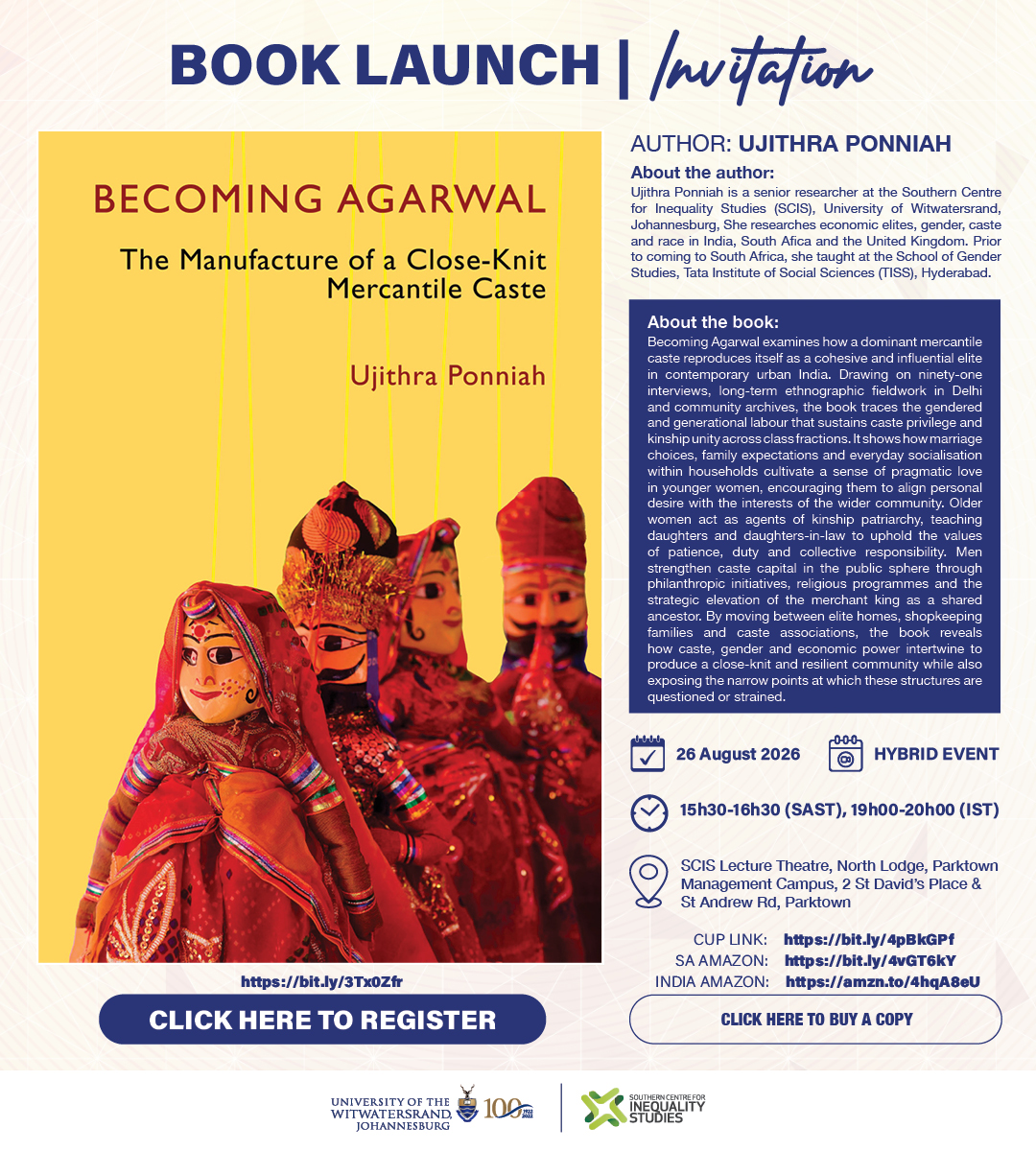
SUMMARY:Becoming Agarwal: The Manufacture of a Close-Knit Mercantile Caste, by Ujithra Ponniah
END:VEVENT
END:VCALENDAR